
Women Sport
At a Glance
Early Clubs
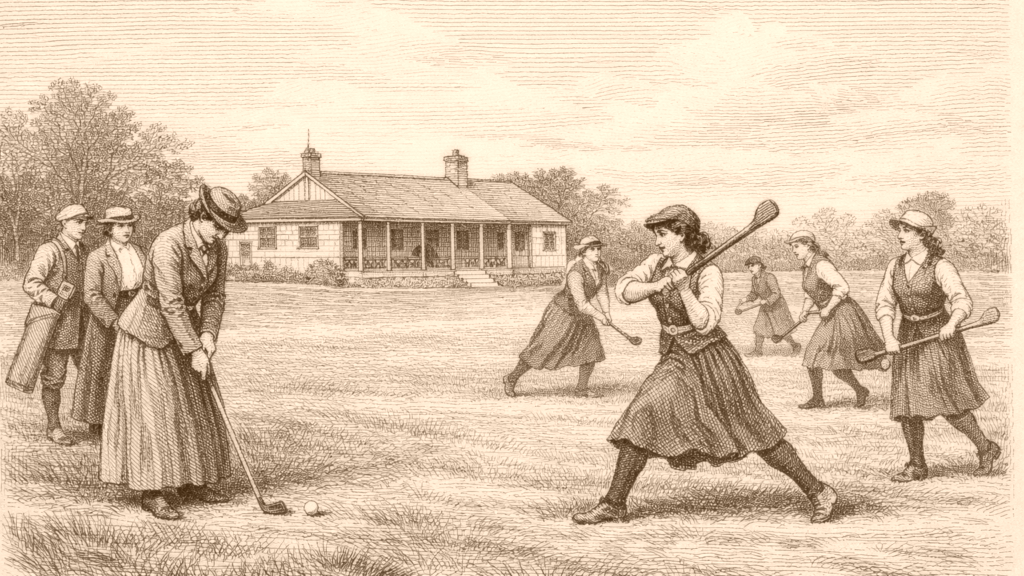
The evidence places some of the earliest visible growth in women’s sport within golf. One account notes records of ladies playing a tournament at Musselburgh in 1811, the founding of St Andrews Ladies’ Golf Club in 1867, and the creation of the Ladies Golf Union in 1893. A later museum-style summary presents these as early markers in a longer history, showing that women’s organised play existed well before modern equality campaigns became a public theme. [3]
These same passages also show women’s golf moving from informal participation toward recognised structures. The 1811 tournament, the 1867 club, and the 1893 union appear in sequence, and the later article treats them as part of “the game’s fabric.” That phrasing is interpretive in the article itself, but the directly observable fact is a chronological progression from play, to club formation, to union-based organisation in the nineteenth century. [3]
Tournament Gains
The record also shows women’s sporting success extending beyond Ireland through individual achievement. EPIC’s profile of Irish women in sport identifies Mabel Cahill, born in Kilkenny, as the first foreign player to win the U.S. National Women’s Singles Championship in 1891. It adds that she won again in 1892, and that she returned to Ireland in 1893 rather than defending her titles. This is evidence of prestige attaching to Irish female competitors abroad. [2]
The same source places another milestone in swimming. It describes Sarah Fanny Durack, born to Irish parents, as having competed under a restriction that barred women from events where men were present; that ban then helped drive public demand for change. Durack went on to win Olympic gold in 1912. Here the evidence links women’s sporting growth to both competition success and the removal of barriers, though only the latter is expressly described in the source. [2]
Visible Signs
Later museum material shows women’s sport becoming visible through objects as well as results. The National Museum’s GAA exhibition includes a camogie dress worn by Maeve Gilroy in the 1960s and says she won her second All-Ireland senior camogie title with Antrim in 1967. It also identifies a camogie uniform illustration from 1969, offering a concrete sign of women’s games being documented through dress, medals, and exhibition displays. [5]
The same exhibition describes camogie uniforms as shaped by discomfort and by regulations that prioritised tradition over athleticism. That is a direct statement within the exhibition text, and it helps explain why uniforms themselves became part of the historical record. Alongside the Gilroy dress and the 1969 design illustration, the display shows women’s sport as something seen, worn, and argued over, not merely played on the field. [5]
Policy Turn
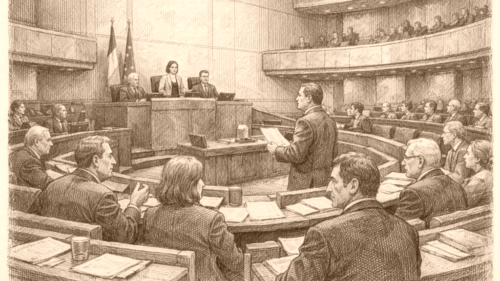
By 2004, the documentary evidence shifts from milestones in play to recommendations for state action. The Oireachtas committee report says that in March 2003 it decided to investigate issues relating to Women in Sport and appointed Deputy Jimmy Deenihan as rapporteur. The report’s introduction states that the committee then presented its fifth report after research and discussions with interested parties. This marks a move from scattered achievement to formal attention in public policy. [1]
The report’s recommendations reveal what growth looked like in institutional terms. It calls for gender-equality strategies, additional funding for programmes that increase female involvement, publicising research on female sport, adopting the Brighton Principles, and requiring equity in bodies receiving Council funding. These are concrete proposals, not evidence of full implementation, but they show that women’s sport had become a matter for structured administrative planning. [1]
Equality Plans
The report goes further by setting out structural measures. It proposes that all National Governing Bodies receiving Council funding should include a gender-equality clause in their constitutions and that the Government and the Irish Sports Council consider extra funding for organisations improving women’s participation and integration, including women with disabilities. A full-time Women’s Development Officer is also recommended. These details show the growth debate moving into governance, staffing, and targeted support. [1]
Education and health appear in the same list of recommendations. The committee suggests reorganising the PE curriculum, completing a national survey of physical education provision for women, and raising the profile of health benefits of sport and recreational activity for women. The report also notes that 2004 was the European Year of Education through Sport. The evidence therefore records a wide policy frame, but not yet proof of full delivery. [1]
Continuing Growth
The National Museum of Ireland says it is committed to amplifying women’s stories. Its GAA exhibition includes camogie items, medals, uniforms, and figures such as Maeve Gilroy and Ursula Jacob. [4] [5]
Taken together, these excerpts trace a limited but coherent pattern: early female golf clubs and tournaments, competitive success by Irish women abroad, visible camogie history in museum display, and official concern with equality by 2004. The evidence does not show a single turning point. Instead, it shows repeated, separately documented advances across sport, administration, and representation, each adding another layer to women’s sporting growth in Ireland. [3] [2] [5] [1]
Source References
Hover over a number to see the source. Select it to open the source.

- [1] Committee Reports::Report No. 05 - Women in Sport::01 July, 2004::Report
- [2] Irish women in sport who have made history throughout the years - EPIC The Irish Emigration Museum in Dublin | Official Site
- [3] Aldeburgh Golf Club: Leading Equality In Golf Since 1884 | Golf Monthly
- [4] Historical Collections Online | National Museum of Ireland
- [5] GAA: People, Objects & Stories | Decorative Arts & History | National Museum of Ireland
How did Irish women’s sport move from isolated club and competition milestones to formal policy proposals for wider participation by the early twenty-first century?