Archibald Rowan
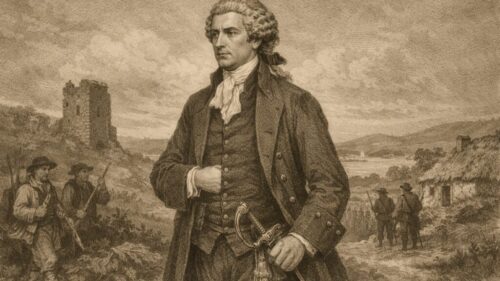
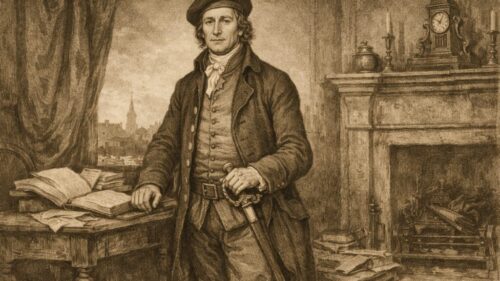
Archibald Hamilton Rowan (1751–1834) was born in London and was the only son and heir of Gawin Hamilton of Killyleagh Castle, County Down. His education was superintended by his grandfather, who placed him at a private school, and at sixteen he inherited property on the conditions that he add the name Rowan to his own and be educated at Oxford or Cambridge. He entered Queens’ College, Cambridge, where he was later rusticated and then readmitted. He spent a few months in America as private secretary to Lord Charles Montague, and through the Duke of Manchester’s influence he obtained a commission as captain of the grenadiers in the Huntingdon militia.
Dateline
Archibald Hamilton Rowan (1751–1834) was born in London and was the only son and heir of Gawin Hamilton of Killyleagh Castle, County Down. His education was superintended by his grandfather, who placed him at a private school, and at sixteen he inherited property on the conditions that he add the name Rowan to his own and be educated at Oxford or Cambridge. He entered Queens’ College, Cambridge, where he was later rusticated and then readmitted.
He spent a few months in America as private secretary to Lord Charles Montague, and through the Duke of Manchester’s influence he obtained a commission as captain of the grenadiers in the Huntingdon militia. In 1777 he accepted a lieutenant-colonelcy in the Portuguese army, but after a brief stay abroad he resigned and returned to London.
Irish Politics
In 1781 he married Sarah Anne Dawson in Paris. He moved to Ireland in 1784, lived near Naas in County Kildare, and later bought the estate of Rathcoffey. He was chosen a delegate for County Down to the volunteer convention in Dublin in October 1784, succeeded his father in command of the Killyleagh volunteers in May 1786, became a founder member of the Northern Whig Club in Belfast in 1790, and joined the Society of United Irishmen in 1791.
Trial Exile
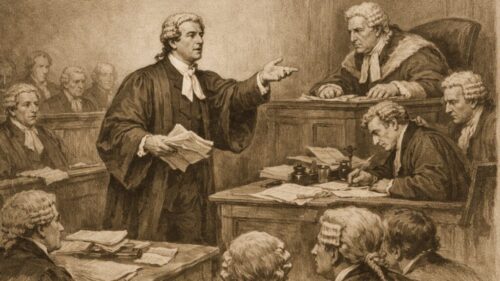
He was arrested in December 1792 on a charge of distributing a seditious paper, tried on 29 January 1794, and sentenced to a fine and two years’ imprisonment. He escaped from Dublin Newgate, fled to France, was arrested there as a spy, and later lived in Paris for more than a year, where he knew Mary Wollstonecraft. He was pardoned in 1803, settled on his estate at Killyleagh Castle, and supported Catholic Emancipation.
Source References
Hover over a number to see the source. Select it to open the source.