Aghagallon: Ancient Heritage
Aghagallon, historically situated in County Antrim in the barony of Upper Massereene, preserves a history extending from ancient religious sites to the linen industry of nineteenth-century Ulster. Its Irish name, Achadh Gallan, recalls the landscape in which successive generations established their homes, farms and places of worship. The placename is associated with standing stones, although its precise derivation has been interpreted in different ways. The old church and cemetery near Rock Lane occupy a hilltop enclosure interpreted by local historians as a former ringfort. The reuse of an earlier enclosure for Christian worship is suggestive of continuity of settlement, but the date of the original religious foundation remains uncertain.
Dateline
Aghagallon, historically situated in County Antrim in the barony of Upper Massereene, preserves a history extending from ancient religious sites to the linen industry of nineteenth-century Ulster. Its Irish name, Achadh Gallan, recalls the landscape in which successive generations established their homes, farms and places of worship.
Ancient Origins
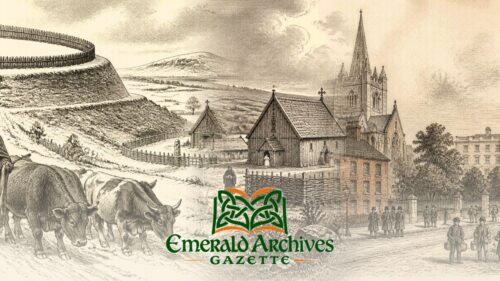
The placename is associated with standing stones, although its precise derivation has been interpreted in different ways. The old church and cemetery near Rock Lane occupy a hilltop enclosure interpreted by local historians as a former ringfort. The reuse of an earlier enclosure for Christian worship is suggestive of continuity of settlement, but the date of the original religious foundation remains uncertain. A local tradition links the site with a saint named Colman; this attribution should not be treated as established fact.
Medieval Heritage
Aghagallon belonged to a wider network of ancient ecclesiastical sites including Aghalee, Maghernagaw and Magheramesk. The relationship between these churches changed over time as parish boundaries developed. The surviving burial ground at Old Aghagallon provides an important physical connection with this earlier landscape. Its use by families of different Christian traditions also demonstrates that burial customs did not always follow later denominational divisions.
Religious Change
A Catholic chapel was established in 1748 through the efforts of Felix O’Donnell and members of his parish. The surviving inscription records the involvement of Arthur McHenry. Its establishment belongs to a period when Irish Catholics faced substantial legal restrictions. The parish tradition also associates the locality with outdoor worship during the Penal era. Local historical accounts disagree over the date of a fire at the earlier chapel: the Aghalee heritage project places it during the rebellion of 1798, whereas the Catholic parish website gives 1898. The discrepancy requires further documentary investigation.
St Patrick’s Church
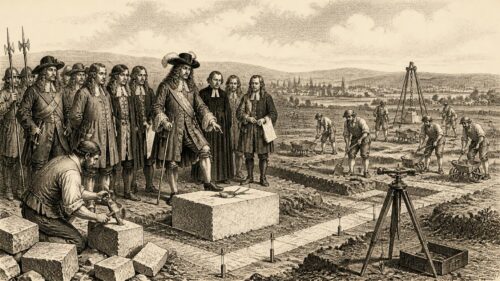
The present St Patrick’s Church dates from 1834, during the ministry of Daniel McGarry. Its erection followed Catholic Emancipation in 1829, although local Catholic worship had existed long before that legislation. The construction of a permanent church illustrates the importance of parish institutions in the development of the settlement. The church’s foundation inscription provides a tangible historical record of the undertaking.
The Nineteenth Century
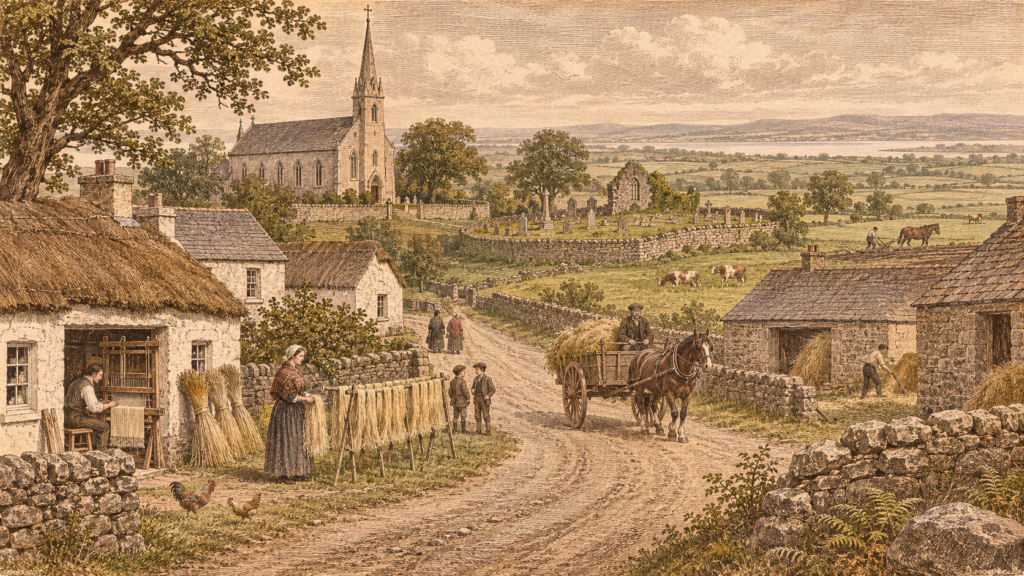
By the late Victorian period, Aghagallon was a small settlement surrounded by an extensive civil parish. Slater’s directory of 1894 records thirteen townlands and distinguishes the hamlet from its wider rural surroundings. The 1891 population figures reproduced in that directory give 145 inhabitants for the hamlet and 2,126 for the parish. These figures are important because historical references to Aghagallon frequently concern the parish rather than the village alone.
The settlement was linked to the market and communications network of Lurgan. Moira railway station was approximately three miles away, while correspondence passed through Lurgan. These connections illustrate the increasing integration of small rural settlements into the commercial infrastructure of nineteenth-century Ireland.
Linen and Fisheries
Slater’s directory identifies textile weaving and fishing on Lough Neagh as the principal local industries. Among the listed weavers were James Connolly, William Lynch and Peter O’Neill. Their occupations provide evidence of the significance of linen production beyond the large industrial centres of Ulster. Agricultural holdings also supported numerous families, including members of the Gilbert, Lavery, Falloon and Turtle families. The coexistence of farming and weaving helps explain the mixed economic character of the district.
Education and Community
The same directory identifies a post office under Thomas Moffet and a network of national schools, including the school at Aghagallon under Mrs I. Smith. It also names William Walter Duff, a physician and surgeon. Such records reveal a community whose everyday needs were served through local institutions as well as neighbouring towns. They are particularly valuable for recovering the lives of people who seldom appear in conventional political histories.
Family Records
The National Library of Ireland preserves Catholic parish registers for Aghagallon dating from 1828, including baptisms, marriages and funeral records. These documents offer a foundation for investigating family relationships and demographic changes before and after the Great Famine. The existence of these records does not itself establish the local extent of famine mortality or emigration; those questions require detailed analysis of the registers and additional evidence.
Historical Legacy
Aghagallon’s heritage encompasses ancient burial sites, religious change, agricultural settlement and the livelihoods associated with Ulster’s linen industry and Lough Neagh. Its surviving churches, historical directories and parish records provide a means of reconstructing the development of a small Irish community over successive centuries.