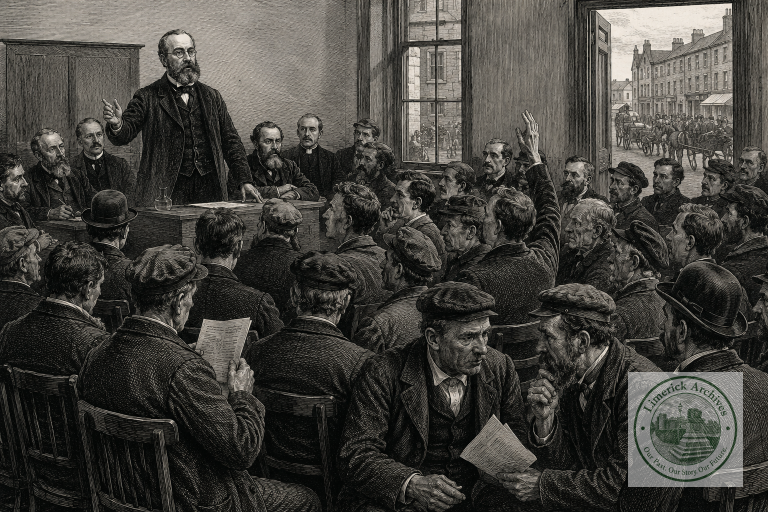

Ulster Divide(c.1880s)
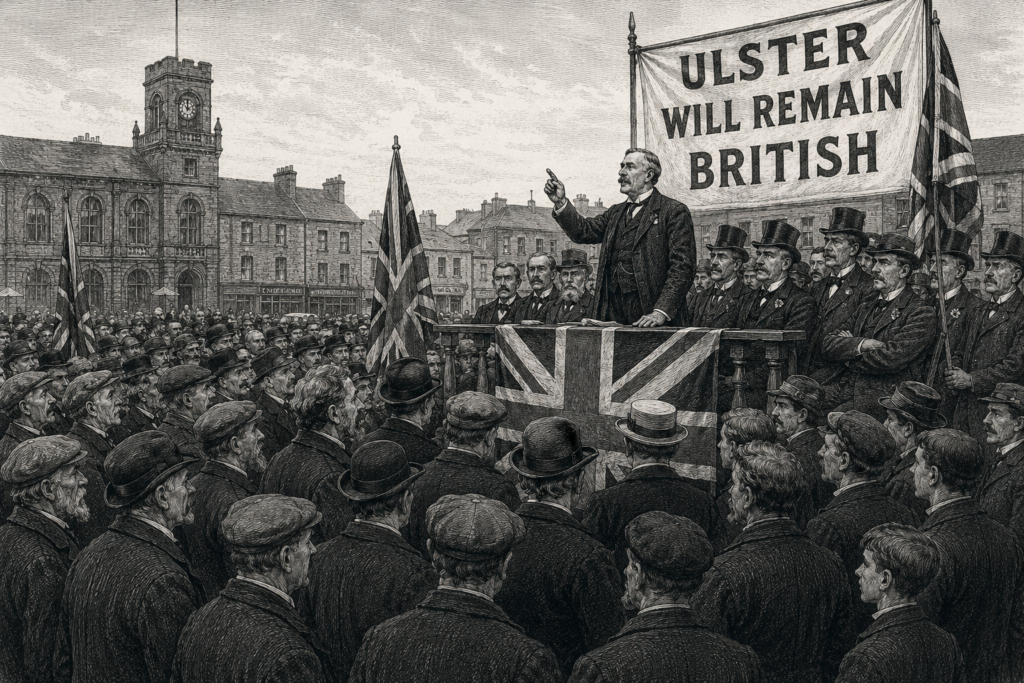
The general election has confirmed a widening political division between nationalist Ireland and the unionist strongholds of north-eastern Ulster. While the reunited Irish Parliamentary Party has secured overwhelming representation across most of the country, Unionist candidates have retained their commanding position in Belfast, Antrim, Down, northern Armagh and neighbouring districts. The result will be closely studied in Limerick, where Home Rule supporters regard an Irish legislature as the principal national demand. Unionist resistance in Ulster, however, demonstrates that constitutional settlement cannot be considered solely through the wishes of the nationalist majority elsewhere in Ireland.
Unionism had gathered strength after William Ewart Gladstone introduced the first Home Rule Bill in 1886. Conservatives, Liberal Unionists, Protestant organisations, commercial interests and many landowners argued that a Dublin parliament would weaken the United Kingdom and threaten their religious, economic and political position. These fears possessed particular force in the industrial north-east, where Belfast’s shipbuilding, linen manufacture, engineering and commercial links with Britain differed markedly from the agricultural conditions prevailing throughout much of Ireland. The defeat of the second Home Rule Bill in the House of Lords in 1893 postponed the immediate question but did not remove the regional opposition.
The Irish Unionist Alliance remained the principal organisation defending the legislative union, working closely with Conservatives and Liberal Unionists at Westminster. Its northern strength rested heavily upon Protestant voters, Orange lodges, businessmen, professional men and landed interests, although unionism was neither socially uniform nor free from disagreement. Nationalists retained important support in southern and western Ulster, while several constituencies were decided by narrow margins. Nevertheless, the election again showed that many seats in Antrim, Down, Belfast and northern Armagh could be held comfortably by candidates opposed to Home Rule, sometimes without a nationalist challenge.
The results expose two sharply different political mandates within Ireland. Nationalists can point to their large majority of Irish parliamentary seats as evidence that the country demands self-government. Unionists answer that concentrated majorities in north-eastern Ulster cannot fairly be placed beneath a legislature they distrust. The return of Londonderry City to Unionist representation, together with strong Unionist performances across Belfast and surrounding counties, has strengthened that argument. No immediate partition proposal commands political discussion, but the territorial concentration of Unionist support is making the Ulster difficulty increasingly distinct from the position of scattered Unionists elsewhere.
For Limerick nationalists, the result provides both encouragement and warning. John Redmond’s reunited party possesses a powerful Irish mandate, and local supporters may view its success as a renewed opportunity to press Home Rule at Westminster. Yet the strength of north-eastern Unionism shows that Irish opinion is not politically uniform. Protestant and Unionist residents of Limerick may also draw reassurance from the continued representation of their views, even though Unionism has declined as an electoral force outside Ulster. The election has therefore strengthened constitutional nationalism while simultaneously revealing the regional resistance that any future Home Rule settlement must confront.
Primary Sources
- Parliamentary Election, 1900: Return of Charges, House of Commons Parliamentary Paper 1901 (33), volume LXIX, including the Irish constituency returns. This official record can verify candidates, contests and election administration. Relevant Irish tables and page references should be checked against the original parliamentary paper before formal citation.
- The Irish Times, 11 October 1900. Contemporary election reporting and editorial discussion can verify reactions to the decline of southern Unionism and the growing importance of Ulster as the movement’s principal electoral base. Exact page and column should be confirmed before formal citation.
- The Irish Times, 12 October 1900. This issue reported and assessed the completed election results and their reception in Ireland and Britain. It can verify contemporary interpretations of the Unionist and nationalist outcomes. Exact page and column should be confirmed before formal citation.
- Belfast News-Letter, 11 October 1900. Contemporary northern reporting can verify Unionist election results, local speeches, constituency reactions and the political arguments advanced by Ulster candidates. Exact page and column should be confirmed before formal citation.
- W. E. H. Lecky to Hugh de Fellenberg Montgomery, 26 November 1900, Public Record Office of Northern Ireland, Hugh de Fellenberg Montgomery Papers, T1089/297. This private contemporary letter records Lecky’s judgement concerning the electoral future and importance of Ulster Unionism.