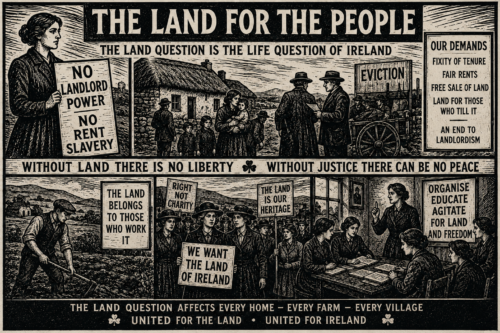
Boycott Pressure
Limerick Archives — 1900
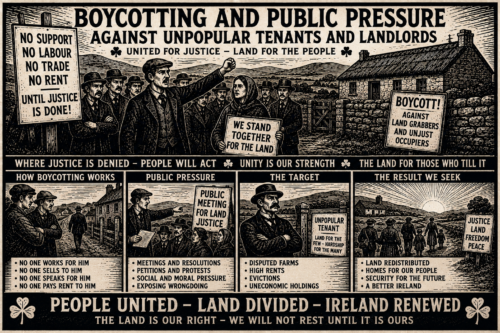
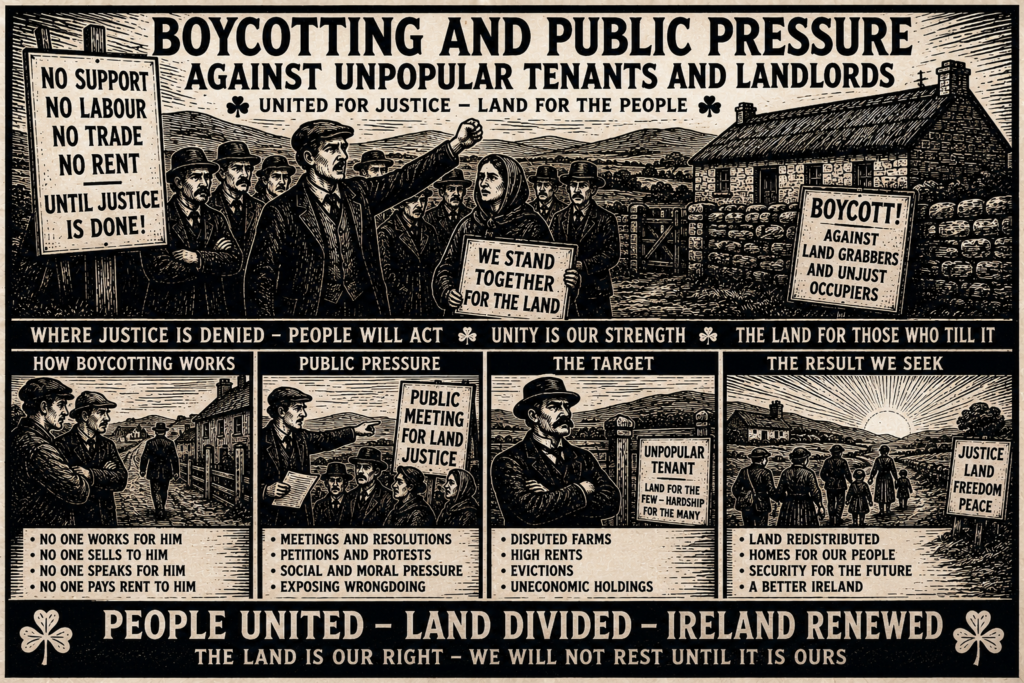
LIMERICK — Boycotting and organised public pressure are being employed in some Irish districts against landlords, graziers and tenants whose conduct is considered hostile to the land campaign. The methods range from public condemnation and refusal of ordinary dealings to the withdrawal of labour, trade and social contact. Supporters describe such action as a peaceful means of enforcing communal discipline where legal and parliamentary remedies appear ineffective. Opponents call it intimidation imposed upon people who may have broken no law. In County Limerick, the practice carries particular force wherever eviction, disputed holdings or the occupation of grazing land has divided neighbours.
The boycott entered Irish political language during the Land War, when labourers, tradesmen and neighbours refused assistance to Captain Charles Boycott after he attempted to enforce evictions in County Mayo. The tactic survived because it allowed a community to isolate an unpopular individual without an organised physical attack. A landlord might struggle to obtain labour, supplies or local cooperation, while a tenant occupying an evicted farm could find ordinary relations withdrawn. Public meetings and newspaper reports strengthened the pressure by identifying disputed farms and warning prospective tenants that acceptance would carry consequences extending beyond the rent agreement.
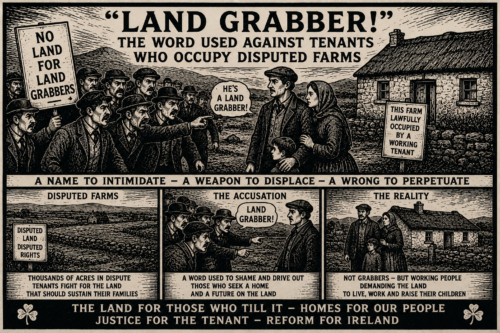
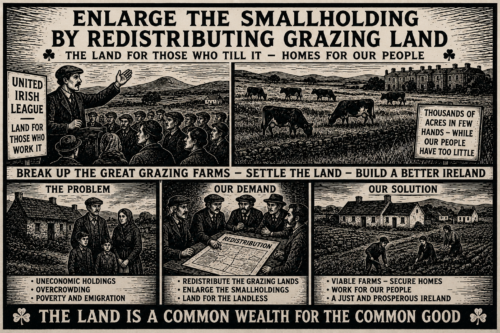
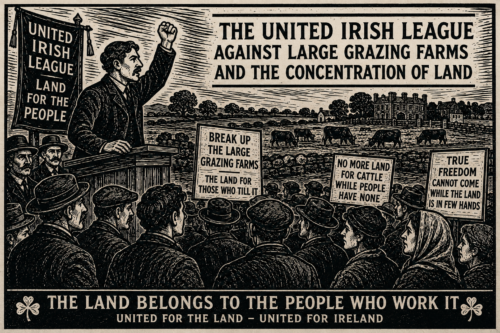
The United Irish League has revived similar methods while campaigning for the restoration of evicted tenants and the division of large grazing farms. Local branches may pass resolutions, organise meetings and discourage people from bidding for land claimed by displaced families or sought for redistribution. Those who resist League demands can be denounced as land grabbers, graziers or enemies of the local cause. Parliamentary debate in 1900 acknowledged that pressure was being applied to holders of grass farms to surrender them, while later discussion described the boycotting associated with League activity.
The consequences can reach beyond the person directly involved. Shopkeepers may fear serving a condemned household, labourers may refuse employment, and neighbours may avoid conversation, worship or market dealings. Wives, children and servants can become isolated despite having played no part in the original dispute. Government officials and unionist critics argue that such pressure substitutes collective punishment for law and leaves individuals vulnerable to local power. Nationalists answer that social withdrawal is less violent than eviction and often represents the only effective weapon available to communities confronting landlords, extensive graziers or unpopular incoming tenants.
For Limerick, boycotting exposes the conflict between lawful possession and accepted local justice. A landlord may rely upon contract, and a new tenant may hold a valid lease, yet neighbours may regard the same arrangement as the product of eviction or unfair concentration of land. The method can strengthen solidarity and compel negotiation, but it may also punish dissent, deepen family feuds and make reconciliation difficult. Its continued use shows that the land question is being decided not only in courts and Parliament but through the daily choices of labourers, traders, farmers and neighbours across the countryside.
- Parliamentary Debates, House of Commons, Evicted Tenants (Ireland) Bill, 21 February 1900, discussion of pressure upon holders of grass farms to surrender them for division among small farmers. Exact columns should be confirmed before formal citation.
- Parliamentary Debates, House of Commons, Civil Service Estimates, 25 May 1900, discussion of United Irish League activity, grazing farms and political boycotting. Exact relevant columns should be confirmed before formal citation.
- Freeman’s Journal, Dublin, 1900, reports concerning boycotting, evicted tenants, disputed farms and United Irish League meetings. Exact issue, page and column should be confirmed before formal citation.
- Limerick Chronicle, Limerick, 1900, reports concerning agrarian disputes, unpopular tenants, landlords and League organisation in County Limerick. Exact issue, page and column should be confirmed before formal citation.
- Royal Irish Constabulary, County Inspector’s monthly reports for Limerick, 1900, concerning agrarian intimidation, boycotting, evicted farms and public meetings. Exact file, report and folio should be confirmed before formal citation.