Archived: 26 September 2026
Abstract
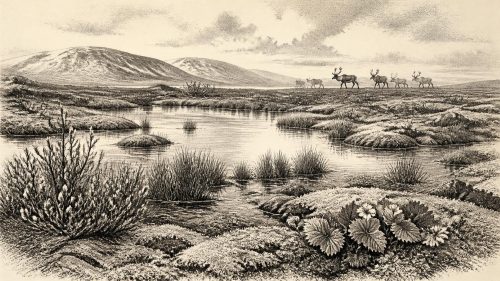
30,651 BCE is a modern label rather than a recoverable Irish historical year. Derryvree, County Fermanagh, preserves freshwater silts between glacial tills, radiocarbon dated broadly to a period encompassing this date. Its plants reveal treeless tundra, wet hollows and seasonal liquid water during an ice-free interval amid changing Midlandian ice conditions. Castlepook Cave, County Cork, records diverse Marine Isotope Stage 3 fauna, including mammoth, reindeer, giant deer and predators, but not a single contemporaneous community. Human presence remains unproven: possible cut marks require investigation, whereas secure evidence is later. The period documents Ice-Age environments, not kingdoms, settlement or recorded events.
Read Article
Archived: 26 September 2026
Abstract
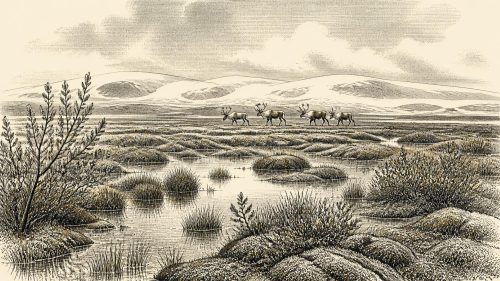
About 30,652 BCE cannot be treated as a precisely dated Irish year, but falls within a Late Pleistocene interval represented by Derryvree, County Fermanagh. Organic silts between glacial tills indicate an ice-free phase, broadly 31,700–36,900 calibrated years before present, when cold, treeless wetlands supported mosses, sedges, dwarf willow, aquatic plants and freshwater life. Cave remains demonstrate that cold-adapted fauna, including reindeer, mammoth and predators, reached Ireland, although assemblages are not local censuses. A cut-marked Castlepook reindeer bone may indicate human butchery, yet remains disputed. Evidence supports intermittently habitable, climatically volatile landscapes, not continuous occupation, settlements, states, trade or annual history.
Read Article

Archived: 26 September 2026
Abstract
Although 30,653 BCE cannot denote a specific Irish event, it falls within a Late Pleistocene MIS 3 interval recorded at Derryvree, County Fermanagh. Freshwater silts and organic deposits between tills show an ice-free phase, supporting cold, treeless tundra wetland vegetation. Castlepook Cave, County Cork, preserves a diverse, differently dated fauna including mammoth, reindeer, giant deer and predators, demonstrating changing connected habitats. A marked reindeer femur may indicate Upper Palaeolithic butchery, but cannot prove settlement or continuous occupation. No political, cultural or social institutions are identifiable. Lower sea levels and shifting ice affected access, while routes and ice extent remain uncertain.
Read Article

Archived: 26 September 2026
Abstract
30,654 BCE is a modern label within a broad Late Pleistocene range, not a date for recorded Irish events. Roadworks at Derryvree, County Fermanagh, exposed freshwater sediments between glacial tills, proving a cold, locally ice-free interval with pools, sedges, mosses, bogbean and insects. Comparable northern deposits confirm fluctuating Midlandian glaciation, without establishing island-wide conditions. Lower sea levels connected Ireland ecologically to north-west Europe, though routes varied. Castlepook Cave, County Cork, preserves cold-adapted mammals, including mammoth, reindeer and hyaena. A cut-marked reindeer bone may indicate Upper Palaeolithic butchery, but cannot demonstrate settlement, population, society or beliefs with certainty at this horizon.
Read Article
Archived: 26 September 2026
Abstract
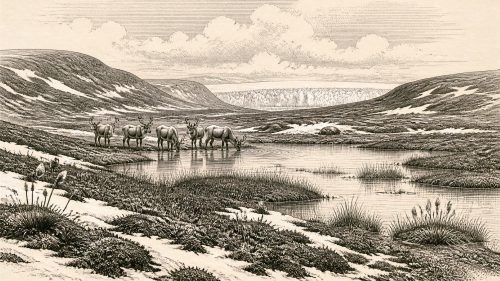
Around 30,655 BCE, Ireland experienced a cold, unstable Late Pleistocene interval rather than a recordable historical year. At Derryvree near Maguiresbridge, freshwater silts and organic deposits between till beds show a marsh developed between glacial advances. Mosses, sedges and northern insects indicate open, treeless wetland and tundra conditions, despite severe seasonality. Ice margins, sea levels and coastlines changed regionally, repeatedly eroding earlier landscapes. Castlepook Cave’s Ice Age fauna includes reindeer and mammoth. A marked reindeer bone may indicate human butchery, but cannot demonstrate settlement. Evidence supports occasional mobile visitors within a varied, harsh glacial environment, not a permanent Irish population.
Read Article
Archived: 26 September 2026
Abstract
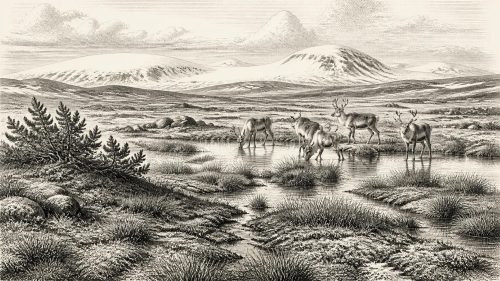
Around 30,656 BCE, Ireland was a climatically unstable Late Pleistocene landscape rather than a recorded society. Derryvree, County Fermanagh, preserves freshwater sediments between glacial tills, indicating locally ice-free, treeless tundra wetlands with grasses, sedges, mosses, juniper and cold-water plants during a broad MIS 3 interval. Castlepook Cave, County Cork, yielded disturbed remains of mammoth, reindeer, giant deer, wolves, foxes, bear and spotted hyaena, demonstrating episodic animal occupation. A marked reindeer femur may indicate stone-tool butchery, but lacks supporting occupation evidence. No political, religious, economic or settled human life can be securely reconstructed; evidence instead reveals fragmented environments, fauna and uncertainty.
Read Article
Archived: 26 September 2026
Abstract
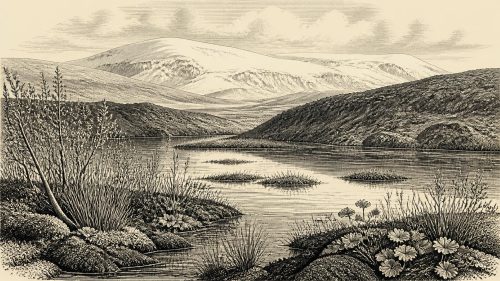
At 30,657 BCE, Ireland’s history is environmental rather than human, as no secure evidence demonstrates settlement, society or activity. During the unstable Late Pleistocene, ice margins, low sea levels and periglacial landscapes changed repeatedly. Derryvree, County Fermanagh, preserves freshwater silts between glacial tills, dated to this period, showing an interval of pools, wetlands, sedges, mosses and cold-adapted open vegetation. Its deposits reveal local conditions, not an island-wide scene. Cave remains indicate that varied cold-stage fauna, including mammoth, reindeer, bears and predators, reached Ireland intermittently. Later glaciation destroyed much evidence, making Derryvree a crucial record of changing habitats before human occupation.
Read Article

Archived: 26 September 2026
Abstract
30,658 BCE cannot be identified as a precise Irish historical date, but falls within a broad Late Pleistocene range. Derryvree, County Fermanagh, preserves freshwater sediments indicating a cold, open, periglacial wetland with sedges, dwarf willow, juniper, aquatic plants and insects, later buried by ice. Expanding, uneven ice sheets made conditions and access variable. Castlepook Cave, County Cork, records cold-adapted fauna including mammoth, reindeer, giant deer, predators and lemmings, though remains span episodes. A possibly cut-marked reindeer femur may indicate intermittent Upper Palaeolithic butchery, not settlement. No evidence supports contemporary communities, institutions or cultural identities; environmental change is the principal history.
Read Article

Archived: 26 September 2026
Abstract
30,659 BCE is a modern label within Marine Isotope Stage 3, not a recoverable Irish year. Evidence from Derryvree, County Fermanagh, records a freshwater wetland between glacial advances, later sealed beneath drumlin till. Its sediments, dated broadly to 36,900–31,700 calibrated years before present, contain bogbean, sedges, mosses and other plants indicating cold, treeless periglacial conditions. Castlepook Cave, County Cork, preserves bones of mammoth, giant deer, reindeer, bear, hyaena and later cold-adapted fauna, demonstrating changing open environments and movement routes. A possibly cut-marked reindeer bone may indicate transient human activity, but cannot securely establish settlement, chronology or social life with certainty.
Read Article
Archived: 26 September 2026
Abstract
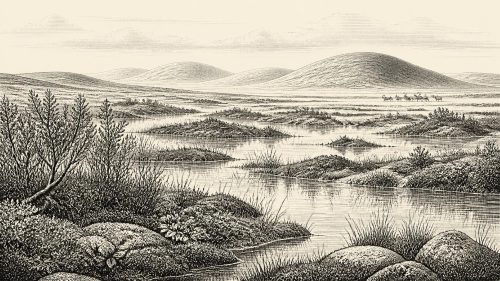
Labelled 30,660 BCE by modern chronology, this period cannot be tied to a specific Irish event or season. Derryvree, near Maguiresbridge, preserves freshwater silts between glacial tills, indicating locally ice-free, cold conditions during MIS 3 before later ice expansion. Radiocarbon dating places the deposits broadly within a range encompassing this notional year. Plant and insect remains reveal treeless tundra wetland, with mosses, sedges, pools and cold-adapted flora. Cave fauna from Castlepook indicates a wider Ice-Age mammal community. A possibly cut-marked reindeer bone suggests transient human activity, but cannot demonstrate settlement. Ireland remained environmentally unstable as the British–Irish Ice Sheet advanced.
Read Article

