Archived: 15 November 2026
Abstract
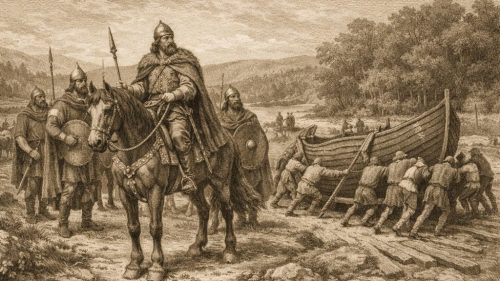
Domnall ua Néill appears in the Irish annals in notices that identify him as king of Temair, and in one entry as king of Ireland. The surviving notices record particular actions and events rather than a continuous narrative, and they provide the basis for what can be said about his activity in the years preserved in the annalistic record.Royal AccountThe earliest notice places him in 963, when Domnall ua Néill brought ships from the Daball across Sliab Fuait to Loch Aininne, something that, according to the annal, had not been done since ancient times. The same entry adds that this
Read Article
Archived: 15 November 2026
Abstract
Year MarksThe surviving notices for this year are attached to different annal frameworks rather than to one uniform date. In the Annals of Ulster, the sequence around the notice in view runs from U567.0, whose printed heading is AD 566, to U568.0, whose printed heading is AD 567. The Annals of Tigernach similarly preserve a year heading sequence around T567 and T568, while the Annals of the Four Masters print M567 with the heading Age of Christ, 567. These forms show that the same calendrical year is not presented in a single identical way across the texts.The evidence available here
Read Article
Archived: 15 November 2026
Abstract
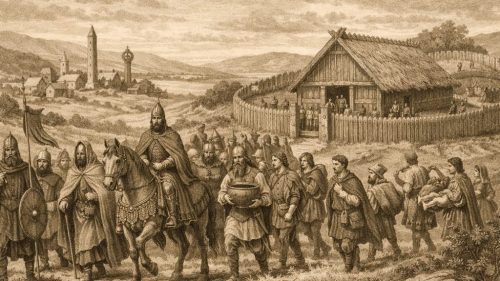
Early LifeMuirchertach mac Néill appears in the medieval Irish record as a ruler of Ailech. The annalistic notice identifies him as “Muirchertach son of Niall”, and also gives the sobriquet “Muirchertach of the Leather Cloaks”. The same notice describes him as king of Ailech and as “the Hector of the western world”, a formula that belongs to the annalistic style of praise and commemoration. No life dates are stated in the source extracts beyond the death notice itself, so it is best to leave his birth and wider chronology unnamed rather than supply unsupported dates.The surviving evidence presented here does
Read Article
Archived: 15 November 2026
Abstract
Irish annals preserve several notices aligned with 568 CE, but they do not all describe the same event. In the Annals of Ulster, Annals of Tigernach, Chronicon Scotorum, Annals of the Four Masters, and Annals of Inisfallen, the year-marker or calendar heading is paired with different short entries. Some records concern the death or slaying of Ainmire son of Sétna; others mention a battle involving Colmán Bec son of Diarmait, or the killing of Demán son of Cairell. This article separates those notices, keeps the annal headings in place, and notes only what each text explicitly records, without merging them.
Read Article
Archived: 15 November 2026
Abstract
Dating CluesThe annal headings around this material do not align perfectly from book to book. In the Annals of Ulster, the relevant run includes AD 568 at U569.0 and AD 569 at U570.0. The Annals of Tigernach give Annal T569, and the Annals of the Four Masters give Annal M569 with The Age of Christ, 569. These headings belong to the record and should be kept separate from the internal identifiers.The Annals of Inisfallen arrange the same cluster differently. AI569.1 places the deaths of Ainmire son of Sétna and Baetán son of Eochu under AI569, while AI570.1 and AI570.2 place
Read Article
Archived: 15 November 2026
Abstract
Congal Cáech is a historical figure known from very limited surviving evidence. The principal source identified in the supplied material is the Annals of Ulster, where Congal Cáech is cited in notices associated with the years 628 and 637. A later podcast episode on the kings of early medieval Ireland also identifies the Annals of Ulster as the source for those references. Beyond that, the evidence provided here does not support further biographical detail, and any fuller reconstruction of Congal Cáech’s life must therefore remain cautious.Primary EvidenceThe available evidence is narrow but clear in its limits. The annalistic record is
Read Article
Archived: 15 November 2026
Abstract
Annal DatingThe Ulster annals place the notices discussed here beside the heading printed as U572.0, which carries the year label AD 571, and then continue with notices numbered U572.1 to U572.6. In the same sequence, the next heading, U573.0, carries the year label AD 572. The Tigernach annals preserve a corresponding sequence under T572 and T573, so the records must be read as annal entries with their own printed headings rather than as modern calendar labels.The two recensions do not present the same ordering. In Ulster, the slaying of two descendants of Muiredach appears before notices of a bishop’s repose,
Read Article
Archived: 15 November 2026
Abstract
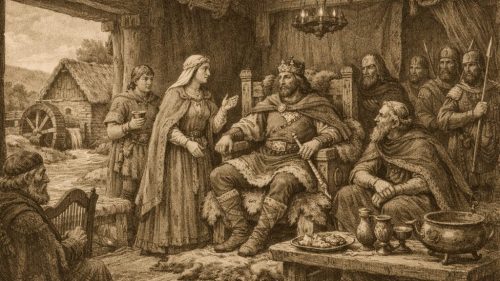
The text preserved by the CELT project under the title Orgguin trí mac Diarmata Mic Cerbaill centres on the killing of Diarmait’s three sons. It names Diarmait as their father and presents him as a king of Ireland within the literary setting of the tale. The narrative follows the deaths of the sons and the events that follow from them, rather than offering a detached historical account.The story opens with the sons of Diarmait mac Fergusa Cerrbeoil travelling again into the land of Laigin on a raid. There they come upon Maelodrán ua Díma Chrón beside a mill owned by
Read Article
Archived: 15 November 2026
Abstract
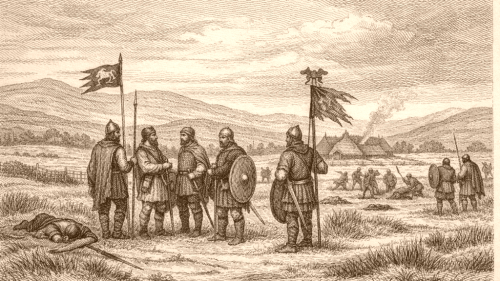
The annalistic notices assigned to 574 present a small set of entries rather than a single unified account. One record places the battle of Tola and Fertola in the territories of the Cruithin and adds a death notice for Conall son of Comgall. Another record assigns the same battle to plains between Éile and Osraige, names Fiachra son of Baetán as victor, and gives a fuller topographical gloss. Related annals place a different battle notice under 574 or nearby years, showing that the surviving entries do not align perfectly in year division. This article compares the notices strictly as written.
Read Article
Archived: 15 November 2026
Abstract
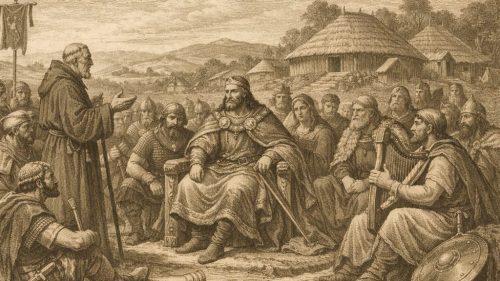
Lóegaire mac Néill appears in early Irish king lists and in later Patrick tradition as a king associated with the first generation of Christianity in Ireland. The surviving material does not give a contemporary life narrative. What can be said securely is drawn from medieval genealogical and chronological texts that place him among the kings of Ireland and link him to the larger dynastic framework of the Uí Néill.Royal SettingIn the king lists preserved in the Book of Leinster tradition, Lóegaire mac Néill is named among the kings of Ireland in sequence after the Christian era begins in the lists’
Read Article
