Archived: 28 October 2026
Abstract
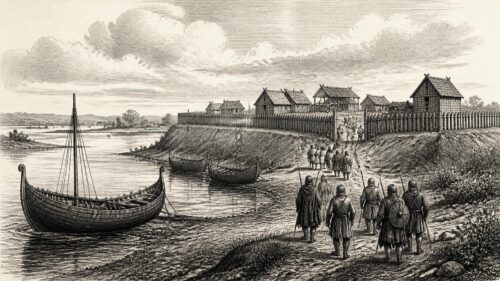
In 902, forces led by Cerball of Leinster and Máel Finnia of Brega expelled Dublin’s Scandinavian rulers from Áth Cliath, ending the city’s phase as a fortified naval and commercial base. Annals describe abandoned ships and wounded fugitives, but do not permit reconstruction of battle details or prove every Scandinavian inhabitant left Ireland. Archaeology indicates a diverse settlement of warriors, traders, craftspeople and families, while residual occupation complicates claims of complete abandonment. Elsewhere, Finnguine of Cashel was killed, enabling Cormac’s accession, and ecclesiastical leadership changed at Lathrach Briúin. The expulsion transformed regional power without ending Scandinavian influence or Dublin’s restoration.
Read Article
Archived: 28 October 2026
Abstract
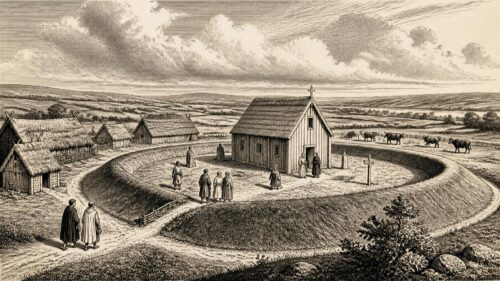
In 903, Irish annals recorded political and ecclesiastical transitions rather than a major campaign. Máel Finnia of Brega, recently associated with Dublin’s Scandinavian expulsion, died and received praise emphasising piety, generosity and martial authority. At Treóit near Tara, Máel Mithig and Áengus committed an unnamed killing at Flann Sinna’s instigation, showing royal influence exercised through kinship and local allies. Deaths among rulers in Laíges, Tuirbe and Uí Cheinnselaig indicated regional succession pressures. Senior churchmen also died, underlining monasteries’ administrative and political importance. Divergent annals require chronological caution. The year reveals power resting on fragile relationships between dynasties, churches and communities.
Read Article
Archived: 28 October 2026
Abstract
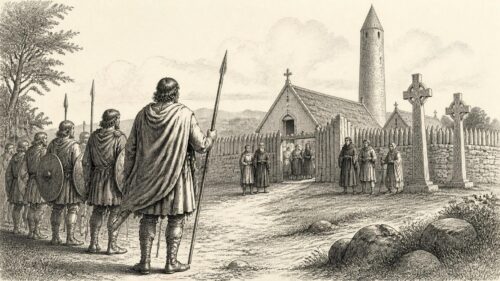
In 904, Flann Sinna, king of Tara, violently confronted his adult son Donnchad at Kells, where the Annals of Ulster record the profanation of the sacred site and the beheading of many men near its oratory. The episode, imperfectly dated, reveals dynastic conflict overriding sanctuary. Deaths of the leaders of Clonmacnoise, Glendalough and Emly marked transitions within influential ecclesiastical centres. Beyond Ireland, Ímar, grandson of Ímar, was killed by men of Foirtriu, reflecting instability after Dublin’s 902 expulsion of Scandinavian rulers. Later attribution of Clonmacnoise’s stone church to 904 is unreliable; evidence dates it to 909 rather than that year.
Read Article
Archived: 28 October 2026
Abstract
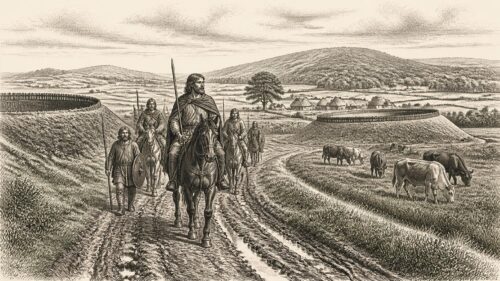
In 905, the Annals of Ulster record Flann Sinna, king of Tara, leading an expedition into strategically important Osraige, amid rivalry with Munster and instability within its ruling dynasty. The source does not specify fighting or outcomes, but the march demonstrated royal pressure in a region linking Leinster and Munster. Máel Ciaráin, bishop of Lann Léire, and Lachtnán, abbot of Ferna, died, highlighting ecclesiastical succession and local power. In the north, Cenél nÉogain prevented battle between Domnall and Niall, sons of Áed Findliath. These sparse notices reveal interconnected kingship, church institutions, rural resources, diplomacy, and tensions preceding wider conflict soon.
Read Article
Archived: 28 October 2026
Abstract
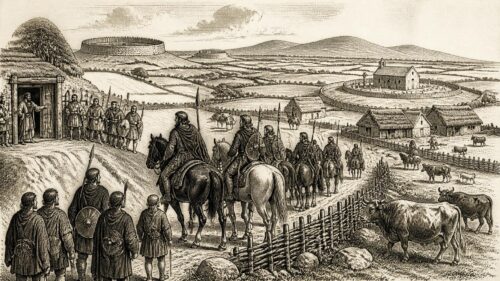
In 906 Flann Sinna, king of Tara, led a major campaign into Munster, apparently with Cerball of Leinster, ravaging territory described as stretching from Gabrán to Limerick. Annalistic evidence confirms the expedition but provides no precise route, battles, captures or settlement. The raid demonstrated Tara’s capacity to project force, while exposing the contested nature of Irish overlordship. Munster, led by Cormac of Cashel, remained powerful and retaliated in 907; conflict culminated in Cormac’s defeat and death in 908. Deaths of northern rulers, Ciarmac of Uí Fhidgeinte, and Bangor’s abbot Indrechtach also marked the year, illustrating intertwined political and ecclesiastical change.
Read Article
Archived: 28 October 2026
Abstract
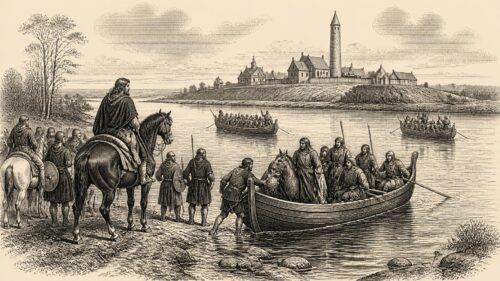
In 907, Cormac mac Cuilennáin, king-bishop of Cashel, and Flaithbertach mac Inmainén led Munster forces through the midlands, challenging Flann Sinna and Uí Néill influence. Annals record fighting at Mag Léna, the death of Máel Craíbe of Cenél Fiachrach, Connacht hostages, and fleet-borne plundering around Lough Ree. Their Christmas campaign reached Uí Néill territories, Mag Aí and Clonmacnoise, requiring eighty ferryings, an uncertain phrase indicating arduous transport. These expeditions demonstrated Munster’s mobile, alliance-based power without creating unified rule. Cét became king of Corcu Modruad locally. Mortality is noted cautiously in Ulster’s annals; Cormac’s defeat came the following year in 908.
Read Article
Archived: 28 October 2026
Abstract
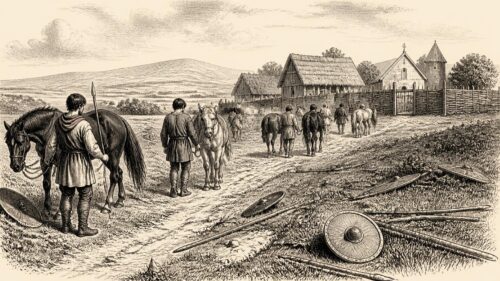
On 13 September 908, Munster’s king-bishop Cormac mac Cuilennáin was defeated and killed at Belach Mugna, or Mag Ailbe, by forces led by Flann Sinna of Tara, Cerball of Leinster and Cathal of Connacht. The battle ended Munster’s expansion, killing allied rulers and ecclesiastical leaders, including Cellach of Osraige, and strengthened Flann’s influence without unifying Ireland. Cormac’s reputation as scholar, scribe, bishop and anchorite illustrates overlapping royal and clerical authority. Annals record northern aggression, church deaths and uncertain reports, revealing rivalry, institutional Christianity and Irish Sea connections. Sources caution against treating later narratives, casualty totals or Viking involvement as certain.
Read Article
Archived: 27 October 2026
Abstract
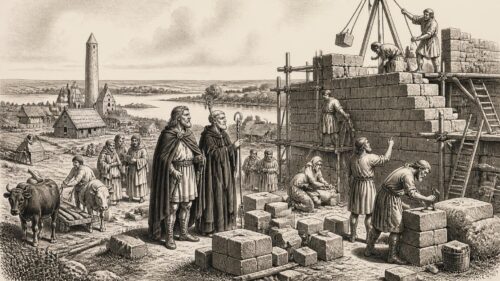
In 909, Flann Sinna, king of Tara, and Colmán Conaillech sponsored a stone church and sacristy at Clonmacnoise, whose surviving north wall attests early Irish monumental masonry. Situated beside the Shannon, the foundation served a populous religious and lay settlement while displaying royal power, ecclesiastical wealth and political connections. The nearby Cross of the Scriptures similarly linked Christian teaching with patronal commemoration. Following Flann’s victory at Belach Mugna in 908, his ally and son-in-law Cerball of Leinster died, prompting dynastic change. Annals also note regional rulers’ and churchmen’s deaths, cattle disease, and killings in Brega. Some battles remain insecurely dated.
Read Article
Archived: 27 October 2026
Abstract
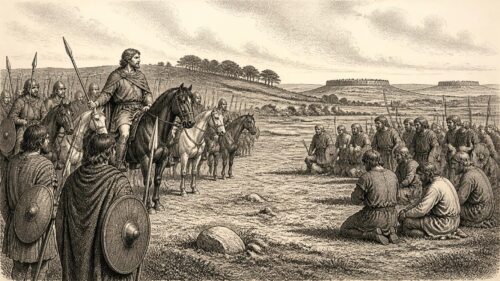
The securely dated core of 910 is not a Viking landing or a famous royal death, but a hard-fought assertion of power in Ireland’s central and western midlands. Flann Sinna, king of Tara and leading ruler of the southern Uí Néill, defeated the men of Bréifne with the help of his sons. The encounter, recorded in the Annals of Ulster and more fully in Chronicon Scotorum, cost the life of Flann son of Tigernán, king of Bréifne, as well as other nobles. It was a severe reverse for a kingdom situated on Mide’s north-western approaches, and a reminder that Flann’s
Read Article
Archived: 27 October 2026
Abstract
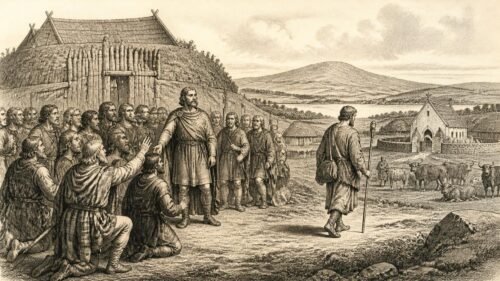
In 911 Domnall, son of Áed Findliath, relinquished the kingship of Ailech by adopting the pilgrim’s staff, a religious renunciation, and his brother Niall succeeded him. Annals of Inisfallen, Chronicon Scotorum and Ulster support the succession, although dating conventions preclude fuller detail. The transfer preserved Cenél nÉogain control of a major northern power, whose authority relied on clientage, tribute, military service and ecclesiastical connections. Domnall died in penitence in 915. Ireland remained politically fragmented under Flann Sinna of Tara; Niall was commander. Records also note a Leinster heir’s death and a phenomenon, while communities sustained networks through agriculture and obligations.
Read Article

