
Archived: 17 September 2026
Abstract
Around 31,421 BCE, Ireland’s past is reconstructed from environmental rather than historical evidence. Derryvree, County Fermanagh, preserves a cold, ice-free tundra wetland between glacial advances, dated broadly to 36,900–31,700 years ago. Its plants, including bogbean, indicate pools and short productive seasons. Crag Cave records intermittent milder conditions. Castlepook Cave’s fauna, accumulated over long periods, includes mammoth, reindeer, giant deer and predators, demonstrating rich but fluctuating ecosystems. A possibly cut-marked reindeer femur may indicate Upper Palaeolithic human activity, although its context is insecure. No settlement or society is evidenced. Subsequent glaciation obscured remains, leaving a fragmentary record of landscapes and visitation.
Read Article

Archived: 17 September 2026
Abstract
31,422 BCE denotes a broad Late Pleistocene, Marine Isotope Stage 3 interval rather than a recoverable calendar year. At Derryvree near Maguiresbridge, Fermanagh, freshwater organic sediments between glacial tills reveal an ice-free local phase, dated broadly to 36,900–31,700 calibrated years BP. Pollen, plants, mosses and insects indicate open, cold, seasonally productive wet tundra with pools, sedges and exposed ground. Castlepook Cave's long-accumulated fauna records mammoth, reindeer, giant deer and predators, but not a single contemporary ecosystem. A possibly tool-marked reindeer bone suggests early human visits, yet remains disputed. No secure evidence supports permanent settlement, political organisation or cultural activity there.
Read Article
Archived: 17 September 2026
Abstract
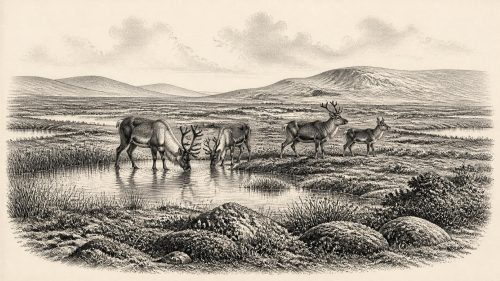
31,423 BCE is a modern chronological label within unstable MIS 3, not a recorded Irish year. At Derryvree, County Fermanagh, freshwater organic sediments between glacial tills indicate a temporary ice-free, treeless wetland landscape, dated broadly to 36,900–31,700 calibrated years BP. Plant and insect remains show pools, mosses and open periglacial ground. Comparable Ulster deposits demonstrate fluctuating ice cover. Castlepook Cave’s MIS 3 fauna, including reindeer, mammoth and hyaena, shows periodic ecological connections with Europe, while ancient-DNA findings remain provisional. Possible tool damage on a reindeer bone suggests, but does not establish, human visitation. Later glaciation buried or destroyed older evidence.
Read Article

Archived: 17 September 2026
Abstract
Around 31,424 BCE, Ireland lay within the unstable cold conditions of Marine Isotope Stage 3, before the Last Glacial Maximum. Lower sea levels and fluctuating ice created changing connections with Britain and continental Europe. Castlepook Cave, County Cork, preserves a complex, re-dated assemblage including mammoth, giant deer, reindeer, hyena, wolves and lemmings, demonstrating a rich, intermittent cold-stage fauna. Improved radiocarbon methods placed some remains far earlier than formerly believed, though dates remain ranges, not precise anniversaries. A cut-marked reindeer femur may indicate Upper Palaeolithic butchery, yet cannot prove settlement. Evidence depicts shifting Ice Age ecosystem; future research may clarify presence.
Read Article
Archived: 17 September 2026
Abstract
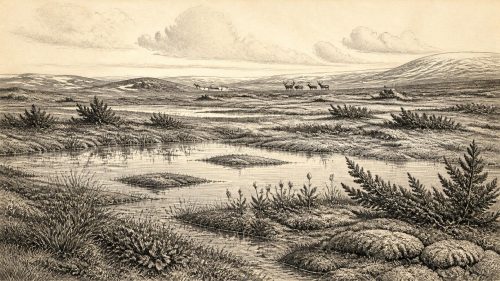
At the nominal date of 31,425 BCE, Ireland lay within the climatically unstable Marine Isotope Stage 3. Derryvree sediments in County Fermanagh, dated broadly to this period, record ice-free freshwater wetlands and open tundra vegetation amid severe periglacial conditions. Later glaciation preserved these deposits beneath till. Castlepook Cave in County Cork contains a Late Pleistocene fauna, including mammoth, reindeer, giant deer, predators and scavengers, demonstrating ecological links with north-west Europe. A marked reindeer femur may show stone-tool butchery around 31,000 BCE, potentially indicating brief human presence. However, insecure context and limited evidence preclude claims for settlement, society, culture or events.
Read Article

Archived: 17 September 2026
Abstract
Around 31,426 BCE, Ireland’s history is environmental rather than political. Derryvree, County Fermanagh, preserves freshwater organic sediments between glacial tills, indicating a cold, treeless, periglacial wetland with dwarf willow, bogbean, sedges, mosses and shallow pools. Its broad radiocarbon range prevents precise annual reconstruction. Climatic conditions during Marine Isotope Stage 3 fluctuated sharply, while Crag Cave records intermittent milder phases. Castlepook Cave demonstrates that mammoth, reindeer, giant deer, bears and hyaenas occurred in Ireland during this wider period. A possibly butchered reindeer bone suggests fleeting human presence, but no settlement evidence exists. Growing ice sheets created changing, uncertain routes and refuges.
Read Article

Archived: 17 September 2026
Abstract
31,427 BCE is a modern label for a volatile Middle Midlandian phase of the last Ice Age, not a documented Irish year. Around this period, abrupt North Atlantic climatic shifts affected ice, drainage, vegetation and sea levels, while Ireland remained regionally varied rather than uniformly glaciated. Derryvree, County Fermanagh, preserves organic beds between tills, revealing cold, treeless freshwater wetlands with mosses, sedges and specialised plants. Castlepook Cave, County Cork, contains cold-adapted fauna, including mammoth and reindeer. A marked reindeer femur may indicate Palaeolithic butchery, but lacks corroborating archaeological context. Evidence supports intermittent habitats and possible human visits, not settled society.
Read Article

Archived: 17 September 2026
Abstract
31,428 BCE is a notional date within Marine Isotope Stage 3, not a recoverable Irish year. Derryvree, County Fermanagh, preserves freshwater sediments between glacial tills, indicating a locally ice-free, periglacial wetland with tundra plants and animal life during a cold, unstable interval. Castlepook Cave, County Cork, contains remains of reindeer, mammoth, giant deer and predators, demonstrating a varied cold-stage fauna. A marked reindeer femur, dated broadly near this period, may record stone-tool carcass processing and Ireland’s earliest human trace. However, it proves neither settlement nor continuity. Later glaciation destroyed or buried evidence, leaving a fragmentary landscape archive for modern researchers.
Read Article

Archived: 17 September 2026
Abstract
Around 31,429 BCE, a retrospective rather than precise date, Ireland lay within the unstable MIS 3 Ice Age environment. Castlepook Cave, County Cork, produced a reindeer femur bearing a deep stone-cut incision, possibly evidence that Upper Palaeolithic visitors processed a carcass. However, antiquarian recovery, carnivore activity and absence of associated tools or occupation deposits prevent claims of settlement. Cave faunas demonstrate reindeer, mammoths, giant deer, bears and hyaenas in productive open habitats. Derryvree sediments reveal treeless, wet tundra. Lower sea levels may have allowed crossings, but no migration evidence exists. Ireland was an ecologically variable frontier, later overwhelmed by glaciation.
Read Article

Archived: 17 September 2026
Abstract
Around 31,430 BCE, Ireland lay within the climatically unstable Late Pleistocene, not a historically recoverable single year. Derryvree, County Fermanagh, preserves freshwater organic sediments between glacial tills, demonstrating an intermittently ice-free, treeless tundra and waterlogged muskeg landscape before renewed glaciation. Castlepook Cave, County Cork, produced remains of mammoth, reindeer, giant deer, predators and other cold-adapted fauna, although these represent deposits accumulated over long periods. A possibly stone-tool-marked reindeer bone suggests a brief Upper Palaeolithic human encounter, but sustained occupation remains unproven. Ireland was an ecologically viable yet shifting Ice Age frontier, shaped by advancing ice, lower seas and uncertain connections.
Read Article

