
Archived: 8 October 2026
Abstract
In 1947, severe winter weather, poor harvests and continuing rationing exposed Ireland’s dependence on imported coal, disrupted transport and worsened rural fodder shortages. Food controls deepened hardship for households. Against this hardship, Oldtown became the first Irish village publicly connected under the Rural Electrification Scheme, signalling gradual modernisation. The Health Act reorganised public-health administration, while James Larkin’s death recalled labour struggles. Clann na Poblachta’s by-election successes challenged Fianna Fáil. Shannon gained customs-free status, the Enterprise Express linked Belfast and Dublin, and UN membership was vetoed. Cultural landmarks included Cork Ballet Group’s debut and Cavan’s All-Ireland football victory in New York.
Read Article

Archived: 9 October 2026
Abstract
In 1925, the Boundary Commission exposed the limits of Free State hopes for revision of partition. After hearings across the frontier, leaked proposals for minor exchanges prompted Eoin MacNeill’s resignation. Cosgrave, Craig and Baldwin then agreed to preserve the border, ending the commission and easing the Free State’s debt liability. Northern Ireland’s election reaffirmed Unionist control. Meanwhile, the Free State consolidated administration through local government, housing, policing, courts, defence, electoral and rural legislation. Most ambitiously, the Shannon Electricity Act enabled construction at Ardnacrusha, launched in August. The hydro-electric scheme signalled state-led modernisation, despite finances and unemployment, contrasting disappointment with ambition.
Read Article
Archived: 9 October 2026
Abstract
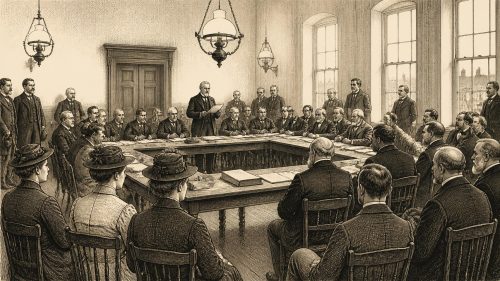
In 1899, Ireland saw institutional, cultural and political developments without resolving its constitutional future. Elections under the Local Government Act replaced grand-jury administration with elected county, rural and urban councils, widening participation though property restrictions remained. The Agriculture and Technical Instruction Act created a department to promote farming, fisheries, industry and education, associated with Horace Plunkett’s cooperative ideas. Dublin’s Irish Literary Theatre inaugurated productions amid controversy, while the Gaelic League’s Oireachtas demonstrated language-revival organisation. The Second Boer War exposed divided loyalties: Irish people served Britain, whereas nationalists supported the Boers. Together, these changes expanded Irish public life, debate and organisation.
Read Article
Archived: 9 October 2026
Abstract
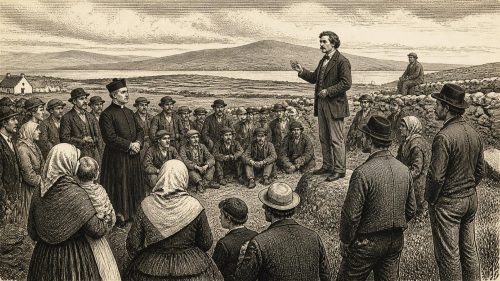
In 1898, Ireland saw agrarian, political and cultural change. William O’Brien founded the United Irish League at Westport, seeking land redistribution and linking western congestion to self-government. The Local Government (Ireland) Act replaced landlord-dominated grand juries with elected councils, although implementation followed in 1899 and franchise limits remained. Centenary commemorations of 1798 elevated Wolfe Tone while exposing competing nationalist, unionist and regional interpretations. Cultural revival advanced through Fáinne an Lae, the Gaelic League’s Oireachtas, Pearse’s Aran visit and Irish literature. Mary Immaculate College, Belfast City Hall and Killybegs carpet manufacture reflected educational, municipal and industrial development. They reshaped public life.
Read Article
Archived: 10 October 2026
Abstract
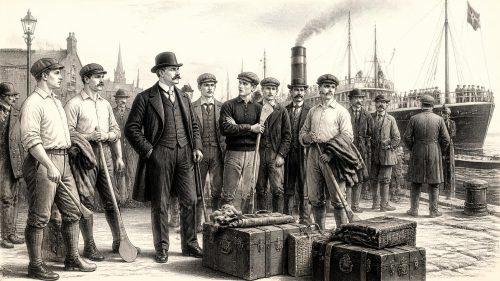
In 1888 Ireland faced coercion, agrarian conflict and scrutiny of constitutional nationalism. The Special Commission investigated allegations against Charles Stewart Parnell and Irish MPs, while the Plan of Campaign provoked prosecutions, evictions and papal condemnation. Local government reform failed, leaving Ireland without elected county councils. Meanwhile, Horace Plunkett promoted co-operation, Christian Brothers College opened in Cork, and W. B. Yeats published Fairy and Folk Tales of the Irish Peasantry. Maurice Davin led Gaelic Athletic Association athletes to America, promoting hurling among emigrants despite financial difficulties. These developments demonstrated continuing struggles over political representation, land, religion, culture and Irish institutional independence.
Read Article

Archived: 15 October 2026
Abstract
In 1642, Ireland’s uprising became organised war amid the Wars of the Three Kingdoms. Catholic leaders united Gaelic and Old English interests around defence of worship, property and liberties, while professing loyalty to Charles I. Synods at Kells and Kilkenny promoted an oath of association. In October, the Kilkenny General Assembly established a Supreme Council, subordinate councils, military administration and taxation, creating a fragile Catholic government. Royalist, Protestant and Scottish forces retained key territories; defeats at Kilrush and Liscarroll checked Catholic arms. Owen Roe O’Neill’s return aided Ulster’s future resistance. War brought displacement, requisitioning and violence to all communities nationwide.
Read Article




