Archived: 26 September 2026
Abstract
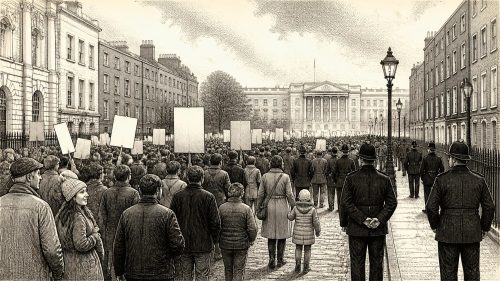
Ireland in 2014 emerged economically from crisis, but austerity and distrust fuelled protests against Irish Water’s meters and household charges. The Government delayed charges, capped bills and legislated safeguards, while electoral losses reflected wider discontent. Severe Atlantic storms caused flooding, coastal damage and power failures. Garda controversies prompted ministerial resignations and reforms including protected-disclosure, human-rights and freedom-of-information measures. Catherine Corless’s Tuam research provoked national reckoning with mother-and-baby institutions. President Higgins’s state visit to Britain affirmed improving relations. In Northern Ireland, the Stormont House Agreement addressed finances, institutions and conflict legacies. The Wild Atlantic Way promoted coastal tourism amid uneven recovery.
Read Article

Archived: 8 October 2026
Abstract
In 1973, Ireland joined the European Economic Community, opening markets, agricultural supports and a less Britain-dependent future, while Irish gained limited Community status. A Fine Gael–Labour coalition replaced Fianna Fáil, and constitutional reforms lowering the voting age and removing denominational preference took effect. Troubles violence affected both jurisdictions and extended to London. Northern Ireland’s border poll, Assembly, constitutional legislation and power-sharing plans sought to replace unionist majority rule, but remained contested. December’s Sunningdale Agreement linked consent, an Executive and a Council of Ireland. Oil-driven inflation complicated European optimism. The year established principles of power-sharing and north-south co-operation amid continuing conflict.
Read Article
Archived: 9 October 2026
Abstract
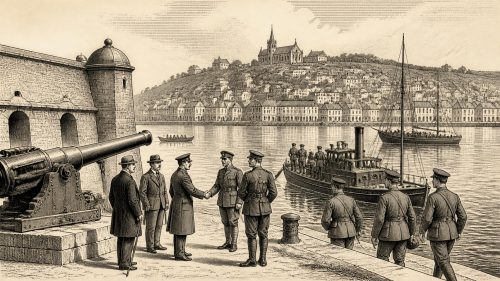
In 1938, the new Constitution acquired practical force as Ireland developed its institutions and position. Douglas Hyde, cultural revivalist and Church of Ireland scholar, became first President, symbolising an inclusive national identity, though disputes persisted. April agreements ended the Economic War: Ireland paid £10 million, Britain removed special duties, and the Treaty Ports at Cork Harbour, Berehaven and Lough Swilly returned to Irish control. Fianna Fáil then won an overall majority. Labour legislation addressed shop workers’ conditions, but poverty, emigration and agricultural dependence continued. Partition remained unchanged despite discussions with Britain and Northern Ireland, while port recovery strengthened future neutrality.
Read Article
Archived: 9 October 2026
Abstract
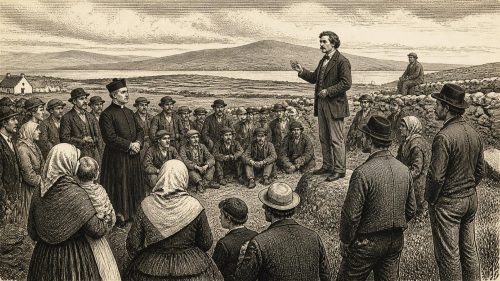
In 1898, Ireland saw agrarian, political and cultural change. William O’Brien founded the United Irish League at Westport, seeking land redistribution and linking western congestion to self-government. The Local Government (Ireland) Act replaced landlord-dominated grand juries with elected councils, although implementation followed in 1899 and franchise limits remained. Centenary commemorations of 1798 elevated Wolfe Tone while exposing competing nationalist, unionist and regional interpretations. Cultural revival advanced through Fáinne an Lae, the Gaelic League’s Oireachtas, Pearse’s Aran visit and Irish literature. Mary Immaculate College, Belfast City Hall and Killybegs carpet manufacture reflected educational, municipal and industrial development. They reshaped public life.
Read Article
Archived: 10 October 2026
Abstract
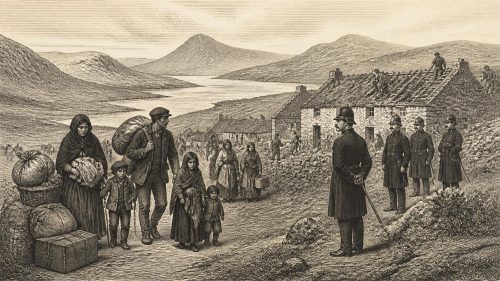
In 1861, Ireland faced continuing post-Famine decline, emigration and unequal development. The Derryveagh evictions in Donegal saw John George Adair remove 244 people from forty-seven families, with police enforcing lawful writs and homes destroyed. Parliamentary debate exposed tenants’ lack of security, while poor-law authorities assisted displaced families. Census enumeration recorded 5,798,967 inhabitants, reflecting sustained demographic loss, although household returns were later destroyed. Land-improvement legislation promised rural progress amid continuing insecurity. Queen Victoria reviewed troops at the Curragh, while Dublin’s Mater Misericordiae Hospital opened. Belfast’s linen industry expanded, Sheridan Le Fanu began a novel serial, and Irish scholar John O’Donovan died.
Read Article
Archived: 11 October 2026
Abstract
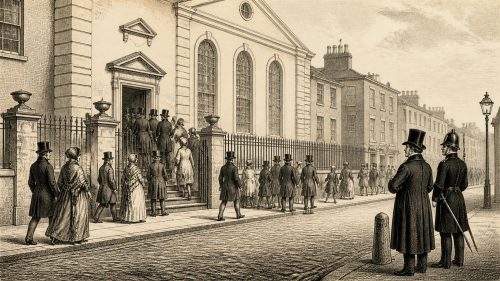
In 1811, Irish politics centred on Catholic emancipation and the legality of organised petitioning. Edward Hay’s plan for county-appointed petition managers prompted Chief Secretary Wellesley-Pole’s circular, invoking the Convention Act to restrain the Dublin Catholic Committee. The ensuing controversy exposed tensions between constitutional petitioning, representative organisation and Dublin Castle’s authority after the Union. Henry Grattan presented a Catholic petition at Westminster, but emancipation failed; nevertheless, Catholic activists developed safer organisational methods, influencing Daniel O’Connell’s later strategy. The year also saw the foundation of the Kildare Place Society, cultural works by Owenson and Knowles, and HMS Saldanha’s wreck at Lough Swilly.
Read Article
Archived: 14 October 2026
Abstract
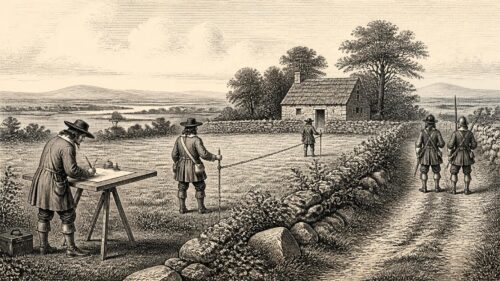
In 1658, completion of Sir William Petty’s Down Survey gave the Commonwealth its first national-scale detailed mapping of Ireland, enabling confiscated land to be valued and allocated to Adventurers and soldiers. Though not covering Connacht or resolving competing claims, it strengthened Protestant ownership and made Catholic dispossession more enforceable. Henry Cromwell governed from Dublin, balancing courts, revenue, army discipline and an unstable land settlement. Oliver Cromwell’s death on 3 September brought Richard’s succession and Henry’s promotion to lord lieutenant. Religious policy privileged Protestants but constrained dissent and excluded Catholics. Beneath order, military power, land claims and constitutional legitimacy remained precarious.
Read Article
Archived: 14 October 2026
Abstract
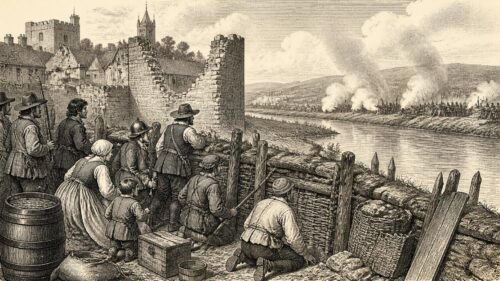
In 1650, the Cromwellian conquest advanced despite continuing resistance in Connacht, Limerick and Ulster. Cromwell’s agreement with Protestant royalists weakened Ormond’s Catholic–royalist coalition. At Clonmel, Hugh Dubh O’Neill’s improvised inner defence repelled a costly assault, although shortages enabled the garrison’s escape and the town’s surrender. Broghill defeated a relief force at Macroom, while Scarrifholis destroyed the Ulster Catholic army and led to Heber MacMahon’s execution. After Cromwell departed, Henry Ireton captured plague-stricken Waterford and Duncannon, pressured Athlone and failed before Limerick. Clergy repudiated Ormond; garrisons, blockade, disease and resource seizures established groundwork for further conquest and settlement in Ireland thereafter.
Read Article
Archived: 16 October 2026
Abstract
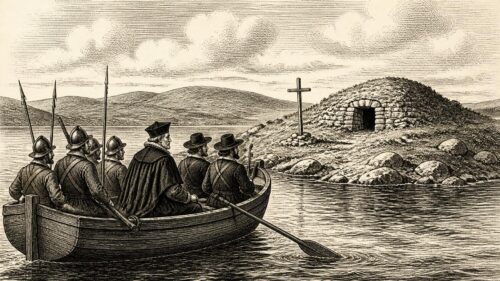
In 1632, Ireland experienced mounting political, fiscal and religious strain under Lords Justices Adam Loftus and Richard Boyle, while Charles I appointed Thomas Wentworth as future lord deputy. Government need for army revenue prompted Boyle’s proposed recusancy fines, but Loftus and Wentworth favoured negotiation, preserving fragile Catholic expectations surrounding the Graces. In October, Bishop James Spottiswood destroyed St Patrick’s Purgatory cave at Lough Derg, forcefully suppressing a major Catholic pilgrimage. Meanwhile Catholic synodical discipline, Ussher’s historical scholarship, plantations and planned towns reflected competing religious and colonial visions. The year exposed an uneasy peace, foreshadowing Wentworth’s more rigorous administration in Ireland.
Read Article

Archived: 16 October 2026
Abstract
In 1630, Ireland experienced contested government, religion and cultural memory rather than a single decisive event. Lords Justices Adam Loftus and Richard Boyle governed after Falkland’s departure, amid rivalries, plantation ambitions and uncertainty over Catholic concessions. Authorities suppressed visible Catholic houses in Dublin, although household networks sustained recusant worship. Malachy Ó Queely’s appointment as Tuam archbishop demonstrated continuing Catholic organisation. On 19 April, Franciscan scholar Mícheál Ó Cléirigh completed the Martyrology of Donegal, preserving Irish sacred learning and helping establish collaboration later associated with the Four Masters. Cork’s tomb commission highlighted elite Protestant power, Catholic insecurity, and uneven state authority.
Read Article
Archived: 17 October 2026
Abstract
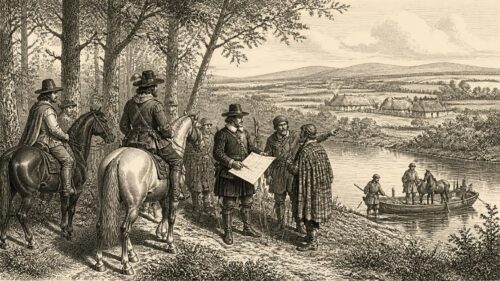
In 1608, Sir Cahir O’Doherty, formerly a Crown ally and lord of Inishowen, rebelled amid disputes over land, authority and Governor George Paulet’s conduct. His followers seized Culmore Fort, stormed, plundered and burned Derry, killing Paulet, but failed to create a wider Ulster coalition. Crown forces suppressed the rising after O’Doherty’s death near Kilmacrennan in July, followed by reprisals and executions. The revolt intensified official distrust of Gaelic landholders and expanded forfeitures. Surveys of six Ulster counties documented lands and resources for redistribution, while planning for plantation advanced. Deaths among exiled Gaelic leaders further weakened resistance, leaving Crown power strengthened.
Read Article
Archived: 17 October 2026
Abstract
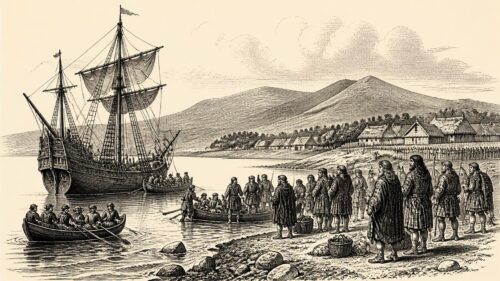
In September 1607, Hugh O’Neill, Ruaidhrí O’Donnell and Cúchonnacht Maguire left Rathmullan with families, followers and clerics, beginning the Flight of the Earls. Their departure reflected insecurity after the Nine Years’ War, as crown law, land investigations and rival Irish claimants undermined Gaelic lordship. Tadhg Ó Cianáin recorded the hazardous voyage: ninety-nine passengers sailed on a French ship, endured storms and shortages, and reached Normandy after twenty-one days. Continental Catholic communities welcomed them, but offered no assured military restoration. Their flight created an opening for stronger crown control in Ulster, preceding, rather than initiating, the later official Plantation of Ulster.
Read Article
Archived: 17 October 2026
Abstract
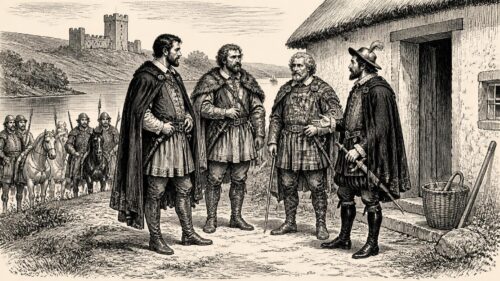
In 1596, attempts to settle the Ulster conflict through pardons and limited autonomy failed as Hugh O’Neill and Hugh Roe O’Donnell linked territorial claims with Catholic liberty. Spanish envoy Alonso de Cobos met them at Lifford, prompting an appeal to Philip II for troops and a Habsburg ruler, and tying Irish resistance to European war. In Connacht, Norreys’s large expedition stalled beside the River Robe when provisions ran out, revealing the importance of supply and alliances. Succession disputes, raids, coercive administration and religious tensions widened disorder across Ireland. Changes in Connacht’s government and continued local rivalries failed to restore stability.
Read Article

Archived: 17 October 2026
Abstract
In 1587, Hugh Roe O’Donnell, heir to Tír Chonaill, was lured aboard a trading vessel at Rathmullan and imprisoned in Dublin Castle, giving the Tudor government a valuable hostage amid Ulster’s unstable rivalries. Elsewhere, parliament confirmed the Desmond attainder, enabling redistribution and plantation of Munster lands, though implementation remained uneven. In Connacht, the composition system replaced traditional exactions with fixed revenues, provoking resistance and controversy over Sir Richard Bingham’s harsh rule. Wet weather and poor corn heightened rural insecurity. These measures extended Crown authority through captivity, law, land and revenue, but deepened grievances, exposed weak enforcement, and shaped later conflict.
Read Article
Archived: 17 October 2026
Abstract
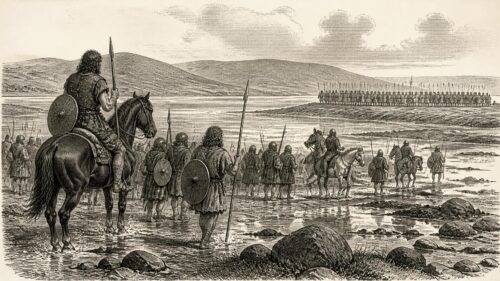
In 1567 Shane O’Neill’s Ulster overlordship collapsed after defeat by the O’Donnells at Farsetmore, where tidal conditions magnified his army’s losses. Seeking support from the MacDonnells, whom he had previously oppressed, Shane was killed during negotiations at Cushendun. His fall liberated rival lordships but did not secure English control: Turlough Luineach O’Neill faced disputed succession, while O’Donnell and MacDonnell power revived. Sir Henry Sidney’s government pursued influence through alliances, garrisons, progresses and infrastructure, yet exposed its limited reach. In Munster, Desmond’s arrest altered regional politics. Administrative and church appointments in Dublin reflected continuing Tudor reform amid uneven authority and instability.
Read Article
Archived: 17 October 2026
Abstract
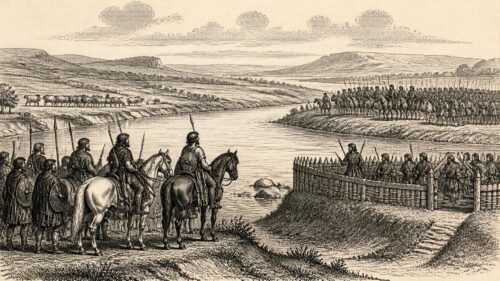
In 1564, Ireland experienced interconnected struggles over lordship, succession, tribute and fortified places rather than a unified war. Shane O’Neill, strengthened by Crown recognition but constrained by unresolved negotiations and Dublin’s weakness, raided Tír Chonaill, exploited O’Donnell divisions at Donegal, supported Hugh Boy O’Rourke in Breifne, and fought the MacDonnells near the Bann. His setback and ensuing truce demonstrated limits to his power; decisive MacDonnell defeats came later. In Thomond, rival O’Briens, mercenaries and raids devastated communities, cattle and church resources. Religious institutions remained politically important, while William Bathe’s birth reflected Dublin society. The year intensified conflicts without resolving them.
Read Article

Archived: 18 October 2026
Abstract
In 1555 An Calbhach Ó Domhnaill, aided by Archibald Campbell’s Scottish troops and artillery, overthrew and imprisoned his father Manus, lord of Tír Chonaill, initiating prolonged conflict and devastation in Donegal. The coup demonstrated Gaelic rulers’ reliance on maritime alliances, mercenaries, castles and gunpowder. Elsewhere, Hugh Ó Néill of Upper Clandeboye was killed by Scottish gunfire, amid enduring MacDonnell expansion in Ulster. Dublin’s authority remained limited, while annalistic dating of official campaigns requires caution. Marian restoration included papal recognition of Philip and Mary and St Patrick’s cathedral’s revival. Notices from Thomond and Youghal reveal negotiated regional politics and overseas links.
Read Article
Archived: 18 October 2026
Abstract
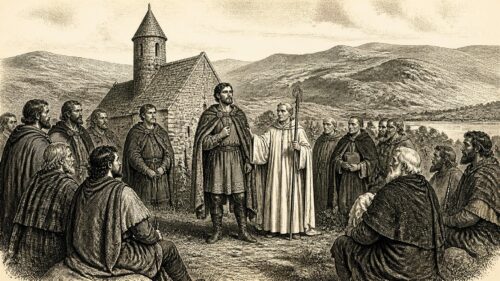
In 1537, Henry VIII’s government intensified its authority in Ireland, executing Silken Thomas FitzGerald and five uncles, investigating Lord Deputy Leonard Grey, and enacting Reformation statutes asserting royal supremacy, restricting Rome and enabling religious suppression. Their impact remained uneven beyond government-controlled districts. Grey’s expedition demolished Daingean castle in Offaly, yet O’Conor Faly recovered power. In Tír Chonaill, Aodh Dubh O’Donnell died and Manus O’Donnell was inaugurated at Kilmacrennan, though rivalry persisted; Manus subsequently campaigned in Lower Connacht. Conflict also disrupted Clandeboye and Fermanagh, where Cuconnacht Maguire was killed. Deaths, warfare and legislation reshaped lordships, but Gaelic structures proved resilient locally.
Read Article
Archived: 18 October 2026
Abstract
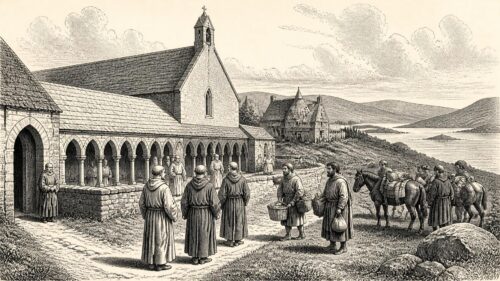
In 1530, Ireland remained divided among the Pale, Anglo-Irish magnates and Gaelic lordships. Gerald FitzGerald, ninth Earl of Kildare, returned from England alongside the new deputy, Sir William Skeffington, whose government relied uneasily on Kildare’s influence. Their forces compelled midland submissions from the O’Mores and O’Connors. Aodh Dubh O’Donnell raided Connacht and Breifne, extracting tribute, burning settlements and making temporary peace. Donegal hosted a Franciscan chapter lavishly supported by O’Donnell patronage. Annals also record deaths, dynastic killings and hospitality, illustrating authority founded on armed followings, negotiated settlements, religious patronage and household generosity rather than stable national rule throughout the island.
Read Article
Archived: 18 October 2026
Abstract
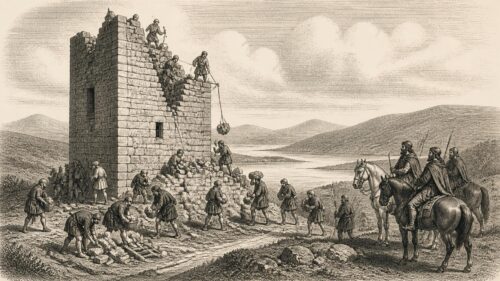
In 1529, local violence, succession and cautious royal intervention shaped Ireland. In Tír Chonaill, Manus Ó Domhnaill captured and demolished Castleforward after a Scottish MacDubhghaill was killed there, weakening a rival power centre amid family conflict. Annals recorded killings and feuds across Ulster, involving lords, clergy and ruling kindreds. James fitz Maurice FitzGerald, earl of Desmond, died without a legitimate son, succeeded by his elderly uncle Thomas, whose alliances helped secure Munster interests. Sir William Skeffington negotiated peace between Desmond and Ossory while assessing royal authority. Learned jurists and poets also died, demonstrating the continuing importance of Gaelic professional culture.
Read Article
Archived: 18 October 2026
Abstract
In 1528 Richard Nugent, Lord Delvin, vice-deputy during Kildare’s detention in England, was captured by Brian Ó Conchobhair Fáilghe after challenging the black rent paid by Meath communities. His imprisonment until February 1529 exposed Dublin government’s military weakness and dependence on magnates. Kildare’s continuing rivalry with Piers Butler, later earl of Ossory and deputy, deepened instability, while John Alen became chancellor after Hugh Inge’s death. Across Ireland, successions in Thomond, Bréifne and Moylurg, Uí Néill violence, Scottish-linked campaigning, learned and religious patronage, charitable hospitality, and a destructive pre-Christmas storm demonstrated resilient regional political, cultural and economic life beyond the Pale.
Read Article
Archived: 18 October 2026
Abstract
In 1527, Ireland remained divided among the Dublin administration, Anglo-Irish magnates and Gaelic lordships. Gerald FitzGerald, earl of Kildare, and James Butler travelled to England amid rivalry, while fighting continued between Desmond and Butler interests in Munster. Manus O’Donnell completed Lifford Castle during war with Con Bacach O’Neill, strengthening a contested Ulster frontier. O’Donnell’s coalition ravaged Moylurg and captured several castles; Castlereagh later surrendered after a prolonged siege and famine. Successions in Fermanagh and Tirerrill demonstrated contested lordship. Annals also commemorated scholars, physicians, charitable women and Edmund Butler’s consecration as archbishop of Cashel, revealing cultural and ecclesiastical institutions amid warfare.
Read Article
Archived: 19 October 2026
Abstract
In 1512, Irish power rested on military mobility, castles, hostages, revenue and patronage amid overlapping crown, Gaelic and ecclesiastical jurisdictions. Returning from pilgrimage, Aodh Dubh O’Donnell raised hired troops, defeated Edmund Burke’s forces, destroyed Esker castle, secured hostages, and compelled Art O’Neill to terms before rebuilding Omagh castle, asserting authority in Tyrone. Meanwhile, Gerald FitzGerald, earl of Kildare and justiciar, campaigned through Connacht and Ulster, capturing and demolishing strongholds including Belfast. Annals also record church patronage, learned households, deaths and Dublin appointments, demonstrating that warfare, negotiation, religion and administration jointly reshaped Ireland’s unsettled political landscape during this exceptionally documented year.
Read Article
Archived: 19 October 2026
Abstract
In 1505, Aodh Ruadh Ó Domhnaill died at Donegal after forty-four years as lord of Tír Chonaill and was buried in its Franciscan friary. His son, Aodh Dubh, secured succession through a campaign in Tír Eógain, taking Castlederg, before inauguration at Kilmacrenan. Feuds killed military and local leaders, while drowning claimed travellers on Finn Lough. Persistent rain ruined crops, particularly in Fermanagh, and plague affected Anglo-Irish nobles. Churchmen experienced both institutional continuity and violence. Meanwhile, Gerald FitzGerald received the Garter and Piers Butler became seneschal of Tipperary, illustrating Ireland’s plural, alliance-based political order during a year of contested regional authority.
Read Article
Archived: 19 October 2026
Abstract
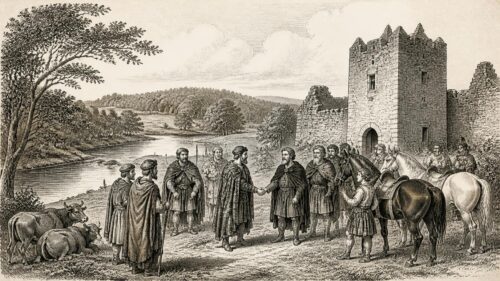
In 1480, Irish annals recorded interconnected conflicts, settlements and deaths across Ulster, Fermanagh and Connacht. Gerald FitzGerald, Earl of Kildare, joined Conn O’Neill’s unsuccessful siege of a rival O’Neill castle, demonstrating both Dublin’s reach and its limits. Raids between Tír Eógain and Tír Chonaill caused burnings, cattle losses and casualties, while O’Donnell dynastic rivalries continued. At Castlefinn, O’Donnell, Conn O’Neill and Neachtan O’Donnell’s sons negotiated peace and appointed Eigneachán O’Donnell tanist. Obituaries for Tomás Óg Maguire, Cathal Óg Mac Maghnusa, poets and teachers emphasised hospitality, religious patronage and learning. Local feuds also involved MacMahons, Maguires, O’Rourkes and de Burgh factions.
Read Article
Archived: 19 October 2026
Abstract
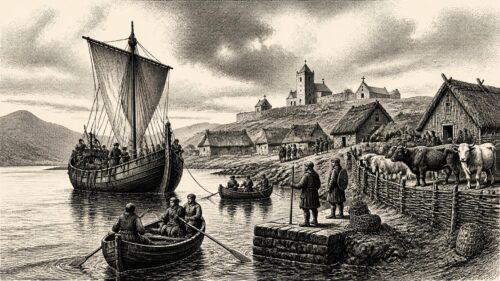
In 1478 Ireland experienced severe disruption from weather, disease and conflict. Annals describe a destructive Epiphany storm that damaged livestock, buildings, churches and Dublin windows, while Cormac MacCarthy was blinded during dynastic strife. A plague reportedly arrived by ship at Assaroe, spreading through north-western Ireland and causing deaths among nobles, clergy and learned families. Thomas FitzGerald’s death brought Gerald, later Gearóid Mór, to the Kildare earldom. In Connacht, contests for Sligo, Moylurg, Roscommon and Machaire Connacht involved sieges, devastation and changing lordships; Annaly saw partition after peace. Together, uneven records depict connected communities vulnerable to maritime disease, warfare and disaster.
Read Article
Archived: 19 October 2026
Abstract
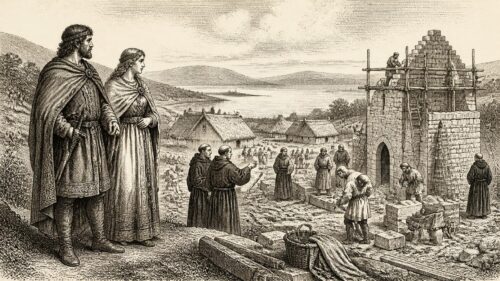
In 1474, Aodh Ruadh Ó Domhnaill and his wife Finola Ó Briain began Donegal’s Franciscan friary, intended as a dynastic mausoleum and declaration of Ó Domhnaill power. Its dating remains uncertain within 1472–74, but annals associate its foundation with 1474. Elsewhere, Ireland remained politically fragmented: Ó Domhnaill fought Ó Neill and Clann Aodha Buidhe; succession, raiding and castle destruction destabilised the midlands; and failed negotiations produced warfare in Connacht and Thomond. Dublin officials feared Scottish intervention. Deaths of bishops and hereditary scholars underline religion’s cultural role. The friary endured as a religious institution amid violence, dynastic competition and weak authority.
Read Article
Archived: 20 October 2026
Abstract
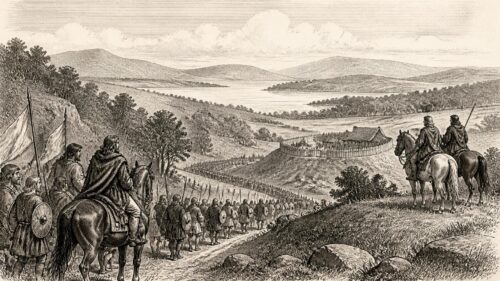
In 1456 Enrí Ó Néill consolidated power in northern Ireland after the death of his father, Eóghan, whom he had displaced as ruler of Tír Eóghain in 1455. Allied with Tomás Óg Mag Uidhir, he invaded Inis Eógain, where Domhnall Ó Domhnaill of Tír Conaill was killed on 28 May and opponents captured. Ó Néill installed Toirdelbach Cairbreach Ó Domhnaill, securing acknowledged superiority rather than annexation. Obituaries from Connacht recorded the deaths of Moylurg’s tanist Fergal Mac Diarmata, his daughter Lasarfina, and John Burke. At Lisgabhail, deaths among teachers and fosterage networks reveal ecclesiastical communities, learning, kinship and women’s roles.
Read Article
Archived: 20 October 2026
Abstract
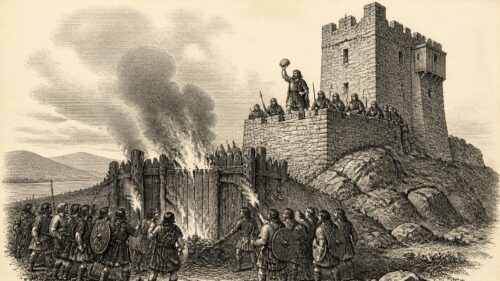
In 1454, Ireland’s fragmented political order was illustrated by conflict, succession and cultural exchange. At Inis Castle in Tír Chonaill, Domhnall O’Donnell killed rival Ruaidhrí O’Donnell with a stone during a siege, securing the lordship temporarily. Annals also record deaths and kin violence among the O’Reillys, Maguires and O’Molloys, alongside contested local successions and cattle raids. Sir Edward FitzEustace’s death led to Thomas fitz Maurice FitzGerald’s election as justiciar in Dublin. Notices commemorate elite women and a notable Fermanagh sermon. Meanwhile, Edmund MacRichard Butler’s manuscript, copied by Gaelic scribes during campaigning, vividly demonstrates interconnected Anglo-Irish patronage, learning, warfare and mobility.
Read Article
Archived: 20 October 2026
Abstract
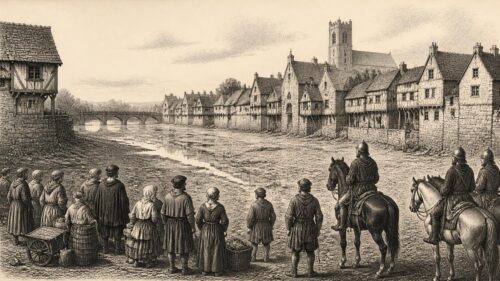
In 1452, Ireland was governed through competing lordships, kinship, warfare and negotiation. Neachtan Ó Domhnaill’s assassination by nephews destabilised Tír Chonaill, enabling Énrí Ó Néill to broker a settlement while gaining territory and tribute. Marriage alliances drew James Butler, fourth earl of Ormond, north to compel Énrí’s reconciliation with his first wife. Fighting in the Fews ended with compensation and peace. Ormond’s rapid circuit across the midlands and north-east secured submissions, payments and prisoners, but he died at Ardee in August. His death weakened settlements. Annals also noted the Liffey’s recession, raids on Teagh-Munna, plague, and deaths among learned families.
Read Article




