

The Derryvree Drumlin Archive
Around 31,891 BCE, Ireland experienced fluctuating Late Pleistocene cold during Marine Isotope Stage 3, not the later glacial maximum. Derryvree, County Fermanagh, preserves freshwater silts dated broadly to this period, revealing treeless, wet, tundra-like ground between glacial advances. Expanding upland ice, permafrost, seasonal thaw and altered drainage shaped a changing landscape, while lower sea levels modified coasts and possible migration routes. Cave remains show mammoths, reindeer, hyaenas and other mammals occupied Ireland during the wider period. Possible cut marks on a Castlepook reindeer bone may indicate early human visits, but no secure evidence demonstrates settlement, communities, institutions or sustained occupation.
View Record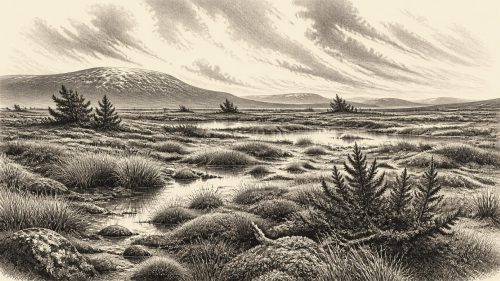
Maguirebridge Between the Tills
Labelled 31,892 BCE, this period cannot be dated to a single Irish calendar year, but falls within Marine Isotope Stage 3. At Derryvree, County Fermanagh, freshwater sediments between glacial tills indicate locally ice-free, treeless tundra, with wetlands, grasses, sedges, herbs, juniper, mosses and severe seasonal conditions. Castlepook Cave, County Cork, preserves mixed evidence of mammoth, reindeer, giant deer and predators, demonstrating intermittent cold-adapted fauna. Possible stone-tool cuts on a dated reindeer bone may suggest brief human visits, but do not prove settlement. Later ice-sheet expansion reshaped or destroyed evidence, leaving a dynamic, sparsely documented glacial Ireland at its western edge.
View Record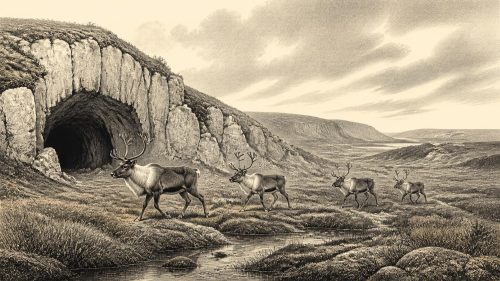
The Doneraile Femur
Castlepook Cave near Doneraile, County Cork, contains a reindeer femur whose deep mark may represent Ireland’s earliest evidence of human activity, perhaps from stone-tool butchery around 33,800 years ago. The date is a broad Late Pleistocene MIS 3 estimate, not a precise annual event, and bone dating records animal death rather than human handling. Excavated deposits were disturbed and include scavenger-accumulated fauna, limiting conclusions. Mammoth, reindeer, giant deer and carnivores indicate cold, open, intermittently habitable landscapes and changing access routes. The find suggests possible brief forager presence, but proves neither settlement, culture, identity nor permanent occupation in Ice Age Ireland.
View Record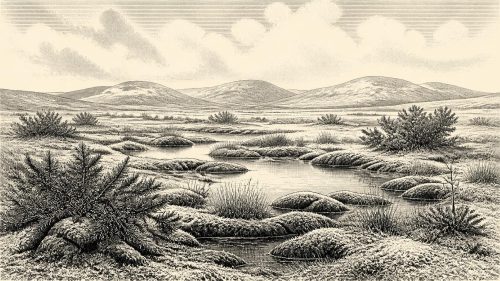
Derryvree’s Treeless Marsh
Around 31,894 BCE, Ireland lay within the unstable Late Pleistocene environment of Marine Isotope Stage 3. Derryvree, County Fermanagh, preserves a marshy, treeless tundra deposit between older and later glacier tills, indicating a temporary ice-free interval. Mosses, grasses, sedges, juniper, herbs and insects supported productive wetland ecosystems despite severe cold and seasonal freezing. Elsewhere, cave remains show that mammoths, giant deer, reindeer, bears, hyaenas and other mammals occupied Ireland during the broader period, though not necessarily simultaneously. Ice-sheet extent, coastlines and migration routes remain uncertain. No secure evidence demonstrates human settlement; possible butchery marks suggest only a tentative, brief visit.
View Record
Derryvree’s Arctic Lake
At the notional date of 31,895 BCE, Ireland lay within the climatically unstable Marine Isotope Stage 3, before maximum glaciation. Its ice sheet, coastlines and habitats changed markedly across Ireland, precluding a precise national reconstruction. Buried lake sediments at Derryvree, Fermanagh, dated broadly to 36,900–31,700 years before present, demonstrate freshwater and sparse tundra-steppe life during an ice-free interval. Castlepook Cave, Cork, preserves MIS 3 fauna including reindeer, mammoth and predators, though not necessarily contemporaneous. No secure human settlement exists. A possibly tool-marked reindeer bone suggests provisional human activity. Radiocarbon calibration, stratigraphy and environmental proxies provide evidence, but retain substantial uncertainty.
View Record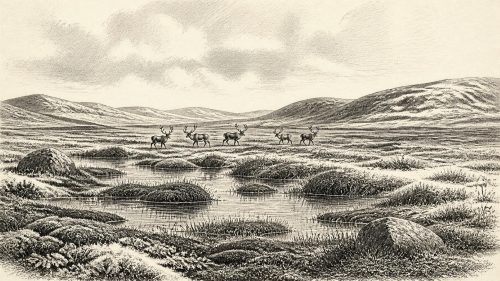
Maguirebridge’s Tundra Lake
About 31,896 BCE, a modern label, Ireland lay in later Marine Isotope Stage 3, before the Last Glacial Maximum. Derryvree near Maguiresbridge preserves sediments beneath glacial tills, indicating ice-free northern ground with treeless tundra, wetlands, pools and cold-adapted plants and insects. Cave evidence from Cork records MIS 3 fauna including mammoth, reindeer, giant deer, bears and hyaenas, though remains span episodes and disturbed contexts. Kerry speleothems indicate milder conditions. Ice expansion was regionally varied and intensified later. No secure human settlement dates to this period; possible butchery evidence remains uncertain. Surviving sediments, bones and calcite reveal a diverse Ice-Age landscape.
View Record
Doneraile’s Faunal Corridor
Around 31,897 BCE, a modern label corresponding approximately to 33,800 calibrated years before present, Ireland lay within the variable later Pleistocene, before the Last Glacial Maximum. Castlepook Cave near Doneraile, County Cork, preserves Ireland’s richest long-term faunal archive, containing mammoth, giant deer, reindeer, bears, hyaenas and other animals. These remains show intermittent habitats for substantial mammals, but cave processes and early excavation complicate interpretation. A possibly cut-marked reindeer bone may indicate very early human activity, yet remains unconfirmed. No secure contemporary settlements, tools, hearths or human remains exist. Ice reshaped landscapes, leaving cave deposits as fragmentary records of environmental change.
View Record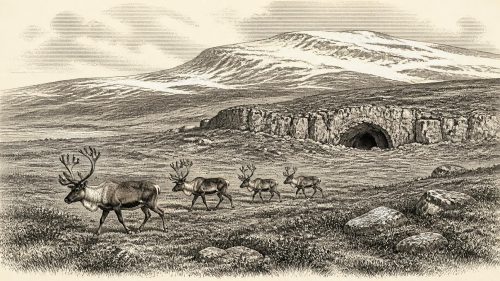
Castlepook’s Reindeer Passage
Circa 31,898 BCE, Ireland lay within the climatically unstable later Marine Isotope Stage 3, not a precisely datable historical year. Castlepook Cave in County Cork preserves the island’s richest faunal archive from this period, including mammoth, reindeer, giant deer, hyaena, wolf and Arctic fox, indicating changing cold, largely open environments. A reindeer bone bearing a possible stone-cut mark may record brief Palaeolithic butchery, but disturbed deposits and absent tools or occupation layers preclude claims of settlement. Altered coastlines may have enabled visitors’ arrival. Approaching glaciation later erased much evidence, making Castlepook’s fragmentary record vital yet necessarily cautious for Irish prehistory.
View Record
Fermanagh’s Mossy Pools
Around 31,899 BCE, Ireland lay within the cold, unstable Marine Isotope Stage 3, before the Last Glacial Maximum. Lower sea levels and shifting ice margins altered connections with Britain and Europe, without proving a continuous land route. Derryvree, County Fermanagh, preserves sediments showing an ice-free interlude of treeless wetlands, mosses, pools, grasses, insects and severe seasonal conditions. Castlepook Cave records diverse cold-stage fauna, including mammoth, reindeer, giant deer, wolves and hyaenas, though species did not necessarily coexist. A possibly tool-marked reindeer bone suggests early human activity, but requires testing. No settled communities, economy or social history can be securely reconstructed.
View Record
Maguirebridge’s Moss-Rich Silt
Around 31,900 BCE, Ireland’s history is reconstructed from environmental rather than written evidence. Freshwater silts at Derryvree, County Fermanagh, dated broadly to 36,900–31,700 calibrated years BP, preserve a cold, treeless wetland of grasses, sedges, herbs and mosses between glacial deposits. Greenagho confirms earlier ice-free intervals, while ice-sheet growth and retreat made conditions regionally variable. Castlepook Cave, County Cork, contains cold-stage fauna, though deposits span periods and dating remains uncertain. A cut-marked reindeer bone may indicate early human visits, but no secure evidence demonstrates permanent settlement. Glaciers later destroyed or buried evidence, leaving fragmentary records of Ireland’s changing Ice Age landscape.
View Record