Archived: 3 November 2026
Abstract
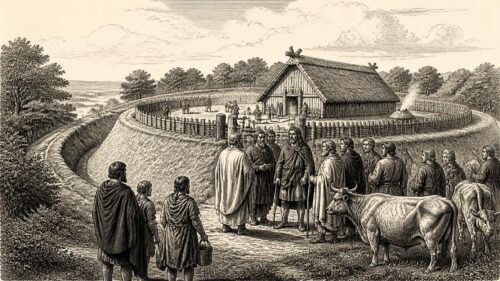
In 647 CE, Máel Cobo son of Fiachnae, overking of Ulaid, was killed by his nephew Congal Cennfhota son of Dúnchad. The notice is brief, but it preserves a decisive act of dynastic violence in north-east Ireland. Máel Cobo belonged to Dál Fiatach, one of the competing royal kindreds of Ulaid; Congal belonged to the same dynasty and was the son of Máel Cobo’s brother Dúnchad. This was not an invasion or a clash between distant peoples. It was a killing within the ruling family, at a point when possession of the overkingship of Ulaid could turn on the survival,
Read Article
Archived: 3 November 2026
Abstract
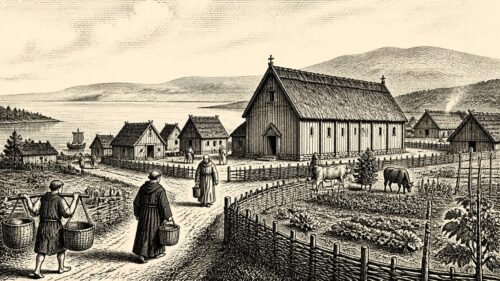
In 646, the Annals of Ulster record the killing of Scannal son of Béc, styled king of the Cruithin, and the death of Mac Laisre, abbot of Bangor. Scannal’s violent death reflects continuing political competition in north-east Ulaid after the battle of Mag Roth, though the annals name neither his killer nor location. Mac Laisre’s obituary marks a leadership change at Bangor, an important monastery beside Belfast Lough with wider Irish Sea connections. Sparse sources reveal little else about the year, but these notices illuminate the coexistence of vulnerable secular rulership and enduring ecclesiastical institutions within a predominantly rural society.
Read Article
Archived: 3 November 2026
Abstract
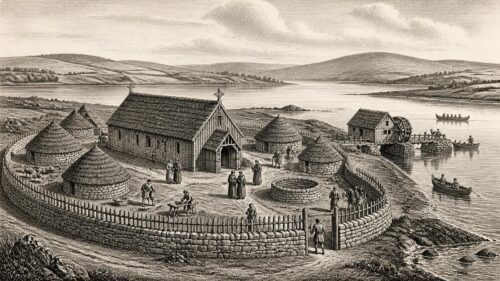
In 644 CE, Ireland’s surviving annalistic tradition presents a compact but revealing cluster of deaths, warfare and disputed royal authority. Yet the date must be handled with care. The notices now grouped under 644 were copied into chronicles centuries after the events, and the parallel annals do not always place them in the same numbered year. What can responsibly be said is that, around this calendar year, the political order was unsettled after the death of Domnall mac Áedo, a major northern Uí Néill ruler, while Leinster, Osraige, Munster and the north-east each appear in the record through named people
Read Article
Archived: 3 November 2026
Abstract
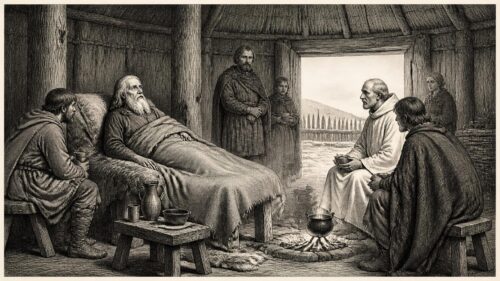
In 642 CE, the most consequential Irish event securely attached to the year was the death, at the end of January, of Domnall mac Áedo. The Annals of Ulster calls him rex Hiberniae, ‘king of Ireland’, an unusually emphatic title in an island divided among many kingships. Its notice is brief, yet its language makes Domnall’s death a landmark: a powerful overking had gone, and the political arrangements he had sustained were left to be tested. The same annal also records the killing of Ailill son of Colmán, king of Cenél Loegaire, a Uí Néill people of Brega. Thus the
Read Article
Archived: 4 November 2026
Abstract
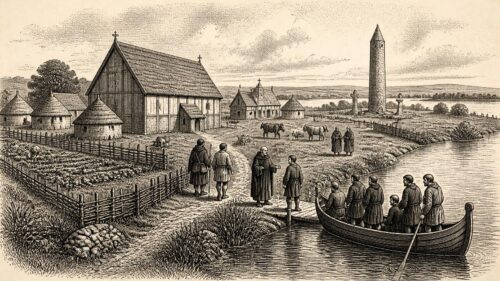
In 640 CE, the clearest securely reconstructed Irish annalistic notices are not of a decisive battle within Ireland or a change of high kingship, but of deaths in the ecclesiastical world. Crónán moccu Loégde, abbot of Clonmacnoise, died, and the annals also record the death of Mochua of Balla in Connacht. These brief notices are valuable precisely because they reveal what early medieval record-keepers considered worth preserving: the passing of men who led important religious communities. They also place Ireland in a year of wider Gaelic political tension, for a battle and siege involving the following of Domnall Brecc of
Read Article
Archived: 4 November 2026
Abstract
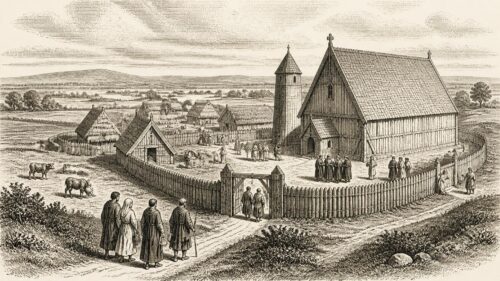
In 639 CE, the most significant Irish development that can be placed with reasonable confidence in this calendar year was the death of Áed Dub, bishop and abbot of Kildare. His obituary is brief, but it illuminates a great deal: in seventh-century Leinster, an important church could be led by a member of a ruling dynasty, and religious office could be an instrument of regional authority as well as pastoral care. The year’s surviving notices also record deaths at Nendrum and Leighlin, the killing of a man named Congal son of Dúnchad, the death of Ailill son of Áed Rón,
Read Article
Archived: 4 November 2026
Abstract
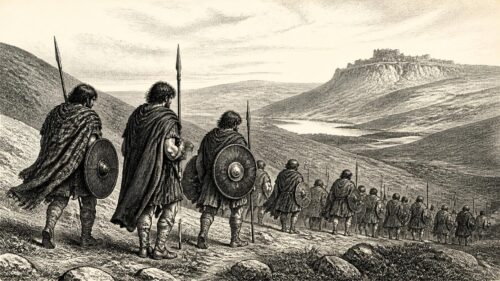
In 638 CE, the clearest event linked to Irish history was not fought on the island of Ireland itself, but in the Irish Sea world to which north-east Ireland belonged. Chronicon Scotorum records a battle at Glenn Muiresan in which the followers of Domnall Brec were put to flight, followed by the besieging of Eten. Domnall Brec was king of the Cenél nGabráin, the leading kindred of Dál Riata: a Gaelic sea-kingdom whose territories and connections extended between Argyll and the coast of Antrim. The annal therefore preserves a hard, if brief, sign that the political shocks of the late
Read Article





