Archived: 9 October 2026
Abstract
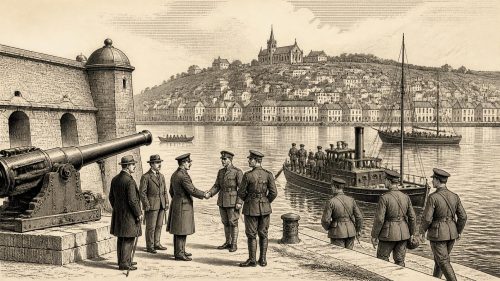
In 1938, the new Constitution acquired practical force as Ireland developed its institutions and position. Douglas Hyde, cultural revivalist and Church of Ireland scholar, became first President, symbolising an inclusive national identity, though disputes persisted. April agreements ended the Economic War: Ireland paid £10 million, Britain removed special duties, and the Treaty Ports at Cork Harbour, Berehaven and Lough Swilly returned to Irish control. Fianna Fáil then won an overall majority. Labour legislation addressed shop workers’ conditions, but poverty, emigration and agricultural dependence continued. Partition remained unchanged despite discussions with Britain and Northern Ireland, while port recovery strengthened future neutrality.
Read Article

Archived: 9 October 2026
Abstract
In 1936, the Irish Free State accelerated constitutional change under de Valera. Abolition of the Seanad created a unicameral Oireachtas, while Edward VIII’s abdication enabled removal of the Crown and governor-general from domestic government, retaining limited royal functions abroad. Economic War pressures, despite a coal-cattle agreement, sustained hardship and arguments over protectionism, while the census documented social conditions. The Spanish Civil War polarised opinion, although government maintained non-intervention. Catholic confidence appeared in Mullingar’s new cathedral; Peig and Ireland To-day reflected cultural life. Aer Lingus’s Iolar inaugurated Bristol flights. Partition endured, but 1936 anticipated the 1937 constitution and its future direction.
Read Article
Archived: 9 October 2026
Abstract
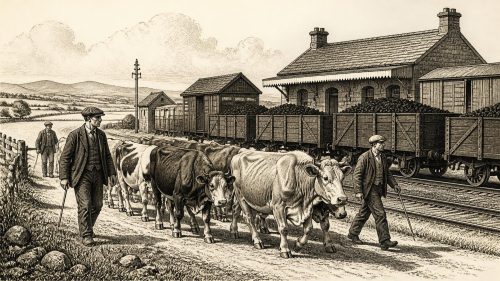
In 1935, the Irish Free State pursued autonomy amid economic hardship and the continuing Anglo-Irish Economic War. The Coal–Cattle Pact expanded cattle exports to Britain in return for coal purchases, easing but not resolving agricultural distress. Citizenship legislation and constitutional planning strengthened state identity, while laws regulating dance halls, contraception, labour and agricultural production extended official control. Interventionist measures addressed bacon, dairy, transport and employment, yet emigration and insecurity persisted. Belfast’s July sectarian riots, causing ten deaths, revealed partition’s instability; Carson’s funeral affirmed unionism. At Geneva, de Valera supported League collective security during Italy’s Abyssinia crisis, demonstrating Ireland’s international ambitions.
Read Article

Archived: 9 October 2026
Abstract
During 1934, de Valera’s Free State confronted Blueshirt militancy by restricting political uniforms, while seeking unsuccessfully to abolish the Seanad. The Economic War strained rural Ireland, contributing to violence at Cork’s Copley Street cattle sale, though December’s cattle-and-coal agreement provided limited relief without ending the dispute. Republican Congress emerged at Athlone, linking independence with socialism, but rapidly divided. In Northern Ireland, Craigavon’s declaration of a Protestant state highlighted entrenched Unionist dominance, alongside civic developments including Belfast Zoo. Cultural life included Man of Aran, Dublin’s Theatre Royal closure, a newspaper strike, and Adolf Mahr’s National Museum directorship, reflecting contested Irish identities.
Read Article
Archived: 9 October 2026
Abstract
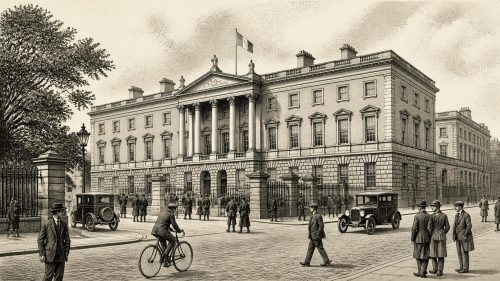
In 1933 Fianna Fáil secured a Dáil majority, enabling Éamon de Valera’s government to pursue a stronger interpretation of Irish self-government. The Constitution (Removal of Oath) Act ended compulsory parliamentary declarations involving the Crown and repealed the Treaty’s overriding constitutional status, though Ireland remained short of a republic. Anglo-Irish conflict over land annuities continued to damage agricultural exports during the Economic War. Protectionist measures promoted cereals, industrial credit and sugar production, while land reform and unemployment assistance expanded state intervention. Government suppression of Blueshirt mobilisation preceded Fine Gael’s formation. Meanwhile, Northern Ireland’s Unionist administration remained firmly entrenched, underscoring partition’s persistence.
Read Article
Archived: 9 October 2026
Abstract
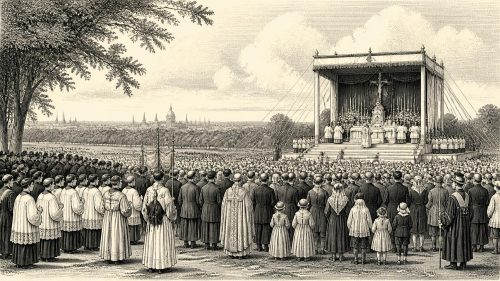
In 1932 Fianna Fáil, led by Éamon de Valera, replaced Cumann na nGaedheal through constitutional politics, marking peaceful anti-Treaty accession to Free State power. The government challenged Treaty symbols, introduced oath-removal legislation, and withheld land annuities, provoking Britain’s tariffs and the Economic War. Dublin’s International Eucharistic Congress displayed Catholic confidence, while de Valera enhanced standing at the League of Nations and Irish athletes won Olympic gold. In Northern Ireland, Stormont’s opening embodied unionist permanence. Simultaneously, Belfast outdoor-relief protests briefly united Catholic and Protestant workers against depression, securing improved payments amid police repression. Partition, hardship, sovereignty and divergent cultures remained unresolved.
Read Article




