Archived: 13 October 2026
Abstract
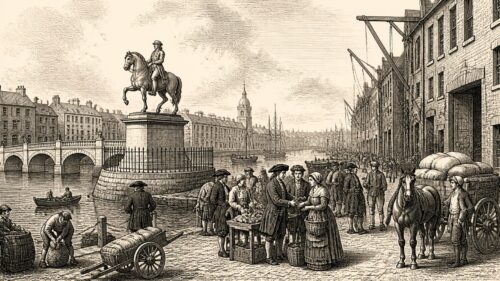
In 1722 George I authorised English ironmaster William Wood to mint up to 360 tons of copper halfpence and farthings for Ireland, initiating a controversy over currency, trade and political authority. Issued in London without Irish parliamentary consultation, the fourteen-year patent alarmed critics amid Ireland’s restricted autonomy following the 1720 Declaratory Act, although Swift’s attacks and parliamentary condemnation came later. Ireland’s rural economy, unequal imperial trade and unreliable small change formed its background. Executive government, policing proclamations and penal restrictions demonstrated state power. Dublin simultaneously celebrated Hanoverian rule with George I’s statue, while print culture widened constitutional unease more widely.
Read Article
Archived: 13 October 2026
Abstract
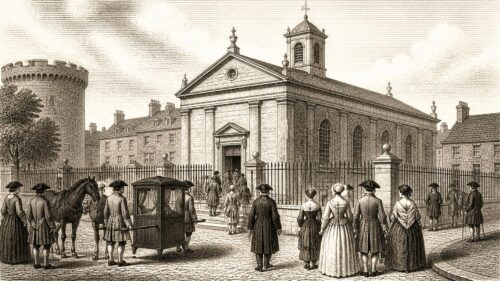
In 1719, the Sherlock v Annesley inheritance dispute escalated into a constitutional conflict between the Irish and British Houses of Lords over appellate jurisdiction. Although Westminster’s Declaratory Act followed in 1720, the controversy exposed Irish Protestant elites’ defence of judicial dignity within constrained government. Dublin’s parliament managed revenue, regulation and militia security, while granting Protestant dissenters, especially Presbyterians, limited worship protections; Catholics and non-Trinitarians remained excluded. Rebuilt St Werburgh’s Church symbolised Anglican confidence, while a 1719 issue of Cornelius Nary’s New Testament evidenced Catholic learning. Expanding linen exports linked rural households to markets, yet prosperity remained uneven and livelihoods precarious.
Read Article
Archived: 13 October 2026
Abstract
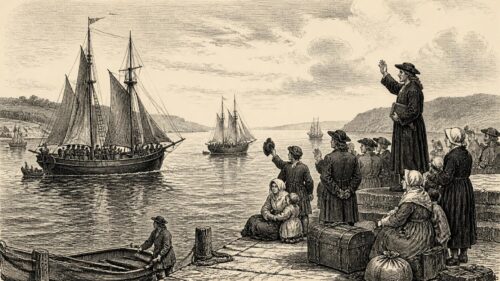
In 1718, Ireland’s significant developments centred on migration, religion and voluntary institutions rather than rebellion. Five vessels carried Presbyterian emigrants from Ulster to Boston, beginning a durable Atlantic movement driven by tenancy insecurity, economic pressures, religious disabilities and colonial opportunity. Ireland’s Protestant ruling order continued to disadvantage Catholics and dissenters, while Sherlock v Annesley highlighted contested Irish autonomy. Six surgeons founded Dublin’s Cook Street infirmary for injured poor, precursor to Jervis Street Hospital. A Ballybough cemetery lease recorded Jewish life. Church appointments and Catholic diocesan administration demonstrated competing authorities, while Thomas Parnell’s death connected Irish culture with British literary networks.
Read Article
Archived: 13 October 2026
Abstract
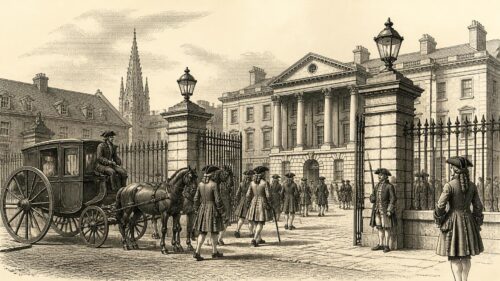
In 1716, Ireland’s Hanoverian administration responded to the Jacobite rising’s aftermath through security measures, religious enforcement, ceremony and legislation. Proclamations targeted Ormond, restricted Catholic enlistment, recruited soldiers, pursued alleged rural outlaws and renewed penalties against Catholic clergy. Public thanksgiving proclaimed loyalty to George I and the established church. Parliament abolished the Duke of Ormond’s palatine jurisdiction in Tipperary and vested his estates in the Crown, while later recovery remained possible for his family. It also promoted drainage, linen, commodity standards and labour dispute settlement. Church finances and appointments reinforced Protestant institutions, while Dublin’s music and print culture retained Jacobite connections.
Read Article
Archived: 13 October 2026
Abstract
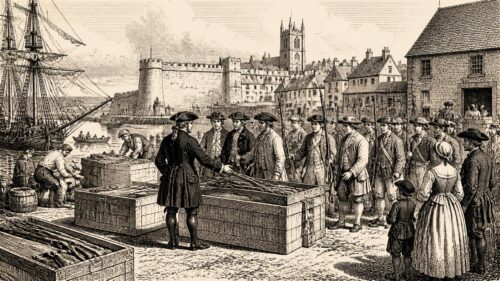
In 1715, Ireland avoided a Jacobite rising despite rebellion in Scotland and northern England, but Hanoverian authorities governed amid anxiety. Officials disarmed Catholics, enforced penal laws, monitored clergy, travellers and supplies, and reinforced ports and garrisons, although evidence of conspiracy was lacking. Troops were sent to Britain, prompting plans for a Protestant militia that lacked sufficient weapons and ammunition. The new Protestant parliament funded defence through renewed and additional taxes, while asserting control over public finance. Anti-Jacobite measures also targeted Ormond’s influence. Dublin’s theatre remained active. Ireland stayed peaceful, yet surveillance, sectarian exclusion and military expenditure deepened under imperial insecurity.
Read Article




