Archived: 17 October 2026
Abstract
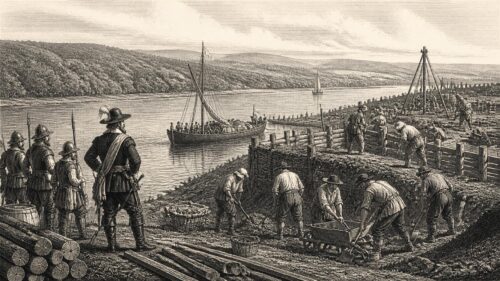
In 1600, the Nine Years’ War shifted strategically without decisive resolution. Lord Mountjoy and Sir George Carew restored English military organisation and recovered much of Munster through garrisons, raiding and coercion, while Ormond’s capture exposed continuing instability. Hugh O’Neill’s southern expedition demonstrated confederate reach but cost him Hugh Maguire and intensified internal disputes. Sir Henry Docwra’s landing at Lough Foyle created a vulnerable but enduring northern bridgehead, strengthened by Niall Garbh O’Donnell’s defection. At Moyry Pass, O’Neill blocked Mountjoy’s advance into Ulster. By year’s end, pressure on the confederacy had grown, making Spanish intervention at Kinsale increasingly urgent in 1601.
Read Article
Archived: 17 October 2026
Abstract
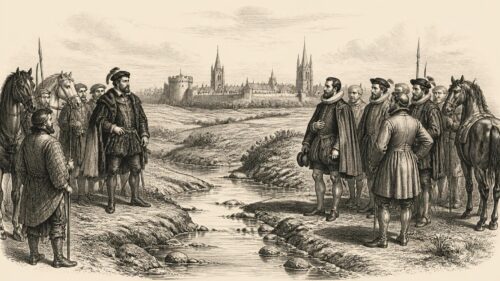
In 1597, Ireland’s war exposed the Tudor administration’s logistical and military weakness while Hugh O’Neill’s confederacy extended its influence. A gunpowder explosion in Dublin killed 126 people, damaged the capital’s supply system, and highlighted insecure wartime labour and logistics. The Crown killed Fiach MacHugh O’Byrne in Glenmalure, weakening but not pacifying Leinster. Hugh Roe O’Donnell raided Connacht, reaching Athenry and Galway. Lord Burgh’s Ulster offensive failed to unite royal forces, although Blackwater Fort was re-established; his death worsened the crisis. Irish victories near Carrickfergus and Daingean compelled talks outside Dundalk. O’Neill accepted a two-month cessation, gaining recognition without surrendering authority.
Read Article

Archived: 17 October 2026
Abstract
In 1592 Hugh Roe O’Donnell escaped Dublin Castle, where he had been held to restrain Ulster alliances, and returned to Tír Chonaill. Supported by his mother Iníon Dubh, Scottish connections and Hugh O’Neill, he became The O’Donnell, resisted garrisons and negotiated a fragile submission at Dundalk. His revival intensified conflicts within Ulster and exposed limits of crown authority. In Dublin, Elizabeth I chartered the College of the Holy and Undivided Trinity on the former All Hallows priory, to educate Protestant clergy and officials. Meanwhile, Catholic diplomacy with Spain heightened anxieties. These developments foreshadowed wider political, religious and military confrontation ahead.
Read Article

Archived: 17 October 2026
Abstract
In 1587, Hugh Roe O’Donnell, heir to Tír Chonaill, was lured aboard a trading vessel at Rathmullan and imprisoned in Dublin Castle, giving the Tudor government a valuable hostage amid Ulster’s unstable rivalries. Elsewhere, parliament confirmed the Desmond attainder, enabling redistribution and plantation of Munster lands, though implementation remained uneven. In Connacht, the composition system replaced traditional exactions with fixed revenues, provoking resistance and controversy over Sir Richard Bingham’s harsh rule. Wet weather and poor corn heightened rural insecurity. These measures extended Crown authority through captivity, law, land and revenue, but deepened grievances, exposed weak enforcement, and shaped later conflict.
Read Article
Archived: 17 October 2026
Abstract
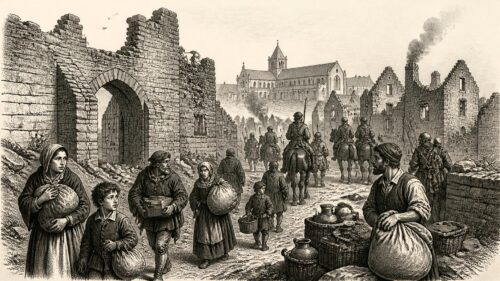
In 1572 Sir Edward Fitton’s Galway court and arrest of the earl of Clanricarde provoked Ulick and John Burke’s rebellion across Connacht. Supported by gallowglasses and Scottish mercenaries, they attacked castles, towns, trade routes and government allies, devastating Athenry and threatening Galway. The crown released Clanricarde to restore peace, but negotiation merely suspended disputes over succession and authority. Meanwhile, rebels unsuccessfully aided James fitz Maurice during the siege and eventual fall of Castlemaine Castle, a key stage in the first Desmond rebellion. Deaths of churchmen, learned men and civilians, alongside reported human and cattle mortality, reflected insecurity amid Tudor rule.
Read Article





