
Archived: 14 October 2026
Abstract
In 1697, post-war Ireland faced food scarcity, political consolidation and social disruption. Grain exports were restricted amid fears of shortages, while parliament reinforced Protestant ascendancy through property, security and religious legislation. It confirmed limited treaty protections for qualifying Jacobites but secured wartime forfeitures. The Banishment Act ordered Catholic bishops and regular clergy to leave, while restrictions targeted Protestant-Catholic marriages. Peace with France ended the Nine Years’ War, yet fears of Jacobitism persisted. Lightning destroyed Athlone Castle’s powder magazine, causing major damage. Scottish migration strengthened Ulster Presbyterian communities, while commercial tensions over Irish woollens and modest rebuilding reflected an uneven recovery.
Read Article

Archived: 14 October 2026
Abstract
In 1694, Ireland’s post-Williamite settlement advanced through administration rather than warfare. Commissioners began hearing claims under the Articles of Limerick, determining Jacobites’ rights to property, livelihoods and legal protection. Dublin’s Lords Justices managed revenue, including hearth-money exemptions, while debating a parliament whose supply might secure Protestant interests; no parliament met. Government fasts, Trinity College’s centenary celebration and Jonathan Swift’s diaconal ordination reflected Protestant public culture. Portarlington’s French Reformed register documented an emerging Huguenot community. Rewards for robbers and alleged rebels showed continuing insecurity. Queen Mary II’s death made William III sole monarch, leaving Ireland’s constitutional, religious and property settlement unfinished.
Read Article

Archived: 14 October 2026
Abstract
In 1693, Ireland, though no longer a battlefield after the Treaty of Limerick, remained unsettled under Williamite rule. Lord Lieutenant Henry Sydney was recalled, parliament dissolved, and lords justices governed amid English pressure. Protestant military recruitment reinforced the new settlement, while treaty claims and forfeiture investigations determined former Jacobites’ property rights. Authorities pursued suspected tories, rapparees, priests and their families. Ireland remained involved in the Nine Years’ War: Patrick Sarsfield and John Barrett died after Landen, and trade with France was banned. Dublin gained a Huguenot congregation, while Vertue Rewarded transformed war into fiction. Official thanksgiving proclaimed restoration, despite division.
Read Article
Archived: 14 October 2026
Abstract
In 1692, post-war Ireland remained unsettled despite Williamite victory. Authorities ratified and administered the Treaty of Limerick, processed claims, organised Jacobite departures, restored taxation, regulated currency, disarmed Catholics and addressed billeting, crime and militia security. Lord Sydney summoned the first Williamite parliament, whose Protestant members recognised William and Mary, defined Ireland’s attachment to England, and portrayed victory as deliverance from Catholicism and French influence. Commons nevertheless contested control of money bills under Poynings’ Law. Treaty protections coexisted with tightening restrictions on Catholics. Ruvigny’s advancement foreshadowed forfeiture and Protestant settlement, while Charles O’Kelly’s Jacobite history recorded a competing memory of defeat.
Read Article
Archived: 14 October 2026
Abstract
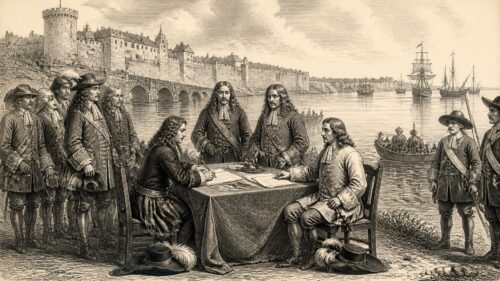
In 1691, Williamite forces broke Jacobite power in Ireland, ending the war begun after James II’s overthrow. Ginkel captured Athlone, then defeated Saint-Ruth’s army at Aughrim, where the French commander’s death precipitated rout and Galway’s surrender. Limerick, divided after Tyrconnell’s death and deprived of resources, endured siege, bombardment and a Williamite crossing of the Shannon. Articles signed on 3 October ended organised resistance, offering protections for Catholic property, trade and worship, though their wording and enforcement remained disputed. Military terms enabled departure, Williamite service or homecoming. Thousands entered French service, while William and Mary secured sovereignty amid unsettled political consequences.
Read Article




