-
Hartstonge Legacy
Read Article: Hartstonge LegacyThe Hartstonge and Pery families became closely bound through two marriages that brought together political influence, landed property and urban ambition in eighteenth-century Limerick. Sir Henry Hartstonge, third baronet of Bruff and Court, married Lucy Pery in 1751. She was the sister of Edmond Sexten Pery and the Reverend William Cecil Pery, whose parliamentary, ecclesiastical and property interests increasingly shaped the city. The marriage produced no children, but it placed Hartstonge firmly within the Pery family circle. He became both a political ally and a participant in the development of property connected with Newtown Pery.
A second connection followed when Sir Henry’s sister Mary married Henry Ormsby of Cloghan, County Mayo, in 1757. Their only daughter, Mary Alice Ormsby, later became heir to much of the Hartstonge property in counties Limerick and Tipperary. In 1783 she married Edmond Henry Pery, son and heir of William Cecil Pery and future second Lord Glentworth. Through this union, lands that might otherwise have passed away from the Pery interest returned through marriage into the same expanding family network. The arrangement strengthened a dynasty already enriched by the Sexten, Stacpole, Wray and Clayton inheritances.
When Sir Henry Hartstonge died in 1797, the baronetcy became extinct because he had no children. His niece Mary Alice appears to have succeeded to all or most of his estates, bringing substantial Munster property into her marriage with Edmond Henry Pery. Their eldest surviving son, born in 1789, was named Henry Hartstonge Pery, preserving the inherited family name within the next generation. In 1801, Lord Glentworth formally quartered the Hartstonge arms with those of the Pery family. Heraldry, naming and property inheritance were thus used together to demonstrate continuity between two landed houses whose fortunes had become inseparable.
Sir Henry’s relationship with the Perys was political as well as familial. He represented County Limerick in the Irish House of Commons from 1776 until 1790 and generally supported the influential Pery interest. In 1794, he stood unsuccessfully as the family’s candidate for Limerick City after Edmond Henry Pery inherited the Glentworth title and vacated his parliamentary seat. The contest showed how parliamentary representation, marriage and property operated together within elite politics. Family alliances could determine candidates, patronage and influence, while elections in Limerick reflected rivalries among organised interests rather than simple personal popularity.
Hartstonge also participated directly in the physical development of Limerick. Edmond Sexten Pery granted him a lease of property on Henry Street, where he developed part of the emerging Georgian district. He may also have been responsible for constructing the new Bishop’s Palace and the adjoining Pery residence, although the precise attribution remains uncertain. These paired buildings became prominent landmarks within Newtown Pery and embodied the alliance between the two families. Hartstonge Street later preserved the name within Limerick’s urban landscape, ensuring that the family’s political service, property inheritance and contribution to the Georgian city remained visible long after the estates had passed to the Perys.
- National Library of Ireland, The Limerick Papers, Collection List No. 121, account of the Hartstonge family, its marriages with the Perys, estate succession and involvement in Newtown Pery.
- National Library of Ireland, Manuscript 41,676, Hartstonge family papers concerning the estates at Bruff, Court and elsewhere in counties Limerick and Tipperary.
- National Library of Ireland, Genealogical Office Manuscript 105, page 11, recording Edmond Henry Pery’s quartering of the Hartstonge arms with those of the Pery family in 1801.
- Irish House of Commons records concerning Sir Henry Hartstonge’s representation of County Limerick from 1776 to 1790 and the Limerick City by-election of 1794.
- National Inventory of Architectural Heritage and Limerick property records concerning the Bishop’s Palace, adjoining Pery residence and Georgian development of Henry Street.
-
Mallow Inheritance
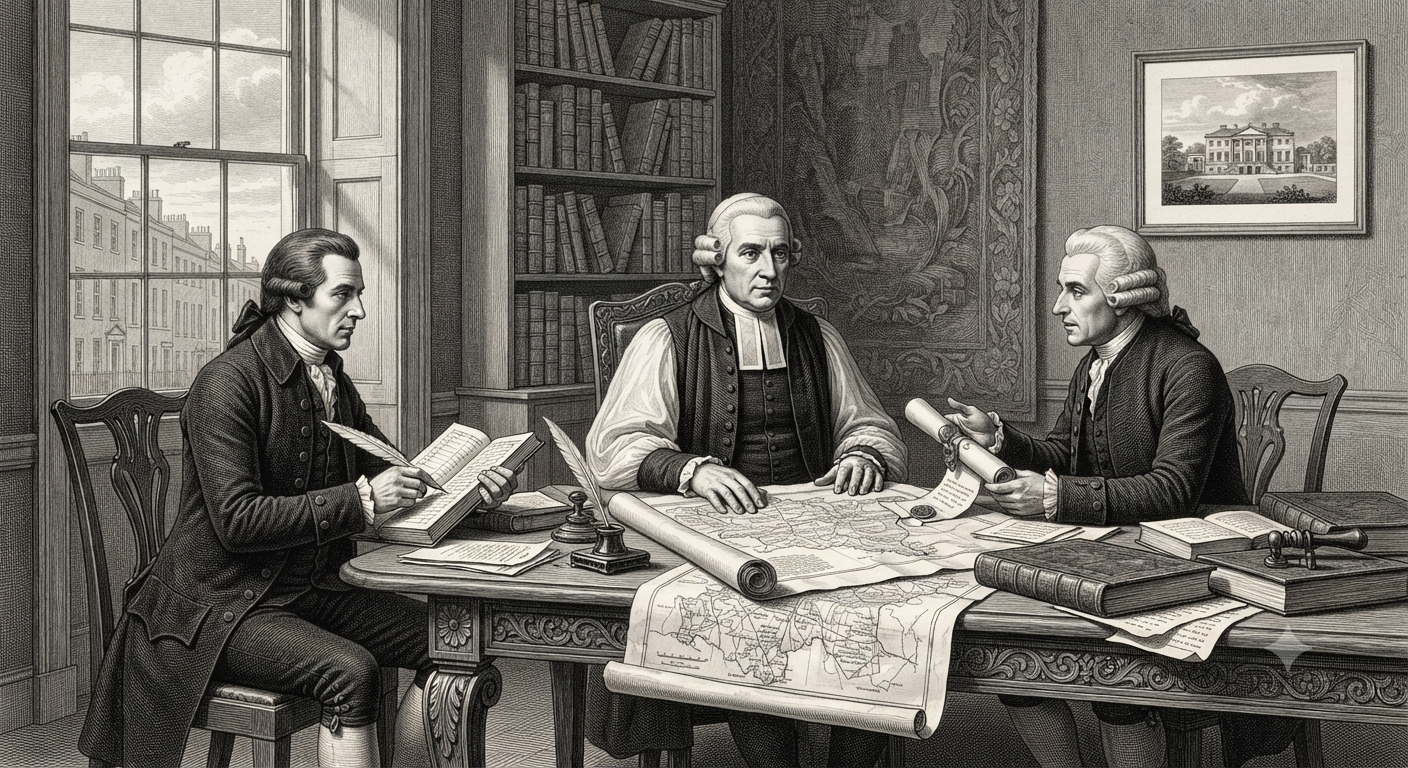
Read Article: Mallow InheritanceWilliam Cecil Pery’s choice of “Mallow” as the territorial designation of his barony appears to have reflected his close relationship with Mrs Theodosia Clayton and a probable inheritance from her family’s County Cork property. The Claytons had long been associated with Annabella, an estate outside Mallow, and retained considerable interests within the manor. When Pery was created Baron Glentworth of Mallow in 1790, the title joined the older Wray connection represented by Glentworth with a Cork property interest that had entered the Pery family’s expanding network of estates, financial responsibilities and social alliances.
Mrs Clayton lived in Queen Street East, Marylebone, London, but retained Irish property requiring regular supervision. Bishop Pery acted as her agent, managing rents, correspondence and financial affairs connected with Annabella, Tullconrotta, Coolevota and other Cork holdings. Their surviving letters describe a relationship based upon kinship, trust and practical business. Pery’s position in Limerick enabled him to oversee matters that would have been difficult for an absentee owner to manage from England. His service placed him within the familiar eighteenth-century system through which Irish estates were administered by relatives, agents, tenants, attorneys and local intermediaries.
Following Mrs Clayton’s death in 1787, Pery became the active executor of her will. He was responsible for settling accounts, administering legacies and dealing with the remaining property attached to the Clayton estate. The surviving archive indicates that she left benefits to members of the Pery family and probably transferred some interest in the Mallow property to William Cecil Pery himself. Absolute details of the inheritance remain uncertain, but the connection was sufficiently important to explain why a bishop and landowner identified principally with Limerick selected a County Cork town when receiving his hereditary title three years later.
The Clayton papers preserved among the Limerick family archive reveal how closely property beyond the county was tied to the fortunes of prominent Limerick households. Income from Cork lands could support residences, marriages, education, political influence and building projects centred in Limerick. Property administration also created work for legal clerks, estate agents, surveyors and rent collectors moving between the city and neighbouring counties. The Pery family’s power was therefore not confined to Newtown Pery or its County Limerick estates. It rested upon a wider regional web of inheritance, kinship and financial management extending through Clare, Cork and England.
The Clayton connection left no monument in Limerick as obvious as Glentworth Street, Cecil Street or the Bishop’s Palace, yet it contributed to the identity assumed by the dynasty. “Baron Glentworth of Mallow” united two separate lines of inherited association within a single title: Glentworth recalled the Wray family, while Mallow pointed towards Mrs Clayton and the Annabella estate. The designation demonstrated how aristocratic titles could preserve histories of marriage, executorship and property as effectively as family names. Behind the peerage stood years of private correspondence, estate management and obligations undertaken between a Limerick bishop and his London-based kinswoman.
- National Library of Ireland, The Limerick Papers, Collection List No. 121, account of the Clayton family’s property at Annabella, William Cecil Pery’s agency and the probable origin of the territorial designation “of Mallow.”
- National Library of Ireland, Manuscript 41,678/10, correspondence between William Cecil Pery and Mrs Theodosia Clayton, approximately 1770–1787, concerning her Irish estates, finances, commissions and family affairs.
- National Library of Ireland, Manuscript 41,675, Clayton family papers relating to Annabella, the manor of Mallow and associated County Cork property interests.
- Probate and testamentary records concerning the will and estate of Theodosia Clayton, who died in 1787, including William Cecil Pery’s service as executor.
- Records of the Irish peerage concerning the creation of William Cecil Pery as Baron Glentworth of Mallow in 1790.
-
Dynasty Secured
Read Article: Dynasty SecuredEdmond Sexten Pery retired as Speaker of the Irish House of Commons in 1785 after fourteen years in one of the most influential offices in Irish political life. The Commons unanimously appealed to the lord lieutenant to obtain a royal honour for him, acknowledging his authority, parliamentary skill and long public service. The Crown responded by creating him Viscount Pery of Newtown Pery, permanently linking his title with the Georgian district he had helped establish in Limerick. The honour elevated a local political and property-owning family into the peerage while commemorating the urban development that had transformed the city’s southern expansion.
Pery had married twice but had no surviving son to inherit and continue his title. The Viscountcy would therefore expire with him, leaving the family’s dynastic future dependent upon the descendants of his younger brother, the Reverend William Cecil Pery. The brothers had followed different but complementary routes to influence. Edmond dominated parliamentary and civic affairs, while William advanced through the Church of Ireland. The Speaker’s patronage and political connections assisted that progress, demonstrating how ecclesiastical appointments, parliamentary influence and family ambition frequently operated together within the governing establishment of eighteenth-century Ireland.
William Cecil Pery began his clerical career with St John’s in Limerick and Kilkeedy in County Limerick, benefices he held together. He was promoted to the deanery of Killaloe in 1772 and then to the more distant deanery of Derry in 1780. The following year he became bishop of Killala and Achonry. His advancement culminated in 1784 when he was translated to the bishopric of Limerick, Ardfert and Aghadoe. Returning as bishop to the city where his family’s power was concentrated fulfilled a major dynastic ambition and placed ecclesiastical authority beside the Perys’ political and landed influence.
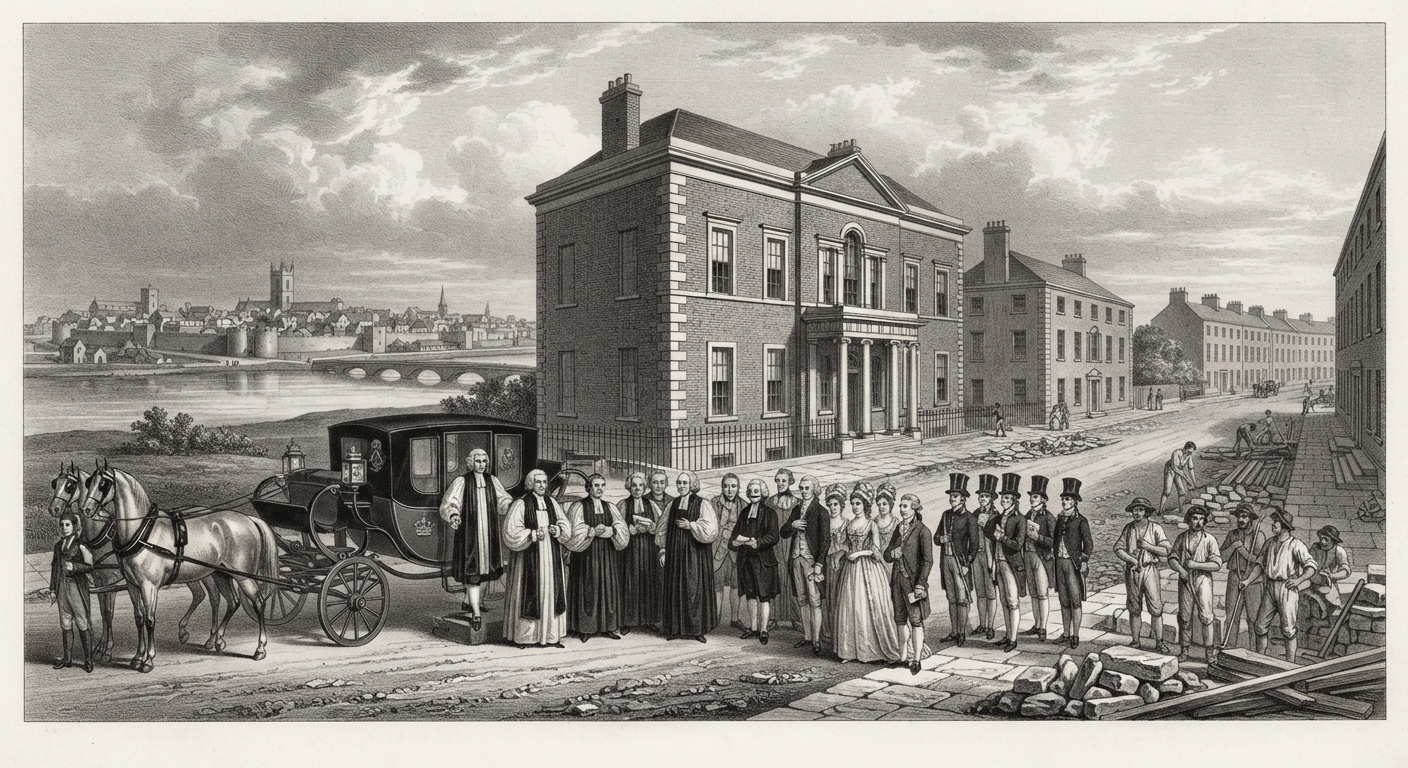
The new bishop soon left the old episcopal residence on King’s Island for a substantial palace in Henry Street, Newtown Pery. The red-brick Palladian house, built within the developing Georgian quarter, stood beside the residence later occupied by the Pery family itself. Its position demonstrated how the family’s urban planning, political connections and church appointments reinforced one another. The bishop’s move also shifted an important institution away from the medieval city and into the expanding district created upon Pery land. Henry Street became a visible centre of clerical, aristocratic and family power within the modernising streetscape of Limerick.
William Cecil Pery received his own peerage in 1790 when he was created Baron Glentworth of Mallow. The title preserved the family’s connection with the Wray inheritance and ensured that a hereditary dignity would pass through his male descendants. When he died in 1794, the barony descended to his son Edmond Henry Pery, who later became Earl of Limerick. The political Speaker without a male heir and the bishop assisted by family patronage had together secured the dynasty’s future. Their titles, residences and street names remained embedded within Newtown Pery, making the Georgian quarter a lasting record of family ambition.
- National Library of Ireland, The Limerick Papers, Collection List No. 121, introduction describing Edmond Sexten Pery’s retirement, creation as Viscount Pery and William Cecil Pery’s ecclesiastical career.
- National Library of Ireland, Manuscript 41,679, papers concerning William Cecil Pery’s clerical appointments, family patronage and advancement within the Church of Ireland.
- Journals of the Irish House of Commons, 1785, proceedings concerning Edmond Sexten Pery’s retirement as Speaker and the unanimous address requesting a royal mark of favour.
- Church of Ireland episcopal and cathedral records concerning William Cecil Pery’s appointments as Dean of Killaloe, Dean of Derry, Bishop of Killala and Achonry, and Bishop of Limerick, Ardfert and Aghadoe.
- National Inventory of Architectural Heritage, The Bishop’s Palace, 104 Henry Street, Limerick, record of the former residence built for William Cecil Pery within Newtown Pery.
-
Georgian Vision
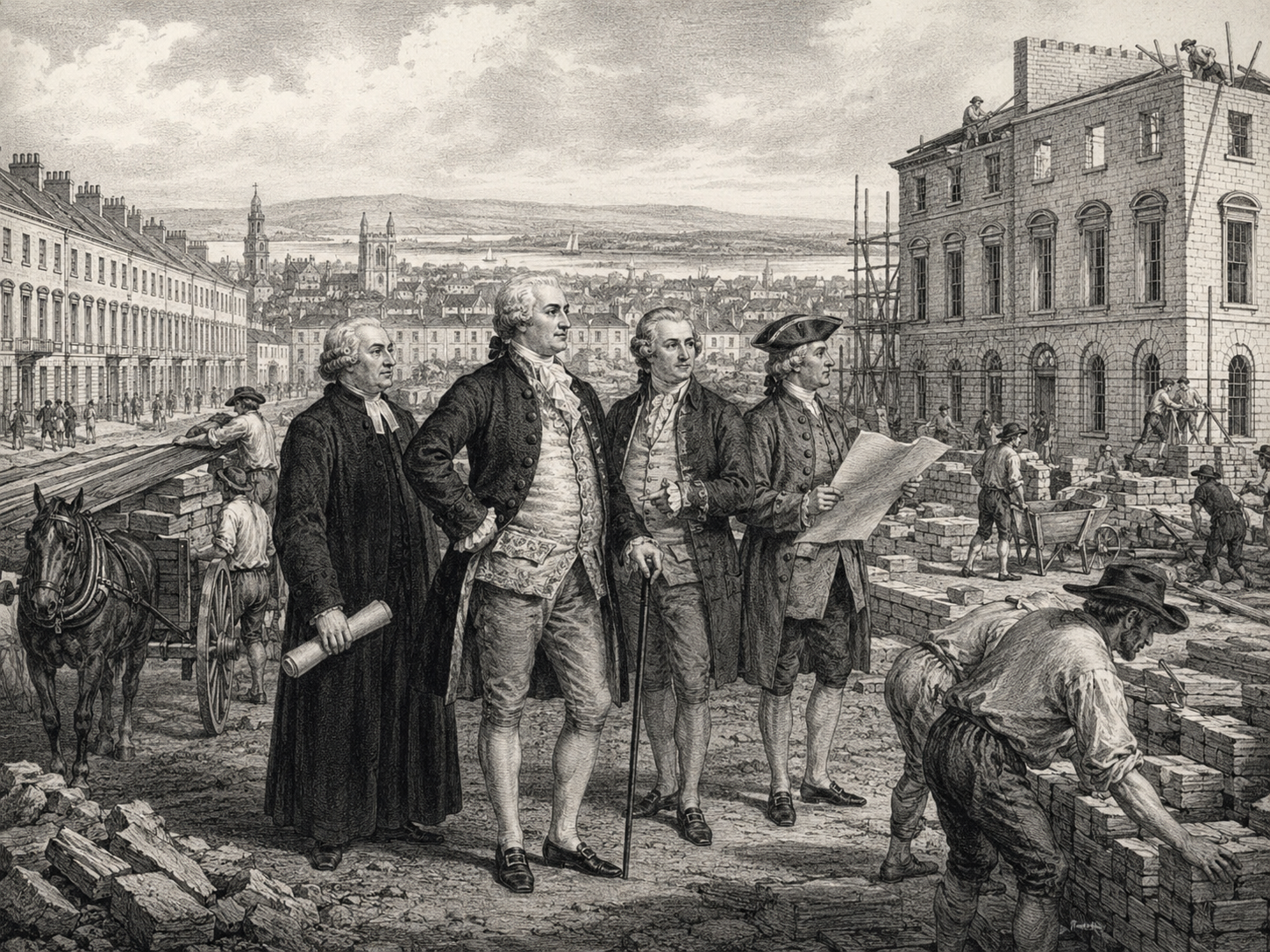
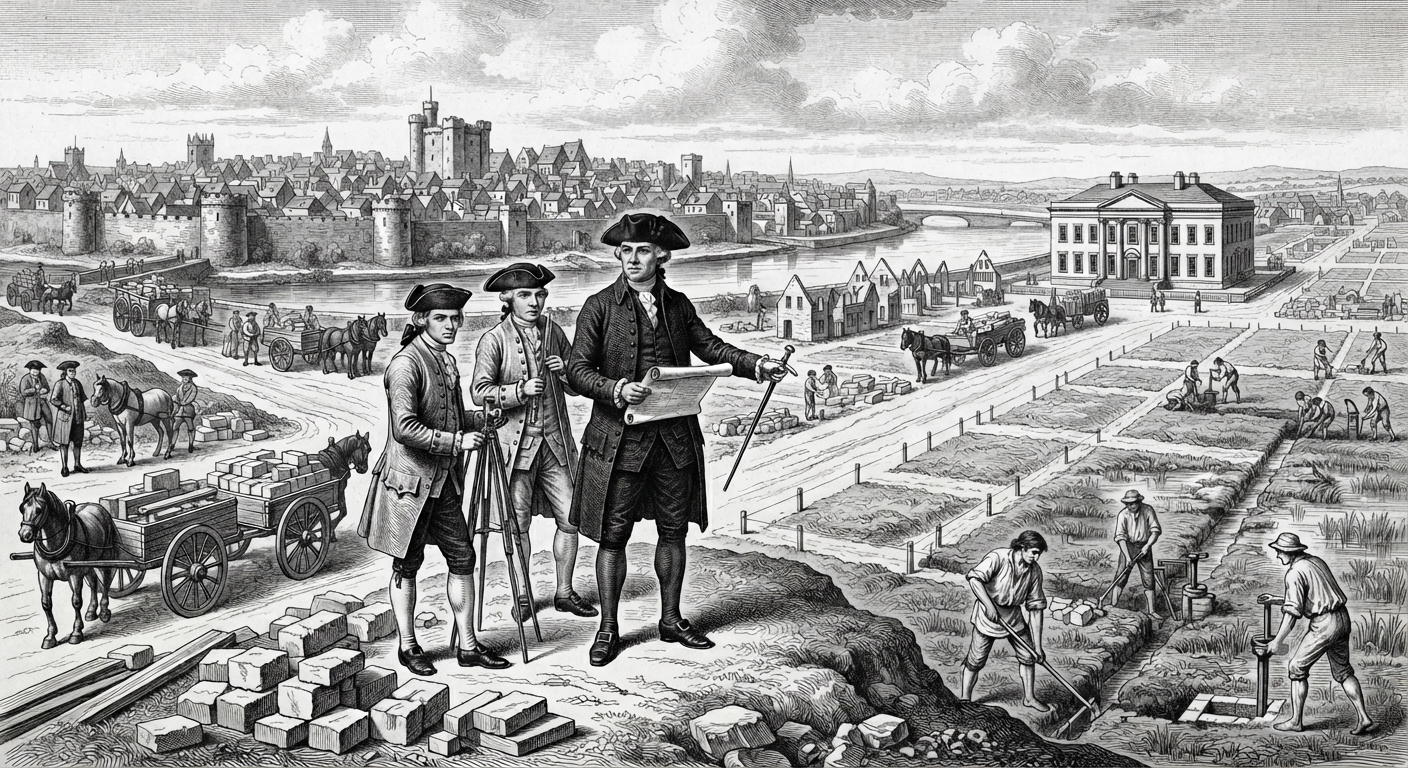
Read Article: Georgian VisionEdmond Sexten Pery emerged as one of the most accomplished Irish parliamentarians and urban improvers of the eighteenth century. Representing Limerick City in parliament, he combined political skill with a practical interest in construction, land development and civic expansion. His election as Speaker of the Irish House of Commons in 1771 placed him in an office of considerable authority during a period when parliamentary procedure, patronage and government policy were closely connected. Returned to the chair three times, Pery remained Speaker until 1785 and used his standing in Dublin to advance measures and obtain public funding that benefited Limerick.
Pery’s first important building enterprise was John’s Square, originally called New Square, developed between 1751 and 1757 within the walled district of Englishtown. The project was unusual because it introduced an orderly residential square into the older fabric of Limerick, where narrow streets and irregular plots reflected centuries of medieval growth. The development displayed Pery’s ability to combine architectural improvement with personal and family advantage. By helping to establish a new parish, the scheme created a clerical position that was filled in 1754 by his younger brother, the Reverend William Cecil Pery, demonstrating how civic improvement, property and patronage could operate together.
The demolition of Limerick’s walls and fortifications opened new possibilities for development beyond the crowded historic city. Pery turned southwards towards the South Prior’s Land, a low and partly marshy estate inherited through his Sexten ancestors. At the meeting point between the old town and this undeveloped ground, he built the Custom House between 1765 and 1769. The imposing public building served the needs of Limerick’s expanding trade while also raising the value and importance of surrounding Pery property. Its position anticipated the city’s movement away from its medieval centre towards the planned streets that would become Newtown Pery.
After completing the Custom House, Pery began laying out Newtown Pery as a regular Georgian suburb of broad streets, formal plots and spacious residential terraces. The development transformed former monastic land into a new commercial and fashionable district, allowing Limerick to expand southwards in a controlled pattern. Pery’s planning did not arise solely from aesthetic ambition. Every improvement in roads, drainage, public buildings and access increased the value of the family estate. The new district therefore represented both a major civic achievement and a profitable private enterprise, demonstrating how closely eighteenth-century urban improvement could be linked with landed ownership and political influence.
Pery’s position in parliament proved essential because it enabled him to secure substantial sums of public money for Limerick’s improvement. Government-supported works strengthened trade, modernised the city and encouraged building, but they also enhanced his property near the expanding urban centre. His career illustrates the complicated relationship between public service and private advantage in Georgian Ireland. John’s Square, the Custom House and Newtown Pery permanently altered Limerick’s appearance, economy and direction of growth. Though motivated partly by family interest, Pery’s planning created the foundations of the Georgian city whose streets, squares and architecture continue to define central Limerick.
- National Library of Ireland, The Limerick Papers, Collection List No. 121, account of Edmond Sexten Pery’s parliamentary career, property interests and development of Limerick.
- National Library of Ireland, Manuscript 41,679/2, material concerning the creation of the new parish associated with John’s Square and the appointment of the Reverend William Cecil Pery.
- Irish House of Commons journals and parliamentary records, 1771–1785, documenting Edmond Sexten Pery’s repeated election and service as Speaker.
- Limerick Corporation records concerning John’s Square, the demolition of the city fortifications, the Custom House and public improvements during the eighteenth century.
- Pery estate maps, leases and development papers concerning the South Prior’s Land and the planning of Newtown Pery.
-
Civic Inheritance
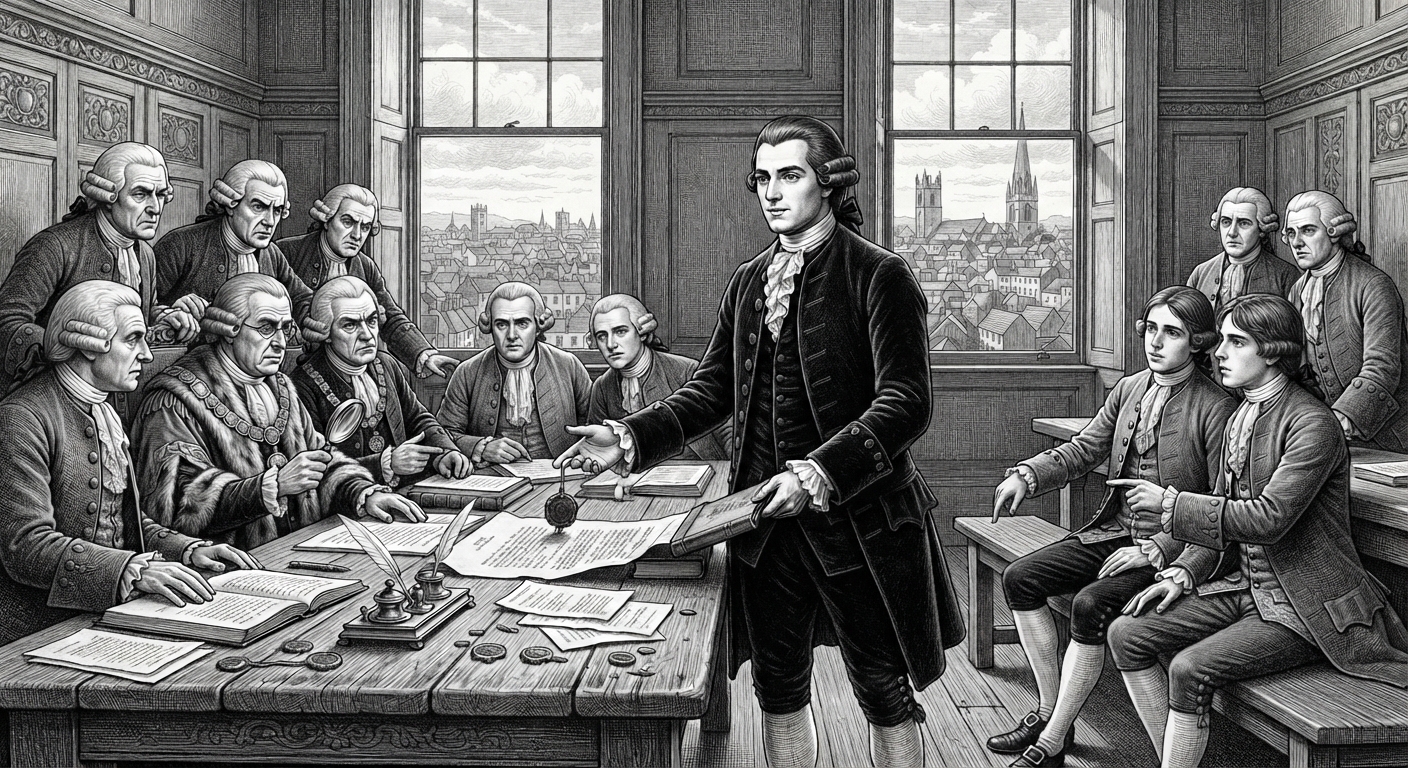
Read Article: Civic InheritanceEdmond Pery successfully asserted a remarkable inherited privilege in 1677 when he claimed two votes in Limerick’s common council. The right was traced through the Sexten family to the former priors of St Mary’s, whose religious property and privileges had passed into private ownership following the dissolution of the monasteries. Pery argued that succession to those lands carried political rights as well as rents and property. His achievement gave the family an unusual position within Limerick’s civic government, where elections for the mayor and common councillors shaped the distribution of authority among merchants, aldermen and established urban families.
The claim demonstrated how privileges once attached to a religious office could survive long after the institution itself had disappeared. St Mary’s had ceased to function as a religious house during the Tudor period, yet its former legal standing continued to influence municipal politics more than a century later. Limerick Corporation had repeatedly disputed the exemptions and voting rights claimed by the Sextens and their Pery descendants. The controversy revealed a city still negotiating the consequences of monastic dissolution, as inherited charters, royal grants and private property rights collided with the corporation’s efforts to control elections, taxation and civic administration.
The Reverend Stacpole Pery later attempted to exercise the same right but failed during the years between approximately 1730 and his death in 1737 or 1738. His inability to reproduce his father’s success suggests that inherited privilege required continual legal and political defence rather than automatic recognition. Municipal officeholders could challenge an old claim when circumstances or alliances changed, while the absence of a favourable decision might weaken a family’s influence. Stacpole Pery nevertheless passed the combined Pery, Sexten and Stacpole estates to his elder son, Edmond Sexten Pery, who possessed both the property and ambition required to renew the contest.
In 1748, Edmond Sexten Pery successfully reasserted the family’s civic right and became a member of Limerick’s common council. His entry into municipal government marked the beginning of a political career that carried him far beyond local office. Trained as a barrister, he understood how inherited legal claims could be converted into practical influence. Membership of the council connected him directly with the government of his native city, including its elections, finances, trade and physical development. He later represented Limerick City in the Irish parliament from 1761 until 1785, ensuring that local interests had an exceptionally influential advocate in Dublin.
Pery became Speaker of the Irish House of Commons in 1771 and remained in that office until his retirement in 1785. His national prominence was rooted partly in the civic position recovered in Limerick decades earlier. He also encouraged improvements to the city and the development of the Georgian district later known as Newtown Pery upon his family’s estate. The two votes first claimed through the former priors of St Mary’s therefore belonged to a much longer history connecting dissolved religious property, municipal authority, parliamentary power and urban expansion. An inherited privilege ultimately helped one Limerick family shape both the government and streets of the city.
- National Library of Ireland, The Limerick Papers, Collection List No. 121, account of Edmond Pery’s successful assertion of two votes in Limerick’s common council in 1677 and the later claims made by his descendants.
- National Library of Ireland, Manuscript 41,678/2, papers concerning the Reverend Stacpole Pery’s unsuccessful attempt to exercise the inherited voting privilege and Edmond Sexten Pery’s later reassertion of the right.
- National Library of Ireland, Pery and Sexten family legal papers, including petitions, grants and documents concerning former property and privileges of St Mary’s in Limerick.
- University of Limerick, Special Collections and Archives, Pery Family Archive, material concerning the Sexten inheritance, Limerick Corporation and the political development of the Pery family.
- Irish parliamentary and municipal records concerning Edmond Sexten Pery’s membership of Limerick’s common council from 1748 and his representation of Limerick City in parliament from 1761 to 1785.
-
Estates United
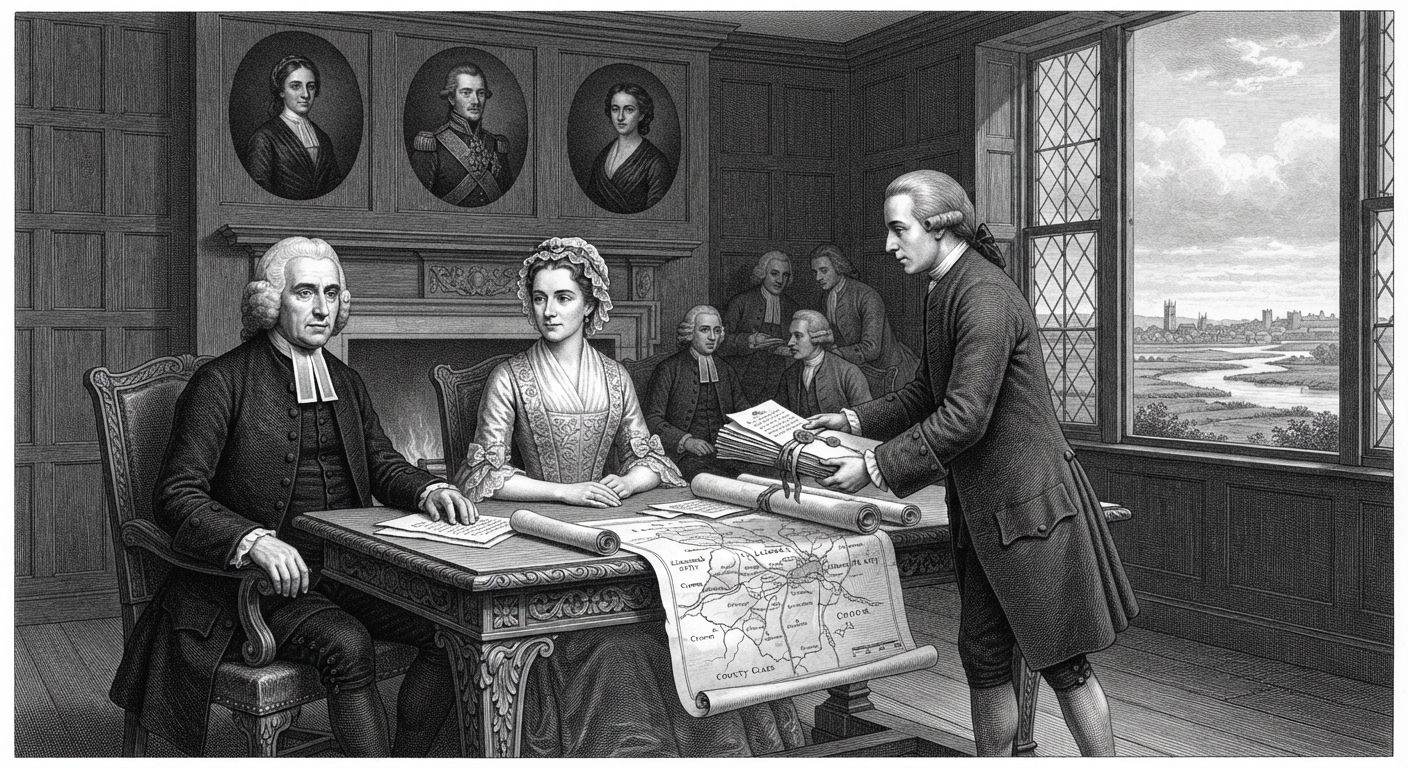
Read Article: Estates UnitedThe landed inheritance that later sustained the Pery family’s influence in Limerick was assembled through a succession of marriages connecting the Sexten, Pery, Stacpole, Twigg and Wray families. Susannah Sexten, who died in 1671, was the only daughter of Edmond Sexten and eventually inherited the property of his grandson, another Edmond. Her marriage to Edmond Pery of Croom brought the Sexten estates into the Pery family. Those lands included former religious property in and around Limerick, giving their descendants wealth, rents and a territorial position that would profoundly influence the city’s later development.
Susannah and Edmond Pery’s son, Colonel Edmond Pery, strengthened the family inheritance by marrying Dymphna, daughter and heiress of Bartholomew Stacpole of Stacpole Court in County Clare. This marriage brought the Stacpole property into the expanding Pery estate and connected lands on both sides of the Shannon. By the time Colonel Pery died in 1721, the family’s position rested upon several distinct inheritances rather than one ancestral holding. Marriage among landed families served an economic and political purpose, preserving estates, settling property claims and creating alliances capable of extending influence across county boundaries and municipal jurisdictions.
The surviving son, the Reverend Stacpole Pery, consequently inherited the combined Sexten, Stacpole and Pery properties in 1721. His succession placed in one person estates acquired through Tudor grants, seventeenth-century inheritance and marriage. The consolidation mattered greatly to Limerick because the family now controlled substantial property beside the older city, including land that could later be leased and developed. The wealth was not merely agricultural. It included urban rights, rents and strategically located ground whose value increased as Limerick’s trade, population and built environment expanded beyond the medieval walls during the eighteenth century.
Stacpole Pery had married Jane Twigg in 1716. She was the daughter of the Venerable William Twigg, archdeacon of Limerick, and inherited a modest interest through her mother, Diana. Diana Twigg was the daughter and co-heiress of Sir Drury Wray of Glentworth in Lincolnshire and brought an undivided share of the Wray estate in Ireland. That property lay conveniently near Limerick city, adding another layer to the family’s regional holdings. Through Diana, the Perys could also claim descent from the Cecil family, Viscounts Wimbledon, giving the increasingly prosperous Limerick dynasty an association with established English aristocratic lineage.
The Wray and Cecil connections were later written permanently into Limerick’s streetscape. William Cecil Pery adopted Glentworth as the title of his barony, while Cecil Street and Glentworth Street preserved the names within Newtown Pery. When the Georgian suburb developed across the family estate from the later eighteenth century, its street names became a map of inheritance, marriage and family ambition. Limerick residents walking through the district were moving across land whose ownership had been assembled over generations. The ordered terraces therefore concealed a complicated history of heiresses, clerical families, royal grants and estates gradually united in the Pery name.
- National Library of Ireland, The Limerick Papers, Collection List No. 121, family history of the Pery, Sexten and Stacpole families and the formation of their estates.
- National Library of Ireland, Manuscript 41,678/7, material concerning the Wray inheritance in Ireland and its location near Limerick city.
- National Library of Ireland, Manuscripts 41,677–41,680, family, estate and legal papers concerning the Sexten, Pery, Stacpole, Twigg and Wray inheritances.
- University of Limerick, Special Collections and Archives, Pery Family Archive, records concerning the family’s estates in Limerick city, County Limerick and County Clare.
- Limerick local authority historical records concerning Newtown Pery and the naming of Cecil Street, Glentworth Street and other streets associated with the Pery family.
-
Civic Defiance
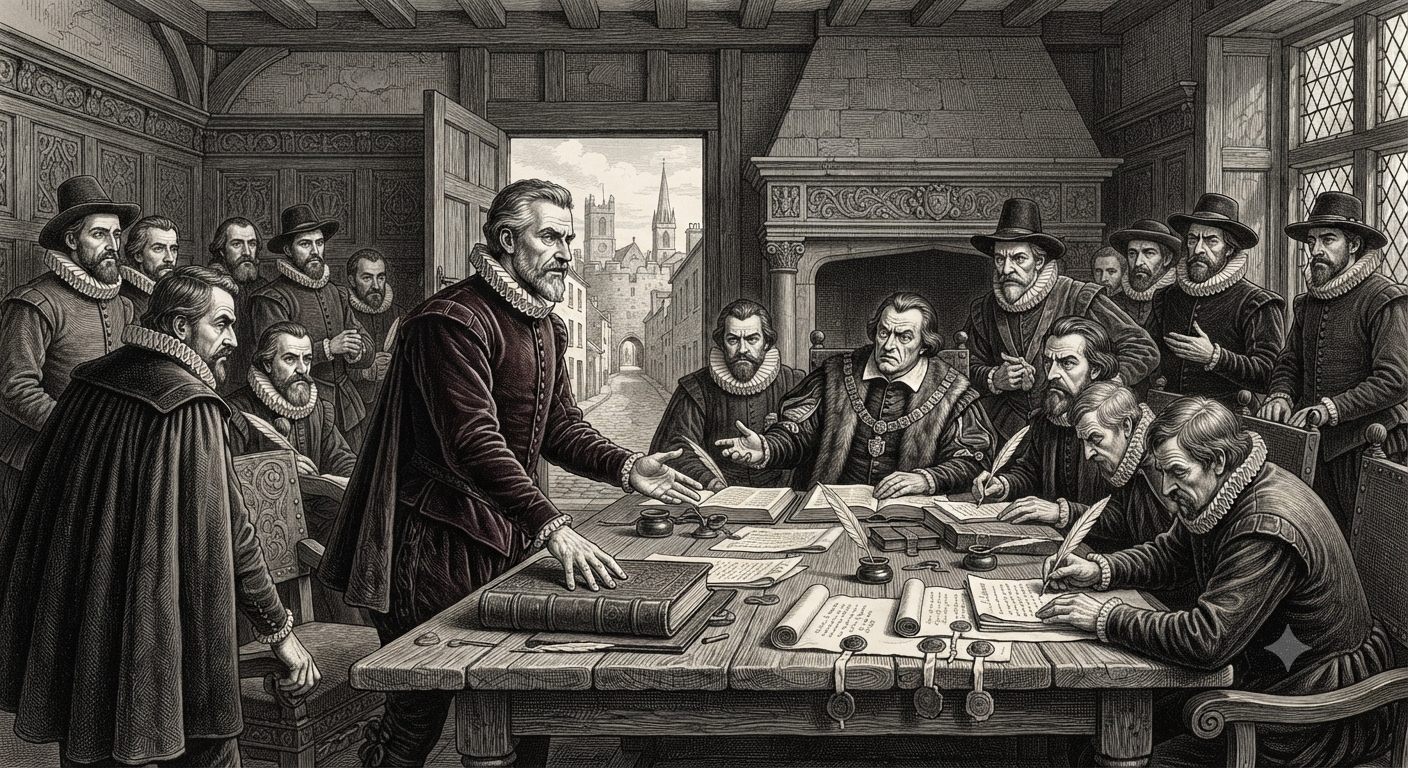
Read Article: Civic DefianceEdmond Sexten inherited his family’s extensive Limerick property around 1594 and became one of the most powerful, persistent and controversial figures in the city’s early seventeenth-century government. A grandson and namesake of the Tudor mayor who had acquired the former lands of St Francis’s and St Mary’s religious houses, Sexten served as an alderman, held the mayoralty several times and repeatedly occupied the office of high sheriff. His municipal service did not produce harmony with Limerick Corporation. Instead, much of his adult life was consumed by arguments over whether his inherited lands stood inside or beyond the authority of the city’s mayor and council.
The principal dispute concerned the former estates of the two dissolved religious houses. Sexten insisted that the privileges attached to those properties protected them from ordinary municipal jurisdiction, while the corporation resisted the existence of a powerful private estate possessing exemptions within and around Limerick. The contest was conducted through petitions and counter-petitions rather than open violence. Sexten appealed to the Lord President and Council of Munster and, when necessary, to the lord deputy and Privy Council of Ireland. His opponents answered through the same administrative channels, carrying a local struggle over property, taxation and authority into the highest levels of Irish government.
A royal patent issued in 1609 strengthened Sexten’s position by confirming the grants Henry VIII had made to his grandfather. The document renewed the family’s legal claim to the former Franciscan and St Mary’s properties and gave Sexten a formidable instrument in his dealings with the corporation. Yet confirmation from the Crown did not settle how the inherited privileges should operate within a changing city. Limerick’s civic leaders had responsibilities for order, taxation and urban administration, while Sexten claimed rights rooted in the former authority of religious superiors. The resulting conflict exposed the uncertain boundary between medieval privilege, Tudor confiscation and municipal government.
Sexten also claimed two votes in elections for Limerick’s mayor and common councillors because he considered himself the legal successor to the prior of St Mary’s. The demand was politically significant, since it could give one landholder influence beyond that of an ordinary freeman or alderman. His argument treated the civic privileges of a dissolved religious office as inheritable property, while opponents feared that the arrangement would distort municipal elections. The controversy revealed how the Reformation continued to shape Limerick long after the friars had departed. Former monastic rights had become weapons in struggles among merchants, officeholders, landowners and competing centres of authority.
A further disagreement arose in 1615 over responsibility for maintaining the church of St John the Baptist, whose tithes had belonged to St Mary’s. The corporation and parish faced the practical question of whether Sexten, as holder of the appropriated revenues, should bear the cost alone or whether the wider parish remained responsible. What appeared to be a dispute over repairs therefore touched upon worship, property income and public obligation. Sexten’s prolonged battles left an enduring documentary record of early modern Limerick, showing a city negotiating the consequences of religious dissolution while powerful families defended privileges that would later pass through inheritance into the Pery estate.
- National Library of Ireland, The Limerick Papers, Collection List No. 121, introduction and family history concerning Edmond Sexten the younger, the former monastic estates and his disputes with Limerick Corporation.
- National Library of Ireland, Manuscripts 41,677/1–5, petitions and counter-petitions concerning Edmond Sexten’s disputes with the mayor and corporation of Limerick.
- National Library of Ireland, Manuscript 41,679/1, royal patent of 1609 confirming the earlier grants of the former properties of St Francis’s and St Mary’s to the Sexten family.
- University of Limerick, Special Collections and Archives, Pery Family Archive, IE 2135 P51/1/1, transcripts of letters and petitions by Edmond Sexten the elder and Edmond Sexten the younger.
- Limerick civic and parish records concerning the mayoralty, common council elections and the 1615 dispute over responsibility for maintaining the church of St John the Baptist.
-
Pery Foundations
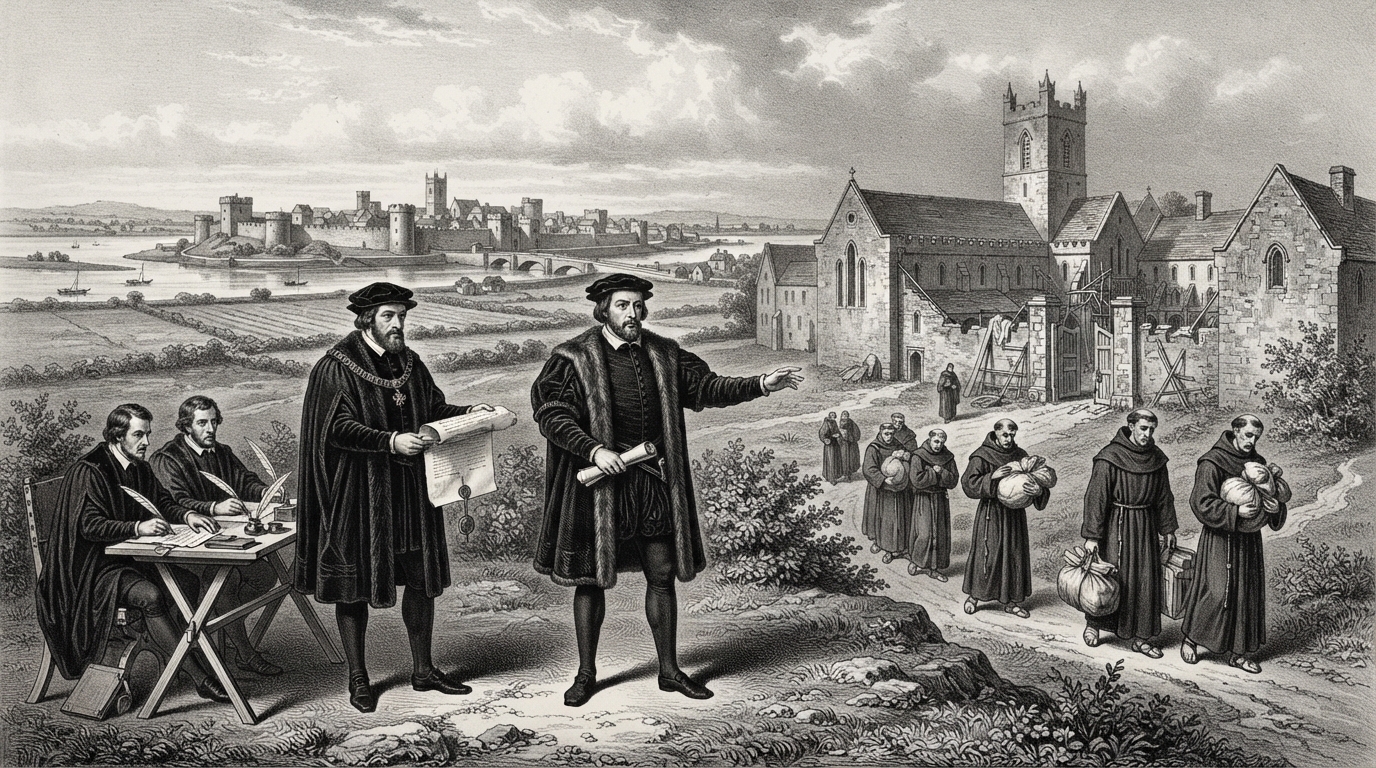
Read Article: Pery FoundationsThe Pery family’s rise in Limerick began not with the Georgian streets that later carried its name, but with land accumulated during the Tudor dissolution of Ireland’s religious houses. William Pery, who died in Limerick around 1635, appears to have been the first member of the family to settle permanently in Ireland. The more consequential ancestor, however, was Edmond Sexten, mayor of Limerick in 1535. Through political skill, royal service and his relationship with the English court, Sexten obtained property that would remain within his descendants’ inheritance and eventually shape the physical expansion of Limerick city.
Sexten belonged to a family already established in Thomond, but his advancement depended upon his usefulness to Henry VIII’s government. Appointed Sewer of the Chamber, he became one of the Crown’s principal local agents during the dissolution of monasteries and friaries in Munster. The policy transferred religious property into royal hands before granting or selling much of it to individuals whose loyalty could strengthen English authority. Sexten’s role placed him at the meeting point of local ambition, religious upheaval and Tudor administration. The property he acquired gave his family influence extending far beyond the mayoralty he held in Limerick.
In 1538, Henry VIII granted Sexten the lands and privileges belonging to the dissolved Franciscan friary commonly known as St Francis’s Abbey. Its property stood outside Limerick’s walls and formed part of the county rather than the tightly enclosed medieval city. Five years later, Sexten received possessions formerly belonging to the religious house of the Blessed Virgin Mary. St Mary’s property included land within Englishtown, but much of its estate lay farther south. Known as the South Prior’s Land, this extensive tract would become one of the most historically significant inheritances in the development of modern Limerick.
The grants represented more than a change of ownership. Monastic estates had supported religious communities, tenants, workers, charitable activity and patterns of worship established over centuries. Their dissolution redirected land, rents and privileges towards families aligned with the Tudor state. Through marriage and inheritance, the Sexten property eventually became associated with the Pery family. What began as a sixteenth-century redistribution of church land therefore continued to influence Limerick’s social hierarchy and urban geography long after the friaries had disappeared. The origins of later Georgian wealth were rooted in a turbulent period of religious suppression, political loyalty and private acquisition.
From 1769, Edmund Sexton Pery used the South Prior’s Land to begin developing the planned Georgian district that became Newtown Pery. Engineer Christopher Colles prepared a grid of broad streets and regular plots beyond the older city, allowing Limerick to expand southwards from its medieval boundaries. Streets later associated with the Pery family transformed former religious property into a commercial and residential centre. The surviving Georgian quarter therefore preserves a visible connection between Tudor confiscation and eighteenth-century urban ambition. Beneath its ordered terraces lies the much older history of dissolved religious houses, Edmond Sexten’s royal grants and the inheritance carried into the Pery estate.
- National Library of Ireland, The Limerick Papers, Collection List No. 121, introduction and family history of the Pery family, Earls of Limerick.
- National Library of Ireland, Manuscript 41,673/8–12, records concerning royal grants to Edmond Sexten of the dissolved properties of St Francis’s Abbey and St Mary’s religious house in Limerick.
- University of Limerick, Special Collections and Archives, Pery Family Archive, records concerning Edmond Sexten, the Pery inheritance and estates in Limerick city and county.
- Tudor Crown grants and enrolments from the reign of Henry VIII concerning dissolved religious property in Limerick and Munster.
- Limerick local authority historical records concerning Edmund Sexton Pery, Christopher Colles and the planning and development of Newtown Pery from 1769.
-
Statistician Dies
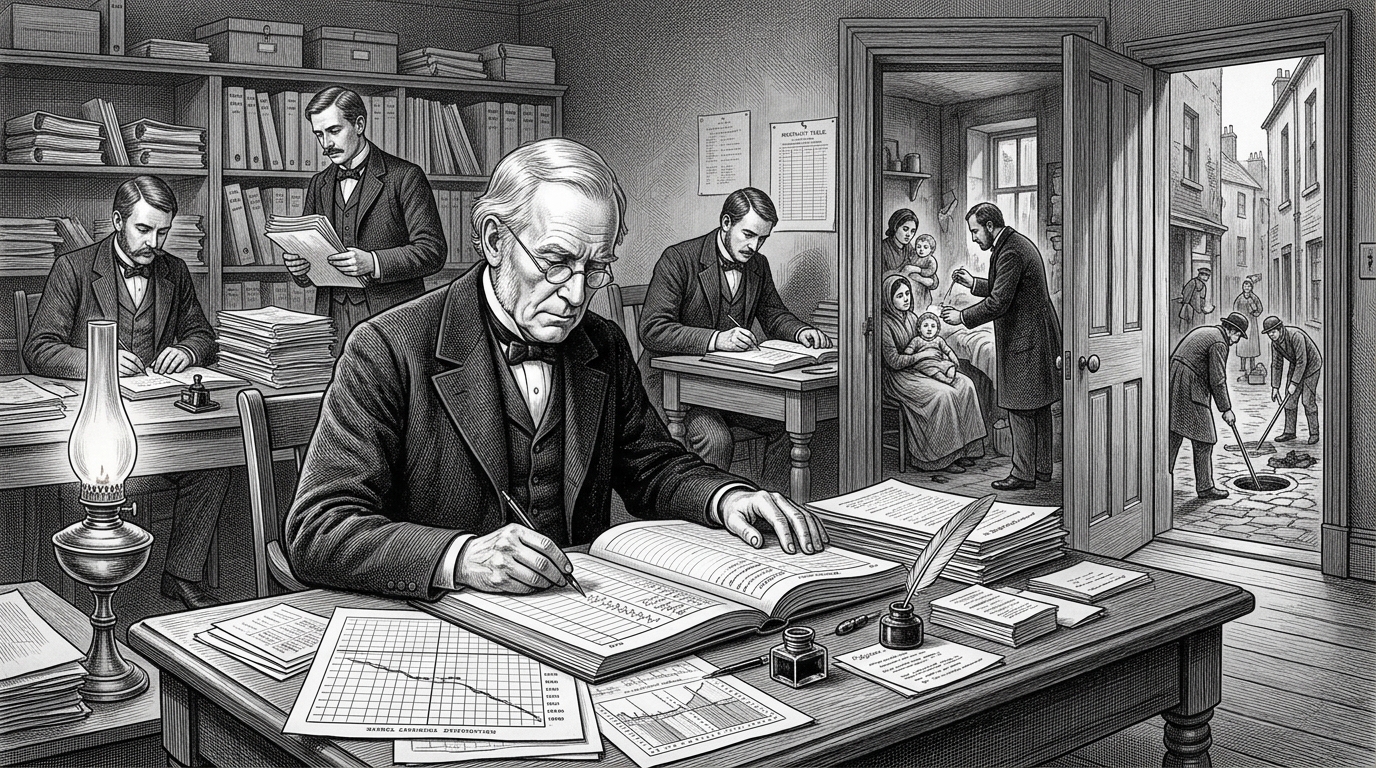
Read Article: Statistician DiesThomas Wrigley Grimshaw, physician, public-health reformer and former registrar-general for Ireland, died at his residence in Carrickmines, County Dublin, on 23 January. Born near Belfast in 1839, he had spent much of his professional life examining the relationship between disease, poverty, housing and mortality. His death removed one of the country’s most influential medical statisticians at a time when Irish towns still faced recurring epidemics, tuberculosis, overcrowding and poor sanitation. Grimshaw believed that accurate records of births, deaths and illnesses could reveal conditions that anecdote, prejudice and political argument often concealed.
Educated at Trinity College Dublin and trained in several leading hospitals, Grimshaw worked as a physician, lecturer and medical administrator before his appointment as registrar-general in 1879. That office collected and analysed Ireland’s civil registration records, producing annual reports on marriages, births, deaths and causes of mortality. Grimshaw used these figures to compare regions, identify patterns of disease and demonstrate the human consequences of inadequate housing and public sanitation. He became particularly concerned with infectious illnesses and chronic pulmonary disease, arguing that reliable statistics were essential for understanding the health of communities and directing effective public action.
His work carried direct relevance for Limerick, where municipal authorities, doctors, Poor Law officials and charitable organisations confronted overcrowded housing, contaminated water, fever and high levels of poverty. The registrar-general’s reports supplied national and local figures through which Limerick’s mortality could be compared with that of other Irish towns. Such records did not cure disease, but they made suffering harder to dismiss as isolated misfortune. For families living in congested courts and lanes, the patterns documented by Grimshaw reflected everyday realities: children lost to illness, adults weakened by tuberculosis and households repeatedly disrupted by fever and insecure employment.
Grimshaw also participated in organisations concerned with sanitary reform, social inquiry and improved housing. He helped establish the Dublin Sanitary Association and supported efforts to provide healthier accommodation for working families. His interests extended beyond immediate medical treatment towards the environmental causes of disease, including ventilation, drainage, water supply and the density of urban dwellings. In public lectures and statistical studies, he treated health as a social condition shaped by employment, housing and administration. His approach encouraged officials to regard preventable illness not merely as a private tragedy but as evidence of wider failures requiring coordinated civic action.
During his career, Grimshaw served as president of the Statistical and Social Inquiry Society of Ireland and later as president of the Royal College of Physicians of Ireland. He produced extensive analyses of Irish population, agriculture, trade, taxation and mortality, demonstrating that public health could not be separated from economic and social conditions. His reports remain valuable records of late-nineteenth-century Ireland, preserving evidence about communities whose experiences were rarely described in personal memoirs. Grimshaw’s death at Carrickmines ended more than two decades of national statistical service, but the methods he advanced continued to influence how Irish disease, poverty and urban life were measured.
- Thirty-sixth Detailed Annual Report of the Registrar-General for Ireland, containing abstracts of marriages, births and deaths registered during 1899, Parliamentary Papers, 1900.
- Thomas Wrigley Grimshaw, “A Statistical Survey of Ireland, from 1840 to 1888,” Journal of the Statistical and Social Inquiry Society of Ireland, volume IX, 1888–1889, pages 321–361.
- Thomas Wrigley Grimshaw, annual reports and statistical analyses issued by the General Register Office for Ireland during his tenure as registrar-general, 1879–1900.
- Royal College of Physicians of Ireland, presidential and biographical records concerning Thomas Wrigley Grimshaw.
- Caoimhghín S. Breathnach and John B. Moynihan, “Thomas Wrigley Grimshaw (1839–1900): Registrar General 1879–1900,” Ulster Medical Journal, volume 78, number 1, January 2009, pages 43–50.
-
Painter Born
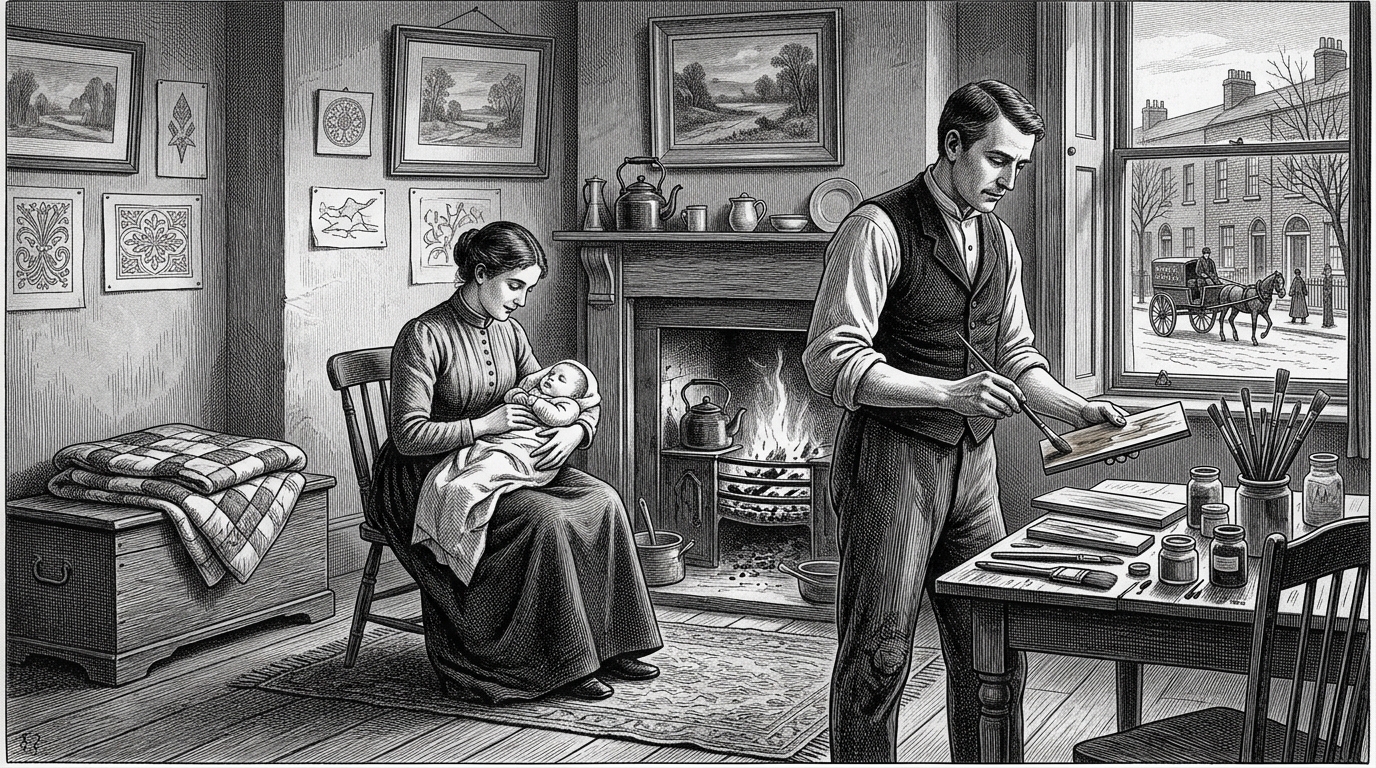
Read Article: Painter BornMaurice Joseph MacGonigal was born in Ranelagh, Dublin, on 22 January 1900, the only son and third child of Francis MacGonigal and Caroline Lane. His father was a painter and decorator from County Sligo, while his mother belonged to a family already connected with Irish craftsmanship and art. Growing up within that environment exposed him to colour, design and skilled manual work long before he entered formal training. The child born in suburban Dublin would eventually become an influential painter, teacher and administrator whose landscapes, portraits and scenes of Irish life secured him a prominent place in twentieth-century Irish art.
MacGonigal attended Synge Street Christian Brothers’ School before beginning an apprenticeship in 1915 at the stained-glass workshop of his maternal uncle, Joshua Clarke. There he worked alongside his cousin Harry Clarke, whose richly detailed windows and illustrations became internationally admired. The workshop gave MacGonigal practical experience in drawing, decorative composition, colour and the careful preparation required for stained glass. He also attended evening classes at the Dublin Metropolitan School of Art. Although he later concentrated upon painting, these early years established the discipline and technical control that remained visible throughout his work as an artist and teacher.
His youth was also shaped by Ireland’s revolutionary struggle. MacGonigal joined Na Fianna Éireann, served as a dispatch rider during the War of Independence and was interned in Kilmainham Gaol and Ballykinlar Camp. After his release in 1921, he withdrew from republican organisations and devoted himself more fully to art. A Taylor Scholarship enabled him to study as a day student from 1923 under painters including Seán Keating, Patrick Tuohy and James Sleator. Visits to the Aran Islands and the west of Ireland deepened his interest in coastal landscapes, fishing communities and the hard physical character of rural life.
MacGonigal began exhibiting with the Royal Hibernian Academy in the 1920s and later became one of its central figures. He was elected an associate, advanced to full membership and served as the Academy’s president from 1962 until 1977. His long teaching career at the National College of Art allowed him to influence generations of Irish students while defending a disciplined figurative tradition. He produced landscapes, portraits, murals, illustrations and theatrical designs, often concentrating upon western scenery and working communities. His art combined academic training with close observation, preserving places and occupations undergoing profound social and economic change.
Limerick retains an important connection with MacGonigal through works held by Limerick City Gallery of Art, including a self-portrait and the large group painting Studio Interior. These paintings allow local audiences to encounter both the artist himself and the educational world in which he taught. His landscapes have also appeared in exhibitions drawn from the Gallery’s permanent collection, placing his work within Limerick’s continuing presentation of modern Irish art. MacGonigal died in Dublin in 1979, but the works preserved in Pery Square ensure that his artistic legacy remains visible to generations of Limerick visitors, students and painters.
- Lawrence William White and Carmel Doyle, “MacGonigal, Maurice Joseph,” Dictionary of Irish Biography, Royal Irish Academy, biographical account of his birth, family, education, revolutionary activity and artistic career.
- Royal Hibernian Academy, membership, exhibition and presidential records concerning Maurice MacGonigal, including his service as president from 1962 to 1977.
- National College of Art and Design, student and teaching records relating to MacGonigal’s artistic education and subsequent career as a professor.
- Hugh Lane Gallery, collection and curatorial records for Maurice MacGonigal, including biographical material and paintings associated with his career.
- Limerick City Gallery of Art, permanent collection and exhibition records for Maurice MacGonigal, including his self-portrait, Studio Interior and landscapes exhibited from the municipal collection.