-
Broadcast Pioneer
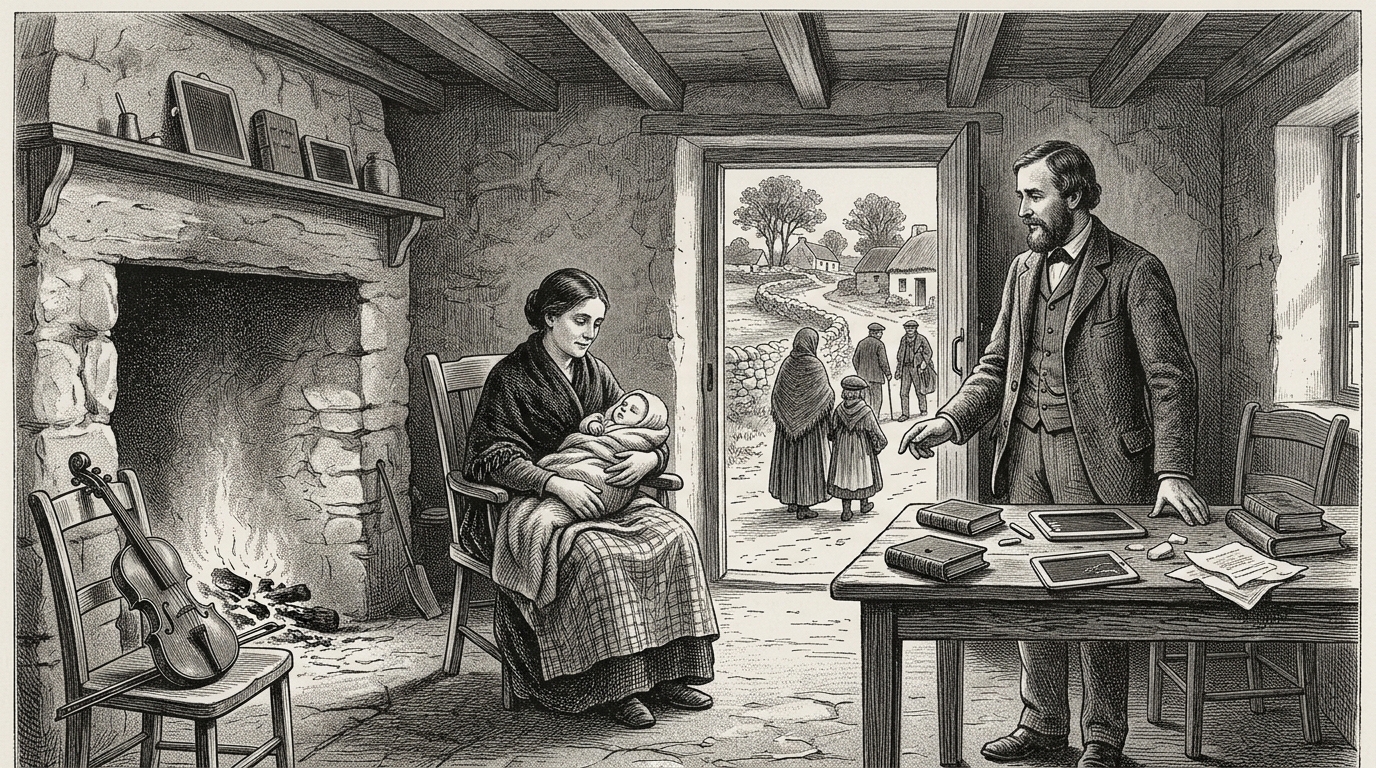
Read Article: Broadcast PioneerSéamus “Clan” Clandillon was born near Gort, County Galway, on 6 June 1878 into a household closely connected with education. His father, William A. Clandillon, was a national school teacher, while his mother, Joanna Little, also came from a family shaped by work, migration and service. The countryside surrounding Gort preserved a strong inheritance of Irish-language speech, traditional singing and local storytelling. These influences entered Clandillon’s life early and later guided his work as a teacher, musician, civil servant and broadcaster. The child born in rural Galway would eventually help determine how the newly independent state presented Irish culture through radio.
Clandillon attended St Flannan’s College in Ennis before entering university in Dublin during the closing years of the nineteenth century. His education brought him into contact with students and teachers involved in the Gaelic revival, which sought to preserve and restore the Irish language after generations of decline. He became fluent in Irish, joined the Gaelic League and developed a reputation as a singer and pianist. Clandillon did not regard traditional music as a decorative remnant of the past. He believed that Irish songs contained language, memory and emotional experience capable of strengthening national identity within a rapidly changing society.
His musical interests were shared by Máighréad Ní Annagáin, whom he later married. Together they collected, arranged and published traditional Irish songs, drawing attention to melodies and lyrics that might otherwise have disappeared. Their work required travel, careful listening and cooperation with singers who had learned music through oral transmission rather than printed notation. Clandillon’s knowledge of regional performance styles later distinguished him from administrators who approached Irish culture chiefly through official policy. He understood that traditional music depended upon individual voices, local communities and subtle variations that could not easily be reproduced by formal choirs or standardised arrangements.
Clandillon combined his cultural interests with careers in teaching and the civil service. He worked in educational institutions before entering government employment and continued performing at cultural gatherings throughout Ireland and Britain. His experience as a singer, organiser and Irish-language advocate eventually brought him to the attention of those planning the new national radio service. In 1925 he was appointed the first director of broadcasting at 2RN. When the station began transmitting on 1 January 1926, Clandillon was responsible for shaping programmes within severe financial and technical limits while trying to serve listeners whose expectations of radio were only beginning to form.
As broadcasting director, Clandillon promoted Irish-language speech, traditional music, public ceremonies, sport and national cultural life. He persuaded Douglas Hyde to deliver the address that opened the station and sought to make radio a meeting place for Gaelic culture across Ireland and neighbouring Celtic regions. His decisions were sometimes criticised, yet his influence upon the early character of Irish broadcasting was considerable. The child born near Gort entered a world without electronic broadcasting, recorded sound in most homes or a politically independent Irish state. By adulthood, he had helped place traditional voices and music at the centre of a new national medium.
- Shaun Boylan and Lesa Ní Mhunghaile, “Clandillon, Seamus (‘Clan’),” Dictionary of Irish Biography, Royal Irish Academy, recording his birth near Gort, County Galway, on 6 June 1878 and outlining his career in music, public service and broadcasting.
- General Register Office, Ireland, civil birth registration for Séamus Clandillon, County Galway, 1878.
- RTÉ Archives, “Séamus Clandillon, 2RN First Director of Broadcasting 1925,” biographical and broadcasting records concerning his appointment and the establishment of Irish radio.
- Séamus Clandillon and Máighréad Ní Annagáin, An Londubh: Dhá Amhrán Déag, Dublin, 1904, collection of traditional Irish songs.
- Nicholas Carolan, “From 2RN to International Meta-Community: Irish National Radio and Traditional Music,” Journal of Music in Ireland, examining Clandillon’s cultural policy and commitment to traditional music.
-
Champion Born
Read Article: Champion BornJoseph Francis Devlin, later known throughout international badminton as Frank Devlin, was born at 11 Wellington Place in Dublin on 19 January. He was the son of Joseph Edmund Devlin, a government official, and his wife, Elizabeth. Nothing surrounding the arrival of the child suggested that he would become one of the most successful competitors in the history of his sport. Badminton remained largely associated with private clubs, schools and middle-class recreation, but the game was developing rapidly. Devlin’s extraordinary ability would eventually carry an Irish player from domestic competition to sustained success at the most prestigious championship in the badminton world.
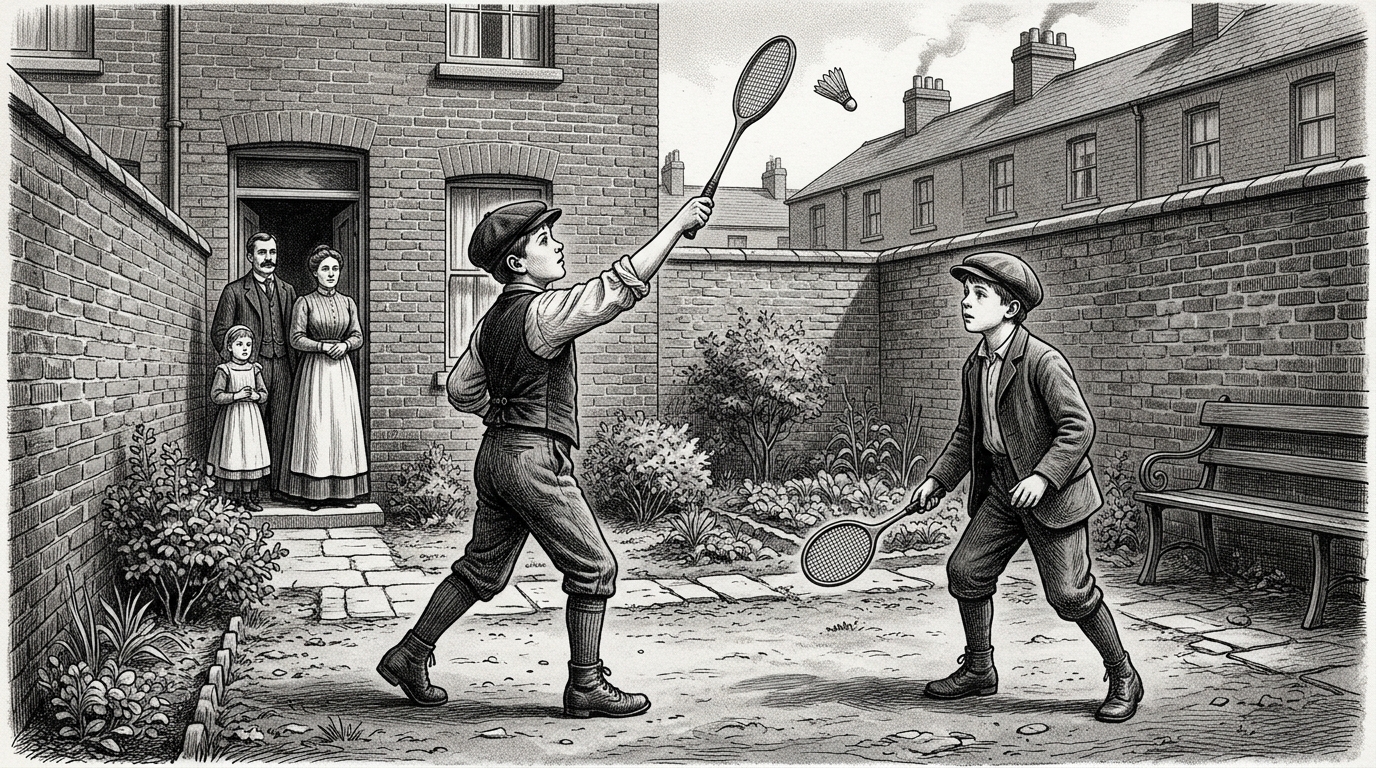
Devlin first encountered badminton informally in the family garden, where he played from childhood with relatives and his friend Gordon Bradshaw Mack, commonly known as Curly Mack. The two boys developed their control and timing without the specialised coaching, equipment or indoor facilities available to later generations. Garden play encouraged quick reactions, accuracy and improvisation, qualities that became central to Devlin’s competitive style. Mack also became an accomplished player, and the friendship formed during childhood later developed into a formidable doubles partnership. Their progress illustrated how a recreation practised within an ordinary Dublin household could provide the foundation for international sporting achievement.
Devlin emerged as a leading competitor during the 1920s, when the All England Championships were regarded as badminton’s unofficial world championship. Between 1922 and 1931 he accumulated eighteen All England titles across men’s singles, men’s doubles and mixed doubles. He won six singles championships and achieved the exceptional feat of securing all three available titles in 1926, 1927 and 1929. His success depended upon speed, control, stamina and tactical intelligence rather than physical power alone. During an era dominated largely by English competitors, Devlin’s repeated victories gave Irish badminton unprecedented visibility and established him among the outstanding racket-sport players of his generation.
His international influence extended beyond tournament victories. Devlin travelled to Canada with touring teams during the 1920s and 1930s, helping to demonstrate and promote badminton while organised associations were developing overseas. He later settled in North America and continued to teach, coach and encourage the sport. His understanding of stroke production, positioning and efficient movement influenced players beyond Ireland and Britain. Badminton remained amateur, meaning that champions received limited financial reward, yet Devlin devoted much of his life to its advancement. His achievements reflected a period when personal reputation, club competition and international exhibition tours were central to the growth of organised sport.
Devlin’s sporting legacy continued through his daughters Susan Devlin and Judy Devlin, both of whom became international champions. Judy developed into one of the greatest women’s badminton players of the twentieth century, while Susan also enjoyed major success in doubles and international competition. Frank Devlin lived until 1988 and was inducted posthumously into the International Badminton Federation Hall of Fame in 1997. His eighteen All England victories left him among the championship’s most successful competitors. The child born at Wellington Place entered Irish sporting history not merely as a prolific winner, but as the founder of a remarkable family tradition that influenced badminton across several countries.
Frank Devlin, Joseph Francis Devlin, Irish badminton, Dublin sport, Wellington Place, All England Championships, badminton champions, Curly Mack, Gordon Bradshaw Mack, Irish sportsmen, racket sports, international badminton, men’s singles, men’s doubles, mixed doubles, Devlin family, Judy Devlin, Susan Devlin, January 1900, Irish sporting history
-
Folklorist Dies
Read Article: Folklorist DiesWilliam Larminie, poet, scholar and collector of traditional Irish stories, died from pneumonia at his home in Bray, County Wicklow, on 19 January. He was fifty years old. Born in Castlebar, County Mayo, in 1849, Larminie had devoted much of his later life to literature, philosophy and the preservation of oral storytelling. His death removed an important figure from the developing Irish cultural revival at a time when scholars and writers were turning increasingly towards the Irish language, mythology and folklore. He was survived by his elderly mother and was buried in the churchyard at Enniskerry.
Larminie was educated at Kingstown School before entering Trinity College Dublin, where he studied classics and graduated in 1871. He later moved to London and worked for the British India Office between 1873 and 1887. Retirement from government employment allowed him to return to Ireland and concentrate upon writing and research. Settling in Bray, he produced poetry influenced by Irish legend while pursuing wider interests in philosophy and language. His life combined the disciplined habits of a civil servant with the imagination of a poet and the patience required to listen carefully to stories preserved through generations of spoken tradition.
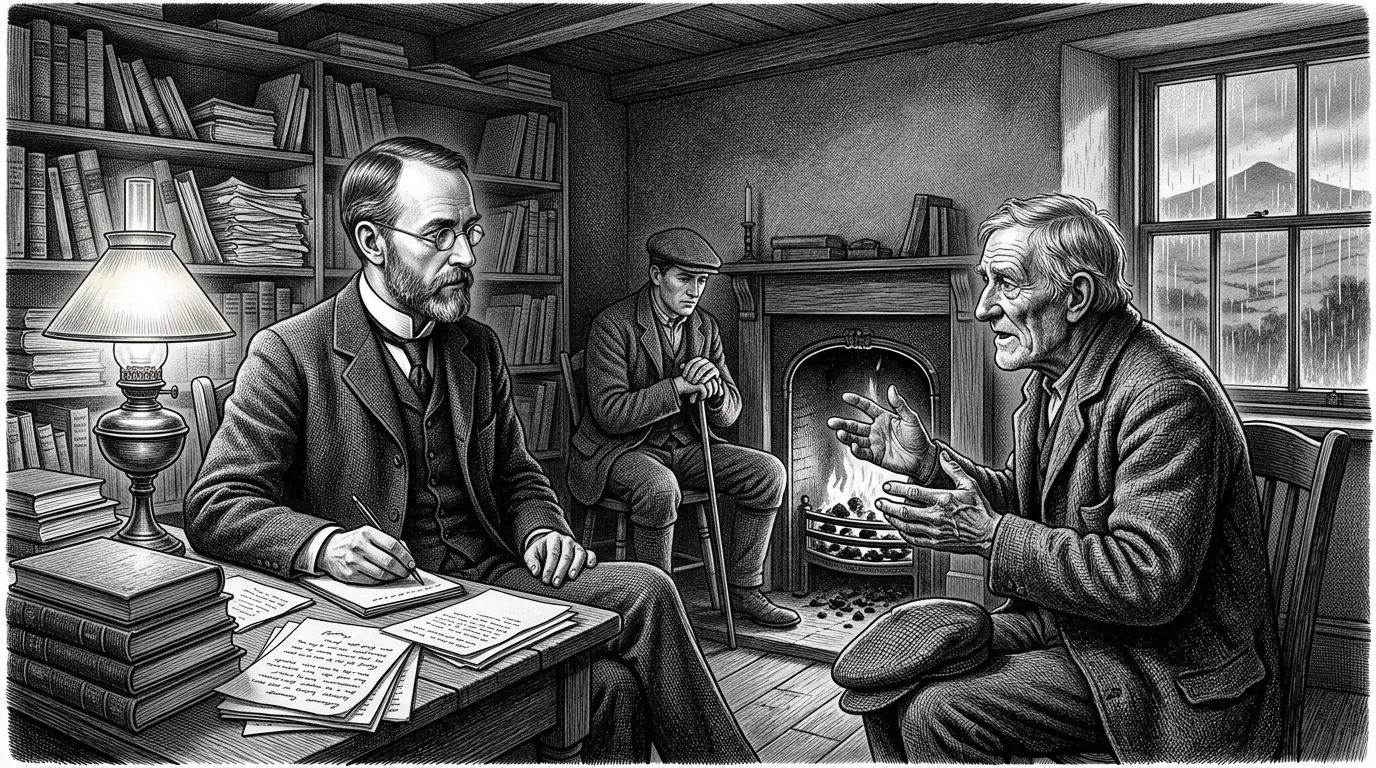
His most enduring achievement was West Irish Folk-Tales and Romances, published in 1893. Larminie gathered the stories from Irish-speaking narrators in counties Mayo, Galway and Donegal, recording tales of enchanted kingdoms, heroic journeys, supernatural encounters and dangerous transformations. He translated the narratives into English while also preserving examples of the original Irish in phonetic form. At a time when the Irish language was declining rapidly, his method helped retain not merely the plots of the stories but traces of the voices and speech patterns through which they had been transmitted. The collection later became an important source for folklorists.
Larminie also published two volumes of poetry, Glanlua and Other Poems in 1889 and Fand and Other Poems in 1892. Drawing upon mythology, landscape and traditional forms, he experimented with assonance and other features associated with Irish-language verse. Like several writers connected with the emerging literary revival, he believed that Ireland’s inherited stories could provide material for modern literature. His work appeared before folklore collecting became a fully organised academic discipline, and he often travelled personally to meet storytellers. These journeys required linguistic knowledge, trust and an ability to preserve material without stripping it of its local character.
During his final years, Larminie worked upon an English translation of De divisione naturae by the ninth-century Irish philosopher John Scotus Eriugena. The translation remained unpublished, but it reflected the breadth of his intellectual interests and his determination to connect Ireland’s philosophical and literary inheritance with contemporary readers. Larminie did not achieve the public fame later enjoyed by some figures of the Irish revival, yet his careful collections preserved stories that might otherwise have disappeared. His death in Bray closed a career devoted to poetry, thought and the spoken imagination of the western Irish countryside.
- Dictionary of Irish Biography, Royal Irish Academy, “Larminie, William,” recording his birth, education, literary career, death from pneumonia in Bray on 19 January 1900 and burial at Enniskerry.
- William Larminie, West Irish Folk-Tales and Romances, London, Elliot Stock, 1893.
- William Larminie, Glanlua and Other Poems, London, Kegan Paul, Trench & Company, 1889.
- William Larminie, Fand and Other Poems, London, Kegan Paul, Trench, Trübner & Company, 1892.
- National Library of Ireland, William Larminie manuscripts, including his unpublished translation of John Scotus Eriugena’s De divisione naturae.
-
League Endorsed
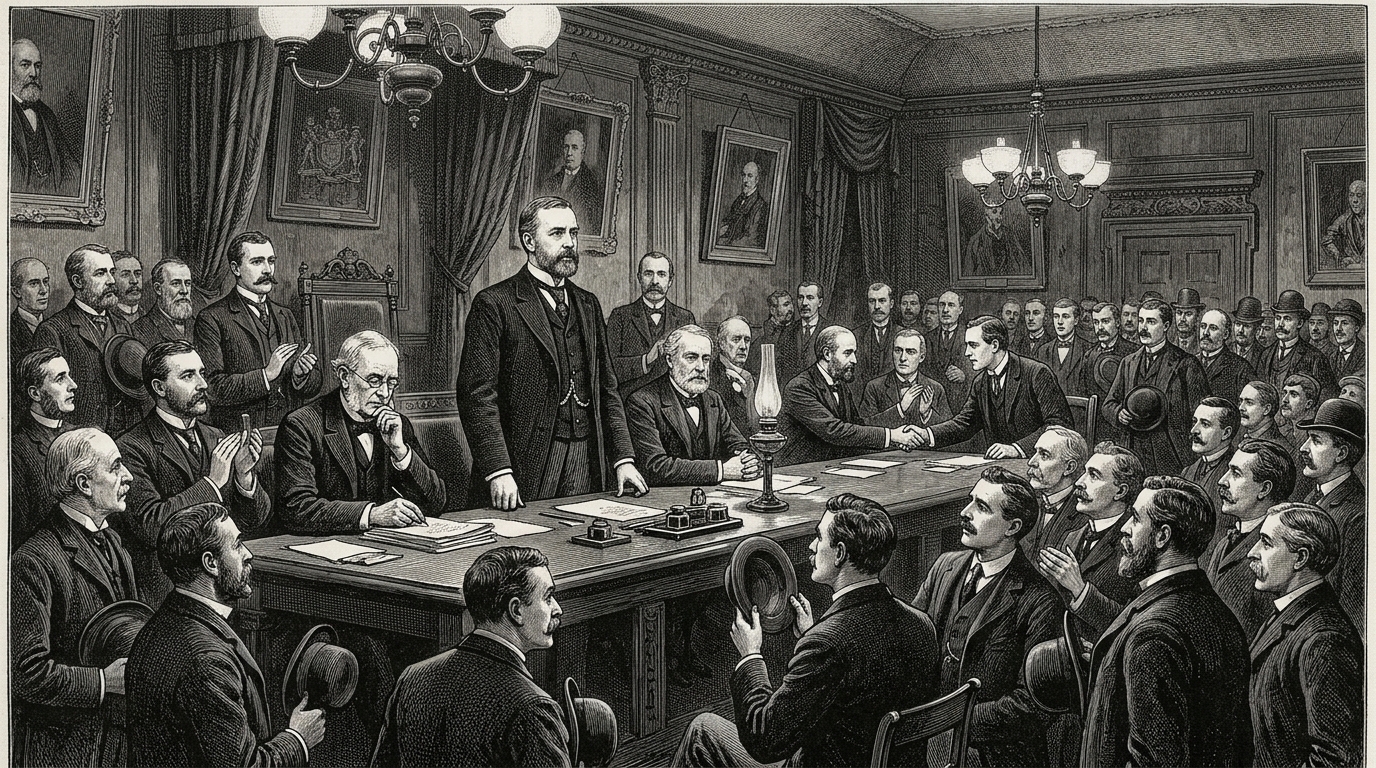
Read Article: League EndorsedThe United Irish League’s campaign for nationalist unity received an important endorsement from parliamentary representatives gathered at Dublin’s Mansion House on 17 January. By appearing together and advancing negotiations for reunion, members of the rival nationalist factions acknowledged the popular demand that had grown around the League since its establishment by William O’Brien in 1898. The organisation had begun chiefly as a campaign for land reform and the enlargement of uneconomic holdings, but its branches increasingly called upon politicians to end the quarrels created by the fall of Charles Stewart Parnell and restore a united parliamentary movement.
The endorsement demonstrated how greatly the balance of influence within constitutional nationalism had changed. During the 1890s, the rival parliamentary groups had maintained separate leaderships, organisations and loyalties while claiming to represent the same national electorate. The United Irish League developed outside those exhausted divisions and gathered support among tenant farmers, rural organisers and local political activists. Its rapid growth gave it an authority that established politicians could no longer dismiss. Representatives attending the Mansion House conference understood that reunion was required not merely to improve their position at Westminster, but to retain the confidence of supporters organising independently throughout Ireland.
William O’Brien had presented political unity as necessary for pursuing the land question with sufficient strength. The League opposed the concentration of extensive grazing lands in relatively few hands and demanded measures that would allow small farmers and congested communities to obtain viable holdings. These economic grievances gave the campaign for unity a practical foundation. Local members were not being asked simply to forget past political quarrels; they were being promised that a reunited movement could exert greater pressure for land purchase, redistribution and national self-government. The Mansion House proceedings indicated that parliamentary representatives were prepared to recognise that argument.
Support for the League did not mean that every politician accepted O’Brien’s methods, programme or growing personal influence. John Redmond, John Dillon, Timothy Healy and their respective followers retained different views about leadership, discipline and the future organisation of the nationalist movement. Some feared that the League might challenge sitting members or allow local activists to control parliamentary selection. Nevertheless, the public endorsement of its appeal for unity strengthened the League’s claim to speak for a broad body of nationalist opinion. The organisation had succeeded in making continued factional conflict appear increasingly indefensible before voters tired of political weakness and personal recrimination.
The development helped prepare the reunion of the Irish Parliamentary Party under John Redmond later in January. It also anticipated the League’s emergence as the principal grassroots organisation supporting the reunited party. The relationship would not remain free from disagreement, but the events of 17 January showed that popular organisation could shape decisions made by parliamentary leaders. The United Irish League had turned land agitation into a broader demand for national political discipline. Its endorsement at the Mansion House represented a significant victory for activists who believed that constitutional nationalism could recover its influence only by reconnecting parliamentary action with organised opinion across Ireland.
- Freeman’s Journal, 18 January 1900, report of the Mansion House conference and negotiations among the nationalist parliamentary factions.
- Philip Bull, “The United Irish League and the Reunion of the Irish Parliamentary Party, 1898–1900,” Irish Historical Studies, volume 26, number 101, May 1988, pages 51–78.
- John Redmond Papers, National Library of Ireland, correspondence and political papers concerning nationalist reunion and the United Irish League.
- United Irish League, Constitution and Rules Adopted by the Irish National Convention, 19–20 June 1900, Dublin, Swan & Company, 1900.
- F. S. L. Lyons, The Irish Parliamentary Party, 1890–1910, London, 1951, discussion of the League’s expansion and its influence upon parliamentary reunion.
-
Rivals Reconcile
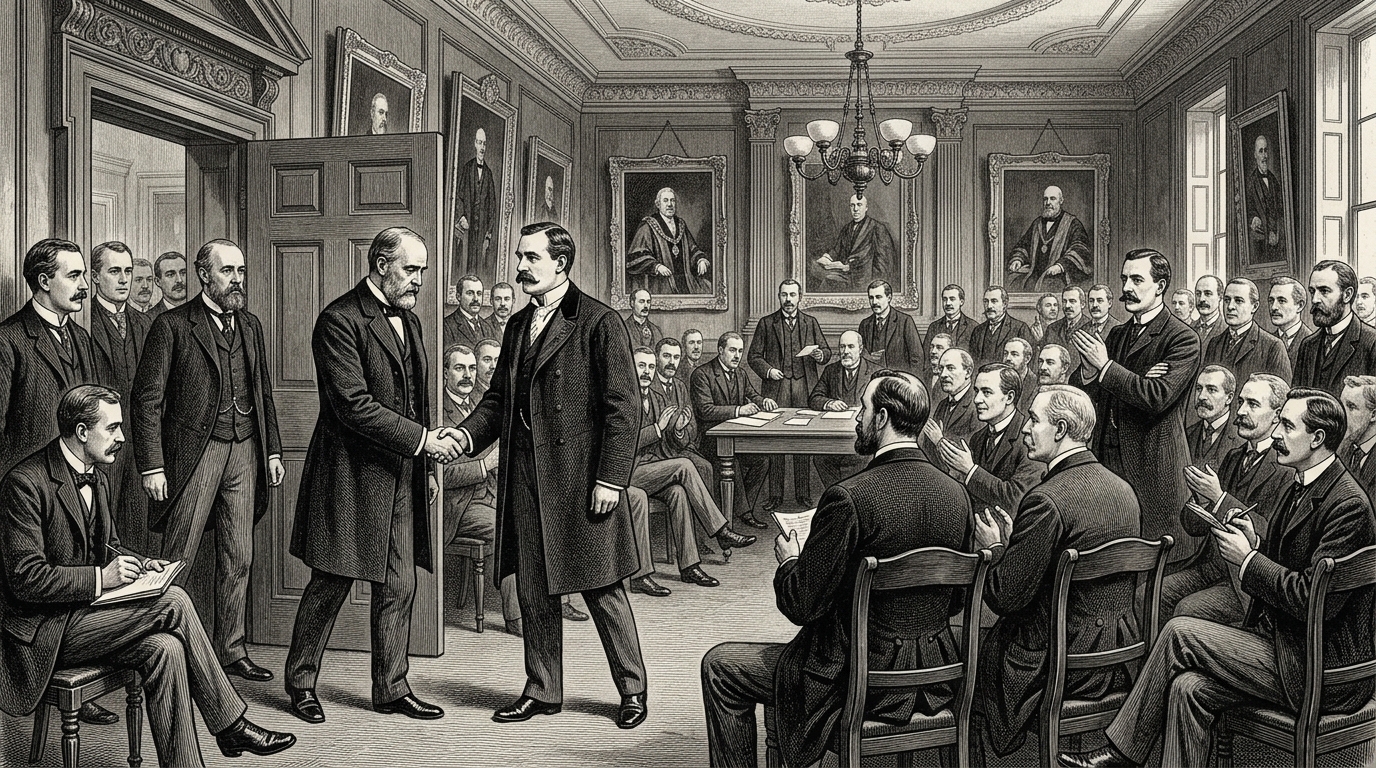
Read Article: Rivals ReconcileParnellite and anti-Parnellite representatives appeared together at Dublin’s Mansion House on 17 January in the most important public demonstration of nationalist reconciliation since the political rupture of 1890. Men who had spent nearly a decade attacking one another from platforms, newspapers and election committees now entered the same civic chamber under intense public scrutiny. Their presence did not erase the bitterness created by the fall of Charles Stewart Parnell, but it offered supporters visible evidence that reunion had become possible. The gathering converted private discussions and cautious approaches into a public acknowledgement that continued division was damaging the wider nationalist cause.
The split had produced competing parliamentary factions, rival political organisations and repeated contests between candidates who professed the same commitment to Irish self-government. John Redmond led the principal Parnellite group, while John Dillon remained influential among the anti-Parnellites and Timothy Healy commanded a separate following. Their disagreements involved leadership, clerical influence, parliamentary discipline and personal loyalties that had hardened through years of controversy. Appearing together therefore required more than ceremonial courtesy. Each faction risked criticism from supporters who regarded reconciliation as surrender, betrayal or an attempt to conceal unresolved disputes beneath a temporary display of unity.
The public character of the gathering carried significance beyond the formal negotiations. Nationalist voters throughout Ireland had grown weary of quarrels that weakened representation at Westminster and diverted attention from Home Rule, tenant purchase and land redistribution. Reports that former opponents had met peacefully allowed local organisers to argue that the divisions were finally being overcome. The Mansion House supplied an appropriately prominent setting, linking the reconciliation effort with Dublin’s civic life and ensuring that newspapers could present the encounter as a national political event rather than another private consultation among parliamentary leaders.
William O’Brien’s United Irish League had created much of the pressure behind the display. Its rapid growth demonstrated that nationalist organisation was reviving outside the established parliamentary factions, particularly among tenant farmers and rural communities demanding action on the land question. League supporters wanted representatives to cooperate rather than preserve disputes inherited from the Parnell crisis. The appearance of the rival groups together suggested that parliamentary leaders understood the danger of becoming separated from popular opinion. Reconciliation offered them an opportunity to reconnect Westminster activity with the expanding network of local branches, public meetings and agrarian campaigning.
The demonstration did not guarantee that every disagreement had been settled, nor did it restore the authority once exercised by Parnell over a disciplined parliamentary movement. It nevertheless marked an unmistakable change in public behaviour. Politicians who had defined themselves through opposition to one another now accepted that national unity required visible cooperation. Their joint appearance helped prepare the formal reunion completed shortly afterwards under the compromise leadership of John Redmond. For supporters who remembered the recriminations of the previous decade, the scene at the Mansion House offered the first convincing public evidence that constitutional nationalism could again act through a common parliamentary organisation.
- Freeman’s Journal, 18 January 1900, reports concerning the Mansion House conference and the joint appearance of Parnellite and anti-Parnellite representatives.
- Irish Daily Independent, January 1900 editions, reports and political commentary concerning nationalist reconciliation and parliamentary reunion.
- John Redmond Papers, National Library of Ireland, correspondence and political material relating to negotiations for reunion in January 1900.
- Philip Bull, “The United Irish League and the Reunion of the Irish Parliamentary Party, 1898–1900,” Irish Historical Studies, volume 26, number 101, May 1988, pages 51–78.
- F. S. L. Lyons, The Irish Parliamentary Party, 1890–1910, London, 1951, discussion of the Parnell split, competing nationalist factions and the reunion of January 1900.
-
Reunion Advances
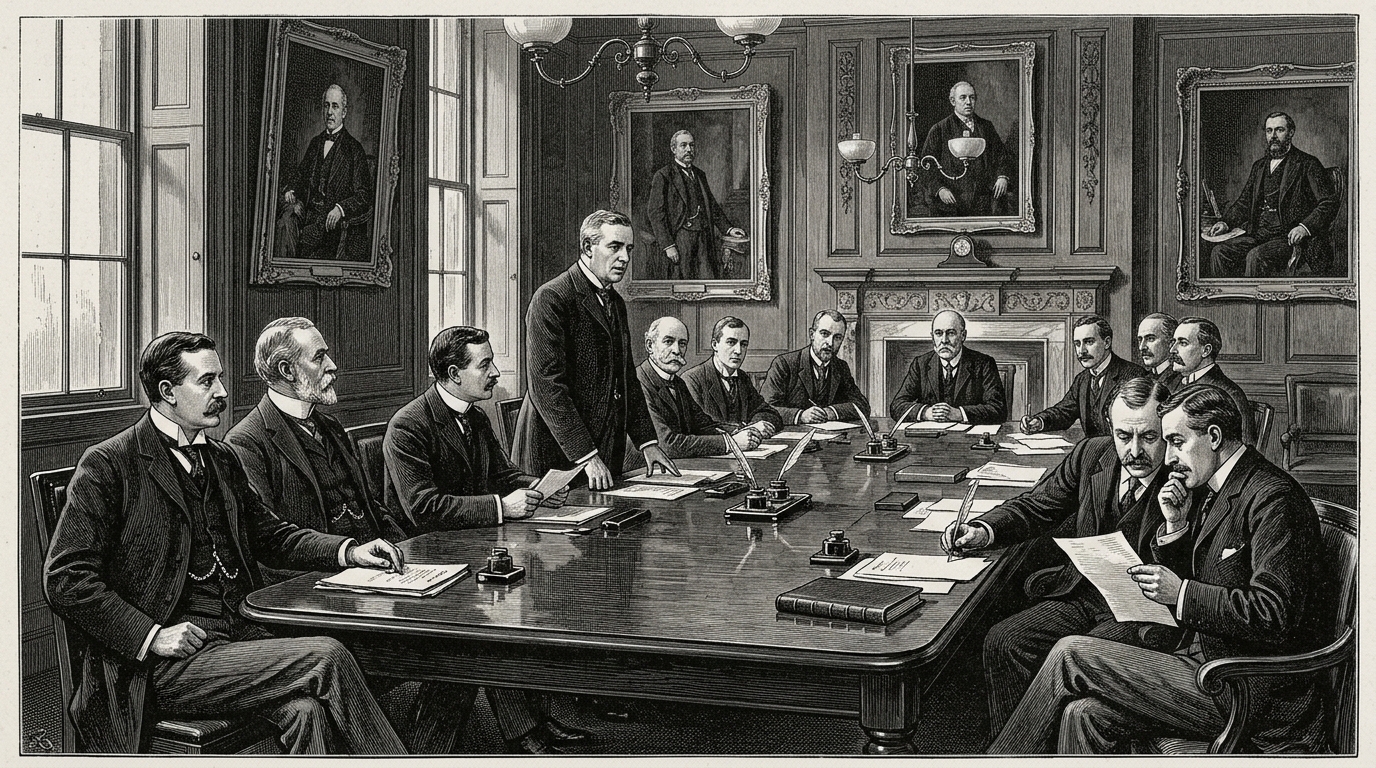
Read Article: Reunion AdvancesNegotiations to reunite Ireland’s divided nationalist parliamentarians advanced formally during the Mansion House conference held on 17 January. Representatives associated with the rival factions created by the fall of Charles Stewart Parnell met in Dublin to consider practical terms for restoring a single parliamentary organisation. Nearly a decade of internal conflict had weakened nationalist influence at Westminster and exhausted many supporters throughout Ireland. The conference did not instantly remove the personal distrust, political grievances and competing ambitions that had accumulated since 1890, but it transformed informal appeals for reconciliation into a structured negotiation between recognised representatives of the opposing groups.
The divisions had originated when Parnell’s leadership became untenable following the divorce crisis involving Katharine O’Shea. Nationalist members divided into Parnellite and anti-Parnellite camps, while rival organisations, newspapers and candidates continued the quarrel after Parnell’s death in 1891. John Redmond emerged as the principal parliamentary leader of the Parnellites, while John Dillon and other prominent figures exercised influence among their former opponents. By the beginning of 1900, many voters regarded the continuing feud as an obstacle to Home Rule, land reform and effective representation. The Mansion House discussions reflected mounting pressure upon the factions to subordinate old resentments to common political objectives.
William O’Brien’s United Irish League provided much of the momentum behind the movement towards reunion. Founded in 1898, the League organised tenant farmers, local activists and nationalist supporters around land redistribution and the revival of disciplined political organisation. Its rapid expansion demonstrated that popular nationalism was no longer prepared to wait indefinitely for parliamentary leaders to resolve their differences. Local branches supplied energy, membership and a programme capable of reconnecting constitutional politics with everyday rural grievances. The parliamentary factions therefore entered the conference knowing that failure to reunite could allow the League and its organisers to exercise increasing authority over nationalist strategy throughout Ireland.
The negotiations required more than expressions of goodwill. Representatives had to consider leadership, parliamentary discipline, relations with the United Irish League and the treatment of organisations created during the split. Each side feared that reunion might involve surrender to former opponents or the abandonment of loyal supporters. The formal progress made at the Mansion House indicated that these difficulties were no longer considered insurmountable. Delegates recognised that a reunited party could contest elections more effectively, speak with greater authority at Westminster and prevent three rival nationalist candidates from weakening one another in constituencies where the broader electorate supported Home Rule.
The conference helped establish the conditions for the formal reunion of the Irish Parliamentary Party later that month, when John Redmond was chosen to lead the combined parliamentary body. Unity did not erase ideological differences or personal hostility, and later disputes would reveal the limits of the settlement. Nevertheless, the negotiations of 17 January restored a framework within which nationalists could act collectively after years of fragmentation. The proceedings represented an important recovery for constitutional nationalism, strengthened the relationship between parliamentary representatives and the United Irish League, and prepared the movement to enter the new century with a recognisable leadership and renewed organisational purpose.
- Freeman’s Journal, 18 January 1900, reporting the nationalist conference and reunion negotiations held at Dublin’s Mansion House on the previous day.
- Irish Daily Independent, January 1900 editions, reports and political commentary concerning negotiations among the nationalist parliamentary factions.
- John Redmond Papers, National Library of Ireland, correspondence and political material relating to the reunion of the Irish Parliamentary Party in January 1900.
- Philip Bull, “The United Irish League and the Reunion of the Irish Parliamentary Party, 1898–1900,” Irish Historical Studies, volume 26, number 101, May 1988, pages 51–78.
- F. S. L. Lyons, The Irish Parliamentary Party, 1890–1910, London, 1951, chapters concerning the Parnell split, the United Irish League and the restoration of parliamentary unity.
-
Nationalist Reunion
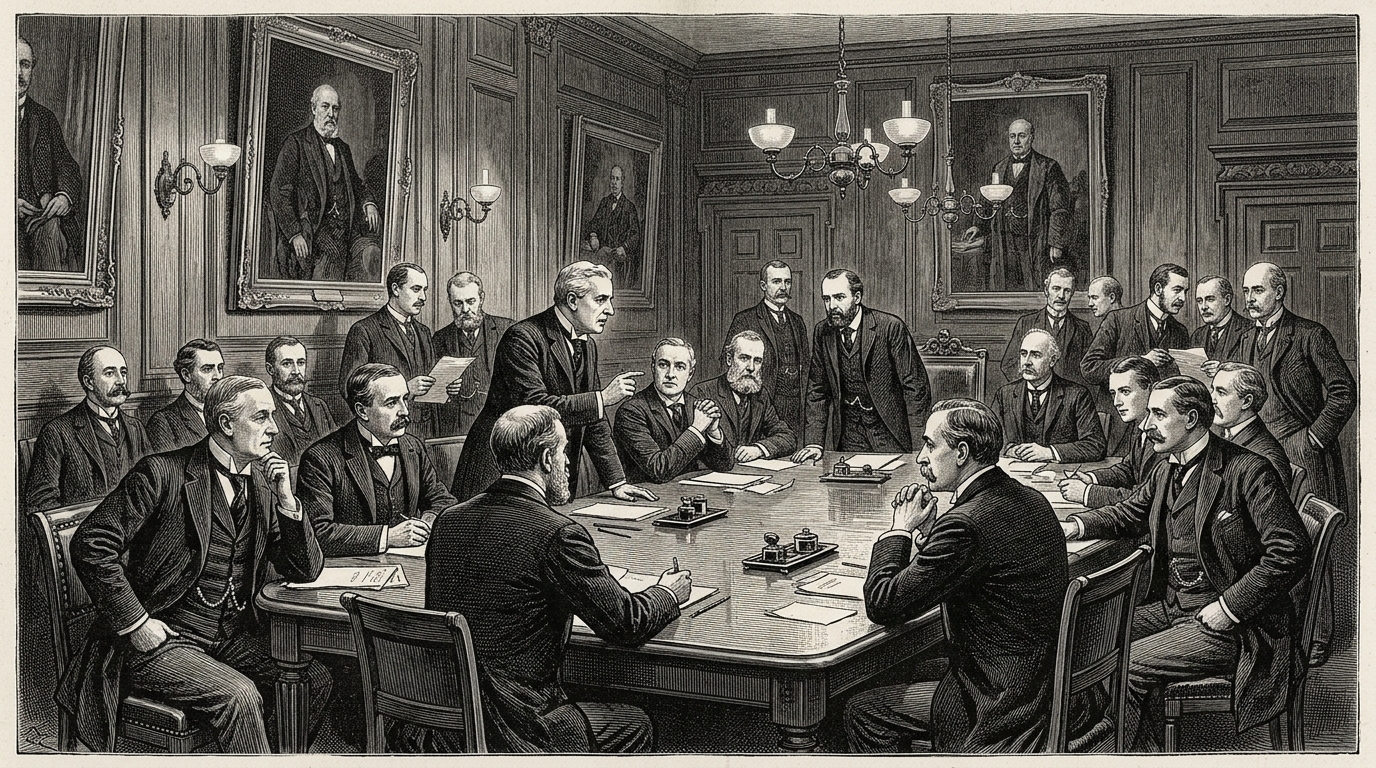
Read Article: Nationalist ReunionRepresentatives of Ireland’s divided nationalist factions assembled in the Oak Room of Dublin’s Mansion House on 17 January in an attempt to restore political unity after nearly a decade of bitterness. The split created by the fall of Charles Stewart Parnell had weakened nationalist organisation, divided parliamentary representatives and produced competing loyalties throughout the country. Those entering the oak-panelled civic chamber carried memories of denunciation, broken alliances and election contests fought between men who claimed to serve the same national cause. Their immediate purpose was to determine whether cooperation could replace factional rivalry before the divisions inflicted further damage upon the Home Rule movement.
The gathering brought together figures associated with the Parnellite and anti-Parnellite traditions, including supporters of John Redmond, John Dillon and Timothy Healy. Agreement was difficult because the dispute had become personal as well as political. Rival newspapers, local organisations and parliamentary groups had sustained the quarrel long after Parnell’s death in 1891. Many nationalists nevertheless feared that continued separation would leave Ireland’s representation at Westminster ineffective. The Mansion House discussions therefore required delegates to distinguish between grievances they considered matters of principle and those that could be set aside for the sake of coordinated political action.
Pressure for reunion had increased through the rapid expansion of William O’Brien’s United Irish League. Founded in 1898, the organisation mobilised tenant farmers, local activists and supporters of land reform while presenting itself as a national movement rooted beyond the parliamentary factions. Its growing influence demonstrated that ordinary nationalist voters were becoming impatient with leadership disputes. The League’s campaign against large grazing farms and its demand for broader land purchase gave political organisation an urgent social purpose. Parliamentary representatives understood that unless they reunited, the popular movement developing outside Westminster might dictate the future direction of Irish nationalism without them.
The choice of the Mansion House carried considerable symbolic weight. Dublin’s official mayoral residence had long served as a setting for civic receptions, political gatherings and expressions of national opinion. The Oak Room, lined with historic panelling and portraits, offered a formal environment in which former opponents could meet without appearing to surrender completely to one another. No single conference could erase the anger produced by the Parnell split, but the assembly allowed competing groups to explore terms for cooperation. Its significance rested less upon immediate declarations than upon the willingness of previously hostile representatives to occupy the same room and negotiate.
The meeting helped prepare the way for the formal reunion of the nationalist organisations in February, when John Redmond was selected as compromise chairman of a reunited Irish Parliamentary Party. Unity did not remove every disagreement, nor did it guarantee lasting harmony among ambitious and strongly opinionated leaders. It did, however, restore a recognisable parliamentary organisation before the approaching general election and reconnect elected representatives with the expanding United Irish League. The Oak Room gathering marked an important stage in the recovery of constitutional nationalism, demonstrating that political necessity and pressure from supporters throughout Ireland could compel divided leaders to seek common ground.
- Freeman’s Journal, 18 January 1900, report of the conference involving the nationalist parliamentary factions at Dublin’s Mansion House.
- Irish Independent, January 1900 editions, reports and commentary concerning negotiations for nationalist reunion.
- United Irish League, resolutions, reports and organisational records concerning the movement for national unity, 1899–1900.
- John Redmond Papers, National Library of Ireland, correspondence and political material relating to the reunion of the Irish Parliamentary Party.
- F. S. L. Lyons, The Irish Parliamentary Party, 1890–1910, London, 1951, discussion of the Mansion House negotiations, the United Irish League and the restoration of party unity.
-
Unlikely Nurse
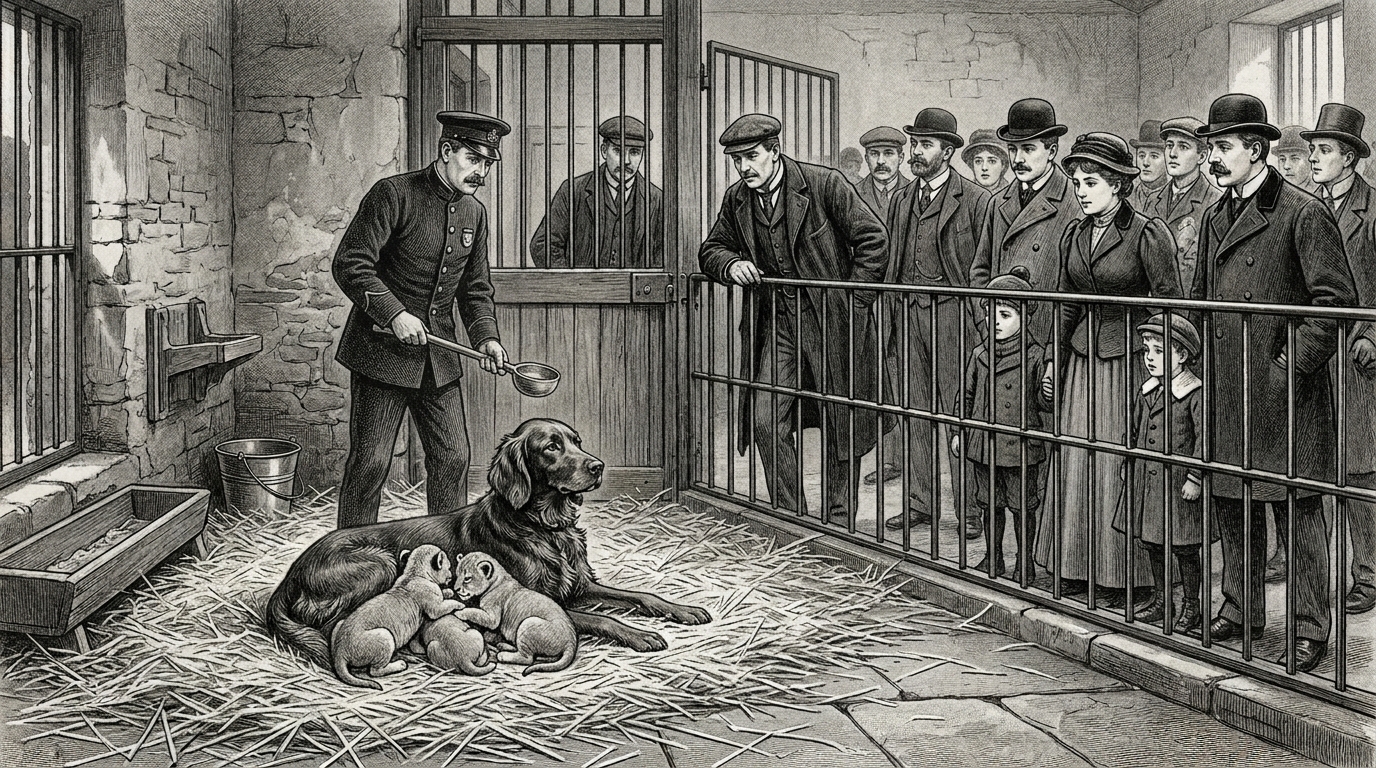
Read Article: Unlikely NurseThree young lion cubs raised with the assistance of an Irish red setter were placed on public view at Dublin Zoo on 16 January, attracting attention to one of the most unusual episodes in the Gardens’ long breeding history. The cubs had been born to the lioness Hypatia, but she refused to nurse them. Keepers were therefore forced to seek another source of milk if the litter was to survive. A goat was first employed for several days before the setter assumed the role of foster mother, accepting the vulnerable cubs and feeding them alongside the close supervision of zoo staff.
The sight of a domestic dog nursing lions brought together animals rarely associated within the same enclosure. Visitors were able to observe the cubs at close quarters while the setter remained calm and protective in their presence. Her success demonstrated the practical improvisation required in zoological collections before specialised artificial feeding methods became widely available. Keepers depended upon experience, judgement and the willingness of suitable foster animals when mothers rejected their offspring. The setter’s temperament made her particularly valuable, since the cubs required regular feeding, warmth and tolerance during the earliest and most dangerous period of their development.
Dublin Zoo had already earned an international reputation for breeding lions, an activity that began during the nineteenth century and supplied animals to zoological collections and travelling exhibitions abroad. Successful litters brought prestige and income, but the survival rate among newborn cubs could be uncertain. Lionesses sometimes failed to rear their young, illness could spread quickly, and keepers possessed only limited veterinary knowledge by modern standards. The birth of three cubs therefore represented both an achievement and a challenge. Their appearance before the public allowed the Society to display the results of its breeding programme while drawing visitors during the quieter winter season.
The episode also reflected contemporary attitudes towards zoological gardens. Animals were presented for education, scientific observation and popular entertainment, although standards of care differed greatly from those expected today. Visitors came to the Phoenix Park to see creatures otherwise known chiefly through books, engravings, imperial exhibitions and travellers’ accounts. The fostered cubs offered an especially memorable spectacle because their survival depended upon an ordinary Irish dog. The contrast between the familiar setter and the exotic lions gave the display its appeal, transforming a difficult problem of animal care into a story readily understood by adults and children alike.
Behind the public curiosity lay the persistent labour of keepers responsible for feeding, cleaning and watching the young animals. The cubs required attention beyond the setter’s nursing, including protection from cold, observation for weakness and careful management as they grew stronger. Their display testified to a rescue effort that had begun when Hypatia rejected them and continued through the temporary use of a goat and the setter’s successful fostering. On 16 January, the unusual family became one of Dublin’s most discussed attractions, offering visitors a striking example of dependence crossing the boundary between domestic animal and wild predator.
- Royal Zoological Society of Ireland, Annual Report for 1899, including the contemporary account and photograph of the Irish red setter nursing the three lion cubs.
- Royal Zoological Society of Ireland, council and animal-register records for 1899–1900 concerning the birth, fostering and exhibition of the lion cubs.
- C. J. Cornish, The Zoological Gardens of Europe: Their History and Chief Features, London, 1902, account of Hypatia’s three cubs being nursed first by a goat and then by an Irish red setter.
- Contemporary Dublin newspaper reports dated 16 and 17 January 1900 concerning the public exhibition of the fostered lion cubs at Dublin Zoo.
- National Library of Ireland, Dublin Zoo annual-report holdings and Royal Zoological Society of Ireland published records.
-
Student Honoured
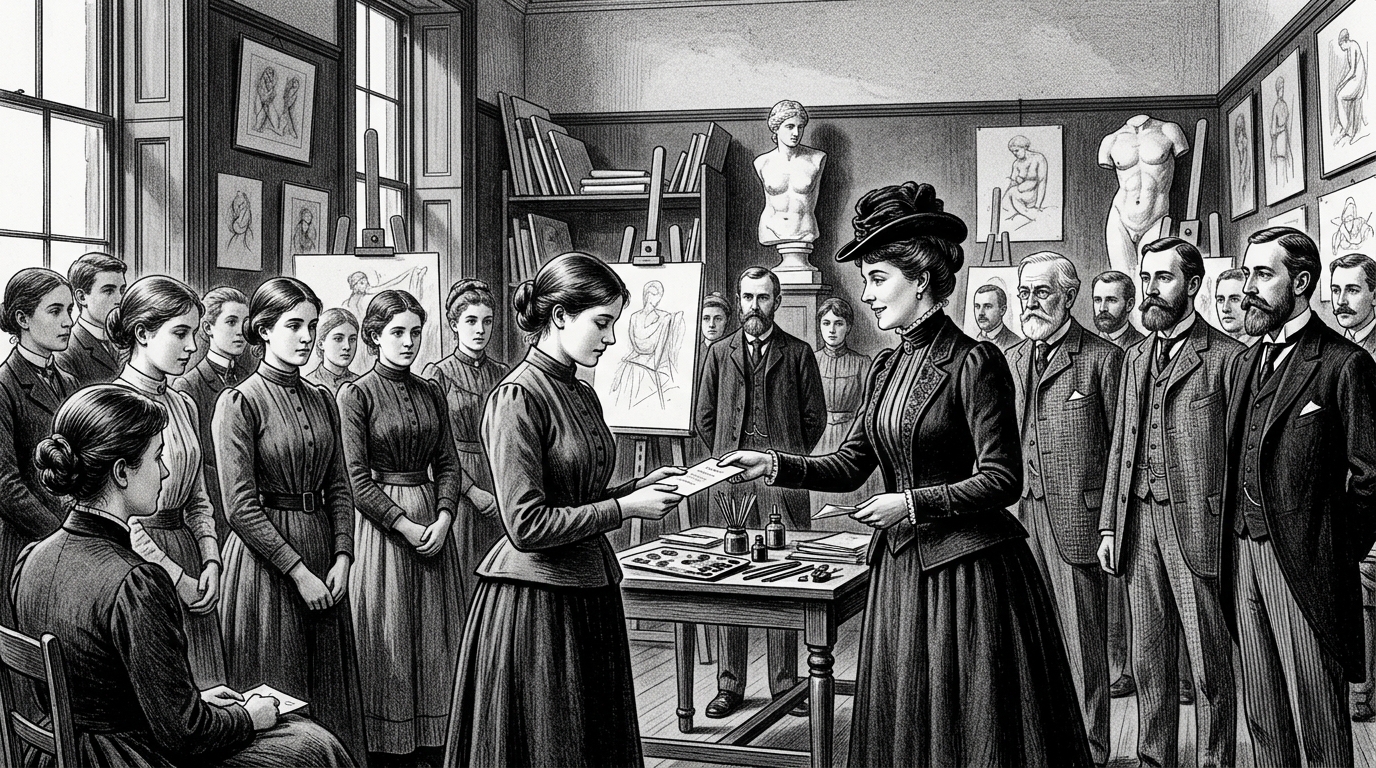
Read Article: Student HonouredDublin art student Eileen Elizabeth Janet Barnes received a prize on 10 January, presented by Countess Beatrix Cadogan, wife of the lord lieutenant of Ireland. The award recognised Barnes’s developing artistic ability during her studies at the Dublin Metropolitan School of Art, one of the country’s principal centres for formal instruction in drawing, painting, design and applied art. Such ceremonies linked student achievement with the highest levels of the administration at Dublin Castle, while providing young artists with public recognition. For Barnes, the presentation marked an early distinction in a career later devoted to exceptionally detailed scientific and botanical illustration.
Born in Dublin in 1876, Barnes was the youngest of ten children of Edwin Barnes, a grocer and wine merchant, and his wife Elizabeth. She attended the Rutland School for Girls before enrolling at the Metropolitan School of Art during the closing years of the nineteenth century. Women were gaining increased access to formal artistic education, although professional opportunities remained limited and often differed sharply from those available to male students. Barnes completed an art teacher’s certificate in 1899, giving her a practical qualification that could support employment while allowing her to continue developing the disciplined observational skills for which she later became known.
The presence of Countess Cadogan gave the prize ceremony additional prominence. As wife of George Cadogan, lord lieutenant from 1895 to 1902, she occupied a highly visible position within Ireland’s viceregal establishment. Women of her rank frequently lent their patronage to education, charitable activity, domestic industries and the arts. Such involvement reflected the social hierarchy of the period, but it could also draw attention to student work and institutions dependent upon public respectability and official support. Barnes’s prize placed a young Dublin woman briefly within that ceremonial world, although her later reputation would rest upon patient work rather than aristocratic patronage.
Barnes eventually developed a specialised career combining artistic skill with natural history. She produced botanical illustrations and three-dimensional models for museum collections, working with leading Irish naturalists and botanists. Accuracy was essential: the shape of a leaf, the arrangement of petals, the colour of a specimen and the smallest structural detail had to be faithfully recorded. Her work helped make scientific information understandable to museum visitors and researchers. Unlike gallery paintings intended primarily for aesthetic appreciation, these illustrations and models served education, classification and public knowledge, demonstrating how artistic training could be applied within scientific institutions.
The prize awarded on 10 January provides an early glimpse of a woman whose contribution remained less celebrated than that of many conventional painters. Barnes later became associated with the National Museum of Ireland, where her precise craftsmanship supported the study and presentation of Ireland’s natural world. Her career occupied the meeting point between art, science, education and museum practice. Each carefully rendered plant or constructed specimen required close observation and technical control. The young student honoured in Dublin would ultimately leave a body of work valued not for fashionable display, but for its accuracy, usefulness and enduring contribution to Irish natural history.
- Niav Gallagher, “Barnes, Eileen Elizabeth Janet,” Dictionary of Irish Biography, Royal Irish Academy, recording the prize presented on 10 January 1900 and Barnes’s subsequent career.
- Dublin Metropolitan School of Art student and examination records, 1898–1900, documenting Eileen Barnes’s enrolment, teacher-training qualification and artistic studies.
- John Lucey, “Eileen Barnes (1876–1956): The Contributions of a Gifted Artist, Scientific Illustrator and Model-Maker to Irish Natural History,” Irish Naturalists’ Journal.
- Patricia Butler, Irish Botanical Illustrators and Flower Painters, Antique Collectors’ Club, 2000, discussion of Barnes and the development of Irish botanical art.
- National Museum of Ireland, Natural History and Antiquities Division records, accession material and staff documentation concerning Barnes’s illustrations, models and museum work.
-
Artist Born
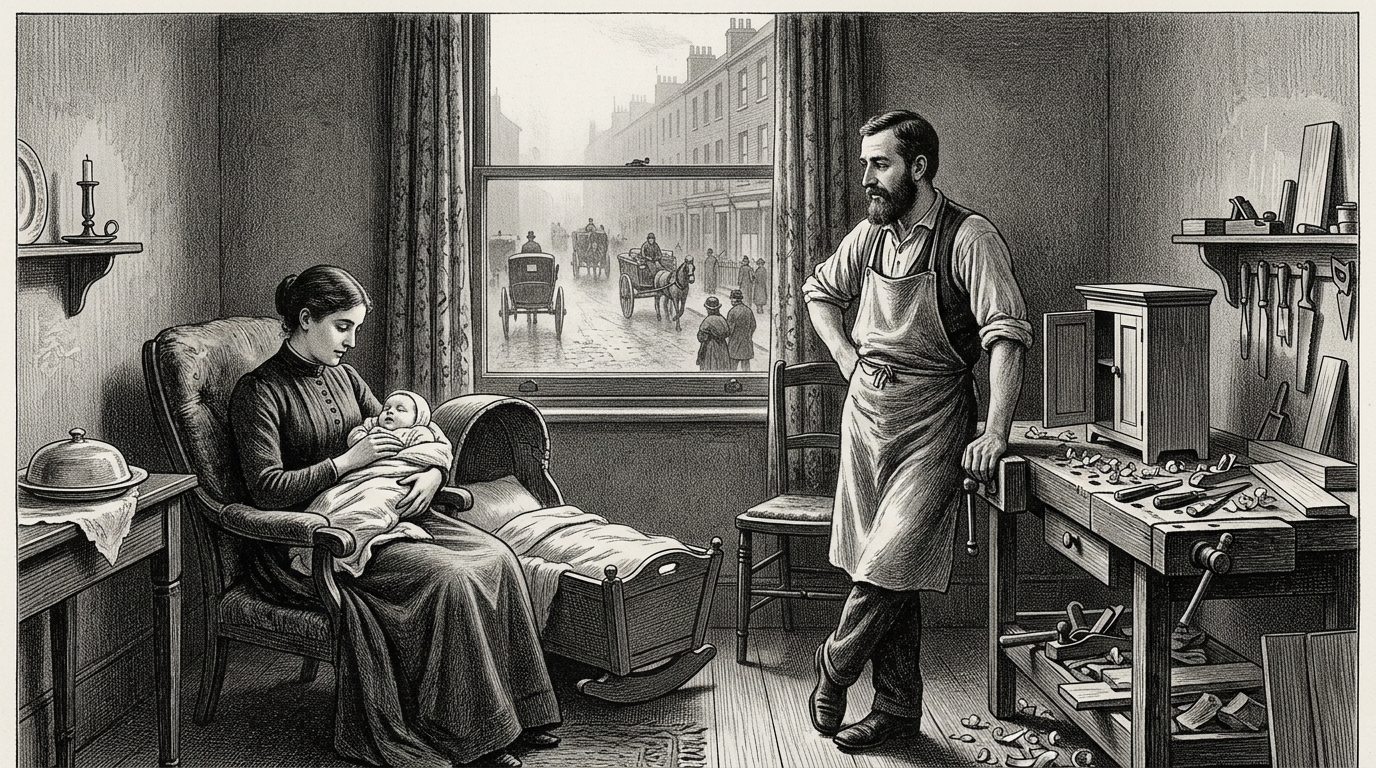
Read Article: Artist BornHarry Aaron Kernoff was born in London on 9 January 1900 into a Jewish family whose origins reached across eastern and southern Europe. His father, Isaac Kernoff, was a furniture maker of Russian-Jewish background, while his mother, Katherine, came from a Sephardic Jewish family. The household combined skilled craftsmanship with the experience of migration, placing the future artist within a world shaped by manual work, cultural inheritance and adaptation. Although born outside Ireland, Kernoff would become closely associated with Dublin and would eventually be recognised as one of the most distinctive visual chroniclers of Irish urban life during the twentieth century.
The craft practised by his father later provided Kernoff with both employment and an early understanding of shape, surface and construction. As a young man, he served an apprenticeship in cabinet-making, learning to work carefully with wood before establishing himself as a professional painter and printmaker. His family moved to Dublin in 1914, when he was fourteen, and settled within the city’s Jewish community. The move brought him into direct contact with streets, markets, public houses, theatres and working neighbourhoods that would supply him with subjects throughout his career, particularly the everyday people and places often overlooked by more formal artistic traditions.
Kernoff studied in evening classes at the Dublin Metropolitan School of Art while continuing to work in the family furniture business. His teachers included artists associated with the changing character of Irish art, and his formal education helped him develop skills in drawing, composition, painting and design. He later received the Taylor Scholarship, an important award for art students, and gradually established a professional reputation. Kernoff exhibited at the Royal Hibernian Academy for the first time in 1926 and continued to show work there regularly, placing scenes of ordinary Irish life within one of the country’s principal artistic institutions.
His paintings, drawings and woodcuts became especially valued for their direct observation of Dublin. Kernoff depicted streets, public houses, theatres, docks, cafés, musicians, labourers and familiar public figures without separating them from the social environments they inhabited. He showed sympathy towards unemployed men waiting for work and recorded the character of places undergoing political, economic and architectural change. His subjects also extended beyond Dublin to landscapes, portraits and scenes encountered during travel. Rather than presenting Irish life as picturesque decoration, he preserved gestures, expressions, occupations and gathering places with humour, precision and sustained interest in ordinary human experience.
Kernoff’s Jewish heritage formed an important part of his identity within Irish cultural life, while his career demonstrated how an artist born abroad could become deeply connected with the streets and people of an adopted city. He produced paintings, theatrical designs, illustrations and three collections of woodcuts, creating a substantial body of work before his death in 1974. Many of his images now serve as visual records of mid-century Dublin, preserving buildings, interiors and social encounters that later disappeared. The child born in London on 9 January 1900 would ultimately become one of Ireland’s most recognisable painters of everyday urban existence.
- Linde Lunney, “Kernoff, Harry,” Dictionary of Irish Biography, Royal Irish Academy, biographical entry recording his birth in London on 9 January 1900 and his family background.
- National Library of Ireland, Harry Kernoff Papers, Collection List No. 2090, containing sketchbooks, correspondence, photographs, exhibition material and records of his artistic career.
- National Gallery of Ireland, collection and curatorial records concerning Harry Kernoff, including his Dublin street scenes, portraits and Sunday Evening, Place du Combat, Paris.
- Irish Jewish Museum, “Harry Kernoff,” biographical account describing his parents, Jewish background, move to Dublin, cabinet-making apprenticeship and artistic education.
- Royal Hibernian Academy exhibition catalogues and annual records from 1926 to 1974, documenting Kernoff’s sustained participation in the Academy’s exhibitions.