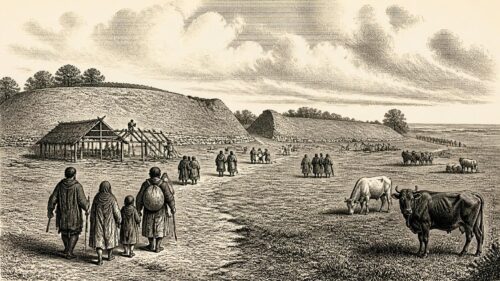
Archived: 28 October 2026
Abstract
In 888, annalistic evidence records a major setback for Flann Sinna, king of Tara, when Dublin-centred foreigners defeated his coalition at the Battle of the Pilgrim. The deaths of Connacht’s king Áed and prominent churchmen exposed the breadth and fragility of Flann’s alliances. Meanwhile, Norse king Sigfrith was killed by a kinsman, and Cerball of Osraige died, altering regional politics. Northern Uí Néill forces campaigned against the south, while Tailtiu’s royal fair was not held. The year also saw Armagh’s abbot die and noted a change affecting religious women, illustrating intertwined political, ecclesiastical and social authority in contemporary Irish society.
Read Article
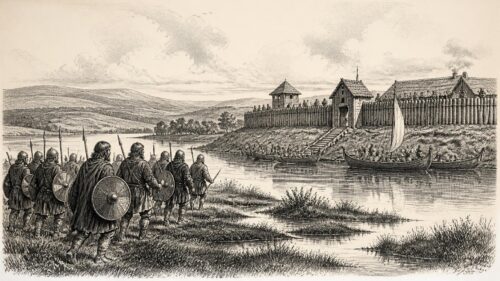
Archived: 28 October 2026
Abstract
In 887, annalistic records describe a Connacht victory over the foreigners of Limerick, though details and dating remain uncertain. The defeat may have destroyed an early Shannon longphort, disrupting Scandinavian power without ending it. Notices also record the pilgrim Anealoen bringing the Law of Sunday and a divinely authorised leaf, alongside reforms concerning hair and tonsure. Deaths of abbots demonstrate monastic influence, while the obituary of Máel Mura of Othain marks the loss of Ireland’s chief poet-historian. Together these sparse entries reveal a society shaped by warfare, religious reform, learning, and interconnected political, ecclesiastical, and maritime worlds across the island.
Read Article
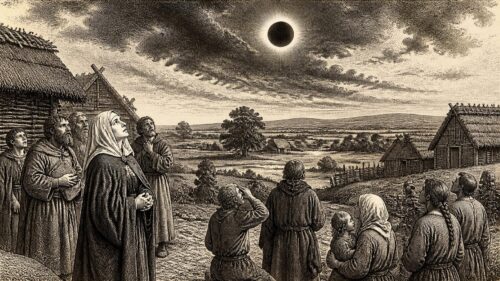
Archived: 28 October 2026
Abstract
On 16 June 885, a total solar eclipse, recorded as daylight darkening and stars appearing, provides a secure chronological anchor for conflicting Irish annalistic dates. The year also brought major losses at Kildare: Abbess Tuileflaith, Bishop Scannal and Muiredach son of Bran, king of Leinster and abbot, died, while a secret killing was reported without explanation. Máel Pátraic, king of Airgialla, was slain by associates. Other royal and ecclesiastical deaths affected Brega, Meath, Clonfert and Glasnevin. No campaign or Viking raid is attested. An alleged speaking infant at Craeb Laisre shows annalists preserved marvels alongside wider political and religious change.
Read Article
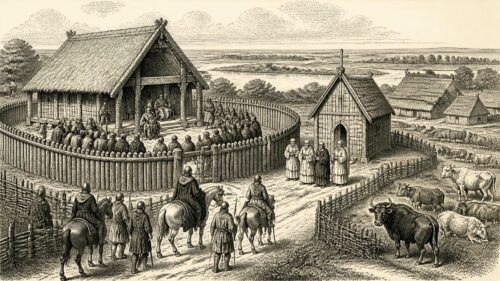
Archived: 28 October 2026
Abstract
In 884, Domnall mac Muirecáin, king of the Leinstermen and member of the Uí Fháeláin branch of Uí Dúnlainge, was killed by his associates in circumstances unrecorded by the annals. His death destabilised Leinster’s contested overkingship; Muiredach mac Brain succeeded briefly, while Domnall’s brother Cerball later gained power. Cairpre mac Dúnlaing, ruler of western Life, also died, though no connection is known. Scannlán, bishop of Kildare, died, affecting a major ecclesiastical institution. These changes occurred amid pressure from Osraige, Tara and Dublin’s Scandinavian power. The sparse records reveal political vulnerability but provide no evidence for a wider campaign or conspiracy.
Read Article
Archived: 28 October 2026
Abstract
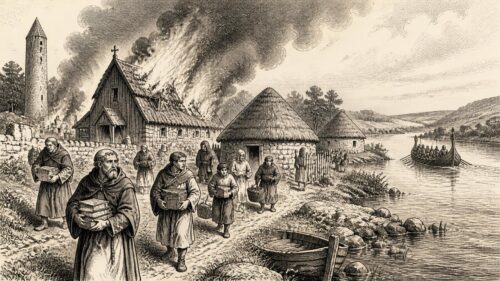
In 883, Les Mór (Lismore), an important Munster monastery on the Blackwater, was burned by an unnamed son of Ímar, illustrating the reach of Scandinavian dynastic violence beyond coastal centres. The annals provide no details of casualties, damage or motive, but the attack threatened a community dependent on religious prestige, land, stores and local support. Elsewhere, Eochucán of Ulaid was killed, Aengus, heir designate of the North, was beheaded, and rulers in Brega and Meath died or were slain. Deaths of bishops at Armagh and Lusca also mattered. These fragmentary records depict contested local kingship, interconnected Irish-Scandinavian politics, and insecurity.
Read Article

