
Archived: 8 September 2026
Abstract
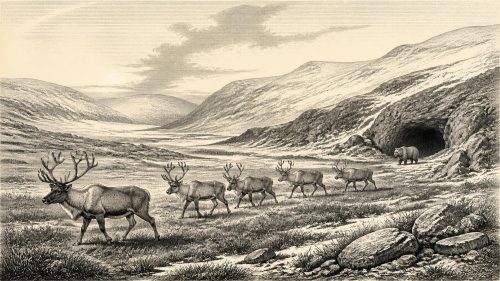
Around 31,978 BCE, Ireland lay in a cold, changing Pleistocene environment before the Last Glacial Maximum, when expanding ice later reshaped much of the island. Evidence is chiefly geological and faunal, with Castlepook Cave near Doneraile providing a significant but uncertain clue to human presence. A reindeer femur, dated roughly 33,000 years ago, bears a possible butchery mark, suggesting intermittent Upper Palaeolithic visitors rather than settlement. Cave remains reveal open tundra-steppe supporting reindeer, giant deer, predators and Arctic mammals. Poor excavation records and disturbed deposits prevent certainty. No camps, tools, hearths, political institutions or specifically Irish cultural practices are known.
Read Article

Archived: 8 September 2026
Abstract
Around 33,900 cal BP, rather than a precisely knowable year, Ireland experienced the cold, unstable later Marine Isotope Stage 3, before the Last Glacial Maximum. Ice and changing climates shaped landscapes, while later glaciation destroyed much evidence of earlier life. Cave finds record reindeer, hares, lemmings, Arctic foxes and larger mammals; dated red deer confirm habitable areas. Castlepook Cave yielded a reindeer femur, about 33,000 years old, with possible stone-tool cut marks, suggesting human carcass processing. However, no securely dated settlement, artefacts, skeletons or cultural affiliation exists. Any visitors were mobile foragers, but beliefs, society, routes and permanence remain unknown.
Read Article
Archived: 8 September 2026
Abstract
Around 34,000 cal BP, during Marine Isotope Stage 3, Ireland was a climatically variable, partly exposed north-west European landscape before the Last Glacial Maximum. Lower sea levels altered coasts and possible access routes. Cave deposits at Shandon, Waterford, and Castlepook, Cork, preserve remains of mammoth, reindeer, horse, giant deer, bear, wolf and hyaena, indicating productive open habitats, though bones span different periods and disturbed contexts. Ice-sheet growth later transformed landscapes and fauna. No securely dated human occupation exists for this time; disputed cut-mark evidence warrants further investigation. Ireland is best understood as a changing Ice Age environment, not a society.
Read Article

Archived: 8 September 2026
Abstract
Circa 31,986 BCE, Ireland was undergoing environmental transition during Marine Isotope Stage 3, before the Last Glacial Maximum. Evidence from Fermanagh sediments and Kerry speleothems indicates that some regions remained ice-free, though climate, coastlines and access routes changed rapidly. Castlepook Cave in County Cork preserves a diverse cold-stage fauna, including mammoth, reindeer, giant deer, carnivores and Arctic mammals, but its deposits represent long-term ecological change rather than a single date. No secure evidence demonstrates permanent human settlement or polity at this time. Expanding British-Irish ice reshaped landscapes, deposits and habitats, determining conditions faced by later post-glacial colonists in subsequent millennia.
Read Article

Archived: 8 September 2026
Abstract
About 31,989 BCE, Ireland lay within Marine Isotope Stage 3, a cold Late Pleistocene interval preceding the last ice sheet’s greatest expansion. Evidence from Fermanagh, notably Derryvree freshwater sediments, indicates locally ice-free, open, treeless tundra or wet muskeg, with sedges, grasses, mosses and pools. Glacial landforms and offshore records show an ice mass developing unevenly, not uniform island-wide cover. Fossils suggest intermittent presence of large mammals, including mammoth and reindeer, but cannot establish contemporaneous communities. Lower sea levels altered coasts and access. No credible evidence demonstrates human occupation. Environmental phase helped create landscapes and conditions encountered by Ireland’s Mesolithic settlers.
Read Article

Archived: 8 September 2026
Abstract
At about 31,991 BCE, Ireland lay within the climatically unstable later Marine Isotope Stage 3, before the Last Glacial Maximum. Growing ice, lower sea levels and changing coastlines transformed habitats and possible access routes, though any land connection with Britain remains uncertain. Castlepook Cave in County Cork preserves key evidence: reindeer, mammoth, giant deer, lemmings, predators and other fauna indicate varied cold open environments. A cut-marked reindeer bone suggests possible Upper Palaeolithic human activity, but cannot prove settlement or continuous occupation. Later glaciation destroyed evidence. Consequently, this period is understood through imprecise dating, cave deposits and reconstruction, not year-specific history.
Read Article

Archived: 8 September 2026
Abstract
Around 32,000 BCE, Ireland lay within the Late Pleistocene, before the British–Irish Ice Sheet reached its maximum extent. Lower sea levels altered coasts, but any land connection to Britain or Europe remains uncertain. Conditions varied regionally, though open, cold steppe-tundra supported reindeer, mammoth, giant deer, bears, wolves, Arctic foxes and fauna. Castlepook Cave, County Cork, preserves animal remains and a reindeer bone possibly bearing stone-tool butchery marks. This tentative evidence may indicate human activity, not settlement. Later glaciation destroyed or buried landscapes, complicating interpretation. Evidence of people in Ireland dates to about 10,860–10,640 BCE, leaving this earlier period archaeologically uncertain.
Read Article

