Archived: 8 October 2026
Abstract
Ireland around 30,117 BCE lay within the climatically unstable Late Pleistocene, as the British–Irish Ice Sheet expanded unevenly and low sea levels reshaped coasts and possible dispersal routes. Derryvree, County Fermanagh, preserves freshwater organic deposits between glacial tills, indicating a treeless, wet tundra-like mosaic during a local ice-free interval. Castlepook Cave, County Cork, contains a time-spanning fauna including reindeer, mammoth, giant deer, predators and cold-adapted small mammals, demonstrating ecological richness but not a single contemporary assemblage. A cut-marked reindeer bone may suggest human carcass processing, yet no secure evidence proves settlement. Regional records reveal ice, water, vegetation and animal movements.
Read Article

Archived: 8 October 2026
Abstract
Labelled 30,118 BCE, this horizon represents an uncertain Late Pleistocene interval, not a precise Irish date. During Marine Isotope Stage 3, Ireland contained shifting ice, periglacial terrain, wetlands and open grazing country as the British–Irish Ice Sheet expanded towards its later maximum. Derryvree sediments indicate local ice-free freshwater environments, while Castlepook Cave preserves cold-adapted fauna including mammoth, reindeer, giant deer, hyaena and wolf. An incised reindeer femur may indicate early human butchery, but its insecure context and lack of associated tools prevent firm conclusions. Later glaciation destroyed much evidence, requiring cautious interpretations based on dated deposits, animal remains and landforms.
Read Article
Archived: 8 October 2026
Abstract
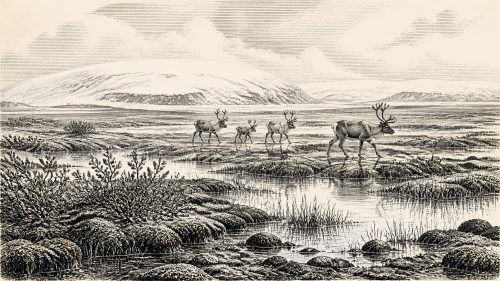
At approximately 30,119 BCE, Ireland lay within the climatically unstable later Marine Isotope Stage 3, beyond precise calendar dating or historical record. At Derryvree, County Fermanagh, organic sediments between two glacial tills document an ice-free local landscape of shallow pools, mosses, sedges, herbs and tundra-like vegetation. They demonstrate regional climatic fluctuation, not an ice-free island. Lower seas and shifting ice altered coasts, while Crag Cave records intermittent conditions. Faunal remains at Castlepook Cave indicate open-country mammals. A marked reindeer bone suggests tentative Upper Palaeolithic human activity, but no secure settlement evidence exists. Environmental change and renewed glaciation define this period.
Read Article

Archived: 8 October 2026
Abstract
Although 30,120 BCE lies within Derryvree’s calibrated radiocarbon range, no year-specific Irish history can be recovered. During unstable Marine Isotope Stage 3, Fermanagh’s Derryvree deposits record an ice-free interval between glacial advances: cold, treeless wetlands of pools, sedges, grasses, mosses, juniper and herbs. Later ice buried and preserved this evidence. Castlepook Cave in Cork contains remains of diverse Ice Age animals, but mixed deposits prevent a single contemporary reconstruction. A modified reindeer bone may indicate brief human butchery, not settlement. Ireland was periodically habitable amid shifting ice and sea conditions, yet lacks evidence for societies, economies, culture or enduring occupation.
Read Article

Archived: 8 October 2026
Abstract
About 30,121 BCE, Ireland lay in a cold, unstable Late Ice Age landscape as the British–Irish Ice Sheet expanded. Open tundra-like habitats, altered coastlines and routes supported cold-adapted fauna, while glaciation later destroyed or buried much evidence. Castlepook Cave in County Cork preserves Ireland’s vertebrate archive for this period, though its mixed deposits span many millennia and were excavated. Bones of mammoth, reindeer, giant deer, hyaena, wolves and Arctic mammals demonstrate animal access. A possibly tool-marked reindeer bone may indicate human activity around 33,000 years ago, but cannot establish settlement, society or sustained occupation. The period remains an environmental history.
Read Article

Archived: 8 October 2026
Abstract
30,122 BCE cannot be reconstructed as a precise year, but falls within a late-MIS-3 interval represented by the Derryvree BIRM-166 organic silt. Deposited between glacial tills in County Fermanagh, it records a locally ice-free freshwater tundra wetland with grasses, sedges, dwarf shrubs, mosses, insects and water plants. Ireland formed an unstable mosaic of ice, periglacial terrain and open habitats before later ice-sheet expansion. Castlepook Cave, County Cork, preserves diverse cold-stage fauna, including mammoth, reindeer and predators, though remains accumulated over time. A marked reindeer bone may indicate human butchery, but sustained occupation remains unproven. Evidence illuminates environmental change, not society.
Read Article

Archived: 7 October 2026
Abstract
30,123 BCE is a modern label for an uncertain Late Pleistocene horizon, not a recorded Irish year. At Derryvree, County Fermanagh, organic freshwater sediments between glacial tills, radiocarbon-dated broadly to this period, preserve bogbean, pollen, mosses and insects. They indicate locally ice-free, treeless tundra wetland with pools, sedges, grasses, herbs and juniper. Ireland experienced changing ice margins before the later Last Glacial Maximum, while lower sea levels did not guarantee access routes. Castlepook Cave, County Cork, contains cold-climate fauna. A possibly tool-marked reindeer bone may indicate human carcass processing, but cannot demonstrate settlement. No evidence supports society, agriculture or institutions.
Read Article

Archived: 7 October 2026
Abstract
About 32,000 calibrated years before AD 1950, Ireland lay within the climatically unstable Late Pleistocene. Derryvree, County Fermanagh, preserves freshwater organic sediments between glacial tills, demonstrating an interval of ice-free, treeless wetland amid advancing ice. Its plants indicate sedges, mosses and hardy herbs in tundra-like, periglacial conditions. Cave remains show that cold-adapted fauna, including reindeer, giant deer, mammoth and hyaena, reached Ireland during wider MIS 3, though not necessarily together. A potentially cut-marked Castlepook reindeer bone suggests, but does not establish, Upper Palaeolithic human presence. Evidence supports environmental change and episodic animal movement, not settlement, society, trade or recorded events.
Read Article

Archived: 7 October 2026
Abstract
About 32,000 years before present, Ireland was a cold, unstable Marine Isotope Stage 3 landscape, increasingly affected by the expanding British–Irish Ice Sheet. Open grassland, steppe and tundra-like habitats supported mobile large mammals, although coasts, ice margins and sea routes remained variable. Castlepook Cave in County Cork, Ireland’s richest pre-Last Glacial Maximum vertebrate archive, preserves time-mixed remains including mammoth, reindeer, giant deer, bear and hyena. Its disturbed deposits cannot prove simultaneous species or human hunting. A possibly cut-marked reindeer bone may indicate a brief human visit, but no secure settlement exists. Growing ice later reshaped terrain and obscured earlier evidence.
Read Article

Archived: 7 October 2026
Abstract
Thirty-thousand years BCE is a modern chronological label, not a recoverable Irish year. Around this period, during MIS 3, Ireland experienced fluctuating climates and advancing, retreating ice. At Derryvree near Maguiresbridge, freshwater silts between two tills, broadly dated to 34,950–29,750 BCE, preserve cold treeless wetland plants and insects, demonstrating locally habitable refuges between glacial episodes. Castlepook Cave’s imperfectly recorded fauna, including mammoth, reindeer, giant deer and predators, indicates connections with wider mammoth-steppe ecosystems. A possible cut-marked reindeer bone may suggest human presence, but no secure evidence establishes settlement. Environmental instability, later glaciation and fragmented survival of evidence prevent conventional history.
Read Article
Archived: 7 October 2026
Abstract
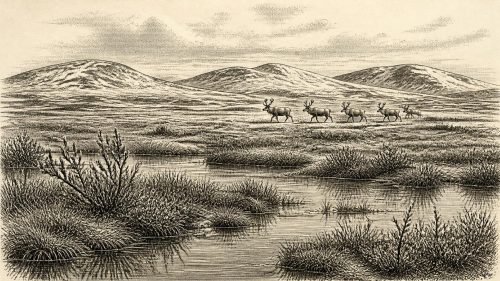
Rather than a precise historical year, 30,127 BCE denotes a Late Pleistocene, Marine Isotope Stage 3 interval of climatic instability before the Last Glacial Maximum. Ireland comprised shifting cold environments, with uncertain ice extent. Derryvree, County Fermanagh, preserves a buried freshwater wetland, dated broadly to this period, whose plants indicate treeless periglacial conditions and shallow water. Castlepook Cave, County Cork, contains a long, disturbed accumulation of mammal bones, including mammoth, reindeer and hyaena, demonstrating diverse Ice-Age fauna. A cut-marked reindeer femur may indicate human butchery, but cannot prove settlement. Evidence reveals ecological richness, not a historical chronicle for this island.
Read Article

Archived: 7 October 2026
Abstract
Thirty thousand years BCE is not a precise recoverable Irish date, but falls within unstable late Marine Isotope Stage 3. At Derryvree, County Fermanagh, organic sediments between glacial tills, dated broadly to 36,900–31,700 calibrated years BP, preserve a cold, treeless freshwater wetland of mosses, sedges, hardy plants and periglacial insects. Ireland experienced shifting ice margins before the later glacial maximum, with fragmented evidence of changing environments. Castlepook Cave, County Cork, records cold-adapted mammals, including mammoth, reindeer and giant deer, across long periods. A possibly tool-marked reindeer bone may indicate a human visit, but no evidence demonstrates settlement, culture or institutions.
Read Article
Archived: 7 October 2026
Abstract
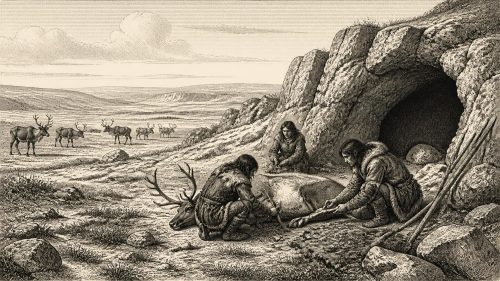
About 32,000 calibrated years BP, Ireland lay within an unstable Ice Age environment, as ice, sea levels and climates changed over periods. The British–Irish Ice Sheet's local extent remains uncertain, while open tundra-steppe supported reindeer, mammoth, horse and predators. Castlepook Cave, County Cork, produced a reindeer femur with a possible stone-tool cut or chop, tentatively indicating Palaeolithic human handling around 31,000 BC. However, disturbed deposits, antiquarian excavation and absence of associated tools or habitation evidence prevent claims of settlement or continuity. The record instead suggests possible brief hunter incursions amid ecological opportunity, reconstructed through fragmentary bones, sediments, landforms and dates.
Read Article
Archived: 7 October 2026
Abstract
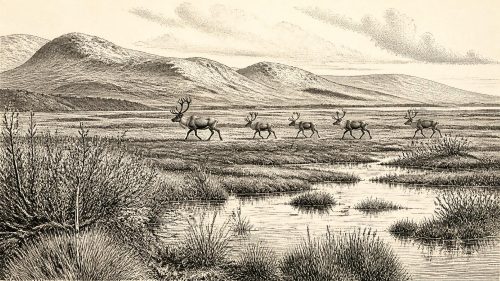
At roughly 32,000 years before present, Ireland lay within the climatically unstable Marine Isotope Stage 3. Evidence from sediments, fossils, caves and glacial landforms permits environmental reconstruction but not precise history. At Derryvree, County Fermanagh, freshwater deposits between tills record tundra-like marsh vegetation, aquatic life and ice-free conditions during a broad calibrated interval encompassing 30,132 BCE. Castlepook Cave, County Cork, preserves remains of mammoth, reindeer, giant deer and predators, though its mixed deposits cannot establish contemporaneity. A cut-marked reindeer bone may indicate human activity, but no secure settlement evidence exists. Later glaciation erased much evidence, leaving a fragmentary environmental record.
Read Article

Archived: 7 October 2026
Abstract
Around 30,134 BCE, Ireland was approaching the Last Glacial Maximum, although ice expansion varied regionally and no precise annual reconstruction is possible. Cave deposits, notably Castlepook near Doneraile, preserve a disturbed, long accumulated record of MIS 3 fauna, including mammoth, giant deer, reindeer, bears, wolves, foxes, hyaenas and lemmings. These remains indicate intermittent open, treeless cold habitats and connections with north-west Europe, not a uniform national fauna. Human occupation remains unproven: a possibly butchered reindeer bone suggests brief presence but lacks secure context. Growing ice fragmented habitats and obscured evidence, leaving ecological change rather than social or political history here.
Read Article

Archived: 7 October 2026
Abstract
About 30,136 BCE, Ireland lay within the cold, changing environment of Marine Isotope Stage 3, as conditions developed towards later extensive glaciation. Open steppe-tundra, sparse vegetation and periglacial processes characterised landscapes, although ice extent, coastlines and access remained uncertain. Castlepook Cave in County Cork preserves time-averaged remains of mammoth, reindeer, deer, bears, wolves, foxes, hares, lemmings and hyaenas, indicating intermittent use by cold-adapted fauna. Revised dating and disturbed deposits prevent reconstruction of a single moment. A cut-marked reindeer bone may indicate an early human visit, but permanent settlement, social organisation and economy remain unproven; environmental change is the historical theme.
Read Article

Archived: 7 October 2026
Abstract
Around 30,137 BCE, Ireland lay within the climatically unstable Marine Isotope Stage 3, and evidence permits no precise annual reconstruction. At Derryvree, County Fermanagh, organic sediments between glacial tills record a temporary, cold ice-free wetland, with grasses, sedges, bogbean and water-milfoil, later buried by advancing ice. Castlepook Cave, County Cork, preserves fauna including reindeer, mammoth, giant deer, bear, hyaena and Arctic lemming, indicating links with wider Europe. A possibly cut reindeer bone suggests, but cannot confirm, human visits. No settlement, tools, institutions or culture are securely attested. Ireland was a dynamic, intermittently habitable landscape approaching more extensive regional glaciation soon.
Read Article

Archived: 7 October 2026
Abstract
Around 30,139 BCE, Ireland was a climatically unstable Late Pleistocene landscape approaching extensive glaciation. Ice was advancing unevenly, while lower sea levels connected the island ecologically to wider north-west Europe. Castlepook Cave near Doneraile yielded reindeer, mammoth, giant deer, predators and cold-adapted smaller mammals, indicating open steppe-tundra habitats and complex food webs. A marked reindeer bone may indicate human butchery about 33,000 years ago, but poor excavation records and absent associated artefacts preclude claims of settlement. Any visitors were likely mobile foragers. Glaciation reshaped terrain and obscured earlier evidence, leaving uncertainty central to this period’s history and its interpretation today.
Read Article
Archived: 7 October 2026
Abstract
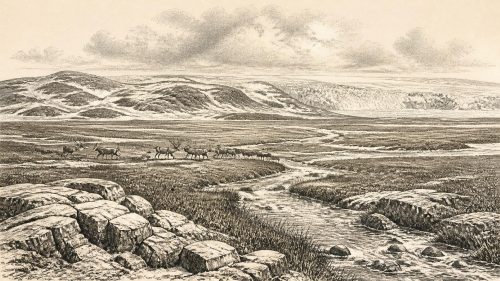
Around 30,140 BCE, Ireland faced severe climatic deterioration as the British–Irish Ice Sheet expanded, although local conditions varied. Later glaciation and changing seas destroyed or obscured much evidence, preventing precise reconstruction. Exposed areas supported treeless tundra, grassland and sparse scrub inhabited by mammoth, reindeer, giant deer, predators and smaller cold-adapted animals. Castlepook Cave in County Cork preserves important faunal remains and a debated cut-marked reindeer bone, possibly indicating brief Upper Palaeolithic human activity. However, no settlement, tools, human remains or cultural assemblage confirms permanent occupation. Travel routes remained uncertain and hazardous. Ireland’s environment is better documented than its possible visitors.
Read Article

Archived: 7 October 2026
Abstract
About 30,141 BCE, Ireland’s record permits environmental reconstruction rather than annual history. At Derryvree, County Fermanagh, freshwater organic sediments between glacial tills, broadly dated to 36,900–31,700 calibrated years BP, show an ice-free interval before later ice returned. Plant, insect and aquatic remains reveal treeless tundra-like wetlands, with sedges, mosses, bogbean and shallow pools. Ireland’s ice cover and coastal geography varied greatly during this unstable period. Castlepook Cave preserves wider Pleistocene fauna, including mammoth, reindeer, giant deer and predators, but not a single contemporary community. A cut-marked reindeer bone suggests an early human visit, although permanent settlement there remains unproven archaeologically.
Read Article

Archived: 7 October 2026
Abstract
30,142 BCE is a modern chronological label, not a recoverable Irish historical year. During Marine Isotope Stage 3, Ireland experienced uneven climatic change, with expanding ice, exposed land, wetlands and animal routes preceding the Last Glacial Maximum. Derryvree, County Fermanagh, preserves a radiocarbon-dated tundra-like wetland between till layers, demonstrating cold but temporarily ice-free conditions. Castlepook Cave, County Cork, contains MIS 3 fauna including mammoth, reindeer, giant deer and hyaena, although deposits span different periods. A cut-marked reindeer bone suggests possible Upper Palaeolithic visitors, but no secure settlement evidence exists. Environmental uncertainty and fragmentary preservation define this deep past in Ireland.
Read Article
Archived: 7 October 2026
Abstract
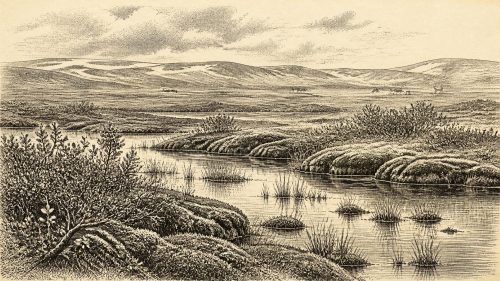
Although 30,143 BCE is a modern, imprecise conversion, Derryvree, County Fermanagh, provides Ireland’s strongest evidence for conditions within this later Pleistocene interval. Freshwater sediments, dated broadly to 36,900–31,700 calibrated BP, lay between glacial tills, recording open water, marsh, tundra vegetation and severe periglacial climate before renewed ice advance. Castlepook Cave, County Cork, preserves a mixed fauna including mammoth, reindeer, giant deer, predators and smaller cold-adapted animals, demonstrating ecological links beyond Ireland. No secure human settlement is known. A possibly cut-marked reindeer bone suggests brief human presence, but remains uncertain. Together, sites reveal regionally varied, unstable environments, not fixed political history.
Read Article

Archived: 7 October 2026
Abstract
At the notional date of 30,144 BCE, Ireland’s past is reconstructed from fragmentary environmental evidence rather than historical events. Derryvree, County Fermanagh, preserves freshwater silts formed during an ice-free interval, indicating treeless tundra, wetlands and severe periglacial conditions before renewed glaciation. Castlepook Cave, County Cork, contains remains of reindeer, mammoth, giant deer, hyaena and other cold-climate fauna, demonstrating varied open-country ecosystems and continental connections. A marked reindeer bone may indicate early human carcass processing, but no secure settlement or population is known. Ice extent, coastlines and chronology remain uncertain; later ice advances destroyed much evidence across Ireland over subsequent millennia.
Read Article
Archived: 7 October 2026
Abstract
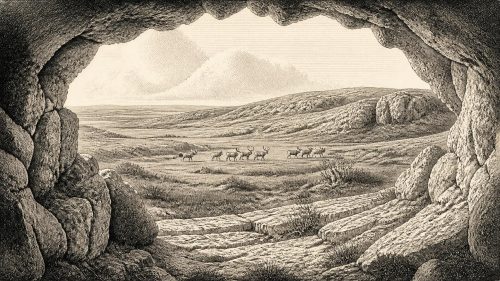
Thirty thousand years BCE is a notional marker within Ireland’s Late Pleistocene, not a securely datable historical event. Amid unstable pre-Last Glacial Maximum conditions, ice, periglacial processes, altered sea levels and open habitats shaped a landscape. Castlepook Cave, County Cork, preserves Ireland’s vertebrate record, including mammoth, giant deer, reindeer, bears, hyenas and later cold-adapted fauna, although its deposits span millennia and are disturbed. A cut-marked reindeer femur, perhaps 33,000 radiocarbon years old, may indicate human carcass processing with a stone tool. It cannot prove settlement, continuity or society. Later glaciation likely destroyed evidence; research may clarify tentative early human presence.
Read Article

Archived: 7 October 2026
Abstract
Around 30,147 BCE, Ireland was entering major glacial expansion during Marine Isotope Stage 3, although dating and ice limits remain uncertain. Growing upland glaciers merged towards the British–Irish Ice Sheet, particularly around the North Channel and northern Ireland, while southern ice remained more localised. Ice and meltwater reshaped bedrock and sediments, contributing to landscapes formed through repeated glaciations. Ice-free areas supported cold, open, variable vegetation and, at different times, fauna including reindeer, mammoth and giant deer. Cave evidence requires reassessment through improved dating. No secure human occupation exists; a modified reindeer bone suggests only an unproven, transient Upper Palaeolithic visit.
Read Article

Archived: 7 October 2026
Abstract
Labelled 30,148 BCE, this period in Ireland belongs broadly to unstable Late Pleistocene MIS 3, not a dated historical year. At Derryvree, County Fermanagh, freshwater silts sealed between glacial tills, radiocarbon dated within a wide range encompassing the nominal date, reveal a temporary cold, periglacial wetland. Mosses, sedges, bogbean, dwarf willow and other Arctic-alpine plants indicate open, largely treeless tundra. Castlepook Cave fauna demonstrates varied Ice-Age animals, though not necessarily contemporaneous communities. Human occupation remains unproven: a possibly cut-marked reindeer bone suggests only a tentative visit. Changing ice, sea levels and connectivity created a dynamic, regionally varied landscape over millennia.
Read Article

Archived: 7 October 2026
Abstract
Although labelled 30,149 BCE, this period cannot be dated precisely and is understood through broad environmental evidence from Marine Isotope Stage 3. Ireland experienced fluctuating cold conditions before the Last Glacial Maximum, with changing ice, sea levels and land connections. Derryvree, County Fermanagh, preserves a local ice-free freshwater wetland, supporting treeless vegetation, insects and marsh habitats. Southern caves reveal a diverse earlier fauna, including mammoth, reindeer and giant deer, though deposits are time-averaged and giant deer cannot be securely assigned to this date. Human presence remains unproven. The surviving record documents climatic instability, ecological change and glacial erosion across Ireland.
Read Article

Archived: 7 October 2026
Abstract
30,150 BCE denotes an approximate late-Marine Isotope Stage 3 horizon, rather than a recoverable Irish year. Ireland experienced unstable cold conditions before maximum British-Irish ice expansion, with local ice-free intervals indicated by Crag Cave speleothems. Castlepook Cave, County Cork, preserves a fauna including reindeer, mammoth, giant deer, predators and tundra species, demonstrating open habitats. A National Museum reindeer femur, possibly cut by a stone tool and dated around 31,000–33,000 BCE, may indicate Ireland's human activity. However, disturbed context and explanations preclude proof of settlement. Glaciation and later landscape change destroyed evidence, leaving caves as archives of change and hunter presence.
Read Article

Archived: 7 October 2026
Abstract
Around 30,152 BCE, Ireland lay within the climatically unstable Late Pleistocene, before the Last Glacial Maximum. Evidence cannot identify events in a single year, but Derryvree sediments in Fermanagh reveal locally exposed, treeless periglacial habitats with freshwater and tundra vegetation. Castlepook Cave, County Cork, preserves a mixed, long-lived faunal record including mammoth, giant deer, reindeer, bears and hyenas, demonstrating intermittent access for animals. A reindeer femur bearing a possible stone-tool cut may indicate brief human carcass processing about 31,000 BC. However, no associated settlement, tools, hearths or human remains prove occupation. Ireland’s history is environmental: shifting habitats, coasts and routes.
Read Article
Archived: 7 October 2026
Abstract
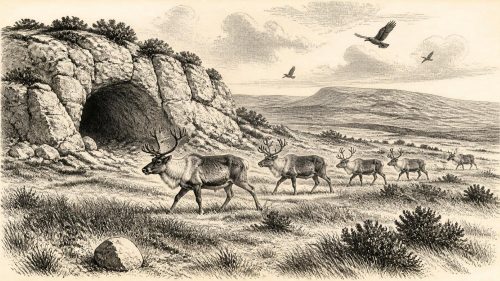
30,153 BCE is an approximate modern waypoint within Ireland’s climatically unstable Late Pleistocene, not a recordable historical year. Castlepook Cave, County Cork, preserves the island’s richest vertebrate assemblage from the period, though disturbed deposits and revised radiocarbon dates require caution. Reindeer, mammoth, giant deer, hyaena and lemmings indicate predominantly open, cold, variable landscapes. A reindeer femur from Hyenahall bears a possible stone-tool butchery cut, suggesting limited Upper Palaeolithic human activity, but not settlement, hunting, or continuous occupation. Later glaciation reshaped landscapes and destroyed evidence. Ireland’s deep prehistory is therefore understood through fragmentary surviving remains, calibrated dating ranges, and cautious interpretation.
Read Article