Archived: 6 October 2026
Abstract
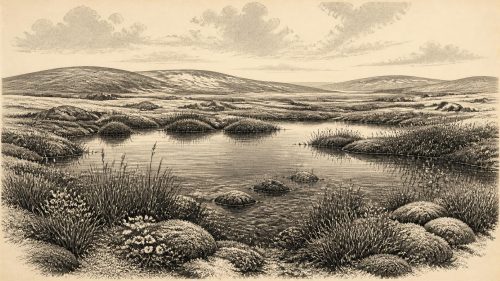
Around 30,208 BCE, Ireland lay within the climatically unstable Late Pleistocene. Derryvree, near Maguiresbridge, preserves organic freshwater sediments between glacial tills, dated broadly to 36,900–31,700 calibrated years before present. Their plants, pollen and insects indicate treeless, periglacial tundra with sedges, mosses, arctic-alpine flora and shallow water. The site confirms ice-free ground in north-central Ireland before later glaciation. Castlepook Cave documents a broader cold-stage fauna, including mammoth, reindeer and predators, but not a single contemporaneous community. A possibly butchered reindeer bone suggests human visits, though permanent settlement remains unproven. Evidence supports environmental change, not political, cultural or economic history at all.
Read Article

Archived: 4 October 2026
Abstract
Thirty thousand two hundred and seventy-nine BCE is a modern label, not a securely datable Irish event. Derryvree, County Fermanagh, preserves organic freshwater sediments between two glacial tills, demonstrating an ice-free interval during late Marine Isotope Stage 3. Plants and insects indicate a cold, treeless wetland. Other deposits confirm episodic, mobile glaciation, preceding the Last Glacial Maximum. Castlepook Cave, County Cork, records cold-stage fauna, including mammoth, reindeer and hyaena; a possibly cut-marked reindeer bone may indicate a brief human visit. However, no settlement, society or precise landscape can be reconstructed. Glacial erosion and fragmentary archives chiefly reveal fluctuating environmental conditions.
Read Article
Archived: 30 September 2026
Abstract
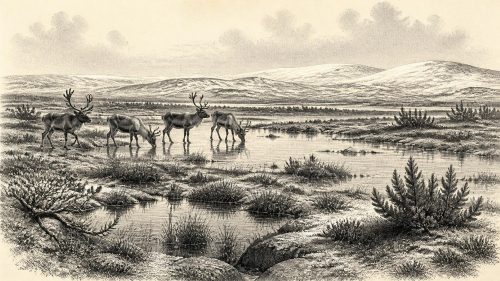
About 30,435 BCE, Ireland lay within the unstable cold climate of Marine Isotope Stage 3, probably during Greenland Interstadial 5.2, though precise calendar correlation is impossible. Derryvree, County Fermanagh, preserves organic wetland sediments between glacial tills, showing grasses, sedges, juniper, herbs, mosses and aquatic plants in an open, harsh environment before later ice expansion. Castlepook Cave, County Cork, contains pre-Last Glacial Maximum remains of mammoth, reindeer, giant deer, carnivores and smaller animals, indicating productive cold landscapes. No secure evidence identifies human occupation then in Ireland. These fragmentary records reveal changing ice, wetlands and fauna, not events, settlements or political communities.
Read Article
Archived: 30 September 2026
Abstract
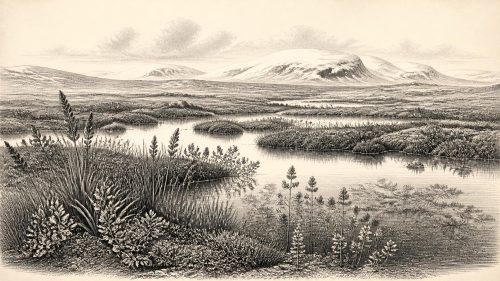
Around 30,455 BCE, Ireland lay within a cold, unstable Pleistocene landscape, although the date represents a broad calibrated range rather than a specific year. At Derryvree, County Fermanagh, freshwater silts between glacial tills preserve bogbean, water-milfoil, mosses, sedges and Arctic-alpine vegetation, indicating shallow wetlands amid open tundra during an ice-free interval. Insects support severe periglacial conditions with short productive summers. Cave finds elsewhere show Ice Age fauna, including reindeer and mammoth, but cannot be directly linked to Derryvree. A possibly cut-marked reindeer bone suggests early human activity, yet permanent occupation remains unproven. Renewed ice later completely buried this temporary ecosystem.
Read Article

Archived: 27 September 2026
Abstract
Labelled 30,615 BCE, the Derryvree evidence represents a broad Late Pleistocene interval rather than a datable year. At Maguiresbridge, County Fermanagh, organic freshwater sediments between two glacial tills record an ice-free wetland during Marine Isotope Stage 3. Mosses, sedges, aquatic plants and Arctic-alpine species indicate cold, treeless pools, saturated ground and sparse vegetation. Castlepook Cave, County Cork, preserves faunal remains including mammoth, reindeer, giant deer, hyaena and Arctic fox, demonstrating ecological links with north-west Europe. A possibly cut-marked reindeer bone suggests fleeting human activity, but no settlement is known. Later glaciation buried and fragmented these exceptional environmental archives in Ireland.
Read Article

Archived: 25 September 2026
Abstract
At 30,672 BCE, Ireland cannot be reconstructed as a single dated landscape or society. Derryvree, County Fermanagh, preserves freshwater silts between glacial tills, indicating a locally ice-free wetland during a broad MIS 3 interval, later sealed by renewed ice. Fossils indicate treeless, tundra-like vegetation, shallow water and cold-stage conditions. Cave remains at Castlepook, County Cork, attest to varied fauna, including mammoth, reindeer and hyaena, but not coexisting populations at one time. A possibly tool-marked reindeer bone suggests early human activity, although evidence remains uncertain. Lower seas altered connections, while advancing ice made environments regionally unstable across the island over millennia.
Read Article

Archived: 20 September 2026
Abstract
31,051 BCE is a retrospective date, not an identifiable Irish event. Derryvree, County Fermanagh, preserves freshwater organic deposits between glacial tills, dated within Marine Isotope Stage 3. Its mosses, sedges, aquatic plants, bogbean and cold-adapted insects indicate an open, treeless tundra wetland shaped by frost, short growing seasons and ice margins. Castlepook Cave, County Cork, contains Pleistocene fauna including reindeer, mammoth, giant deer, predators and animals, though deposits span uncertain periods. A cut-marked reindeer bone may indicate human butchery about 33,000 years ago, but cannot prove settlement or continuity. Evidence reveals shifting ecological opportunities, not island-wide conditions, polities or trade.
Read Article

Archived: 18 September 2026
Abstract
31,234 BCE is a modern chronological label rather than a recoverable Irish historical year. Evidence from Derryvree, County Fermanagh, records a cold, treeless, tundra-like freshwater wetland formed between glacial advances during Marine Isotope Stage 3. Plant and insect remains indicate severe, seasonal periglacial conditions, though local evidence cannot represent the entire island. Castlepook Cave, County Cork, preserves a diverse cold-stage fauna, including mammoth, reindeer and hyaena, demonstrating intermittent ecological connections but not a permanent land bridge. A possibly butchered reindeer bone may suggest human visitation, yet cannot prove settlement. No evidence supports contemporaneous politics, culture, trade or named human communities.
Read Article

Archived: 17 September 2026
Abstract
Approximately 31,490 BCE, Ireland lay within the climatically unstable Late Pleistocene, not a knowable single year. At Derryvree, County Fermanagh, organic silts between glacial tills preserve a cold, periglacial freshwater fen, with open tundra-like vegetation, shallow water and seasonal freezing. Castlepook Cave, County Cork, yielded remains of reindeer, mammoth, giant deer and predators, demonstrating wider Late Pleistocene animal dispersal, though not one simultaneous community. A cut-marked reindeer femur may indicate Upper Palaeolithic human processing, but remains contested and proves neither settlement nor continuous occupation. Later ice expansion reshaped Ireland and destroyed much earlier evidence, leaving a fragmentary environmental archive today.
Read Article

Archived: 17 September 2026
Abstract
Around 31,518 BCE, Ireland cannot be described through annual historical events, but environmental evidence illuminates a broad Late Pleistocene interval. The Derryvree deposit in County Fermanagh, preserved beneath later glacial till, records cold, open periglacial wetlands with pools, sedges, mosses, grasses and sparse low vegetation. Castlepook Cave in County Cork yielded mammals including mammoth, reindeer, giant deer, hyaena, wolves and lemmings, indicating shifting cold-stage habitats. A marked reindeer bone may represent Ireland’s earliest human activity, though evidence remains inconclusive. No political or social history is recoverable. Increasing glaciation later buried and disturbed these fragile traces across the island's varied landscapes.
Read Article

Archived: 13 September 2026
Abstract
31,808 BCE is a modern label rather than a recoverable Irish year, representing a broad Middle Midlandian interval within Marine Isotope Stage 3. Ireland’s conditions varied as the British–Irish Ice Sheet grew, producing severe, open periglacial landscapes rather than uniform ice cover. Derryvree and other Fermanagh deposits indicate wet treeless tundra, with sedges, grasses, shrubs, insects and freshwater habitats. Castlepook Cave preserves mammoth, reindeer, giant deer, predators and smaller cold-adapted animals, demonstrating intermittent ecological connections with Britain and Eurasia amid lower sea levels. A possibly cut-marked reindeer bone suggests, but does not prove, Upper Palaeolithic human presence without settlement evidence.
Read Article