Archived: 19 October 2026
Abstract
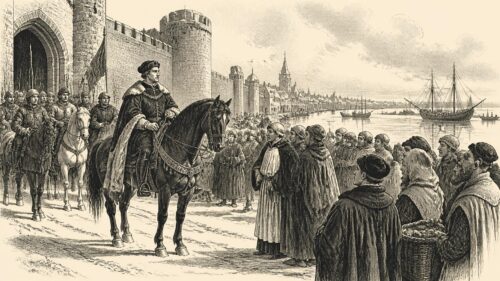
In 1467, John Tiptoft, earl of Worcester, returned as Edward IV’s deputy in Ireland and summoned a Dublin parliament, asserting royal authority within the limited reach of the English lordship. Its programme addressed coastal defence at Lambay, black rents, coinage, church affairs and Meath, while revealing dependence on local cooperation. Desmond’s later execution belonged to 1468, though Worcester’s arrival initiated the crisis. Beyond the Pale, dynastic successions, raids and warfare shaped politics, notably a bloody Connacht battle involving Clanricarde, Ó Ceallaigh and Burke factions. Annals also recorded plague, clerical deaths, learned men and hospitality, illustrating regional institutions and overlapping jurisdictions.
Read Article
Archived: 20 October 2026
Abstract
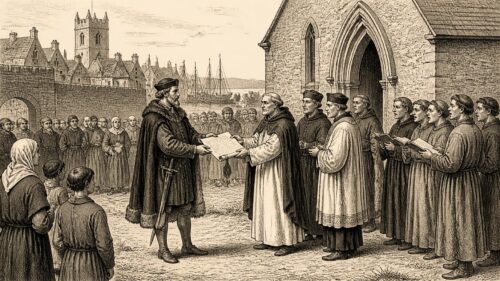
In 1464, Ireland was divided among Gaelic lordships, Anglo-Irish magnates, church jurisdictions and Dublin’s limited English administration. Thomas FitzGerald, earl of Desmond and royal lieutenant, negotiated a treaty in Dublin with Mac William Burke and Ó Domhnaill, while rival officials contested authority. Connacht experienced succession wars, burnings, cattle raids, hostage-taking and gallowglass warfare; similar dynastic violence affected Tír Chonaill, Breifne, Fermanagh and Sliabh Lugha. Illness caused numerous deaths, possibly affecting animals. Devotion remained important through miracles, burials and church offerings. On 27 December, Desmond founded Our Lady’s College at Youghal, a collegiate church supporting worship, music, learning and local administration.
Read Article

Archived: 20 October 2026
Abstract
In 1462, Ireland experienced interconnected conflicts, raiding, lordship and institutional development. Butler forces, supported by English followers, contested Desmond control in the south-east; their defeat at Piltown enabled FitzGerald advances, though maritime captures and parliamentary attainder prolonged the struggle. In Ulster, Henry Ó Néill raided Tír Chonaill, devastating districts amid rivalry with Aodh Ruadh Ó Domhnaill, while killings reflected continuing northern instability. Connacht disputes involved ransoms, rents and cattle seizures. Franciscan friars founded a house at Monaghan, and Thomas Cusin taught law in Armagh. These events demonstrate power exercised through warfare, wealth, patronage, fortified places and learning across medieval Ireland.
Read Article
Archived: 20 October 2026
Abstract
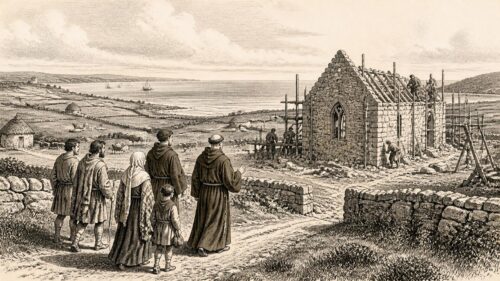
In 1460, Richard of York’s Drogheda parliament affirmed his lieutenancy and declared that Ireland was governed by laws accepted in its own parliament, while regulating defence, finance and local administration. Conflict exposed fragile frontiers: Conn O’Conor Faly defeated lordship forces, and English troops killed John O’Reilly of East Breifne, prompting Cathal O’Reilly’s succession. Captivity and maritime warfare further shaped regional politics. Franciscan patronage and Observant reform expanded through Moyne, Sherkin and Enniscorthy, although foundation dates remain uncertain. The killing of Killaloe’s bishop showed clerical vulnerability. Overall, the year revealed overlapping jurisdictions, military households, contested lordship power and resilient religious networks.
Read Article

