Archived: 18 October 2026
Abstract
In 1544, Tudor authority in Ireland depended on negotiation rather than uniform control. During Sir Anthony St Leger’s absence, Lord Justice William Brabazon managed finance, military levies and invasion rumours, while Irish kern joined Henry VIII’s war against France and Scotland. Local conflicts persisted: English forces aided O’Donnell’s siege at Lifford, and warfare engulfed Ulster through raids, castles, hostages and Scottish mercenaries. At Limerick, a council addressed the Clanricarde succession after Ulick Burke’s death, recognising Richard Burke but empowering a rival custodian, leaving conflict unresolved. Former monastic property passed to crown servants, illustrating primarily economic, rather than immediate religious, transformation.
Read Article
Archived: 18 October 2026
Abstract
In 1524, severe weather and cattle losses heightened insecurity across Ireland, where raiding, dynastic conflict and magnate rivalry shaped political life. Henry VIII restored Gerald FitzGerald, ninth earl of Kildare, as lord deputy, ending Piers Butler’s tenure but not their feud. Allied with Conn Bacach O’Neill, Kildare campaigned in Tír Chonaill against Aodh Dubh O’Donnell. After night fighting, negotiation produced a peace guaranteed by Kildare and reinforced by spiritual kinship. Violence nevertheless continued in Ulster, Breifne and Munster. Annalistic obituaries stressed hospitality, patronage and charity as essential marks of lordship, while warfare’s costs fell upon rural communities throughout the island.
Read Article
Archived: 18 October 2026
Abstract
Ireland’s political landscape in 1519 changed through succession, departures, disease and agricultural hardship. In Ulster, Conn Bacach Ó Néill succeeded his half brother Art Óg as lord of Tír Eógain. Deaths among leading figures elsewhere altered regional balances, while Gerald FitzGerald’s departure for England exposed the uncertainty surrounding Dublin’s administration. Irish annals also record plague in Dublin and an wet summer and harvest associated with sickness and suffering. These accounts place elite political change beside the difficulties experienced by communities. The year reveals how dynastic authority, royal intervention, epidemic disease and weather together shaped an island of overlapping regional powers.
Read Article

Archived: 19 October 2026
Abstract
In 1500, Ireland experienced local conflicts, disasters and environmental hardship rather than a single national crisis. Aodh Ruadh Ó Domhnaill raided Tír Eógain, burning Dungannon and its strongholds, while Kildare’s intervention in Ó Néill territory proved temporary. Succession changed Breifne’s rulership, and killings, livestock raids and castle-building marked Fermanagh. Galway was largely destroyed by fire, threatening an important trading port. In Munster, the Barry family feud brought murder and posthumous punishment, while John Maguire executed a notorious horse thief. Prolonged wet weather damaged wheat. The death of Derry’s Franciscan bishop also reflected active religious networks across fragmented but connected lordships.
Read Article
Archived: 19 October 2026
Abstract
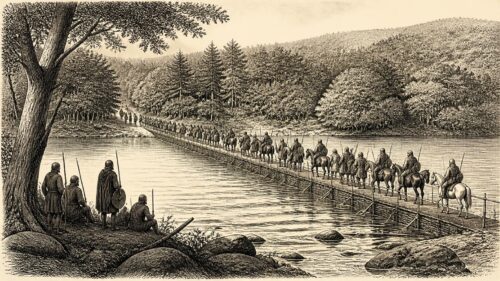
In 1483, Conn O’Neill was released from captivity, inaugurated lord of Tír Eógain, and entered a major conflict with Aodh Ruadh O’Donnell. O’Donnell’s coalition, including Clandeboye forces, raided the Dundalk district, burned Traghbhaile and Baile-Lugh-mhaigh, defeated Kildare’s pursuing army, and exacted protection payments. Returning through Tír Eógain, it cleared woodland and built a wicker bridge across the Abhann Mór, escaping pursuit. Other conflicts occurred across Ireland, while bishops and learned hereditary officials died or succeeded. English dynastic change brought Richard III’s accession, but Kildare remained deputy. The annals depict interconnected lordships, warfare, landscape, church institutions, learning, and local livelihoods alike.
Read Article
Archived: 19 October 2026
Abstract
In 1481, Ireland’s annals recorded conflict, patronage and administration across politically fragmented lordships. On 5 October, Toirdelbach Mag Uidhir was treacherously killed by kinsmen in his Fermanagh castle, alongside several companions; his learning, hospitality and bardic generosity were widely mourned. Tír Eógain endured warfare among O’Neill factions, producing raids, killings, captures and the mutilation of Patrick Savage. Other deaths commemorated aristocratic patrons, poets and clerics, demonstrating the importance of learning, pilgrimage and religious institutions. Killings in Wexford reflected local rivalries, while the English lordship’s 1481–82 business addressed lands, castles, church property, revenues and urban privileges, revealing uneven but governmental authority.
Read Article
Archived: 19 October 2026
Abstract
In 1480, Irish annals recorded interconnected conflicts, settlements and deaths across Ulster, Fermanagh and Connacht. Gerald FitzGerald, Earl of Kildare, joined Conn O’Neill’s unsuccessful siege of a rival O’Neill castle, demonstrating both Dublin’s reach and its limits. Raids between Tír Eógain and Tír Chonaill caused burnings, cattle losses and casualties, while O’Donnell dynastic rivalries continued. At Castlefinn, O’Donnell, Conn O’Neill and Neachtan O’Donnell’s sons negotiated peace and appointed Eigneachán O’Donnell tanist. Obituaries for Tomás Óg Maguire, Cathal Óg Mac Maghnusa, poets and teachers emphasised hospitality, religious patronage and learning. Local feuds also involved MacMahons, Maguires, O’Rourkes and de Burgh factions.
Read Article
Archived: 19 October 2026
Abstract
In 1467, John Tiptoft, earl of Worcester, returned as Edward IV’s deputy in Ireland and summoned a Dublin parliament, asserting royal authority within the limited reach of the English lordship. Its programme addressed coastal defence at Lambay, black rents, coinage, church affairs and Meath, while revealing dependence on local cooperation. Desmond’s later execution belonged to 1468, though Worcester’s arrival initiated the crisis. Beyond the Pale, dynastic successions, raids and warfare shaped politics, notably a bloody Connacht battle involving Clanricarde, Ó Ceallaigh and Burke factions. Annals also recorded plague, clerical deaths, learned men and hospitality, illustrating regional institutions and overlapping jurisdictions.
Read Article
Archived: 20 October 2026
Abstract
In 1444, Aodh Buidhe O’Neill of Clandeboye died from wounds received raiding Iveagh, prompting Eóghan O’Neill of Tír Eógain to intervene. Clandeboye leaders, allied with the MacQuillans, ambushed and defeated him in Dufferin, taking hostages including his son. Eóghan also compelled Dundalk to pay money and wine, while English government met at Drogheda with limited reach. Thomond suffered a violent Ó Briain succession rupture, including Mathgamain’s blinding and Toirdelbach’s seizure of power. Rome appointed Cormac Mác Shamhradháin bishop of Ardagh, while Trim’s Marian miracle cult, charity, deaths, warfare, and learned patronage reflected Ireland’s interconnected yet fragmented political and religious world.
Read Article

Archived: 20 October 2026
Abstract
In 1442, James Butler, earl of Ormond, resumed the Irish lieutenancy, governing through fragile alliances rather than centralised power. In the north-west, Énrí and Eóghan Ó Néill secured assistance from the English settlement and compelled Neachtain Ó Domhnaill to cede Castlefin, Cenél Moen and Inis Eógain’s tribute. Other struggles involved Enniskillen, Oriel, Ulster raiding and Wicklow warfare. After Muircheartach Caomhánach’s killing, his father won prisoners and compensation from Wexford. Obituaries recorded lords and clergy, while Ormond rental accounts reveal farming, rents and seigneurial justice. Together, the sources portray a connected, contested Ireland shaped by castles, kinship, tribute, negotiation and authority.
Read Article
Archived: 21 October 2026
Abstract
In 1410, Ireland’s political map was not a single kingdom directed from one capital but a field of overlapping lordships, kin-groups, towns and ecclesiastical territories. The year’s most striking recorded episode was the seizure of Domnall Ó Néill, lord of Tír Eógain, by Brian Mac Mathghamhna. Yet the annals also preserve a wider pattern: rulers and heirs dying, castles changing hands, cattle being driven away, a captive rival dying in Munster, and succession being managed amid danger. Taken together, these entries show how authority depended on personal alliances, control of strongpoints, inherited claims and the ability to reward followers.The surviving
Read Article
Archived: 21 October 2026
Abstract
In 1395 Richard II sought to stabilise Ireland through military pressure, submissions and negotiated service from Gaelic and Anglo-Irish rulers. Art Mac Murchadha accepted loyalty, payment and recognition of inheritance, while Niall Ó Néill and others sought royal protection against rival claims. More than eighty nobles submitted, receiving pardons, offices and knighthoods, but important western and northern lords remained outside the settlement. Raids in Uí Fhailghe and Éile, conflict within the Ó Néills, and succession violence in Fermanagh demonstrated instability. Richard departed in May, leaving Mortimer as representative. Deaths, church burnings and lordships underscored that ceremony had not pacified Ireland.
Read Article
Archived: 22 October 2026
Abstract
In 1365, Niall Ó Néill, newly king of Tír Eógain, led a coalition into Oriel, besieging Brian Mac Mathghamhna before an unauthorised assault shattered the settlement and killed allies. Dynastic contention also reshaped Connacht, Magh Luirg and East Bréifne, where deaths, accessions, warfare and Cú Chonnacht Ó Raghallaigh’s religious retirement altered lordship. Raids on border communities demonstrated the human cost of rivalry. Ecclesiastical leaders and learned travellers remained active across Irish Sea networks. In the English lordship, Lionel of Antwerp briefly returned England, while Thomond’s rulers submitted diplomatically. The year reveals authority as negotiated through warfare, kinship, religion and accommodation.
Read Article

Archived: 24 October 2026
Abstract
In 1325, Domhnall Ó Néill, king of Tír Eógain, died at Loch Laoghaire, and his son Cú Uladh was murdered by rival kinsmen, precipitating a disputed succession eventually favouring Henry Ó Néill of Clandeboye. Intra-dynastic violence also affected Fermanagh and Thomond. Maurice fitz Thomas FitzGerald’s seizure of Bunratty Castle exposed contested Anglo-Irish authority and required intervention by justiciar John Darcy. Meanwhile, an audit at Westminster uncovered forged Irish exchequer accounts associated with Archbishop Alexander Bicknor, leading to confiscation of his temporal property. Together, these events reveal unstable, personal lordship, constrained royal power, and fragile administration across medieval Ireland at once.
Read Article
Archived: 24 October 2026
Abstract
In 1291 Ireland’s most consequential recorded developments lay in the north and west: the campaigning of Richard de Burgh, earl of Ulster, known to later history as the Red Earl; disputed kingships among the Ó Néill, Ó Domnaill and Ó Conchobair; and a sharp Connacht struggle centred on the weir at Collooney. These events are principally preserved in Irish annals, which organise material by year but do not normally supply dates or a dependable sequence within the year. The campaigns and battles described below can therefore be responsibly assigned to 1291, while their precise seasons and order cannot. Royal administrative
Read Article
Archived: 24 October 2026
Abstract
In 1290, Irish politics saw several local struggles for authority. Cairbre Ó Máelsechlainn, king of Meath, was treacherously killed by Mac Cochlain and the Delbhna amid overlapping Gaelic and colonial lordships. Domnall Ó Néill expelled Niall Ó Néill and seized Tír Eógain, while Toirdelbach Ó Domhnaill, supported by maternal kin and galloglasses, deposed his brother Áed in Tír Chonaill. William Mac Fheorais assumed effective possession of Tuam’s archbishopric, and Kilmacduagh’s bishop died. Edward I appointed William de Vesci justiciar; he arrived in Ireland, combining royal office with Kildare lordship. A Carmelite friary at Kildare was plausibly founded about this time.
Read Article
Archived: 24 October 2026
Abstract
In 1283, Áed Buidhe Ó Néill, king of Tír Eógain, was killed by rivals from Airgíalla and Breifne, destabilising northern politics and encouraging a contested succession. In Connacht, the wounding and death of Tadc Ó Conchobair illustrated dynastic rivalry and the political value of custody. Domnall Ruad Mac Carthaig of Desmond countered a plot with support from prominent Anglo-Irish lords, securing a negotiated settlement involving livestock. Dublin and Christ Church suffered a serious fire, exposing urban vulnerability. Together, these events reveal Ireland as a network of competing lordships, temporary alliances, ecclesiastical institutions, commerce, violence and negotiation across the whole island.
Read Article
Archived: 25 October 2026
Abstract
In 1261, Fínghin Mac Carthaigh defeated a major Geraldine force at Callann in Desmond, killing John fitz Thomas FitzGerald, his heir Maurice and many followers. The victory checked Geraldine expansion, but Fínghin was killed soon afterwards, leaving Desmond disputed. Annals differ over details, including dating, casualties and participants, while confirming the battle's significance. Conflict elsewhere included raids, burned settlements and fortresses, rival successions in Breifne and Tír Eógain, and struggles in Thomond and Connacht. Clerics and churches suffered violence at Derry and Ballysadare, while Raphoe's bishop was elected archbishop of Armagh. The year reveals politically fragmented, shifting power across Ireland.
Read Article
Archived: 25 October 2026
Abstract
In 1260 Brian Ó Néill’s Gaelic coalition, including forces from Tír Eógain, Connacht and Meath, was defeated by northern English interests at Druim Derg near Downpatrick. Brian and many leading allies died, ending his claim to leadership of Ireland’s Gaels; Áed Buide Ó Néill succeeded in Tír Eógain. Elsewhere, Connacht resisted MacWilliam de Burgh’s raid through defensive deployment and negotiated peace, while Thomond defeated Mac Muiris’s force. A cough affected people and horses. Church offices changed hands, and Kildare’s Franciscan friary may have been founded during this period. The year revealed political fragmentation, regional resilience and religious life amid warfare.
Read Article
Archived: 25 October 2026
Abstract
In 1259, Áed Ó Conchobair of Connacht asserted authority in Breifne by replacing rivals, taking hostages, raiding opponents and ordering blinding. At Devenish, he and Brian Ó Néill restored Domnall Ó Ruairc, demonstrating northern alliance politics and Brian’s wider influence. Áed’s marriage at Derry to Dubgall Mac Somairle’s daughter linked Connacht with the western seaways and armed support. Ulster, Thomond and Desmond saw raids, conflict and attacks affecting churches and communities. Tomaltach Ó Conchobair returned from Rome as archbishop of Tuam, while the deaths of Bishop Cormac Ó Luimlín and poet Gilla Cam marked losses to learning and ecclesiastical life.
Read Article

Archived: 25 October 2026
Abstract
In 1255, Feidlim Ua Conchobair of Connacht and his son Áed strengthened their position through diplomacy, protected movement and negotiated peace. Áed travelled to Tír Eógain, reconciled his father with northern powers, and escorted Connacht exiles, dependants and goods safely home through hostile territory. Feidlim’s envoys and Archbishop Florence Mac Flainn secured favourable responses from Henry III, while Feidlim reached a major settlement with Mac William Burke at Tochar Mona Conneda. Elsewhere, Brian Ua Néill failed to obtain hostages in Breifne. Ecclesiastical appointments, clerical deaths, killings and raids reflected local instability. The year demonstrated peace’s strategic, fragile role amid rivalries.
Read Article
Archived: 25 October 2026
Abstract
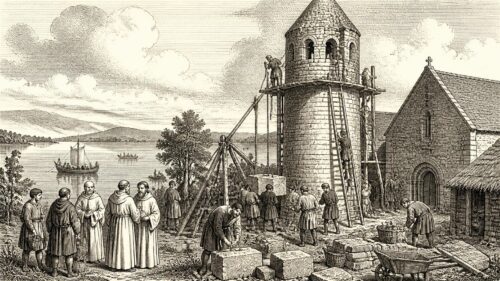
In 1238, Anglo-Irish leaders Maurice FitzGerald and Hugh de Lacy campaigned in the north, deposing Domnall Mac Lochlainn, installing an Ó Néill claimant and taking hostages from Cenél nEógain and Cenél Conaill. In Connacht, barons extended castle building after the 1235 partition, while dynastic killings, captures and raids demonstrated insecurity. A Bréifne force plundered Cluain Coirpthe, causing deaths among pursuers. Annadown’s bell-tower was built beside Lough Corrib, though its exact form remains uncertain. Archbishop Felix Ó Ruadáin died after resigning and becoming a monk in Dublin. Overall, the annals depict contested power expressed through hostages, fortifications, violence and ecclesiastical construction.
Read Article





