
Archived: 12 October 2026
Abstract
In 1785, proposed commercial reforms exposed the limits of Ireland’s post-1782 legislative independence. Thomas Orde’s initial trade bargain, approved in modified form by the Irish Commons, was altered in Britain to require Irish conformity with British navigation and colonial legislation. Opposition led by Henry Grattan and Henry Flood defeated the revised scheme, leaving trade relations unresolved. Debate also highlighted restricted parliamentary representation, while William Drennan’s pamphlet urged Catholic-Protestant reform. Dublin’s Irish Academy was founded, reflecting learned and civic institutions. Richard Crosbie’s balloon flight thrilled Dublin, whereas a balloon-linked fire devastated Tullamore, demonstrating urban vulnerability and contrasting scientific excitement and disaster.
Read Article
Archived: 12 October 2026
Abstract
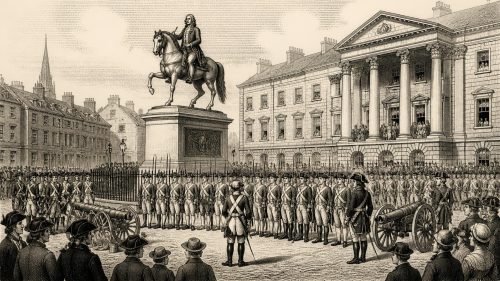
During 1779, war with France and Spain exposed Ireland’s defences, encouraging the growth of locally organised, predominantly Protestant Volunteers. Their armed presence strengthened a campaign for freer trade, prompted by imperial restrictions, falling agricultural prices and impaired credit. Merchants, producers and Patriot MPs, notably Henry Grattan, pressed the Irish Commons to seek commercial relief and use control of supply against government. On 4 November, Dublin Volunteers paraded artillery outside Parliament House, demanding free trade. Crowds added disorderly pressure. Britain promised concessions, although legislation followed later. The agitation linked popular mobilisation with parliamentary action and anticipated demands for Irish legislative independence.
Read Article
Archived: 12 October 2026
Abstract
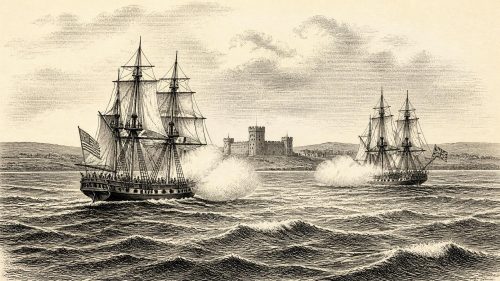
In 1778, Captain John Paul Jones’s Ranger captured HMS Drake off Carrickfergus, exposing Ireland’s weak coastal defences amid imperial war. Fear of attack encouraged Belfast’s first Volunteer company and similar locally organised Protestant corps, which later strengthened demands for political and commercial influence. Wartime disruption prompted limited trade concessions, though these fell far short of free trade and intensified Patriot dissatisfaction. Gardiner’s Catholic Relief Act improved property rights for qualifying Catholics but preserved political exclusion and most penal restrictions. Road building, cultivation, mapping and Dublin’s changing streetscape also reflected gradual improvement. Together, these developments revealed mounting pressures for Irish change.
Read Article

Archived: 14 October 2026
Abstract
In 1673, Lord Lieutenant Essex’s proposed trade report portrayed Restoration Ireland through estimates of land, rents, livestock, housing, goods and scarce circulating coin, privileging taxable wealth over poorer households and local life. English restrictions on cattle imports encouraged exports of processed provisions, wool and fish through Dublin, Cork and Atlantic markets, although benefits were uneven. Essex governed within Protestant political dominance amid English anti-Catholic pressures. Investigation and hostility prompted Archbishop Peter Talbot’s departure for France, while October proclamations targeted Catholic arms, offices, clergy and institutions. Enforcement varied, but Catholic worship became more precarious. Presbyterians retained favour, illustrating selective confessional policy.
Read Article


