Archived: 13 October 2026
Abstract
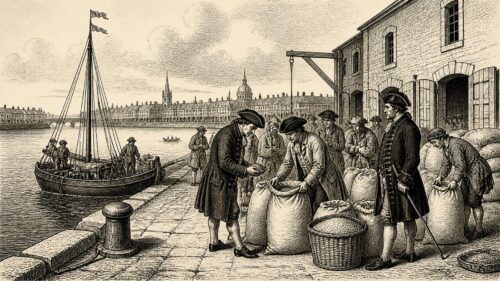
In 1745, Ireland remained peaceful during the Jacobite rising, yet was deeply implicated in the wider Stuart crisis. Lord Lieutenant Chesterfield combined surveillance and preparedness with relative restraint towards Catholics, while restricting provisions exports and proclaiming rewards, fasts and grain controls. Irish expatriates advised Charles Edward Stuart, and the French Irish Brigade distinguished itself at Fontenoy, though no Irish rebellion materialised. Food regulation, markets and linen petitions reflected wartime economic anxieties after scarcity. Dublin retained vitality: Thomas Sheridan managed Smock Alley Theatre, while Jonathan Swift died, leaving funds for St Patrick’s Hospital. Ireland’s calm concealed penal inequality and international entanglements.
Read Article
Archived: 13 October 2026
Abstract
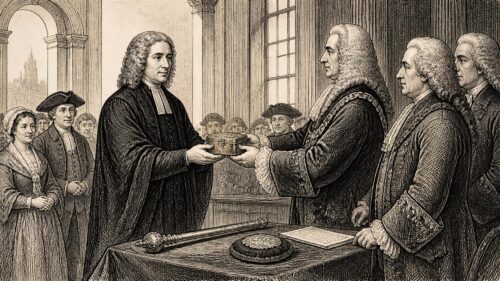
In 1730 Dublin Corporation granted Jonathan Swift the freedom of the city in a gold civic box, recognising the dean and author’s influence after the Drapier’s Letters. The ceremony illuminated Protestant-controlled municipal power, print culture and exclusion. During transition between viceroys, resident officials dominated administration; Ireland’s Parliament remained subordinate to Britain and restricted to propertied Protestants. Legislation against workers’ combinations exposed insecure urban labour and regulation of growing Dublin. Early toll roads signalled commercial development, while agriculture, linen production, markets and weather shaped livelihoods. Established Anglican authority contrasted with the restricted but enduring Catholic majority and disadvantaged Presbyterians, revealing inequality.
Read Article

Archived: 13 October 2026
Abstract
In 1721, Ireland’s proposed public bank collapsed amid post-South Sea Bubble distrust, disputes over credit, land, religious exclusion and dependence on Westminster, recently reinforced by the Declaratory Act. Although supporters sought cheaper loans and retained capital, the Commons rejected the scheme, first narrowly in October and decisively in December, preserving fragmented private finance. Land and influence remained central: Charles Butler regained Ormond estates under British sanction, William Ponsonby became Baron Bessborough, and Luke Gardiner acquired land developed as Henrietta Street. Linen exports linked rural households to imperial markets, while Catholic institutions endured restrictions. Government pursued disorder and imposed plague precautions.
Read Article
Archived: 31 October 2026
Abstract
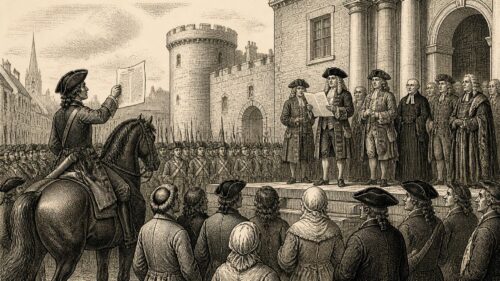
In 1714, Ireland experienced the formal succession from Queen Anne to George I, while Protestant rule remained insecure and unequal. A prorogued, restricted parliament left Dublin Castle dependent on proclamations, magistrates, clergy and military networks. Before and after Anne’s death, officials targeted robbery, Catholic arms and clergy, Jacobite recruitment, non-jurors, seditious print and rural violence, revealing fears rather than evidence of rebellion. George was proclaimed across Ireland on 6 August, followed immediately by Catholic disarmament and liturgical changes. Notices also regulated peace, foreign coin and public worship. The year’s records show Hanoverian authority consolidated through ritual, surveillance and penal control.
Read Article

Archived: 14 October 2026
Abstract
In 1694, Ireland’s post-Williamite settlement advanced through administration rather than warfare. Commissioners began hearing claims under the Articles of Limerick, determining Jacobites’ rights to property, livelihoods and legal protection. Dublin’s Lords Justices managed revenue, including hearth-money exemptions, while debating a parliament whose supply might secure Protestant interests; no parliament met. Government fasts, Trinity College’s centenary celebration and Jonathan Swift’s diaconal ordination reflected Protestant public culture. Portarlington’s French Reformed register documented an emerging Huguenot community. Rewards for robbers and alleged rebels showed continuing insecurity. Queen Mary II’s death made William III sole monarch, leaving Ireland’s constitutional, religious and property settlement unfinished.
Read Article

Archived: 14 October 2026
Abstract
In 1686, James II’s government rapidly reshaped Ireland’s confessional political order. Lord Lieutenant Clarendon’s administration was increasingly challenged by Richard Talbot, earl of Tyrconnell, whose influence advanced Catholic participation in government and the army. Royal payments to Catholic bishops, appointments of Catholic judges and officials, and military recruitment signalled a reversal of longstanding exclusion. These changes alarmed Protestant proprietors, whose security depended on Restoration land settlements. Richard Nagle’s Coventry Letter linked Catholic political advancement to restitution of confiscated estates, intensifying fears of property redistribution. Despite revenue and commerce, uncertainty affected confidence. Swift’s Trinity degree marked the year’s life amid tensions.
Read Article
Archived: 14 October 2026
Abstract
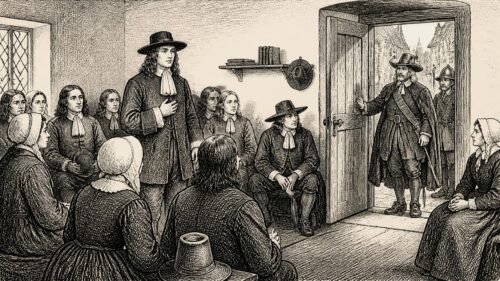
In 1667, Restoration Ireland experienced postwar settlement as courts and officials resolved contested land claims under the Acts of Settlement and Explanation. Ormond’s administration stressed legal procedure, military discipline and strained finances, while English restrictions on Irish cattle threatened trade and exposed Ireland’s dependence on Westminster. Dutch naval successes prompted defensive preparations at Kinsale before the Treaty of Breda ended the war. Protestant institutions strengthened, yet religious conformity was enforced: William Penn was arrested with Friends at a Cork meeting. Jeremy Taylor died, Jonathan Swift was born, and Alice Barry’s death marked elite change. The year revealed a fragile order.
Read Article


