
Archived: 14 October 2026
Abstract
In 1686, James II’s government rapidly reshaped Ireland’s confessional political order. Lord Lieutenant Clarendon’s administration was increasingly challenged by Richard Talbot, earl of Tyrconnell, whose influence advanced Catholic participation in government and the army. Royal payments to Catholic bishops, appointments of Catholic judges and officials, and military recruitment signalled a reversal of longstanding exclusion. These changes alarmed Protestant proprietors, whose security depended on Restoration land settlements. Richard Nagle’s Coventry Letter linked Catholic political advancement to restitution of confiscated estates, intensifying fears of property redistribution. Despite revenue and commerce, uncertainty affected confidence. Swift’s Trinity degree marked the year’s life amid tensions.
Read Article

Archived: 14 October 2026
Abstract
In 1671, Ireland’s unresolved Restoration settlement shaped politics, finance, trade and religion. Sir Richard Talbot’s petition for Catholic landowners prompted a commission under Prince Rupert, yet threatened no immediate reversal of confiscations. Viscount Ranelagh’s revenue-farming contract transferred collection and government payments to private financiers, provoking army officers’ complaints over arrears. Navigation legislation further constrained Irish colonial commerce, while Sir George Hamilton recruited 1,500 men for French service. Catholic bishops Peter Talbot and Oliver Plunkett maintained precarious church administration amid internal disputes. Scholar Dubhaltach Mac Fhirbhisigh died, while Dublin’s Hospital and Free School received a royal charter, strengthening organised urban charity.
Read Article
Archived: 14 October 2026
Abstract
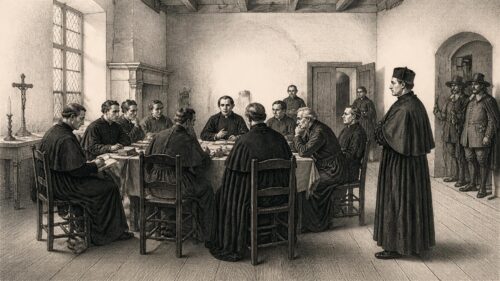
In 1666, Ormond’s Restoration administration sought to consolidate authority in Ireland through land settlement, military discipline, taxation and regulation. Proclamations advanced implementation of the Acts of Settlement and Explanation, while the dissolution of parliament ended legislative sessions until 1689. A pay mutiny at Carrickfergus was suppressed, with nine leaders executed. Dublin’s Catholic synod debated Peter Walsh’s loyalist Remonstrance but failed to secure agreement, exposing clerical organisation and state dependence. War, naval concerns and London’s fire prompted official fasts and thanksgiving. Hearth money, fisheries policy and impending English cattle restrictions affected livelihoods. Sir James Ware’s death marked a loss to scholarship.
Read Article
Archived: 14 October 2026
Abstract
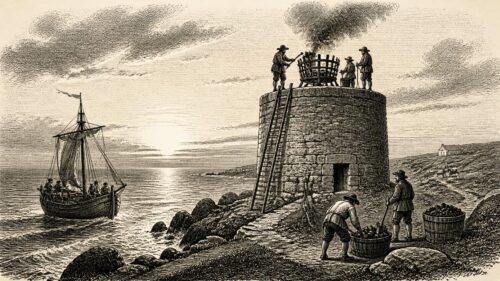
In 1665, Ireland’s Restoration government strengthened its political, economic and institutional framework. The Act of Explanation addressed competing land claims after conquest, requiring many Cromwellian grantees to surrender interests while restricting Catholic restitution. Ormond supervised this fraught settlement, while Michael Boyle’s appointment as lord chancellor reinforced Protestant authority. Dublin’s mayor became lord mayor, reflecting the capital’s growing administrative importance. Charles II authorised Sir Robert Reading’s six coastal lighthouses, linking navigation, commerce and royal privilege during the Second Anglo-Dutch War. Land insecurity affected wider society, investment and local life. These measures established enduring structures while leaving conflict, inequality and uncertainty unresolved.
Read Article

Archived: 14 October 2026
Abstract
In 1664, Restoration Ireland was reshaped through administrative and cultural initiatives rather than decisive events. Dublin Corporation divided the marshy St Stephen’s Green common into ninety-six building plots, retaining a reduced central green to generate revenue. Land settlement negotiations continued without resolution, as Ormond and rival claimants sought to reconcile confiscated estates; legislation followed in 1665. Londonderry Corporation gained responsibility for its Foyle port, while Portmore Castle symbolised elite estate improvement in Antrim. Sir James Ware published Latin annals of Ireland, and Roger Boyle’s plays reached London. These developments strengthened corporate and proprietary control amid Protestant ascendancy and Catholic exclusion.
Read Article
Archived: 14 October 2026
Abstract
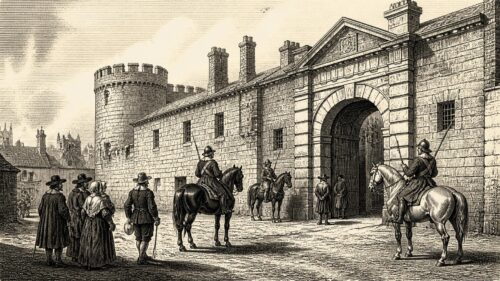
In 1663, Ireland’s Restoration settlement remained unstable amid competing land claims, religious divisions and memories of war. Ormond’s administration faced Thomas Blood’s failed Protestant radical conspiracy to seize Dublin Castle and abduct the lord lieutenant, exposing divisions within Protestant interests. The Court of Claims issued 829 decrees, including 714 innocence declarations, but lacked land to reconcile restored Catholic proprietors with Cromwellian soldiers and adventurers. Government reinforced authority through registration rules, proclamations and Church of Ireland office requirements, while Margetson became primate. Dublin’s cultural life expanded with Katherine Philips’s Pompey. Trade continued amid imperial uncertainty, while property insecurity constrained uneven recovery.
Read Article

Archived: 14 October 2026
Abstract
In 1660, Ireland’s Protestant leaders used the General Convention to support Charles II’s restoration, proclaiming him king before his return to England while seeking to preserve parliamentary influence, episcopacy and Cromwellian landholdings. Former Commonwealth figures, notably Charles Coote and Roger Boyle, became royal brokers and regional magnates, while commissioners governed amid uncertainty. Charles’s November Declaration addressed competing claims of Catholic former proprietors, Adventurers and soldiers, protecting many possessors while offering limited restoration through proof of innocence. The Church of Ireland revived under bishops, yet Catholics remained excluded. Restoration restored monarchical institutions but postponed conflict over land, religion, loyalty and power.
Read Article
Archived: 14 October 2026
Abstract
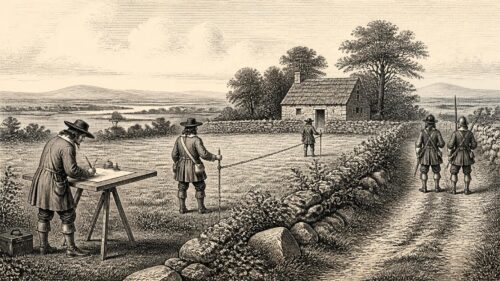
In 1658, completion of Sir William Petty’s Down Survey gave the Commonwealth its first national-scale detailed mapping of Ireland, enabling confiscated land to be valued and allocated to Adventurers and soldiers. Though not covering Connacht or resolving competing claims, it strengthened Protestant ownership and made Catholic dispossession more enforceable. Henry Cromwell governed from Dublin, balancing courts, revenue, army discipline and an unstable land settlement. Oliver Cromwell’s death on 3 September brought Richard’s succession and Henry’s promotion to lord lieutenant. Religious policy privileged Protestants but constrained dissent and excluded Catholics. Beneath order, military power, land claims and constitutional legitimacy remained precarious.
Read Article




