Archived: 18 September 2026
Abstract
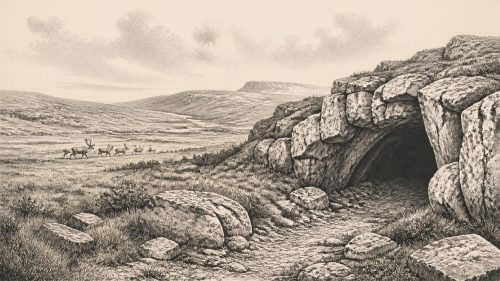
Around 31,285 BCE, Ireland lay within the fluctuating cold conditions of Marine Isotope Stage 3, before the Last Glacial Maximum. Southern landscapes probably comprised open tundra and steppe supporting reindeer, mammoth, giant deer, predators and smaller mammals. Castlepook Cave, County Cork, preserves a disturbed, repeatedly accumulated fauna rather than a single contemporary scene. A reindeer femur, dated approximately 31,000 BCE, bears a mark interpreted as possible stone-tool butchery, potentially Ireland’s earliest evidence of human activity. Yet no sealed occupation, tools, hearths or human remains confirm settlement. Later glaciation and sea-level change destroyed evidence; further dating and excavation remain especially essential.
Read Article
Archived: 16 September 2026
Abstract
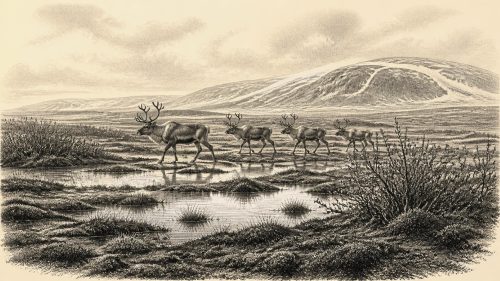
Thirty-one-thousand five-hundred-and-thirty-one BCE is a modern label within MIS 3, not a date for a recorded Irish event. Derryvree sediments in Fermanagh indicate a treeless, cold, wetland environment during a broad ice-free interval before later glaciation, while other deposits demonstrate regional climatic variation. Cave fauna, especially at Castlepook, shows that reindeer, mammoth, giant deer, hyaena and other mammals occupied Ireland before the Last Glacial Maximum. A reindeer femur possibly bearing a stone-tool cut mark may indicate human contact around 31,000 BC, but lacks context. No evidence supports settlement, institutions or continuous population; future research may clarify this Ice Age landscape.
Read Article

Archived: 15 September 2026
Abstract
31,689 BCE is a modern label for a broad MIS 3 interval, not a datable Irish event. Castlepook Cave in north Cork preserves bones and sediments indicating a cold, open landscape inhabited intermittently by reindeer, mammoth, hyaenas, wolves and other fauna. Hyaenas probably accumulated much material, complicating interpretations of human activity. A marked reindeer femur, dated broadly to MIS 3, may bear a stone-tool incision and suggests a possible early human visit, but lacks secure excavation context or corroborating artefacts. Changing sea levels and approaching ice affected access and preservation. Castlepook therefore illuminates Ice Age ecology while leaving settlement unproven.
Read Article

Archived: 15 September 2026
Abstract
Around 31,695 BCE, during later Marine Isotope Stage 3, Ireland was cold, open and partly affected by advancing glaciation. Buried freshwater deposits at Derryvree and Greenagho in Fermanagh demonstrate ice-free terrestrial environments before renewed ice advances. Castlepook Cave, County Cork, preserves remains of reindeer, mammoth, giant deer, bear, wolf and hyaena, indicating a Late Pleistocene grazing and predator landscape. A reindeer femur bearing a possible stone-tool cutmark may represent Ireland’s earliest human trace, but its uncertain cave context precludes proof of settlement. No tools, hearths, burials or social institutions are known. Environmental evidence, rather than human history, defines this period.
Read Article

Archived: 14 September 2026
Abstract
31,741 BCE is a modern label for an uncertain Late Pleistocene interval, not a recordable Irish year. Castlepook Cave, County Cork, produced a reindeer femur dated broadly around 33,000 years ago, whose deep fresh-bone incision may represent stone-tool butchery. If confirmed, it would be Ireland’s earliest evidence of human contact, though excavation methods, mixed cave deposits and carnivore activity prevent stronger conclusions. Fauna indicate a cold, varied landscape of tundra, herbivores and predators. Derryvree sediments document ice-free periglacial wetlands during the wider period. Approaching ice-sheet expansion constrained possible mobile visitors; no settlement, society, route or repeated occupation is securely demonstrated.
Read Article
Archived: 14 September 2026
Abstract
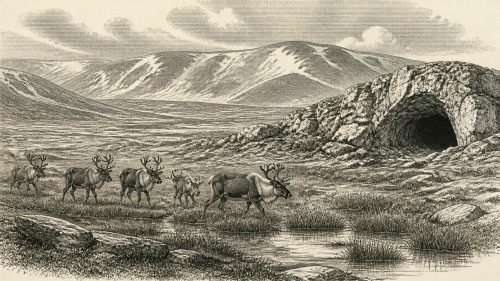
31,787 BCE is a modern proleptic label within late Marine Isotope Stage 3, not a recoverable Irish historical year. Ireland was a cold, variable pre-Last Glacial Maximum landscape, with changing ice, sea levels, open vegetation and mammals including reindeer, deer, bears and hyaenas. Cave deposits and revised radiocarbon dates indicate intermittent animal occupation, but cannot establish permanent human settlement. A marked reindeer femur from Castlepook Cave, County Cork, may show stone-tool processing and possible early human presence. However, its insecure context lacks associated tools, hearths or remains. Until evidence emerges, it remains a record of ice-age environments and cave fauna.
Read Article

Archived: 9 September 2026
Abstract
Around 31,875 BCE, Ireland was entering a colder, increasingly glaciated Late Pleistocene landscape, not yet at the Last Glacial Maximum. Ice, low sea levels, permafrost and open tundra-like habitats shaped a changing island supporting reindeer, horse, mammoth, giant deer and predators. Later glaciation destroyed or disturbed much earlier evidence. Castlepook Cave, County Cork, preserves a reindeer femur, reportedly about 33,000 years old, with possible stone-tool butchery marks. It may indicate a brief pre-glacial human visit, but poor early excavation contexts prevent certainty. No securely dated settlement, tools, hearths, burials or enduring population are known. The date chiefly illustrates evidence's limits.
Read Article

Archived: 9 September 2026
Abstract
Around 31,880 BCE, Ireland was a cold, changing landscape on the north-western fringe of Upper Palaeolithic Europe, approaching but preceding the Last Glacial Maximum. Calendar precision is impossible; evidence consists chiefly of cave remains, sediments and glacial landforms. Castlepook Cave, north County Cork, contains Ireland’s richest pre-maximum vertebrate assemblage, including reindeer, mammoth, giant deer, bears and hyenas, indicating habitats able to sustain Ice Age fauna over millennia. Ice was advancing unevenly, though the extent of ice-free ground remains uncertain. A possibly cut-marked reindeer femur suggests a human visit, but lacks secure context. No evidence proves Palaeolithic settlement, society or continuity.
Read Article