Membership is completely free, giving members unlimited access to all available resources, services, features, and benefits without any restrictions or fees.
Welcome back. Sign in to continue enjoying unlimited access to all available resources, services, features, and member benefits at no cost.
Ormond’s position was complicated. He was a durable royal servant with deep Irish connections, but he was also exposed to attack from English political opponents who accused him of insufficient vigilance. During the Exclusion Crisis, English politicians disputed whether the king’s Catholic brother, James, duke of York, should succeed to the throne. Ireland was inseparable from that wider argument: opponents of Catholic influence could present the kingdom as a potential base for a French-backed invasion or a renewed Catholic rising. Supporters of Ormond, meanwhile, stressed the importance of steady government and an army loyal to the crown.
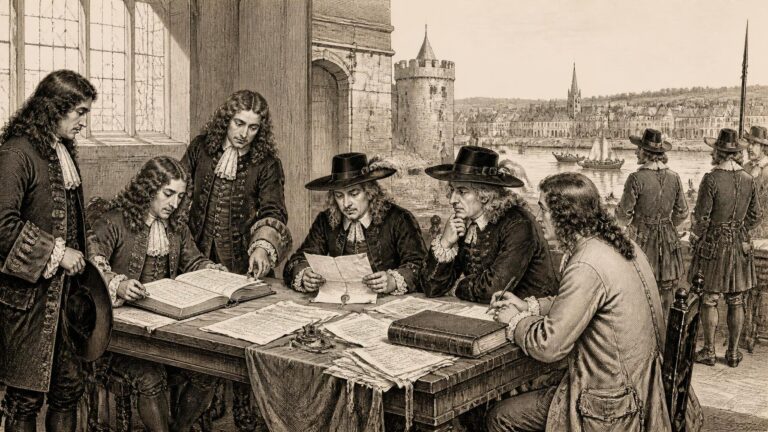
James Butler, duke of Ormond, governed as lord lieutenant for Charles II. He had returned to office in 1677 after the departure of the earl of Essex, bringing unrivalled experience of Irish politics but also deep personal entanglements in its landowning and religious divisions. His third administration sought fiscal solvency, a better-supported army and a final reassurance of property titles. These aims were connected: a parliament might confirm landholdings, grant revenue and make military expenditure more secure. But the political price of a land settlement was high, since the Restoration arrangements had left many Catholic claimants dissatisfied while Protestant proprietors feared any reopening of the question.
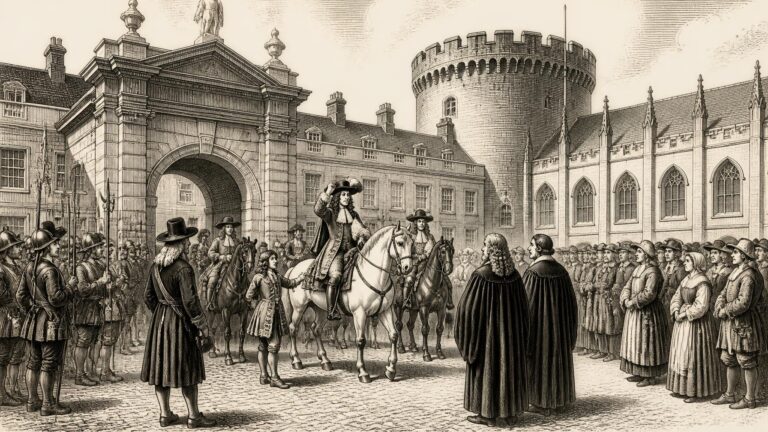
Ormond’s return was neither sudden nor uncomplicated. His reappointment had been announced on 24 May, and royal instructions for him as lieutenant general and general governor were issued on 1 August. At Dublin on 24 August, Arthur Capel, earl of Essex, the outgoing lord lieutenant, personally delivered the sword of office to him. The ceremony marked continuity in royal government, but also the replacement of a viceroy whose relationship with powerful financial interests had become deeply strained.
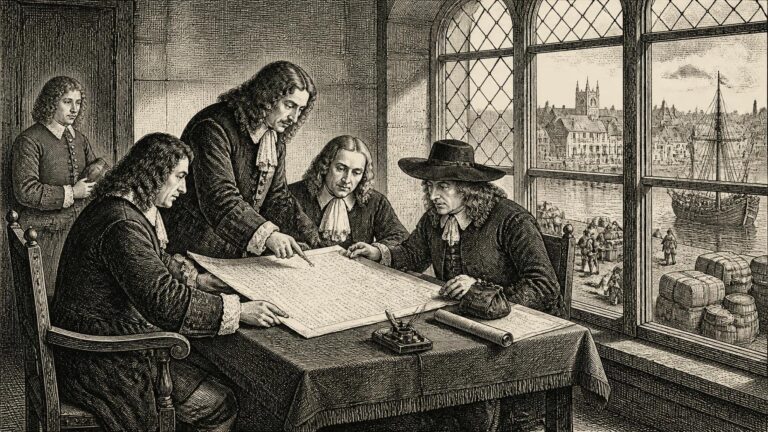
The Council of Trade’s paper offered a striking, if necessarily approximate, survey. It reckoned Ireland to contain about twelve million English acres of arable, meadow and good pasture, with another two million acres of rocky, boggy or scrubby ground considered largely unprofitable. Annual rents were put at £900,000; livestock at £3 million; housing with one or more chimneys at £2.5 million; and corn, household goods, merchandise and shipping together at about £1 million. Coin actually circulating in trade was estimated at only £250,000 to £300,000. Such figures should not be mistaken for a census or a neutral portrait. They were estimates made to guide policy, and their exclusion of cabins without chimneys is itself telling: some of the poorest dwellings, and therefore many of the poorest people, disappeared from this official picture.
Essex was appointed lord lieutenant on 21 May and sworn in on 5 August. His accession mattered because the office concentrated the crown’s Irish executive authority: the lord lieutenant presided over government at Dublin Castle, directed the army and influenced the handling of revenue, law, corporations and religious policy. He succeeded Lord Berkeley, whose administration had acquired powerful critics. Essex was not an Irish magnate of the scale of James Butler, duke of Ormond, or Roger Boyle, earl of Orrery; that relative detachment may have been part of his usefulness to Charles II.
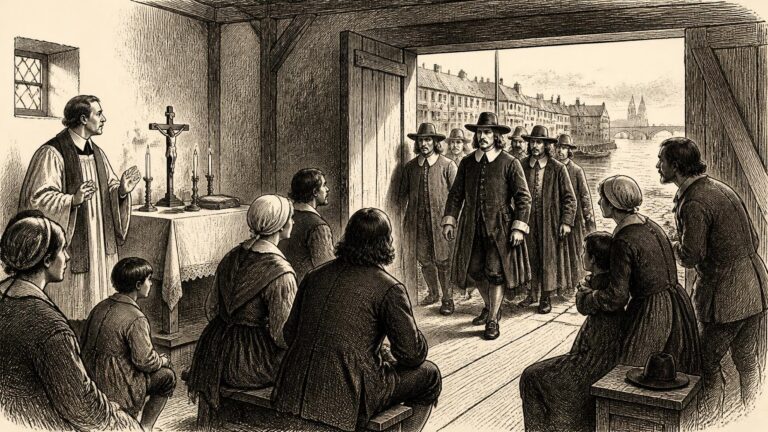
On 18 January, Sir Richard Talbot petitioned Charles II on behalf of Catholic nobles and gentry. The issue was land. The Restoration settlement of the 1660s had confirmed the enormous transfer of property produced by the wars, Cromwellian conquest and transplantation. Some Catholic proprietors had recovered land through the Acts of Settlement and Explanation, but many believed the settlement had been unfairly administered or had left legitimate claims unheard. Talbot’s petition did not undo the existing order. It was, however, an organised attempt to bring the grievances of the dispossessed back before the king.
Government changed hands early in the year. On 4 February John Berkeley, Baron Berkeley of Stratton, was appointed lord lieutenant of Ireland; he was sworn in on 12 April, replacing John Robartes. Berkeley came to office after a period of strained politics. The Restoration land acts had, by the middle of the 1660s, largely confirmed the transfers of property made during the Cromwellian period. Some Catholic proprietors had recovered land, but the broad result of conquest remained: political authority and much landed wealth were securely Protestant.
In 1669, Irish government changed hands, though not in a manner that promised a clean break. On 14 February Charles II announced his intention to remove James Butler, duke of Ormond, from the lord lieutenancy. Ormond had been the dominant figure in Restoration Ireland since taking office in 1662: an exceptionally well-connected Protestant magnate, a royalist survivor of the wars, and the architect of much of the practical settlement that followed them. His replacement was John, Lord Robartes, formally appointed lord lieutenant on 3 May. The transfer matters because it exposed a central fact of Restoration rule: Ireland was governed from Dublin, but decisive political calculations were made at the English court.