

Charged Neutrality
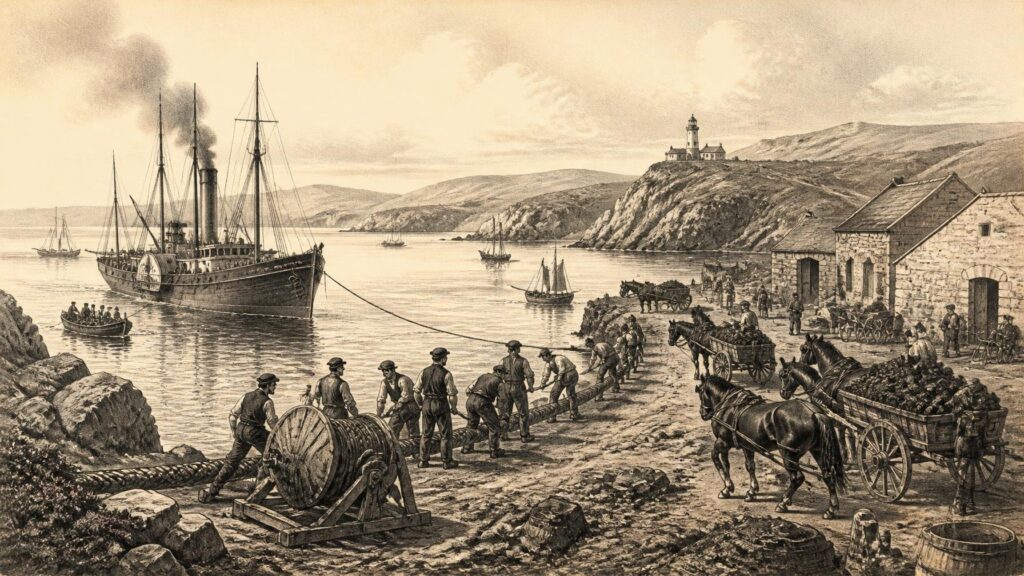
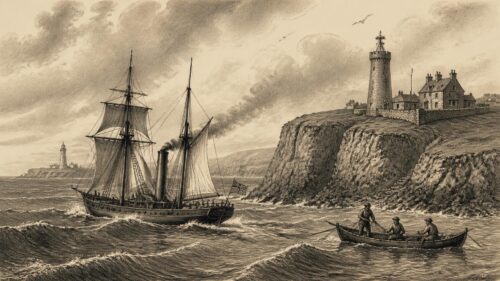
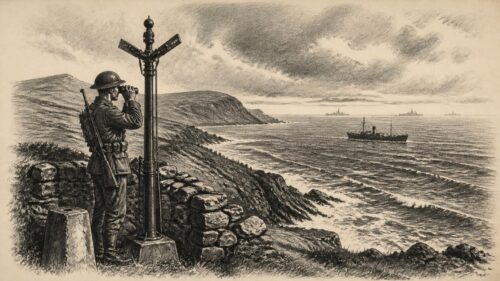
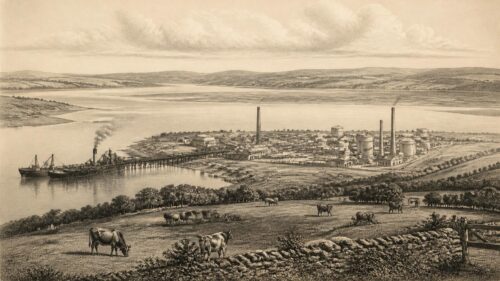
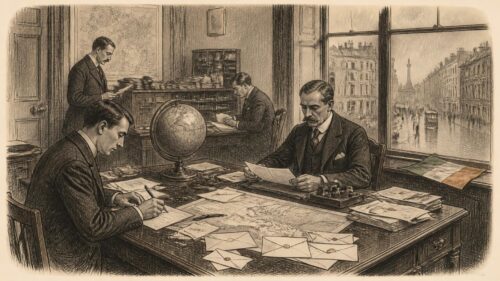
AI generated historical illustration, not a contemporary photograph.
At a Glance
In 2026, Irish arguments over energy and neutrality met at an unusually exposed point in the State’s history. Questions once treated separately—where electricity comes from, who protects cables and sea routes, whether overseas military deployments require United Nations authority, and how far Ireland may rely upon larger neighbours—were increasingly understood as parts of one problem: the security of an independent island state.
Present Tensions
The phrase “Irish energy and neutrality debates” can suggest two unrelated controversies. One concerns the cost and source of electricity, gas and heat; the other concerns military alliances, peacekeeping and the deployment of the Defence Forces. In 2026, however, the overlap was plain. Ireland’s electricity system depended upon cross-border and subsea connections, its gas system remained tied to imports, and its projected renewable future required new offshore cables, ports, grids and interconnectors. These were economic assets, but also strategic ones. Their vulnerability supplied new language to an older discussion of sovereignty.
The debate must nevertheless be described carefully. Ireland was not, in 2026, a legally neutral state in the same manner as a state permanently neutralised by treaty. Nor was it outside European political and economic structures. It was a member of the European Union, a participant in its security and defence policy, a contributor to international peacekeeping, and a member of NATO’s Partnership for Peace, while remaining outside NATO and outside mutual-defence alliances. The official Irish formulation was “military neutrality”: non-membership of military alliances and non-participation in common or mutual defence arrangements.
Energy security similarly did not mean national self-sufficiency. It meant the capacity to keep homes, hospitals, businesses and public services supplied through disruption, price shocks or physical damage. Successive governments therefore advocated a mixture of indigenous renewable generation, demand reduction, backup capacity, strategic reserves, more resilient networks and stronger European connections. The apparent contradiction is central to the story. The more Ireland sought freedom from imported fossil fuels, the more it needed an intricate infrastructure of international exchange during the transition.
State Foundations
The modern Irish State inherited neither a large industrial base nor a secure independent energy system. The Free State’s early economic life remained closely linked to Britain through trade, currency arrangements and transport. Electricity generation was fragmented, limited and unevenly distributed. The construction of the Shannon hydroelectric scheme at Ardnacrusha in the later 1920s was therefore more than an engineering venture. It was a formative act of state building: a visible assertion that the new State could plan, finance and administer national infrastructure.
The Electricity Supply Board, created to operate and extend the system, became one of the most consequential public bodies in twentieth-century Ireland. Its significance was practical—light, power, communications and industrial capacity—but it was also symbolic. Electrification was associated with modernity, state competence and a widening of social possibilities beyond the larger towns. In this respect, energy policy acquired a political meaning that survived every change in technology. Dependence on an outside supplier was never merely a commercial matter in a country whose independence had been hard won.
That heritage matters when contemporary politicians speak of “energy independence”. The phrase is often rhetorical, because no advanced economy is wholly independent of external markets, technology or capital. Yet it has historical force in Ireland. It calls up the effort to make a peripheral agricultural country capable of running essential systems on its own administrative authority. It also explains why public ownership, regulation and physical control of the grid have long carried significance beyond their balance sheets.
Power Nation
The Rural Electrification Scheme, launched in 1946, extended this state-building project into everyday life. ESB records describe a national programme divided into hundreds of rural areas, with lines, poles, demonstrations and local campaigns intended to make electrical power both available and useful. The scheme did not simply put wires across the countryside. It changed domestic work, farming, communications, commerce and expectations of public service. By the later twentieth century, electricity was no longer a privilege of urban centres but a normal condition of citizenship.
Folklore about rural electrification often reduces the story to a single dramatic moment: a lamp switched on in a cottage, a radio speaking for the first time, or a household appliance ending a long routine of labour. Such stories can contain genuine local memory, but they should not be confused with complete historical explanation. Connection did not automatically remove poverty, and some families initially hesitated at the expense of installation and consumption. The transformation was gradual, negotiated and unequal. Yet the broad evidence supports the larger conclusion: electrification materially altered rural Ireland and strengthened the popular expectation that infrastructure should serve the whole country.
That expectation returned in twenty-first-century disputes over wind farms, transmission lines, data centres and household prices. Communities frequently accepted the need for decarbonisation while asking who would bear visual, environmental or financial costs. The argument was not simply resistance to change. It inherited a long civic understanding that the electricity system had been built as a national social project. Contemporary planning conflicts therefore concern distribution as much as generation: where benefits go, where burdens fall, and whether consent has been adequately earned.
Wartime Scarcity
The Emergency of 1939–45 linked energy, transport, food, shipping and sovereignty with particular intensity. Ireland declared a state of emergency on 2 September 1939 and adopted a policy of neutrality as the European war widened. The decision was shaped by strategic weakness, the recent memory of revolution and civil war, partition, the danger of being drawn into Britain’s conflict, and a desire to demonstrate independent decision-making. It was neither an uncomplicated moral posture nor an escape from danger.
Neutrality did not shield Ireland from material hardship. Imported fuel supplies were constrained, shipping was hazardous, and ordinary life was affected by rationing, shortages and altered patterns of transport and production. Turf and peat acquired renewed importance, while fuel conservation became a public necessity. The State’s vulnerability to maritime disruption was painfully obvious. A country dependent upon external supplies could be neutral in law and still suffer from the actions of belligerents, from submarine warfare and from the priorities of larger powers.
The historical record also complicates any image of wartime neutrality as perfect detachment. Ireland publicly insisted on impartiality and used censorship extensively, but it also co-operated discreetly with the Allied side in ways historians have documented. Allied personnel who entered the State were treated differently from German personnel in important respects; intelligence co-operation took place; and strategic considerations shaped official conduct. The lesson is not that Irish neutrality was fraudulent. Rather, it was an emergency policy pursued under extreme constraints, in which formal principles and national survival did not always coincide neatly.
Neutrality Meaning
Irish neutrality has accumulated meanings that are historical, constitutional, emotional and political. Its supporters often present it as an inheritance from anti-imperial politics, opposition to conscription during the First World War, the assertion of sovereignty during the Emergency, and later participation in United Nations peacekeeping. Its critics answer that the tradition has always been contingent, that it has depended upon geography and friendly powers, and that it can be invoked too vaguely. Both accounts identify real features of the past, though neither is sufficient alone.
Documented policy is narrower than popular memory. The Constitution expresses commitments to peace, friendly co-operation and the peaceful settlement of international disputes; it also provides that the State shall not participate in war without the assent of Dáil Éireann. It does not, however, constitutionally entrench a general policy of military neutrality. Nor did Ireland become permanently neutral under international law. Governments could therefore maintain a policy of military neutrality while adapting its practice through legislation, European treaties and decisions on peace operations.
This gap between formal status and public conviction is a recurring source of disagreement. Many citizens understand neutrality as a defining national principle and expect it to impose strong limits on military co-operation. Governments have generally described it as a policy choice compatible with European membership, peacekeeping and certain forms of security partnership. The disagreement is not a mere semantic quarrel. It turns on who has authority to define the State’s identity: the executive interpreting foreign policy, the Oireachtas legislating on particular powers, or the people asserting a wider historical mandate.
Peacekeeping Practice
After joining the United Nations in 1955, Ireland developed a prominent record in peacekeeping. Service in missions abroad became an important part of the Defence Forces’ public identity and of the State’s international reputation. Irish soldiers served in difficult and dangerous circumstances, notably in the Congo and Lebanon. This history made it possible for Irish governments to argue that military neutrality was not isolationism. Ireland could avoid alliances while contributing personnel to collective efforts intended to keep or restore peace.
Peacekeeping, however, has never been identical to neutrality. United Nations missions depend upon mandates, consent, force-protection arrangements and the political conditions of particular conflicts. Moreover, the international environment has changed. Peacekeeping operations have increasingly faced fractured mandates, vetoes in the Security Council, threats from non-state armed groups and blurred lines between monitoring, protection and enforcement. The old reassurance—that international legitimacy could always be supplied by a functioning United Nations system—became harder to sustain.
Still, it would be mistaken to treat peacekeeping as public relations or as an empty ceremonial tradition. It has trained generations of personnel, created international relationships and supplied a practical vocabulary of restraint, mediation and multilateralism. Its influence explains why arguments over the overseas deployment rules carried such emotional weight in 2026. To supporters of reform, new rules were necessary if Ireland were to remain capable of helping in a changing world. To opponents, weakening the United Nations requirement risked removing the very safeguard that distinguished peacekeeping from participation in military blocs.
European Connections
Ireland’s entry into the European Economic Community in 1973 added another layer to the relationship between sovereignty and interdependence. Membership offered access to markets, development funding and a larger political setting, but it also required acceptance that important economic decisions would be made through shared European institutions. The energy crises of the 1970s made that context especially important. Sudden oil-price shocks demonstrated that national energy policy was constrained by global supply, shipping routes and decisions far beyond Dublin.
The response included diversification. Ireland developed peat-fired generation, built new oil and gas capacity, and later commissioned Moneypoint, a large coal-fired station. The logic was understandable in its period: reduce over-reliance on oil after successive shocks and strengthen electricity supply. Yet diversification did not mean independence. Each alternative carried its own dependence on imported fuels, capital equipment, technology and market conditions. The long-term environmental consequences of carbon-intensive generation would also become impossible to ignore.
European integration raised neutrality issues most visibly when treaty changes expanded the European Union’s foreign, security and defence roles. Irish governments sought assurances that participation would not oblige the State to join a common defence. Legal guarantees associated with the Lisbon Treaty affirmed that the treaty did not affect or prejudice Ireland’s traditional policy of military neutrality. Those guarantees did not end political argument, but they established an important distinction: Ireland could participate in European structures while retaining the choice not to enter a mutual-defence arrangement.
Fuel Choices
Natural gas became increasingly important to Irish electricity generation and heating. The discovery and development of the Kinsale gas field initially encouraged hopes of domestic supply, while the later Corrib project became one of the most controversial infrastructure projects in recent Irish history. The Corrib dispute involved environmental concerns, planning, policing, property rights and differing local views of risk and benefit. It also revealed how quickly the abstract language of national energy need can collide with a community’s experience of a proposed project.
Gas had advantages in a system seeking flexibility: it could support generation when wind output was low and coal or oil plants were being phased down. But gas dependence carried strategic and climate risks. Indigenous production declined; imports became more important; and much supply reached Ireland through infrastructure connected to Great Britain. This did not mean that supply was inherently unreliable, but it meant that a disruption in a neighbouring system, a subsea route, a market or a geopolitical crisis could have consequences in Ireland.
By the mid-2020s, the government’s energy-security strategy openly addressed that exposure. It argued that the durable answer lay in an electricity-led system with more renewable generation, flexibility, efficiency and European integration, while also considering the risks of oil, natural gas and electricity supply during the transition. The controversial proposition was that decarbonisation and security should be pursued together rather than treated as rival objectives. Critics accepted the need for renewables but disputed the pace, the balance of technologies and the wisdom of new gas infrastructure.
Grid Exposure
The idea of “critical infrastructure” gave the energy debate a sharper security dimension. Electricity networks, gas pipelines, landing stations, ports, data links and interconnectors may appear mundane until they fail. Their strategic importance became more visible across Europe after Russia’s full-scale invasion of Ukraine in 2022, the disruption of energy markets, and heightened concern over subsea infrastructure. Ireland’s geographical position made the issue especially resonant: much of its external connectivity passes through or beside waters of wider strategic importance.
It is important not to overstate the evidence. Public concern about cables and pipelines does not prove that Ireland faced an imminent attack in 2026. Nor does the mere existence of a vulnerability establish the most appropriate military response. Infrastructure is protected through a mixture of design, redundancy, surveillance, regulation, international co-operation, commercial contingency planning, civilian emergency management and, where appropriate, defence capability. A historical account should resist turning a plausible risk into a melodramatic certainty.
Nevertheless, vulnerability was no longer a technical footnote. Parliamentary debates connected the protection of subsea cables and electricity or gas interconnectors with wider questions of maritime surveillance, airspace, Defence Forces resources and co-operation with neighbours. In this setting, neutrality was not discussed only as a matter of distant war. It became entangled with the practical question of who notices, deters, investigates and responds when infrastructure on which daily life depends is threatened.
Gas Reserves
The strategic gas reserve debate demonstrated the tension between immediate resilience and long-term decarbonisation. Government policy after the energy-security review contemplated a State-led emergency reserve intended to mitigate the consequences of a catastrophic interruption. Supporters argued that a reserve was prudent insurance during a transition in which gas remained important for electricity, heating and industry. They pointed to the responsibility of government to avoid severe shortages, especially where households and vulnerable consumers would suffer first.
Opponents asked whether new gas infrastructure would lock Ireland into fossil-fuel dependence, divert funds from insulation, storage, demand management and renewable generation, or create local environmental burdens. Some also objected to liquefied natural gas because of the emissions associated with its production and transport. Others distinguished between a tightly defined emergency reserve and a commercial import terminal, insisting that the former might be justified only with strict limits and a credible plan for decline.
These arguments echoed earlier Irish energy choices. Peat stations, oil facilities, coal generation and domestic gas had each been presented in their day as answers to insecurity. Each brought benefits, dependencies and costs not fully apparent at the outset. The historical pattern does not dictate a verdict on a 2026 reserve. It does, however, counsel humility. Security measures tend to outlive the crises that produced them, while infrastructure built for one fuel system can shape political choices for decades.
Offshore Promise
Offshore wind offered a different vision of security. Ireland possesses extensive maritime space and strong wind resources. Advocates argued that large-scale offshore renewable generation could reduce exposure to imported fossil fuels, support climate commitments, stimulate port development and create an exportable resource. The attraction was not simply environmental. It revived an old national hope: that local natural conditions could provide the basis for economic autonomy.
Yet offshore wind does not eliminate interdependence. Turbines, vessels, cables, substations, finance, specialist labour, market rules and grid connections all link Ireland to international systems. Offshore generation also introduces new questions about marine planning, fishing, biodiversity, coastal communities and the rights of those who work at sea. The language of an inexhaustible “national resource” can obscure these practical negotiations. Like earlier hydroelectric and gas projects, offshore energy requires public legitimacy as well as technical potential.
The security implications are equally double-edged. A more dispersed renewable system may be more resilient than dependence on a small number of imported fuel routes, but offshore assets themselves require protection and repair capacity. The answer is not necessarily a militarised sea. It may instead involve better mapping, regulation, monitoring, redundancy, maritime skills and co-operation with European partners. The historical point is that every energy system has a geography of vulnerability. Renewable energy changes that geography; it does not abolish it.
European Networks
Electricity interconnection became a symbol of the new relationship between sovereignty and connection. Links with Great Britain had long allowed electricity to move across the Irish Sea. The Greenlink interconnector to Wales entered commercial operation in the 2020s, while the Celtic Interconnector with France promised a direct connection to continental Europe. Policy also envisaged additional opportunities, including further links to Britain and wider European integration.
To supporters, interconnectors provide resilience. They allow electricity to be imported during shortages, exported when Irish renewable output is high, and traded across a larger market. They may help integrate variable wind generation and reduce the need to maintain expensive spare capacity within one small system. To critics, they can deepen exposure to external prices, policy decisions and transmission failures. Both claims are true in part. The key historical question is not whether interdependence is good or bad, but whether it is sufficiently diverse, regulated and reciprocal to strengthen rather than weaken national resilience.
The French connection had particular imaginative importance because it offered a route that did not pass through Great Britain. In Ireland, routes matter politically as well as technically. A direct continental link could be interpreted as a practical diversification measure, a sign of deeper European belonging, or a partial answer to anxieties about reliance on the neighbouring island. None of these interpretations made the cable an act of geopolitical separation. They showed instead how infrastructure can carry historical memories of dependence and independence.
Corporate Demand
Energy affordability complicated every strategic ambition. Households and businesses experienced electricity and gas primarily through bills, not through white papers. High prices, price volatility and concerns about the allocation of grid capacity gave the debate an immediate social edge. The rapid growth of electricity demand from data centres and other large users intensified questions about who the system was being built for, how much new generation was required, and whether ordinary consumers were bearing disproportionate costs.
There is a temptation to frame this solely as a conflict between technological investment and domestic welfare. The real position is more complicated. Data-intensive industries can contribute employment, tax revenue and digital infrastructure, while their demand can place genuine pressure on a constrained system. The policy challenge is to distinguish speculative claims from measurable effects, require efficient use of power, ensure grid investment serves wider public needs, and maintain confidence that climate and security policy do not become subsidies for a narrow group of users.
This debate has a historical predecessor in the public purposes attached to electrification. The State’s original electrical project was widely understood as developmental: it was meant to serve homes, farms, towns and industry. The precise economic model has changed, but the political expectation remains. When energy is expensive or scarce, citizens ask whether national infrastructure is being governed as a common utility or as an asset whose benefits are captured elsewhere. That question is as much about legitimacy as it is about megawatts.
Climate Commitments
Ireland’s statutory climate framework committed the State to major emissions reductions by 2030 and climate neutrality by no later than 2050. Climate Action Plan policy connected those aims to renewable electricity, warmer homes, cleaner transport and energy security. This framing rejected an older assumption that security required ever larger fossil-fuel reserves. It presented efficiency and domestic renewable generation as security measures because energy not wasted need not be imported or generated in the first place.
The strength of this approach is historical as well as environmental. Ireland has repeatedly been disadvantaged by imported fuel shocks. Insulation, heat pumps, public transport, flexible demand and renewables may therefore be read as methods of reducing exposure to external markets. The weakness is that implementation is difficult. Retrofitting can be expensive and disruptive; planning systems can be slow; grid upgrades provoke opposition; and the benefits of reforms are not always felt quickly by households facing bills in the present.
Claims that climate policy and energy security are inherently enemies should therefore be treated with caution. In the short term, a rapid transition can require backup fuels, investment and complex new infrastructure. In the longer term, a successful transition may lessen certain forms of dependence. The dispute lies in the pathway: how much temporary fossil capacity is prudent, how fast demand can be reduced, what degree of public support is fair, and whether government institutions can deliver at the speed their plans require.
Security Recast
The wider European security environment altered the tone of Irish discussion. Russia’s war against Ukraine, cyber threats, disinformation, attacks and suspected attacks on infrastructure elsewhere, and instability affecting global energy routes all encouraged renewed attention to national resilience. The Government’s consultative forum on international security policy in 2023 brought together competing views on neutrality, European security, NATO partnership, peacekeeping, cyber threats and critical infrastructure. Its very existence showed that the inherited vocabulary of neutrality was under pressure to address forms of danger beyond conventional invasion.
One conclusion should be avoided: that concern about security automatically requires NATO membership or abandonment of military neutrality. The historical record offers more options than that binary. A state may improve maritime awareness, cyber resilience, emergency planning, defence capacity and international co-operation without joining an alliance. Equally, neutrality is not a substitute for capability. A policy of standing apart from military blocs does not physically monitor waters, defend airspace, repair cables or secure supply chains.
The sharpest question was therefore one of responsibility. If Ireland insists on independent policy, what capacities must it maintain to make that independence credible? If it relies upon co-operation with partners, how can it do so transparently without drifting into commitments the public has not authorised? These were not new questions. They had appeared during the Emergency, throughout the Cold War and during European treaty referendums. In 2026 they returned in an infrastructure-heavy form.
Triple Lock
The proposed Defence (Amendment) Bill of 2026 brought these tensions into parliamentary focus. Under the established “triple lock”, substantial overseas deployment as part of an international United Nations force required Government approval, Dáil approval and a United Nations mandate. The proposed legislation would remove the requirement for a Security Council mandate while retaining Government and Dáil approval, and would allow deployment as part of a broader category of relevant international force, subject to stated conditions of international law and United Nations principles.
Government supporters argued that the Security Council’s paralysis could prevent Ireland from taking part in legitimate peace-support or crisis-management operations. They maintained that reform did not change the policy of military neutrality: Ireland would remain outside alliances and common defence arrangements, while the Oireachtas would retain democratic oversight. They also argued that it was undesirable to allow the veto of a permanent Security Council member to determine whether Ireland could assist in a mission consistent with international law.
Opponents answered that the United Nations mandate was not a technical obstacle but a fundamental restraint. In their view, its removal could widen the range of missions in which the Defence Forces might serve and weaken public confidence that Irish troops would be deployed only under the clearest multilateral authority. The disagreement was not resolved by saying that the triple lock was merely statutory. Statutory mechanisms can become politically significant safeguards, particularly when they are associated in public memory with a wider national tradition.
Parliamentary Contest
The Oireachtas debates of 2026 revealed competing uses of history. Ministers stressed that military neutrality had always been a policy maintained by successive governments rather than a constitutional prohibition on change. They argued that adaptation was necessary in a world where United Nations decision-making had often been blocked. Critics described the proposed change as the removal, rather than reform, of the triple lock, and treated it as evidence that neutrality was being narrowed in practice without a referendum.
Neither side spoke from an empty past. The Government’s position drew on the flexibility that has characterised Irish foreign policy since the State’s foundation. Ireland had joined the United Nations, the European Communities and NATO’s Partnership for Peace without becoming a NATO member. The opposition position drew on the equally real fact that neutrality has long possessed a popular democratic meaning wider than formal legal definition. The strength of the controversy lay precisely in this double history.
Energy entered the argument because the protection of infrastructure became an example of the new security environment. Speakers referred to subsea cables, gas and electricity interconnectors, maritime surveillance and the possibility of hostile interference. Such references did not mean that the Defence Bill was principally energy legislation. Rather, they showed how energy systems supplied concrete illustrations for a debate that might otherwise have remained abstract. A cable on the seabed made the problem of interdependence visible.
Public Memory
Public arguments about neutrality often include folklore. One familiar story portrays Ireland as an island that simply kept out of the Second World War through courage and moral clarity. Another presents neutrality as little more than an illusion maintained under British protection. Both are reductions. The historical evidence shows a small state pursuing survival, sovereignty and domestic stability in exceptionally dangerous circumstances, while making compromises and engaging in discreet co-operation that a strict public image of impartiality could not easily acknowledge.
Similar simplifications appear in energy history. Ardnacrusha is sometimes remembered as proof that one bold national project can solve dependence; rural electrification as proof that a public utility invariably distributes benefits fairly; domestic gas as proof that indigenous supply ends vulnerability. These stories preserve valuable truths about ambition and public capacity, but they omit cost, conflict, technical limits and the persistence of external links. They are best understood as civic myths: not necessarily false, but selective accounts through which a society explains itself.
Historical interpretation should neither sneer at such memories nor surrender to them. Their endurance indicates what citizens value: independence, practical competence, equality of access and the avoidance of entanglement in other powers’ wars. Those values remain relevant. But they cannot decide detailed policy alone. A twenty-first-century energy system and a modern security environment require evidence about networks, law, costs, technologies and risks as well as respect for inherited political sentiment.
Island Dependencies
Ireland’s island geography creates both advantages and constraints. Water offers distance from continental battlefields and a substantial renewable resource, but it also makes the State dependent on maritime trade, pipelines, cables, ports and external routes. The division of the island adds further complexity. Electricity arrangements, gas systems, markets and security questions cannot be understood solely within the territory of the Republic. Co-operation across the border is an established practical necessity, whatever political disagreements may surround it.
Independence, therefore, has never meant isolation. It has meant retaining the ability to make political choices while managing dependencies that cannot be wished away. The post-independence State did this through public utilities, trade policy, diplomatic caution and international institutions. Contemporary Ireland does it through European markets, regulatory bodies, cross-border arrangements, interconnectors and multinational supply chains. The instruments have changed, but the governing problem is recognisably old.
This perspective helps avoid a false choice between autarky and surrender. A resilient state does not try to produce every good or guard every system alone. It aims to avoid single points of failure, cultivate relationships with several partners, retain essential domestic capacity, regulate strategically important assets and ensure democratic accountability for commitments made abroad. These are principles that can apply to electricity cables and gas reserves as readily as to peacekeeping deployments.
Historical Verdict
The debates of 2026 should not be described as the end of Irish neutrality or as proof that energy policy had become militarised. Both claims go beyond the evidence. Ireland remained outside NATO and continued officially to define its policy as military neutrality. The Defence Bill was still before the Oireachtas during October 2026 rather than enacted law. Energy policy remained principally concerned with affordability, climate obligations, supply and infrastructure, even as officials and legislators increasingly used the language of resilience and critical security.
What had changed was the context in which old concepts operated. During the Emergency, security meant avoiding invasion and surviving shortages. In the oil crises, it meant fuel diversification and economic stability. In the decades of European integration, it meant reconciling participation with policy autonomy. In 2026, it meant all of these things plus cyber systems, maritime infrastructure, electricity markets, renewable development and the fragility of global supply routes. Neutrality and energy were linked because both concerned the State’s capacity to act when systems beyond its borders were under strain.
The strongest historical conclusion is therefore one of continuity through adaptation. Irish governments have repeatedly sought to preserve room for independent judgement while accepting that Ireland’s welfare depends upon connections to others. The difficulty has always been to ensure that connection does not become helpless dependence. In 2026, that difficulty was expressed in the language of cables, gas reserves, wind farms, European grids and United Nations mandates.
Future Balance
A durable settlement will require more than declarations. On energy, it requires transparent decisions about infrastructure, fair treatment of communities, protection for consumers, serious investment in efficiency and grids, and a credible route from imported fossil fuels towards lower-carbon domestic generation. On security, it requires honest explanation of what military neutrality does and does not mean, adequate civilian and defence capacity to protect essential systems, and parliamentary scrutiny proportionate to the gravity of overseas deployments.
There is room for disagreement over each policy instrument. Reasonable people may differ over a gas reserve, the pace of offshore wind, the role of interconnectors, data-centre demand, maritime surveillance or the United Nations mandate requirement. History does not hand down a single correct answer. It does establish that choices presented as temporary responses can shape the State for generations, and that public consent weakens when governments treat questions of sovereignty as merely technical.
The older Irish ambition was not complete separation from the world. It was the capacity to meet the world without being ruled by another power’s necessities. That ambition remains intelligible in an era of shared grids and exposed seas. Whether Ireland can realise it will depend less on any slogan about neutrality or self-sufficiency than on the patient construction of resilient institutions, diversified systems and democratic trust.



Charged Neutrality highlights a persistent paradox: Ireland’s renewable transition may reduce fossil-fuel dependence while increasing reliance on offshore cables, interconnectors and European co-operation. This makes sovereignty less about self-sufficiency than about resilient, democratically governed interdependence. The article usefully connects this contemporary dilemma with wartime scarcity, rural electrification and disputes over gas infrastructure, showing why energy assets carry both practical and symbolic weight. It also suggests that protecting critical infrastructure need not erase military neutrality, provided responses remain proportionate and accountable. How should Ireland define independence when secure energy depends on systems beyond its shores, and what safeguards should guide co-operation?