Forensic Reckoning
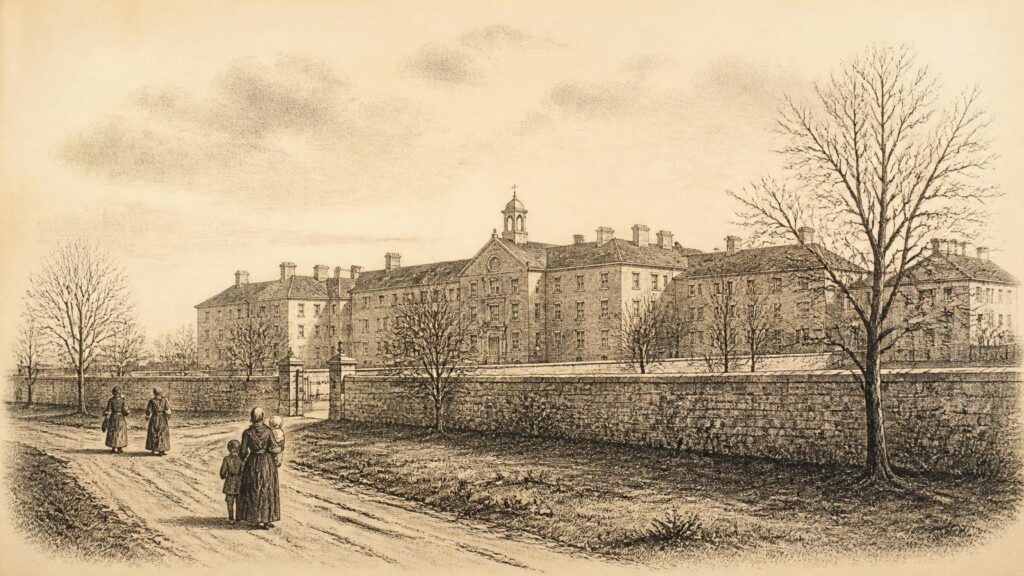
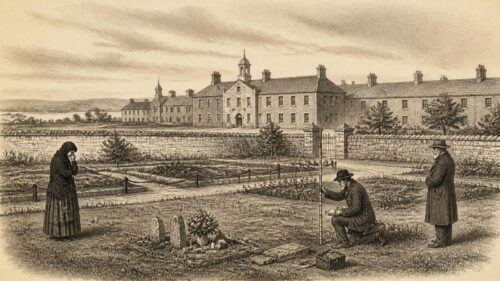
AI generated historical illustration, not a contemporary photograph.
At a Glance
Decision Genesis
The progression toward a forensic excavation at the site of the former Mother and Baby Home in Tuam was not a linear evolution of policy but rather a complex reconciliation of humanitarian necessity with the constraints of historical site architecture. The formalisation of the excavation mandate traces its primary impetus to the March 2017 Commission statement, which confirmed the presence of two distinct structures containing human remains. Crucially, the second of these structures, containing twenty chambers, presented a profound interpretive challenge, as its original function remained historically uncertain and architecturally ambiguous. This revelation necessitated a shift from speculative assessment to a statutory framework capable of addressing the ethical complexities of disturbing a site of institutional burial. The path from this empirical discovery to the government’s 2018 determination required a rigorous mediation between archaeological methodology and the intense, well-founded expectations of the survivor community.
By July 2018, the process had matured into a formal public consultation facilitated by the Galway County Council. This exercise sought to reconcile five distinct management options presented in a technical expert report, acknowledging that any chosen course would have significant implications for the site’s integrity and the dignity of the deceased. The necessity of this consultation phase highlighted the government’s recognition that the recovery of human remains could not be treated as a standard construction or archaeological project; it demanded an unprecedented level of social engagement. The public consultation report announcement, released on 6 July 2018, served as the bridge between investigative uncertainty and the eventual commitment to a humanitarian forensic programme. It was within this climate of transparent, albeit difficult, deliberation that the state transitioned away from localized site monitoring toward a nationalised forensic strategy.
The subsequent government decision on 23 October 2018 to approve a phased forensic excavation represented the fundamental threshold of the state’s involvement. This directive was deliberately framed within the parameters of humanitarian forensic action, a designation that prioritised the recovery, identification, and respectful reinterment of the remains above mere historical record-keeping. The inclusion of systematic ground-truthing and test excavation as precursors to the main operation underscored a commitment to forensic accuracy over speed. By formalising these stages, the state sought to mitigate the risk of site contamination and ensure that any recovery process would withstand the scrutiny of both forensic science and the families who had long advocated for the truth. The 2018 decision effectively institutionalised the site as a location requiring specialist oversight, marking the end of the exploratory phase and the commencement of long-term strategic planning for a fully forensic intervention.
Statutory Framework
The transition from a high-level government directive in 2018 to the operational reality of forensic recovery required the development of a bespoke legislative architecture. The Institutional Burials Act 2022, which came into effect on 15 July 2022, functioned as the legal bedrock for the subsequent establishment of the Office of the Director of Authorised Intervention, Tuam (ODAIT). The significance of this legislation cannot be overstated; it provided the Director and their team with the specific statutory powers required to access the site, conduct excavations, and manage the delicate process of individualisation and identification. Without this dedicated legal framework, the ethical and procedural ambiguities surrounding the site—particularly those relating to the jurisdiction over human remains within the former institutional grounds—would have likely remained unresolved.
The ODAIT itself, established in October 2022, was designed as an independent body tasked with navigating the intersections of scientific rigour, administrative accountability, and profound human sensitivity. A cornerstone of this structure was the creation of an advisory board comprised of family members, technical experts, advocates, and council representatives. This diversity in the board’s composition was intended to ensure that the process of recovery remained anchored in the lived experiences of the survivors and the families of the deceased. The remit of the ODAIT, as defined by its founding objectives, focused on a multi-faceted mission: to recover, analyse, memorialise, and provide for a respectful burial, while also endeavouring to individualise and identify the remains where scientifically possible. By explicitly separating the processes of recovery and identification, the ODAIT acknowledged that while scientific advancement facilitates the former, the latter is bounded by the limits of available biological and historical data.
The administrative structure of the ODAIT was further bolstered by the appointment of its Director in May 2023, who assumed responsibility for the operational execution of the 2018 government mandate. The establishment of the Toghermore forensic facility and mortuary in July 2026 provided the necessary infrastructure to conduct large-scale analysis, with forensic analysis commencing in August 2026. This facility represented a significant investment in the state’s capacity to handle the sensitive recovery and cataloguing of remains. Furthermore, the Office’s commitment to separate engagement events for families, survivors, the media, and community partners reflected an understanding of the differing needs of these stakeholders. By segmenting the information flow, the ODAIT aimed to maintain confidentiality and dignity while fulfilling its obligation to keep the public and the affected families informed of the forensic progress.
Excavation Dynamics
The physical excavation of the site, which officially commenced on 14 July 2025, served as the manifestation of the planning and legislation initiated years prior. Preparedness for this event involved rigorous site security and prior access for families, acknowledging the emotional weight of the undertaking. The project was initially scheduled for a twenty-four-month duration, a timeline reflective of the delicate nature of hand-excavation techniques required at such a sensitive site. The transition to a formalised forensic environment meant that every stage of the recovery, from the stripping of topsoil to the delicate cleaning of individual remains, was documented in accordance with the strict forensic standards mandated by the 2022 Act.
Technological and methodological adjustments became apparent as the excavation progressed into 2026. The technical update provided on 22 July 2026, covering reports through 15 July 2026, revealed the recovery of 77 coffined infants from the Tent 1 area and 22 from Tent 2. This data provided the first substantial forensic insight into the site’s layout and the nature of the burials. Crucially, the update also noted the investigation of a subterranean vaulted structure, which was distinguished from the previous memorial garden structure, indicating that the site’s historical footprint was far more complex than initial site mapping had suggested. This discovery prompted significant changes in operational strategy; for instance, the replacement of Tent 1 with a larger Tent 3 during the July–September 2026 reporting period facilitated more sophisticated logistics for the evolving excavation site.
The investigation of the vaulted structure, particularly the exterior hand-excavation that identified a foundation cut dating to the 1840s, demonstrated the necessity of integrating archaeological history with forensic practice. By separating the original foundation cuts from the subsequent burial interventions, the ODAIT was able to better understand the temporal layers of the site. These technical updates serve as a reminder that forensic reckoning is an ongoing process of discovery. The distinction made by the ODAIT between the individualisation of remains and their eventual identification is a crucial scientific boundary. Individualisation refers to the recovery of separate remains as distinct persons, while identification refers to the successful linking of those remains to a specific name via DNA or other forensic markers. This distinction is vital for managing the expectations of survivors who seek both the recovery of their loved ones and the confirmation of their identity.
Future Objectives
As the ODAIT continues its work into the latter stages of the project, the focus remains on the synthesis of forensic findings and familial engagement. The government’s signal in April 2026 of its intent to extend DNA eligibility to first cousins was a pivotal policy consideration, reflecting an evolving awareness of the limitations of existing biological records. While this expansion had not been formally enacted at the time of the reporting period, its proposal highlights the government’s recognition of the changing forensic landscape. Such potential extensions of the legal criteria for identification illustrate the fluid relationship between scientific capability and state policy, where the goal is to cast as wide a net as possible for identification without compromising the integrity of the data.
The process of remembrance has been deeply intertwined with the technical operations of the ODAIT. The mandate to provide a respectful reinterment is not merely an administrative conclusion to the excavation; it is an essential component of the restorative justice process promised to the families in the wake of the 2018 decision. Throughout the excavation, the ODAIT has prioritised the distinction between the physical remains and the institutional context, ensuring that the human rights of the deceased are upheld at every turn. The rigorous oversight of the advisory board remains a mechanism to hold the Office accountable to these humanitarian standards. The challenges that emerged during the excavation—from the discovery of unforeseen subterranean structures to the complexities of the Toghermore mortuary workflows—underscore the inherent difficulty of applying forensic precision to historical sites that were never designed for, nor historically documented with, the level of detail now required.
The lingering questions surrounding the site, including the definitive clarification of the original function of the subterranean structures and the ultimate success rate of individual identification, remain the core focus of the current ODAIT programme. By separating the scientific objectives of recovery and identification from the social and ethical objective of memorialisation, the state has created a structured environment in which to conduct this forensic reckoning. The significance of the 2018 decision was in its commitment to action; the significance of the post-2022 process is in the methodology of that action. As the work proceeds toward its target conclusion, the data generated by the ODAIT stands as a testament to the effort to bring individualised attention to those whose existence was historically obscured. The reconciliation of these technical reports with the lived experience of the community continues to be the definitive hallmark of the project’s success, ensuring that the legacy of the Tuam site is defined by the dignity of the recovery rather than the anonymity of the past.
Systematic Recovery
The forensic fieldwork operationalised between 2025 and 2026 represents a departure from the preliminary investigative phase that defined the early discovery period. While the 2017 commission report established the presence of human remains within the two distinct structures—specifically identifying a twenty-chambered subterranean space—the transition to the Office of Director of Authorised Intervention Tuam (ODAIT) necessitated a shift from assessment to systematic recovery. The statutory framework provided by the Institutional Burials Act 2022, which came into effect on 15 July 2022, established the legal mandate for this humanitarian forensic action, transforming the site from an area of historical investigation into a controlled forensic theatre. By the time full excavation commenced on 14 July 2025, the logistical preparations had spanned years, ensuring that the recovery process adhered to rigorous standards of forensic archaeology and site security. The initial phase of this activity, as detailed in the ODAIT commencement directives, prioritised the preservation of context over speed, acknowledging the sensitivity of the site and the historical weight of the remains contained within the various subterranean chambers. The structure of this intervention is deliberately phased, moving from surface clearance and structural stabilisation to the intricate, painstaking hand-excavation required to manage the integrity of remains that had been subject to decades of environmental degradation.
Forensic Methodology
The transition from ground-truthing, as sanctioned in the 2018 government decision, to the full-scale excavation of 2025 involved a significant escalation in both technical resources and forensic oversight. As the excavation progressed through 2026, the ODAIT technical updates provided a granular view of the challenges faced by the forensic teams. The recovery of 77 coffined infants from the Tent 1 area and an additional 22 from Tent 2 by July 2026 underscored the high density of the site, requiring teams to adjust their methodology to accommodate the complexities of interred remains. The shift from Tent 1 to the significantly larger Tent 3 during the July–September 2026 reporting period was not merely a logistical necessity but an illustration of the evolving nature of the site’s topography and the increasing recognition of the subterranean chambers’ extent. The excavation of the 1840s foundation cut, confirmed through the meticulous hand-excavation of the vaulted structure’s exterior, provided a critical spatial understanding that separated the original architectural function from the later use of the space. This methodology is predicated on the distinction between recovery—the physical extraction of remains from the burial environment—and identification, the subsequent, more complex scientific process that depends upon the quality and preservation of those recovered materials. The forensic facility at Toghermore, which opened in July 2026, serves as the hub for this analysis, providing a dedicated space for the forensic anthropologists and pathologists to conduct their work away from the high-pressure environment of the primary site.
Individualisation Challenges
The process of individualisation—the forensic act of separating and identifying specific human remains within a collective burial environment—remains one of the most formidable tasks undertaken by the ODAIT. Unlike standard exhumations, the conditions at Tuam present unique archaeological difficulties, where the commingling of remains and the impact of long-term exposure within subterranean chambers necessitate a conservative and cautious approach to individualisation. Each set of remains recovered must be documented with absolute precision, ensuring that the chain of custody remains unbroken from the moment of exhumation to the arrival at the Toghermore mortuary facility. The scientific limitation here is a reality that the ODAIT has communicated with transparency; the recovery of remains does not automatically guarantee successful identification. Forensic analysts must navigate the degradation of organic materials, which complicates the extraction of high-quality DNA profiles. While the government signalled an intention in April 2026 to broaden the criteria for DNA testing to include first cousins, this reflects the complexities of building a reference database capable of matching against the recovered biological evidence. The individualisation process is therefore a technical exercise in forensic archaeology that is fundamentally tied to the quality of the remains preserved within the distinct vaulted and subterranean chambers identified by the ODAIT.
Scientific Interpretation
The interpretation of the site has evolved significantly since the early test trenches of 2017 suggested an uncertain function for the subterranean chambers. By mid-2026, the ODAIT had moved beyond general observation to a nuanced understanding of the burial patterns and the environmental impact on the site’s contents. The decision to treat the site as a forensic crime scene, governed by the legislative structures of the 2022 Act, ensures that the evidence base remains authoritative. The distinction between the memorial garden structure and the subterranean vault investigated by the ODAIT is crucial for both historical accuracy and the current recovery process. Analysts must differentiate between original construction features, such as the 1840s foundation, and the later usage patterns associated with the institutional burial of infants. This interpretative layer is essential for the forensic team to contextualise the findings; without understanding the architectural and functional history of the burial chambers, the site remains a series of isolated data points rather than a cohesive record. The relationship between the recovered coffined remains and the non-coffined remains within the vaults highlights the varied historical practices that were once standard but are now subjected to the cold, objective scrutiny of modern forensic science. The ODAIT’s approach necessitates that these findings are not interpreted through a single lens, but rather through a multidisciplinary framework that incorporates archaeological, pathological, and historical data.
Consultation Structure
The ODAIT mandate is not limited to the technicalities of recovery; it encompasses a social and ethical responsibility to the families, survivors, and the broader community. The advisory board, which brings together family representatives, technical experts, and advocate groups, serves as a vital bridge between the clinical reality of the excavation and the human experience of the families. The separation of engagement events—distinguishing between partners, the media, and the families—acknowledges the distinct needs of each group while maintaining a level of institutional transparency that was arguably absent in the pre-2018 period. The public consultation facilitated by Galway County Council in 2018 established the baseline expectation for this level of engagement, moving the conversation from a municipal concern to a national humanitarian undertaking. Throughout the 2025–2026 period, the ODAIT has sought to maintain this trust by providing regular technical updates, ensuring that stakeholders are informed of the progress of the excavation and the implications of the findings as they emerge from the site. This consultative structure is an acknowledgment that the forensic process cannot exist in a vacuum; the recovery of remains is fundamentally an act of public importance that requires consistent and meaningful communication. By formalising these interactions, the ODAIT addresses the limitation of historical silences, replacing them with a structured, albeit complex, dialogue that prioritises the needs of the living while honouring the remains of the dead.
Remembrance Integration
Remembrance is explicitly woven into the ODAIT objectives alongside the scientific processes of recovery and analysis. This integration of forensic fieldwork with memorialisation is perhaps the most defining feature of the Tuam intervention. The ODAIT does not view these tasks as sequential but as interdependent; the act of forensic identification is itself an act of remembrance, an attempt to restore names to the anonymous dead. As the excavation continues, the site itself is undergoing a transformation that respects the sensitivity of the interred remains while preparing for a future, respectful reinterment. The visitation sessions for families and survivors that preceded the full commencement of the excavation in July 2025 were a critical step in reconciling the physical reality of the site with the emotional trauma of the families. These visits allowed for a space of reflection that was separate from the industrial and logistical focus of the tented excavation zones. The challenge for the ODAIT moving forward is to sustain this balance between the forensic rigour required to uncover the truth and the compassionate environment required for those for whom this site is a place of profound personal loss. The ongoing analysis at the Toghermore facility is the engine of this effort, providing the scientific backbone that will eventually allow for the final, respectful laying to rest of the recovered individuals, thereby fulfilling the mandate of the humanitarian intervention.
Remaining Questions
As the forensic fieldwork progresses through its second year, several key questions remain regarding the final scope and results of the individualisation process. The primary variable remains the preservation state of the remains and its subsequent effect on the success rates of DNA analysis. While the ODAIT has established a clear pathway for recovery and identification, the scientific reality of the site—given the specific environmental conditions of the vaulted subterranean structures—imposes limitations on what can be achieved. The 2026 updates have confirmed the intensity of the work required, yet they also highlight the unknowns that persist as the teams reach deeper into the site’s strata. The government’s signalling of expanded DNA testing eligibility reflects a commitment to the process, but the outcome will ultimately depend on the intersection of biological preservation and the effectiveness of the analytical methods employed at the Toghermore mortuary. Furthermore, the long-term implications of the forensic findings on the site’s ultimate memorialisation remain to be addressed in the post-excavation phase. The ODAIT continues to operate under the understanding that identification is not guaranteed, and the forensic process must therefore account for the possibility that some individuals will remain unidentified. This outcome, should it occur, does not diminish the value of the humanitarian forensic action; rather, it highlights the severe consequences of the original institutional practices. The current forensic reckoning is thus a multifaceted project, one that combines the precision of forensic archaeology with the delicate, essential work of restoring the history of those who were previously denied the recognition of a formal identity.