Radical Curate
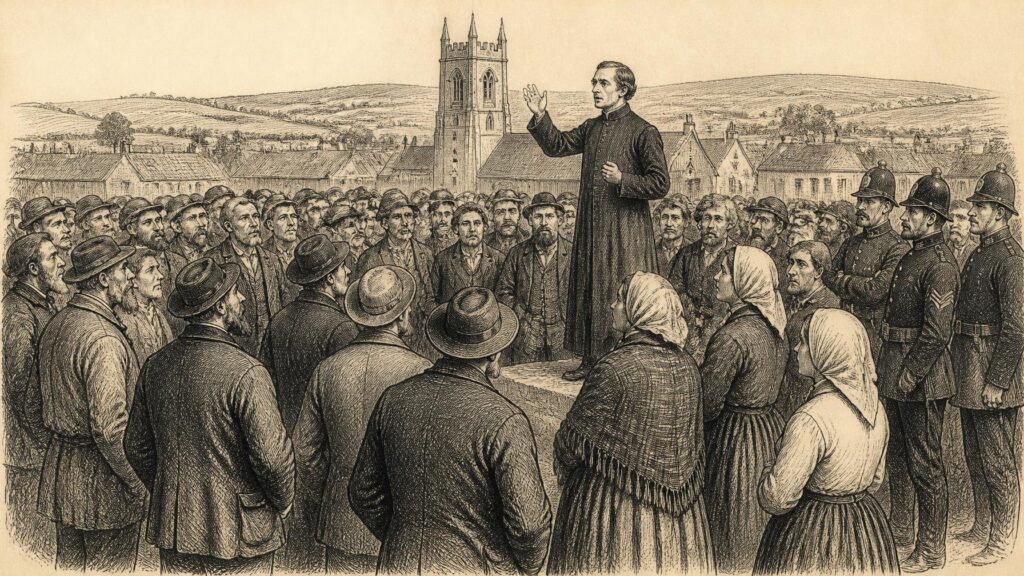
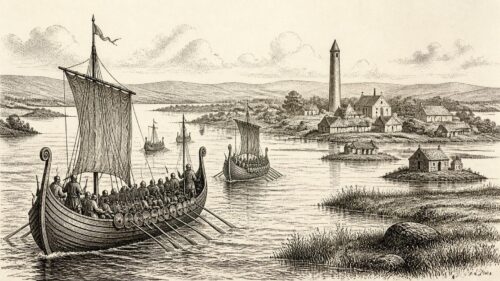
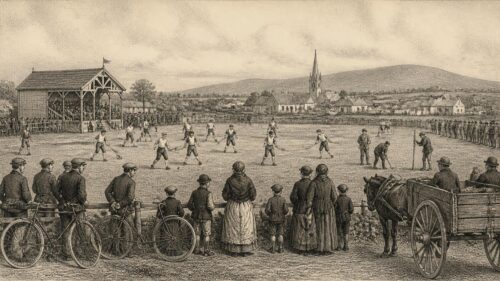
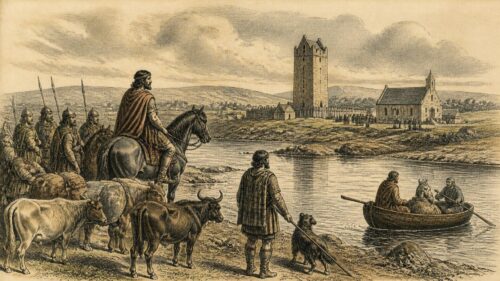
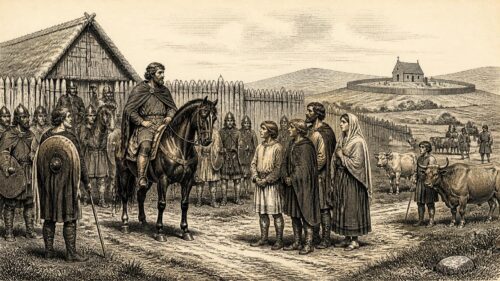
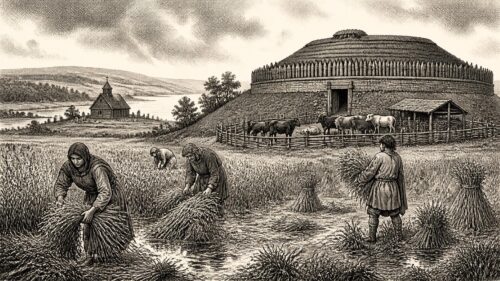
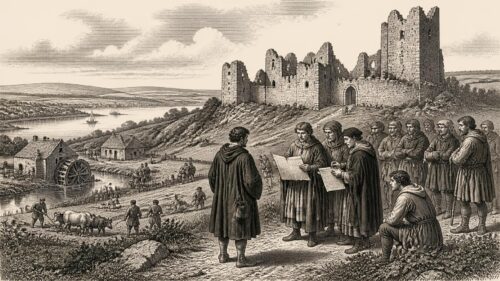
AI generated historical illustration, not a contemporary photograph.
At a Glance
Limerick Origins
Father Eugene Sheehy was neither a conventional parish priest nor a dependable spokesman for any one Irish political camp. From the Land War of the early 1880s to the Easter Rising of 1916, he repeatedly crossed boundaries that churchmen were expected to observe: between pastoral duty and agitation, constitutional nationalism and separatist sympathy, local Limerick life and the Irish-American world. His career illuminates the political uses of clerical authority in modern Ireland, but it also demonstrates its limits. Admired by parishioners and radicals, he was distrusted by bishops and never wholly absorbed by the organisations with which he associated.
Sheehy was born on 25 December 1841 at Broadford, County Limerick, into a family whose later connections placed it near several currents of Irish public life. His father, Richard Sheehy, owned a mill; his mother was Johanna O’Shea. Eugene was the eldest of three children, and his brother David became a prominent nationalist parliamentarian. Through David’s family, Eugene was uncle to Hanna Sheehy Skeffington, the suffragist and republican, and to members of a wider circle that included Tom Kettle and Francis Cruise O’Brien. Such relationships should not be mistaken for a political machine. They do, however, help explain why a priest from rural Limerick could remain relevant to Dublin radicalism long after his most conspicuous period of Land League activity had passed.
Broadford lay in a part of west Limerick shaped by the memory of famine, migration, landlordism and popular political mobilisation. The later tradition that Sheehy saw the worst scenes of the Great Famine as a child is plausible in the broad sense that he grew up in its shadow, but it cannot securely be treated as a detailed autobiographical record. What is documented is more important: he belonged to a generation formed by the post-Famine transformation of rural society, in which pressure on small holdings, insecurity of tenure and emigration remained central facts of life. His later politics drew energy from these conditions, though they were also expressed through the moral language of a Catholic priest.
He received an education in Limerick and continued his clerical studies at the Irish College in Paris. Ordained in July 1868, he entered a Church whose authority in Ireland had been greatly strengthened in the nineteenth century. The Catholic clergy were essential local figures: celebrants of the sacraments, educators, advisers, organisers of charitable activity and, frequently, interpreters of public affairs. Yet episcopal policy did not automatically determine the political temper of every priest. Sheehy’s later career rests upon that distinction. He could draw legitimacy from the collar while acting in ways that embarrassed the hierarchy responsible for his discipline.
The available evidence does not justify presenting him as a precursor of a single later party or doctrine. He was not a systematic political thinker, and no substantial body of published writing survives to establish a developed programme. His importance lies instead in action, association and reputation. He spoke in public, endured imprisonment, travelled in the United States, corresponded with advanced nationalists, encouraged cultural nationalism, appeared at pivotal public gatherings and maintained a distinctly local pastoral following. His reputation was made in the Land War, but his political afterlife was extended by the generations who saw in him either a heroic clerical patriot or an inconveniently independent priest.
Clerical Formation
Sheehy’s early ministry brought him to Kilmallock, a market town with a long political memory and a strong local identity. In the nineteenth century it was not unusual for clerics to support tenant interests, particularly where evictions or landlord power produced visible hardship. What made Sheehy exceptional was not merely that he sympathised with tenants, but that he chose open involvement in a movement which the authorities regarded as a threat to order and which many bishops viewed with caution. Kilmallock also connected him with William Henry O’Sullivan, a radical local politician whose influence helped draw the curate towards popular nationalist causes.
The late 1870s created conditions in which agrarian grievance became nationally organised. Agricultural depression, falling prices and difficult harvests sharpened existing insecurity. The Irish National Land League, founded in October 1879, sought to unite demands for tenant protection with the wider aspiration to alter the ownership and government of Ireland. Its famous programme of fair rent, fixity of tenure and free sale was practical in expression, yet the movement also created a mass political culture: meetings, resolutions, newspapers, collections, speeches and local branches made national politics present in townlands and parish halls.
For a Catholic priest, entering that culture involved real risks. Clerical participation could lend respectability and organisational capacity to local agitation, but it could also blur the line between pastoral influence and political command. The hierarchy had reasons to fear violence, social disorder and confrontation with the state. Priests themselves differed greatly. Some supported reform yet opposed the League’s methods; some took a leading part in meetings; others condemned agitation or kept apart from it. Sheehy belonged unmistakably among the activist minority.
According to the Dictionary of Irish Biography, Sheehy and O’Sullivan supported the formation of the Land League when most bishops and clergy did not. He became a member of its central committee in Dublin and, as president of the Kilmallock branch, addressed League gatherings during the following winter. These are documented positions, not merely retrospective claims. They show that he was more than a sympathetic observer. He held a formal role within the organisation while retaining his status as curate, a combination which gave his public speeches unusual force.
His political language was likely effective because it could move between the immediate and the national. Tenants concerned with rent, grazing land or the prospect of eviction could hear their distress interpreted as part of an Irish wrong. Nationalist audiences, meanwhile, could regard local suffering as evidence that political subordination to Westminster was inseparable from the land question. This fusion was characteristic of the Land League. Sheehy did not invent it, but his clerical position made him a potent exponent of it in south Limerick.
Land League
The decisive episode came in May 1881. The British government had moved against Land League organisation under coercive legislation, seeking to weaken local committees through arrest and detention without ordinary trial. In Limerick, the resident magistrate Clifford Lloyd pursued a policy designed to paralyse League activity. Sheehy defied a prohibition on a League demonstration in Limerick city, spoke at the gathering, and was arrested with other local activists. His detention made him widely known as the ‘Land League priest’.
The nickname should be understood as political shorthand rather than a complete description of the man. It attached a memorable identity to a particular confrontation: a Roman Catholic cleric had publicly defied Dublin Castle and entered prison in connection with a mass tenant movement. The label travelled readily through newspapers and public meetings. It allowed supporters to present him as proof that the League possessed moral as well as popular legitimacy, while opponents could cite him as an example of clergy abandoning proper restraint.
Sheehy was held in Kilmainham Gaol, where prominent nationalist prisoners were confined during the coercion campaign. A contemporary list reproduced from a September 1881 issue of United Ireland names ‘Rev. Eugene Sheehy, C.C., President Kilmallock, Limerick’ among detainees. The National Library of Ireland preserves later visual evidence of how the imprisonment was remembered: a portrait issued with the Weekly Freeman in October 1881 was inscribed ‘In jail with Parnell’. Such material is valuable because it records public commemoration, although it should not lead to an exaggerated claim that Sheehy stood on equal political footing with Charles Stewart Parnell.
Imprisonment was politically productive for the League. It created martyrs without requiring every prisoner to have committed a violent act; it made coercion visible; and it transformed local organisers into figures of national interest. Sheehy’s detention prompted protests and public sympathy. He was released in September 1881, after several months in custody. The episode was sufficiently damaging to the administration that later commentary often treated his arrest as a political misjudgement. That verdict is interpretation, but it rests on a clear fact: the government had turned a Limerick curate into a symbol recognised well beyond his parish.
It is tempting to imagine a simple alliance between Parnell and Sheehy. The evidence suggests something more contingent. After the release, Parnell arranged a brief lecture tour for him and appeared with him at meetings. Their association served mutual purposes: Parnell could demonstrate solidarity with a popular imprisoned priest, while Sheehy gained a national platform. Yet Sheehy was never a central architect of Parnell’s strategy. He was a local leader whose experience of detention gave him temporary prominence in a movement already dominated by more powerful political figures.
The distinction matters because later nationalist memory often compressed the Land War into a gallery of heroic names. Sheehy’s career was real and consequential, but his political agency was shaped by constraints. He had a bishop, a parish, a clerical vocation and a fluctuating relationship with national leaders. His intervention in 1881 was courageous, but it did not free him from ecclesiastical discipline. In fact, the years immediately after his release revealed the tension between a priest’s popular standing and the Church’s institutional authority.
American Campaign
In October 1881, the government suppressed the Land League and imprisoned its leading figures. Sheehy was not rearrested. Instead, he travelled to the United States with Timothy Michael Healy. The journey placed him within the transatlantic structure that sustained Irish nationalist politics. Irish America supplied money, audiences, newspapers, networks of hospitality and a political rhetoric often more uncompromising than that acceptable in Ireland. A priest who had been imprisoned at Kilmainham arrived carrying a ready-made narrative of sacrifice and resistance.
At the third convention of the Land League of America in Chicago, held from 30 November to 2 December 1881, Sheehy voiced strong support for the radical no-rent manifesto. This is one of the clearest signs that his outlook could reach beyond the tactical caution of parliamentary nationalism. The manifesto urged tenants to withhold rent in circumstances where the League’s leadership believed normal bargaining had been made impossible. It was an escalatory policy and was condemned by the Catholic hierarchy in Ireland. Sheehy’s stance therefore placed him in open moral and political tension with ecclesiastical authority.
His American reception must not be romanticised. Diaspora politics contained divisions of personality, strategy and ideology. Constitutional nationalists, physical-force republicans, labour activists and cultural nationalists could cooperate while suspecting one another. American audiences also expected visiting Irish figures to perform particular roles: the imprisoned patriot, the victim of coercion, the voice from the old country. Sheehy fitted that role well, but he was not simply a passive emblem. His willingness to endorse the no-rent position indicates an active political choice.
National Library of Ireland catalogue records demonstrate the durability of his American nationalist connections. A letter of December 1885 from William O’Mulcahy to John Devoy discussed the possibility of Father Sheehy acting as an Irish Republican Army envoy in Chicago. The language of such catalogues reflects the archival description and should not be stretched into proof that Sheehy held a formal position in a later organisation. It does, however, establish that advanced nationalist circles considered him a useful and trusted intermediary. Other Devoy material records Irish-American interest in sending him money and preserves his own correspondence.
When Sheehy returned to Ireland in May 1882, he also supported the Ladies’ Land League, appearing at some meetings with Anna Parnell. The Ladies’ League had assumed much of the work of relief and organisation after the suppression of the parent body. Its female activists challenged accepted assumptions about politics and public speech. Sheehy’s willingness to share platforms with them was unusual among priests. It fits a broader pattern in which he showed sympathy for people and causes marginal to respectable clerical politics, though this should not be confused with a modern programme of gender equality.
The American journey enlarged Sheehy’s political horizons but intensified his difficulties at home. Clerics could be nationalist, but they were not free agents in the way that lay politicians were. The Church’s hierarchy did not necessarily object to every assertion of Irish interest; what it resisted was priestly participation in radical campaigns that appeared to undermine order, obedience or episcopal control. Sheehy had accumulated prestige among popular nationalists precisely by doing what made him vulnerable within the Church.
Episcopal Limits
After the Land League’s suppression, Sheehy became a member of the newly formed Irish National League and remained leader of the Kilmallock branch. Yet the political temperature of his public life cooled. Censure from his bishop restricted the scope of his activity, and he was moved to Bruree in 1884. He became parish priest there two years later. Transfer was a familiar instrument of clerical government: it could remove an awkward priest from a politically charged place without creating the greater scandal of a formal public punishment.
Bruree did not erase his reputation. In a small rural parish, the parish priest’s influence extended through school, church, ceremony and informal authority. There is strong local and biographical evidence that Sheehy was loved as a priest and teacher. The word ‘beloved’, however, is inherently difficult to measure. It should be used cautiously. What can be said more securely is that he remained a recognisable figure in the life of the parish, and that his nationalist storytelling and rhetoric were remembered by at least one exceptionally consequential child, Éamon de Valera.
Sheehy’s later relation to de Valera is sometimes overstated as if the priest single-handedly made a future revolutionary. That claim cannot be sustained. De Valera’s formation involved family, school, local society, nationalist culture and later political experience. Yet de Valera himself recalled Father Sheehy’s presence at the inaugural Irish Volunteers meeting in Dublin in November 1913, identifying him as his old parish priest from Rockhill and Bruree. The Royal Irish Academy’s educational resource reproduces this recollection from de Valera’s 1950 personal notes held in UCD Archives. It is important evidence of remembered influence, not evidence that Sheehy supplied a political blueprint.
In Bruree, Sheehy appears to have combined religion, local history and national history in sermons and instruction. Later accounts describe his dramatic evocation of Bruree’s past and the way he turned parish occasions into lessons in Irish memory. Such accounts contain an element of recollection and literary colouring. Still, they fit the wider evidence of his public persona. He understood that historical narrative could make a rural community feel central to national life. This was a powerful form of cultural politics, especially before Irish independence had made national symbols routine in public institutions.
His transfer also did not sever his interest in agrarian questions. In the 1890s he spent years in New York, where he renewed contact with figures including Patrick Ford, John Devoy and Tom Clarke. The precise balance between pastoral, personal and political purposes in these years is not always recoverable. The surviving record supports the conclusion that he remained entangled with radical nationalist networks. It does not justify treating every meeting or friendship as proof of membership in a clandestine body.
That caution is especially necessary because retrospective nationalist histories can turn association into enrolment. Sheehy knew important militants and was trusted by some of them. He also retained a priest’s independent habits and could be politically impulsive. He did not become a disciplined revolutionary organiser in the mould of Devoy or Clarke. His value to radicals lay partly in the authority of his personality, his American connections and the symbolic capital of his Land League past.
Cultural Politics
Sheehy’s political interests included the cultural revival. He supported the Gaelic League, which sought to restore and expand the public use of Irish through classes, publications and social activity. Language revival was not identical with separatism: people of varied political loyalties joined it. Nevertheless, it provided a framework in which Irish identity could be imagined as more than a grievance against British rule. Sheehy’s support for it is consistent with his habit of linking faith, locality and nationality.
Sport offered another field in which those connections could be made. In the autumn of 1887, at his bishop’s request, Sheehy took part in efforts by Munster clergy to counter republican influence within the Gaelic Athletic Association. He co-chaired the Thurles convention of January 1888 and helped establish a separate Limerick county board in opposition to a republican-leaning official board. This episode is revealing. It shows that he was not simply an ally of every radical initiative. He could work with ecclesiastical authority to restrain republican influence, even while retaining nationalist sympathies of his own.
The apparent contradiction is less surprising when the GAA is viewed in its early context. The Association was a cultural and sporting body, but it was also a contested political space. Clergymen, constitutional nationalists, Fenians and local enthusiasts all sought influence. Sheehy’s participation in the dispute suggests that his nationalism included a concern for institutions to remain socially respectable and locally viable. He could favour an Irish cultural organisation without accepting the direction preferred by its most advanced republican members.
Local Bruree GAA history credits him with founding the South Limerick club and records the club’s county senior hurling success in 1893. This is valuable local testimony but is not the same as a contemporary administrative record. The safest conclusion is that Sheehy played a formative part in sporting organisation in the parish and that later club memory regarded him as a founder. Whether every organisational detail traditionally attached to him can be independently verified is less certain. The larger historical point remains secure: sport, language and historical memory were part of the same civic world in which he exercised influence.
His cultural activity also complicates any effort to classify him solely as a Land War relic. The Land League had made him famous, but cultural nationalism gave him a way to remain active after the limitations placed upon overt political agitation. In parish life, the Irish language, hurling, commemorations and local history could nurture collective identity without always provoking the direct confrontation associated with rent strikes or coercion acts. For a priest under scrutiny, that was both a conviction and a practical adaptation.
Roman Conflict
Sheehy’s relationship with ecclesiastical authority deteriorated sharply after his return from America. On discovering that he had spent much of his time there collecting funds for radical land agitation in Ireland, the bishop of Killaloe suspended him from priestly functions. The suspension was not a mere personal disagreement. It exposed a conflict over jurisdiction: who had the right to define the political boundaries of a priest’s activity, and whether a priest’s popular nationalist standing could override his bishop’s authority.
Sheehy appealed to Rome twice in 1904 and succeeded in having the bishop’s decision overruled. The National Library of Ireland holds his letter of 14 December 1904 to John Devoy, explicitly catalogued as concerning his struggle against suspension because of Fenian activities and his work in Bruree. The letter’s existence is particularly important. It is primary archival evidence that Sheehy himself connected the disciplinary dispute with political activity. It does not, by itself, settle every claim made in later memoirs about his motives, but it confirms that the clash was not simply a misunderstanding over pastoral administration.
His victory in Rome did not produce harmony. On his return, he criticised the display and ceremony he had witnessed at the Vatican and questioned the need for Peter’s Pence collections in sermons. These reports should be interpreted with care. They indicate frustration with ecclesiastical splendour and perhaps a preference for a plainer, more locally accountable Church. They do not establish that he rejected Catholic doctrine or abandoned his priestly identity. His criticism was internal, provocative and rooted in a distinctive sense of the Church’s obligations to ordinary people.
He retired from priestly work in 1907 and moved to Dublin, living in the Georgian house of his brother David at 2 Belvedere Place. Retirement did not mean political withdrawal. Dublin offered access to a denser world of cultural societies, commemorations, newspapers and radical contacts. It also brought him into closer contact with Hanna Sheehy Skeffington, whose feminism and republicanism were troubling to some members of the family but to whom Eugene showed sustained sympathy. The National Library’s Sheehy Skeffington papers preserve correspondence from Father Eugene over a number of years, providing material evidence of this continuing familial relationship.
Sheehy’s sympathy for Hanna should not be inflated into a claim that he shared every aspect of her politics. The surviving archive indicates affection and engagement, not a complete identity of views. Yet it is historically meaningful that a retired priest of his generation could be a supportive uncle to one of Ireland’s most prominent feminist campaigners. It reinforces the impression of a man whose political loyalties were driven less by institutional conformity than by an instinctive attraction to dissenters and causes he regarded as Irish or socially just.
Revolutionary Dublin
In Dublin, Sheehy entered the commemorative politics that prepared part of the ground for revolutionary nationalism. On 7 March 1910, at Tom Clarke’s request, he was principal speaker at a Robert Emmet commemoration in the Rotunda. The choice was symbolically apt. Emmet represented the unfinished republican tradition; Sheehy represented a bridge from the Land League and clerical nationalism to the advanced nationalist milieu of the new century. Such commemorations did not automatically signal a plan for insurrection, but they kept particular historical traditions alive and supplied occasions for activists to meet.
He offered to travel to America to raise funds for the Wolfe Tone Memorial Committee, an organisation secretly controlled by the Irish Republican Brotherhood. The available evidence indicates that Clarke considered him trustworthy and permitted him to attend the Clan na Gael convention of 1910, where Sheehy forwarded a report on behalf of the IRB. These facts demonstrate a real, if limited, connection with clandestine republican organisation. They do not establish that he was a sworn member. His niece Hanna later believed that he had joined the IRB, but the Dictionary of Irish Biography judges that his participation was probably isolated and derived from friendship with Clarke. That assessment is appropriately cautious.
His attendance at the inaugural Irish Volunteers convention on 25 November 1913 is better documented. Contemporary newspaper reporting listed Father Eugene Sheehy among those present at the packed Rotunda Rink meeting. The occasion was important because it publicly inaugurated a force intended to defend Irish self-government at a time of heightened tension over Ulster and Home Rule. Sheehy was one of only two priests identified as attending. His presence mattered symbolically: it associated an elderly and well-known clerical nationalist with a movement that included constitutional nationalists, cultural activists and men who would soon move towards revolution.
De Valera’s later recollection of seeing his old parish priest there is striking precisely because it joins private memory to public history. To de Valera, Sheehy’s presence made the event feel connected to Bruree and to a local world of earlier patriotism. The memory cannot prove causation, yet it illuminates how political traditions were transmitted. Nationalism did not flow only through manifestos and secret oaths. It was also carried through a familiar priest, a remembered sermon, an altar server’s childhood and the recognition of an old face in a crowded Dublin hall.
By 1916 Sheehy was seventy-four. Age did not prevent him from sympathising with the Easter Rising. According to the principal biographical account, he entered the General Post Office during the rebellion in order to bless the insurgents and left only when the building was on fire. The episode is plausible within the pattern of his life and has long formed part of his historical reputation. Nevertheless, it is prudent to note that detailed testimony for every moment of his movement inside the GPO is limited in the readily accessible record. The core claim—that he made his way to the rebels and expressed support—rests on firm biographical tradition; the dramatic particulars should be treated with measured confidence.
Whatever the exact sequence, the meaning was clear. Sheehy, once imprisoned under coercion during the Land War, had placed himself physically beside insurgents during the most consequential rebellion of his lifetime. He did so not as an official chaplain of the rising nor as a commander, but as an elderly priest whose presence conveyed blessing, continuity and dissent. His action condensed the contradictions of his career: a Catholic cleric defying the cautious instincts of his Church, a Land League veteran alongside a new revolutionary generation, and a local Limerick pastor standing in the symbolic centre of Dublin.
Final Legacy
Sheehy died in a Dublin city hospital on 15 July 1917. His funeral was small and private. The modest scale of the burial contrasts with the breadth of the political worlds he had touched. He had been associated with the Land League, Irish America, the Gaelic revival, the early GAA, the Irish Volunteers and the Rising. Yet he had never become a national political leader in the conventional sense. He left no parliamentary career, no major treatise and no cohesive party following.
That is why biography is especially useful in his case. It allows the historian to see connections that more formal political histories can obscure. Sheehy linked parish politics to international fundraising, the authority of a priest to the authority of a prisoner, sporting organisation to cultural nationalism, and a nineteenth-century land movement to the revolutionary decade. These links were not always harmonious. Indeed, his significance lies partly in the conflicts they generated: with bishops, with the state, with moderate strategies and, at times, with republican influence he considered excessive or improperly directed.
He should not be turned into a flawless radical hero. His views on social questions were shaped by his era, and his evidence of sympathy for women activists should not be equated with modern feminist commitments. Nor should his connections to Devoy, Clarke and the IRB be used to erase his periodic accommodation with Church authority or his involvement in attempts to curb republican influence in the GAA. A historically responsible portrait must retain these inconsistencies. They were not defects in the evidence; they were features of political life in Ireland before independence.
Folklore and local memory have understandably enlarged him. The ‘Land League priest’ who inspired de Valera, founded clubs, rebuked Rome and blessed the rebels is a compelling figure. Some elements are well documented; some depend on later reminiscence; some are better treated as commemorative truth than as precise fact. The archival record is strongest where it preserves his official positions, imprisonment, correspondence, family papers and appearances at public events. It is weaker where it seeks to recreate private sermons, motives or every detail of his conduct during revolutionary episodes.
Even with those limits, Eugene Sheehy deserves attention as more than a colourful footnote. He shows that Irish Catholic nationalism was never politically uniform. The Church was an institution of discipline and hierarchy, but individual priests could turn pastoral prestige into a resource for popular mobilisation. Their choices could inspire tenants, unsettle bishops, reassure activists and connect local communities to distant political worlds. Sheehy’s life was an unusually vivid example of that possibility.
His enduring historical value may therefore be found in his refusal to fit neatly into the categories available to him. He was a priest who challenged episcopal authority, a nationalist who did not always follow the parliamentary line, a cultural organiser who could oppose republican dominance, and a veteran agitator who stood with the rebels of 1916. In each role, he made Irish public life more complicated than its official narratives preferred. That complexity, rather than legend alone, is his legacy.