Saint Fintan of Clonenagh
Saint Fintan of Clonenagh was a sixth-century monk born in the province of Leinster. His early religious development took place in Terryglass, County Tipperary, where he received formation under the guidance of the abbot Colum. This period of education was pivotal, as Colum was known for a rigorous Rule and stringent penitential practices. The severity of this discipline left a lasting impression on Fintan, shaping his personal spiritual outlook and his subsequent approach to monastic leadership. He internalised the virtues of asceticism and self-denial, which would later define the character of the community he established.
Dateline
Early Formation
Saint Fintan of Clonenagh was a sixth-century monk born in the province of Leinster. His early religious development took place in Terryglass, County Tipperary, where he received formation under the guidance of the abbot Colum. This period of education was pivotal, as Colum was known for a rigorous Rule and stringent penitential practices. The severity of this discipline left a lasting impression on Fintan, shaping his personal spiritual outlook and his subsequent approach to monastic leadership. He internalised the virtues of asceticism and self-denial, which would later define the character of the community he established.
Monastic Foundation
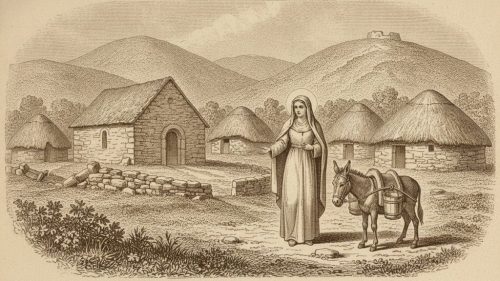
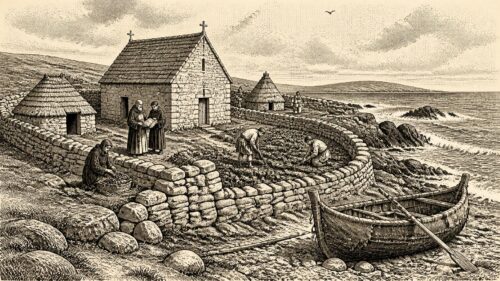
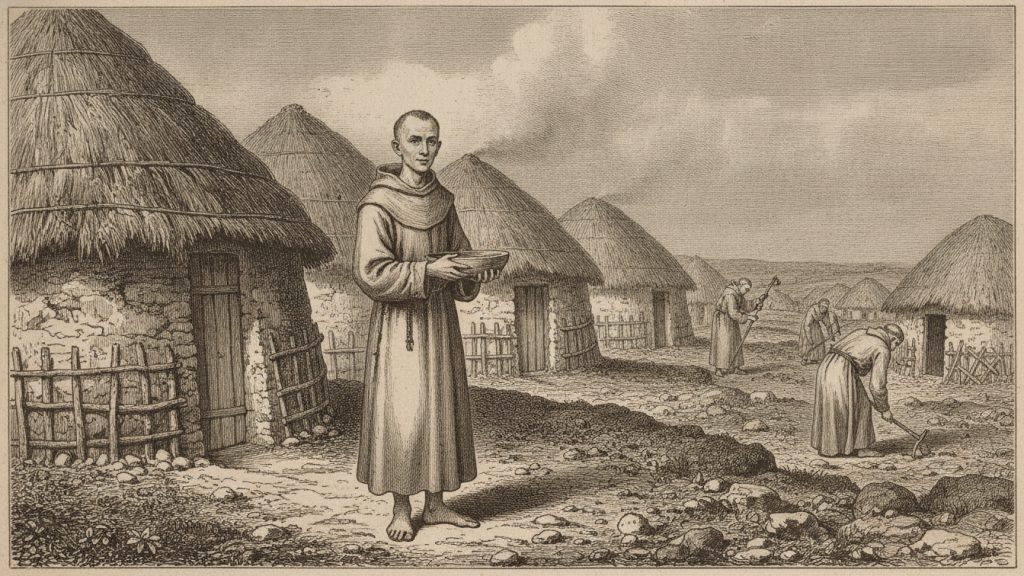
Fintan eventually founded his own monastic settlement at Clonenagh in County Laois. This foundation became renowned throughout Ireland for its uncompromising austerity. The monastery was not merely a place of prayer but a centre for rigorous spiritual training, attracting aspiring monks from across the island who sought a life of extreme discipline. This reputation for severity made Clonenagh a significant site for those pursuing the most demanding forms of religious life. Notably, the influence of Fintan’s foundation extended to other major figures of the era; Saint Comgall, the founder of the monastery at Bangor, is recorded as having received training under Fintan at Clonenagh. Furthermore, the founders of the Céilí Dé reform monastic movement are also associated with training at this site.
Ascetic Practices
Tradition emphasizes the extreme hardships Fintan embraced and imposed upon himself. According to the records of Saint Oengus, Fintan lived on a diet consisting of bread made from woody barley and water containing clay. The austerity of the community was such that they possessed no cows, meaning the monks had no access to milk or butter. Such a meagre diet eventually led the monks to complain that they were unable to perform the required hard labour. This situation prompted a deputation of local clergy, led by Canice of Aghaboe, to visit Clonenagh and urge Fintan to improve the dietary conditions for his followers. While Fintan eventually agreed to alleviate the restrictions for his monks, he personally elected to maintain his strict, ascetic diet.
Hagiographic Traditions
Beyond the historical records of his austerity, alternative traditions describe Fintan’s hospitality. One account suggests that, following a warning from an angel, Fintan prepared a lavish feast for the visiting deputation of clergy. In this version of events, an abundance of food was provided for the duration of the guests’ stay, though the community reverted to its usual state of deprivation immediately upon their departure. These narratives highlight the tension between the monastic ideal of poverty and the ecclesiastical duty of hospitality.
Final Years
Fintan’s life of discipline and leadership continued until his death, which is recorded as occurring in 603. He is distinguished in historical and hagiographical records from other saints of the same name, such as Fintan of Taghmon in County Wexford and a third Fintan associated with Doon in County Limerick. His legacy remains tied to the early Irish monastic tradition of the ‘Desert’—creating remote, rigorous environments where the spirit could be forged through hardship and unwavering devotion to the Rule.
Source References
Hover over a number to see the source. Select it to open the source.