
Year by Year
Explore Year by Year articles from the most modern historical year back to the oldest.
3,295 Articles Archived
Leinster Hostages
Archived: 26 September 2026
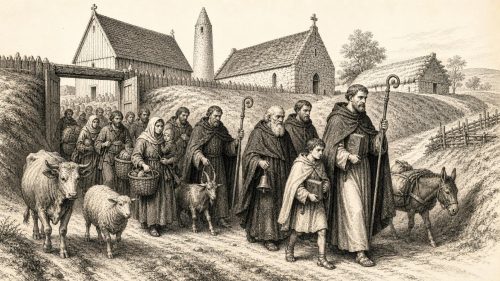
In 1015, Ireland remained unsettled after Clontarf, which had killed Brian Bóruma, Leinster’s Máel Mórda and key heirs. Máel Sechnaill mac Domnaill, aided by Flaithbertach Ua Néill, reasserted authority by plundering Leinster, taking cattle, tribute and hostages; later sources also associate campaigning with Dublin. In Munster, Donnchad mac Briain fought rivals while local kings suffered killings and deaths. Scarcity and dissension disrupted churches, with Emly vacated, Lorrha invaded and other sites plundered. Norse-Gaelic raiders seized 150 captives from western islands. Deaths, betrayals and interdynastic violence across Connacht, Bréifne and the north underscored a fragmented, dangerous political reconstruction after Brian's death.

Clontarf Battle
Archived: 26 September 2026
In 1014, Ireland’s layered kingship faced conflict over Brian Boru’s overlordship of Dublin and Leinster. On Good Friday, 23 April, Brian’s coalition, including Máel Sechnaill, defeated Leinster, Dublin and overseas Scandinavian forces at Clontarf. The costly victory killed Brian, his son Murchad, grandson Tairdelbach, Máel Mórda of Leinster and Sigurðr of Orkney, but neither destroyed Dublin nor expelled Scandinavians. Armagh’s elaborate burial rites strengthened Brian’s Christian royal memory. Subsequent Munster rivalries, provincial raids and deaths exposed continuing instability after the battle. Máel Sechnaill resumed central political importance, while Dublin remained a vital Hiberno-Norse trading centre within the Irish Sea world.

Dublin Rebellion
Archived: 26 September 2026
In 1013, Brian Bórama’s Irish overlordship faced coordinated resistance from Leinster and Hiberno-Norse Dublin under Máel Mórda and Sitriuc Silkbeard. Warfare spread across Mide, Brega, Leinster and Munster: Máel Sechnaill suffered losses near Dublin but countered raids, while northern rivals increased pressure. Brian and his son Murchad conducted prolonged campaigns, devastating Leinster, taking captives and advancing towards Dublin. Dublin’s fleet burned Cork, though Munster forces killed prominent Dubliners. Church relics, ecclesiastical authority, agriculture and fortifications featured in the conflict. Annals portray a Christian, literate yet violent society. No settlement emerged; 1013 established the conditions for Clontarf’s decisive battle in 1014.

Armagh Sickness
Archived: 26 September 2026
In 1012, Brian Bórama’s high-kingship remained powerful yet required constant military, religious and material reinforcement. Northern rulers Flaithbertach Ua Néill and Máel Sechnaill raided rival territories, burning centres and seizing cattle, captives and plunder, while succession fighting continued in Ulaid. Brian campaigned in Mag Muirtheimne, granting immunity to Patrick’s churches, and fortified Cenn Corad and other strategic sites. Armagh suffered a prolonged sickness that killed clergy, students and others. Heavy rainfall damaged cereal crops, worsening pressures on communities already exposed to armies. The annals portray rivalry, fragile overlordship and hardship, anticipating the crises that culminated at Clontarf two years later.

Cenél Conaill
Archived: 26 September 2026
In 1011, Brian Bórama’s supremacy reached the north-west through a major campaign against Cenél Conaill. Forces led by Brian and his sons, allied with Flaithbertach Ua Néill and other rulers, raided, seized cattle and captives, and compelled Máel Ruanaid Ua Máel Doraid to submit at Cenn Corad. The events demonstrated both Brian’s wide influence and the negotiated, competitive character of Irish over-kingship. Máel Sechnaill remained within Brian’s political order, while Ulster’s dynastic conflicts continued. Deaths among royal heirs and prominent churchmen, illness near Armagh, and a plentiful nut harvest reveal a society shaped by warfare, ecclesiastical learning, disease, and resources.

Northern Hostages
Archived: 26 September 2026
In 1010 Brian Bóruma reinforced his contested supremacy by leading Munster forces north to Armagh and securing hostages from the northern Uí Néill, Ulaid and wider Leth Cuinn. The campaign demonstrated that overlordship required repeated negotiation, military display and guarantees. Connacht’s king Cathal mac Conchobair died penitently, while lesser rulers, an Ailech heir and other political figures also died or were killed. Church losses included Brian’s brother Marcán, senior cleric of Munster, Clonmacnoise bishop Conaing, and scholar-king Máel Suthain ua Cerbaill. An abbot suffered blinding. Annals also recorded a hot summer and fruitful autumn, underscoring rural resources sustaining political power.

Competing Kingships
Archived: 26 September 2026
Annals for 1009 portray Ireland as a contested polity under Brian mac Cennétig’s formidable but limited overlordship. Máel Sechnaill raided Leinster, while Flaithbertach Ua Néill killed rivals, raided Brega and seized cattle tribute. Connacht and Bréifne fought reciprocal campaigns, alongside local dynastic killings. The death of Brian’s Connacht-born wife reflected the political importance of royal marriage. Armagh’s lead-roofed oratory demonstrated ecclesiastical wealth and ambition; deaths of church successors at Kells and Ros Cré marked institutional change. The chief poet Clothna also died. Cattle, warfare, hostages, alliances and religious centres shaped authority, revealing competing kingships rather than a unified Irish state.

Severe Winter
Archived: 26 September 2026
In 1008, Irish annals recorded no battle but revealed pressures shaping Brian Boru's overkingship. Chronological discrepancies require caution, yet Inisfallen and Ulster agree on a severe winter, ecclesiastical deaths and political violence. Muiredach son of Matudán, heir designate of Ulaid, was killed by his own people, exposing dynastic division amid northern rivalries. The deaths of abbots and coarbs, including Ferdomnach of Colum Cille's familia, prompted transitions in institutions controlling land, relics, learning and legitimacy. Frost and snow from January to Easter threatened livestock, farming and communications. Together, events illuminate a weather-vulnerable society governed through churches, dynasties, tribute, negotiation and force.
Tailtiu Revival
Archived: 26 September 2026
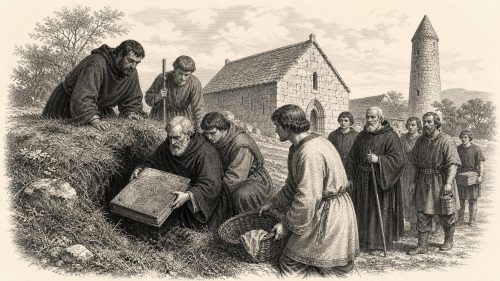
In 1007, Brian Bóruma reinforced his authority by campaigning towards Armagh, securing Ulaid hostages and involving Norse allies. Ulaid suffered rival killings, revenge and violations of church sanctuary, alongside intervention by Flaithbertach Ua Néill. In Mide, the displaced high king Máel Sechnaill revived Tailtiu’s assembly, installed a Columban successor and funded Clonmacnoise’s altar-front through local levies, asserting ceremonial kingship. At Kells, the Great Gospel of Colum Cille, probably the Book of Kells, was stolen for its precious cover but recovered. Ecclesiastical obits reveal religious networks. The annals depict Ireland as politically fragmented, wealthy, and shaped by power, sanctity and violence.
Northern Circuit
Archived: 26 September 2026
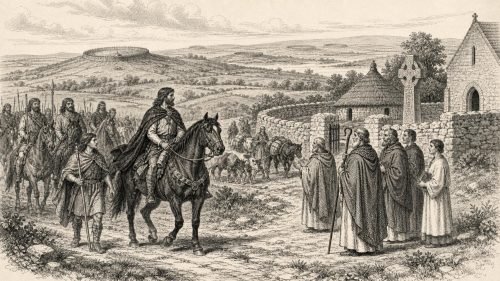
In 1006, Brian Bórama demonstrated the reach yet limits of his Irish overlordship by leading a broad coalition from Munster, Leinster, Mide, Connacht and Dublin through the north. His circuit secured Ulaid hostages and satisfied Armagh's claims, strengthening royal and ecclesiastical legitimacy, but Cenél Conaill and Cenél nEógain withheld submission. Provincial violence continued, including killings of regional kings, revealing unstable local rule. The deaths of Armagh churchmen underline clerical institutions' importance. A mild, food-rich winter offered relief after scarcity, while the army's passage burdened rural communities. Dublin's participation reflected its growing military, commercial and maritime value within Brian's negotiated supremacy.
Some records do not yet have a verified historical year and are awaiting chronological placement.