
Year by Year
Explore Year by Year articles from the most modern historical year back to the oldest.
3,294 Articles Archived

Parnell's Election
Archived: 10 October 2026
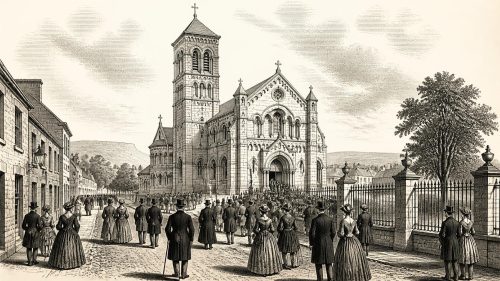
In 1875, Irish politics exposed emerging strains within constitutional nationalism. John Mitchel’s two Tipperary victories, followed by parliamentary disqualification and his death, made elections vehicles for protest. Charles Stewart Parnell entered Parliament for Meath, while Joseph Biggar’s resistance to coercion foreshadowed new Westminster tactics. Thomas Croke became archbishop of Cashel, initially concentrating on diocesan affairs. Population decline, emigration and livestock dependence reflected post-Famine economic change, while Dublin’s whiskey fire revealed urban industrial danger. Railway expansion, Ireland’s first rugby international, and Hibernian Football Club’s foundation demonstrated widening commercial, sporting and migrant connections, anticipating later political and agrarian conflicts across Irish society.
Butt's Mandate
Archived: 10 October 2026
In 1874, Isaac Butt’s Home Rule League won about sixty of Ireland’s 103 Westminster seats, displacing Liberals and establishing a broad but undisciplined constitutional movement. Butt’s proposed Irish legislature, retaining imperial responsibilities at Westminster, received little British support, exposing the gap between electoral representation and influence. Parliament nevertheless handled Irish courts, loans, licensing and navigation. Cardinal Cullen opened Sligo’s Catholic cathedral, symbolising institutional confidence. Registration recorded 141,288 births and 91,961 deaths, while 73,184 people emigrated, chiefly young adults. Agriculture, weather and rural administration remained central to life. Births included Kathleen Lynn, Ernest Shackleton, Annie Moore and Cathal Brugha, among others.
Rotunda Convention
Archived: 10 October 2026
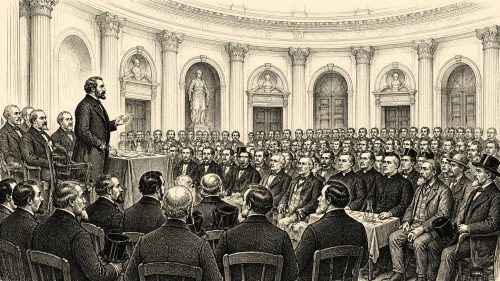
In 1873, Gladstone’s failed University Education (Ireland) Bill exposed divisions over denominational higher education, destabilised his ministry, and left Catholic demands unmet despite liberalising Trinity restrictions. The controversy strengthened Isaac Butt’s case for domestic self-government. At Dublin’s Rotunda, delegates transformed the Home Government Association into the Irish Home Rule League, seeking an Irish legislature within the United Kingdom and Empire. Land insecurity, emigration and unequal rural wealth persisted despite livestock-based agriculture and limited tenant protections. Railway, drainage, poor-law and sanitary reforms signalled uneven modernisation. The opening of St Eugene’s Cathedral in Derry reflected Catholic institutional confidence amid continuing sectarian tensions.
Secret Ballot
Archived: 10 October 2026
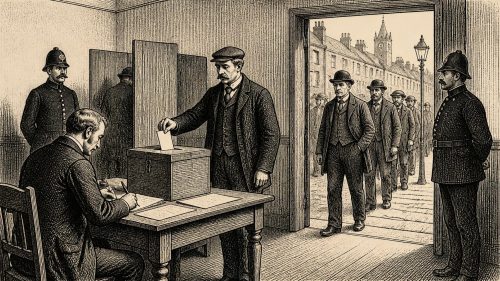
In 1872, the Ballot Act introduced secret voting for Irish parliamentary and municipal elections, first tested at Londonderry City, where Conservative Charles Lewis won a four-cornered by-election. Franchise restrictions and local religious, social and political influence nevertheless persisted. Isaac Butt’s Home Rule movement expanded through contested elections, linking constitutional reform with tenant grievances. Repeal of the Party Processions Act enabled nationalist demonstrations: Derry’s passed peacefully, but Belfast’s Hannahstown procession preceded severe sectarian rioting, deaths and displacement. Religious education, Church affairs, agricultural change, urban institutions and literary publication reflected pressures. Lord Mayo’s assassination in India highlighted Ireland’s connections to imperial government.

Church Disestablishment
Archived: 10 October 2026
In 1871, Ireland experienced constitutional, demographic, agrarian and civic change. The Church of Ireland was disestablished, ending its privileged state position while preserving it as a self-governing voluntary body. The census recorded 5,412,377 people, confirming continuing post-Famine decline and emigration, alongside Belfast’s industrial growth. Land reform under the 1870 Act offered limited tenant protections, but agrarian violence prompted the coercive Westmeath Act, permitting detention without trial in proclaimed districts. Isaac Butt’s election for Limerick advanced constitutional home government. Belfast opened Ormeau Park, while expanding national education and Trinity’s academic life highlighted uneven access, religious tensions and unresolved inequalities across Ireland.

Butt's Association
Archived: 10 October 2026
In 1870, Irish politics increasingly moved from Fenian insurrection towards constitutional campaigning, though prisoner amnesty remained contentious. Isaac Butt founded the Home Government Association at Bilton’s Hotel, uniting disparate interests behind a federal-style Irish legislature within the Crown and empire. Gladstone’s Landlord and Tenant (Ireland) Act recognised Ulster custom, improvements and eviction compensation, but neither secured fair rents nor ownership. Church of Ireland disestablishment, legislated in 1869, awaited implementation in 1871, while its Representative Church Body was established. Emigration, infant mortality, literacy and livestock farming highlighted pressures. The year transformed methods and principles without settling Ireland’s land or religious questions.
Church Settlement
Archived: 10 October 2026
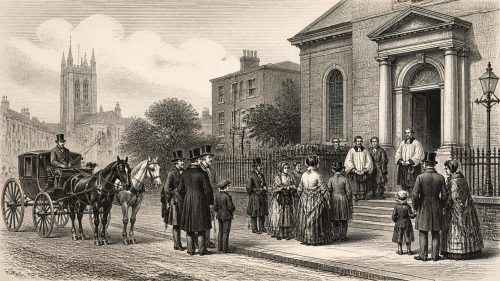
In 1869, Gladstone’s Irish Church Act reshaped Ireland’s settlement by legislating disestablishment of the Church of Ireland, effective in 1871, while protecting clergy and reorganising property. It ended grants to Maynooth and Presbyterian ministers through compensation arrangements, prompting new church financing and governance. Selective release of Fenian prisoners sustained amnesty agitation, with Isaac Butt emerging as a constitutional nationalist figure. Inquiries into tenant rights and agricultural improvements prepared the ground for land reform in 1870. Mary Ward’s death near Parsonstown in an experimental steam carriage marked Ireland’s first recorded mechanised road fatality. Master McGrath’s Waterloo Cup victory generated sporting pride.
Disestablishment Crisis
Archived: 10 October 2026
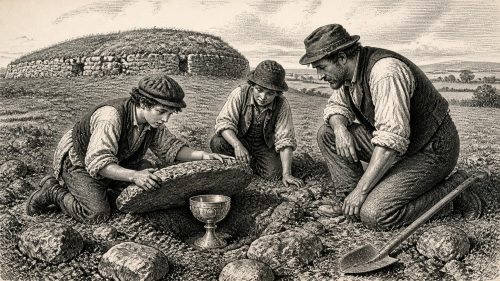
In 1868, Ireland faced a constitutional crisis over the Anglican Church of Ireland, whose privileged status conflicted with the Catholic majority and Presbyterian presence. Gladstone’s resolutions, Commons victories and Liberal election gains made disestablishment unavoidable, although legislation followed in 1869. Franchise reform enlarged, but did not democratise, the male electorate, while Gladstone’s ministry symbolised reform through Catholic lord chancellor Thomas O’Hagan. Fenian prosecutions sustained security fears. National schools expanded amid attendance, and industrial schools extended state control. Emigration, pastoral change and poverty persisted. St Colman’s Cathedral began at Queenstown, Valentia Observatory opened, and the Ardagh Chalice discovered during potato digging.
Fenian Rising
Archived: 10 October 2026
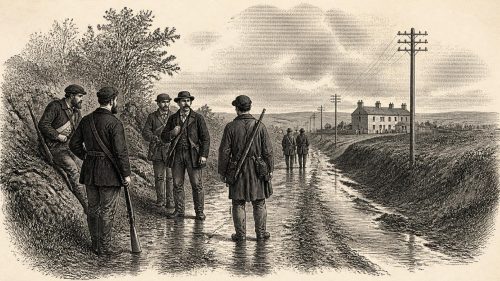
In 1867 the Irish Republican Brotherhood launched a poorly coordinated Fenian rising seeking an independent republic and social reform. After alarms including the failed Chester Castle raid, authorities extended habeas corpus suspension, arrested suspects, and strengthened policing. On 5 March, insurgents attacked police and coastguard stations, disrupted telegraphs and railways, and assembled near Dublin and in Munster. Better-armed government forces, intelligence, poor communications, inadequate weapons, and absent mass support quickly defeated them. Peter O'Neill Crowley's later death fostered martyrdom. The year brought Fenian rescues and executions in Manchester, transportation to Western Australia, the Clerkenwell bombing, hardship, reform, and Orange mobilisation.

Transatlantic Telegraph
Archived: 10 October 2026
In 1866, Ireland experienced political repression alongside religious, educational and technological change. Parliament suspended habeas corpus amid fears of Fenian conspiracy, enabling 752 arrests and weakening republican organisation before the failed 1867 rising. Fenian raids into Canada highlighted nationalism’s Atlantic dimension, while Paul Cullen’s elevation as Ireland’s first cardinal symbolised Catholic institutional confidence, also visible in Belfast’s St Peter’s Church. Anne Jellicoe founded Alexandra College, extending advanced educational opportunities for women. Railway expansion to Westport and changing livestock agriculture altered rural life. Most dramatically, the successful Valentia–Newfoundland telegraph cable connected Ireland to North America, making Kerry a global communications hub.
Some records do not yet have a verified historical year and are awaiting chronological placement.