
Year by Year
Explore Year by Year articles from the most modern historical year back to the oldest.
3,305 Articles Archived
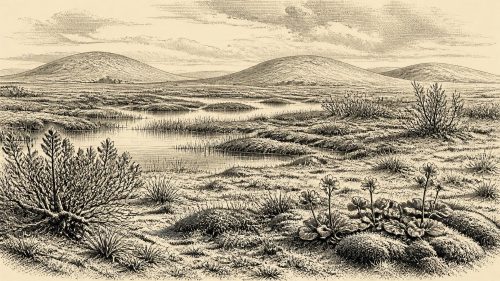
Sandwort Fossils
Archived: 28 September 2026
About 30,524 BCE, Ireland lay within the volatile Late Pleistocene, not a datable historical year. At Derryvree, County Fermanagh, sediments between glacial tills preserve evidence of an ice-free freshwater wetland sometime between roughly 36,900 and 31,700 cal BP. Fossils indicate tundra vegetation, including fringed sandwort, mosses, sedges and aquatic plants, with insects inhabiting pools and saturated ground. Southern cave collections show that diverse cold-stage mammals, including reindeer, mammoth and predators, reached or inhabited Ireland at varying times. Human presence remains unproven: a possibly butchered reindeer bone is inconclusive. Subsequent ice-sheet expansion buried and preserved this fragile environmental archive for posterity.
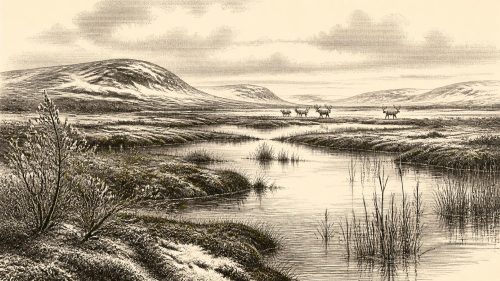
Intertill Record
Archived: 28 September 2026
Around 30,525 BCE, Ireland lay within a volatile Late Pleistocene glacial margin. Derryvree in County Fermanagh preserves freshwater sediments between tills, showing a locally ice-free interval with wetland plants, insects and open, treeless periglacial habitats. Radiocarbon evidence dates the organic deposit broadly to 36,900–31,700 calibrated years BP, precluding annual precision. Later ice reshaped and sealed this record. Cave fauna indicate Ice Age mammals, although assemblages are complex. A modified reindeer bone at Castlepook may indicate human activity, but no secure habitation evidence exists. The period had no settlements, farming, states or written history; it remains a cold, fragmentarily recoverable landscape.

Derryvree Shoreline
Archived: 28 September 2026
30,526 BCE is a modern reference point rather than a precisely datable Irish event. Derryvree, County Fermanagh, preserves freshwater silts between glacial tills, radiocarbon dated broadly enough to encompass this period. Its bogbean, aquatic plants, mosses and sedges indicate cold, open, wet ground during an ice-free interval, later buried by advancing ice. Ireland’s landscapes were unevenly glaciated as the British–Irish Ice Sheet grew. Cave remains, notably at Castlepook, demonstrate Pleistocene mammals including mammoth, reindeer and giant deer across a longer span. A marked reindeer bone suggests possible early human activity, but no evidence establishes permanent settlement, institutions or a community.
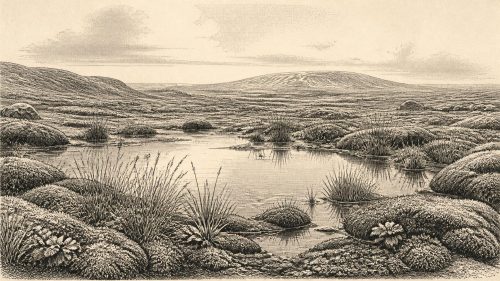
Tundra Pool
Archived: 28 September 2026
At approximately 30,527 BCE, Ireland’s history is reconstructed from fragmentary Late Pleistocene evidence rather than precise events. At Derryvree, County Fermanagh, organic freshwater sediments between glacial tills, dated broadly to 34,950–29,750 BCE, show an ice-free tundra interval with water, wetland plants and severe seasonal conditions. They do not establish conditions across the island. Castlepook Cave, County Cork, preserves remains of mammoth, reindeer, giant deer and predators, though accumulated deposits cannot represent one moment. A possibly tool-marked reindeer bone may indicate fleeting Upper Palaeolithic human butchery, but no settlement, tools or secure occupation evidence confirms a resident population. Sea routes uncertain.
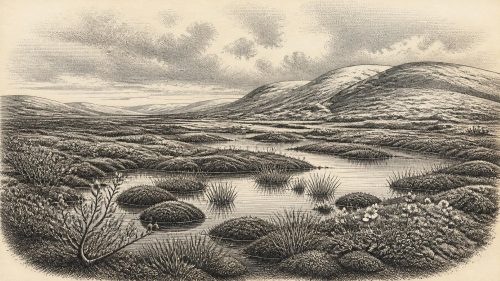
Mossy Sediments
Archived: 28 September 2026
Thirty thousand five hundred and twenty-eight BCE is an imprecise modern label for a Late Pleistocene interval, not a documented Irish year. Ireland experienced unstable pre-Last Glacial Maximum conditions, with advancing and retreating ice repeatedly erasing evidence. At Derryvree, County Fermanagh, freshwater sediments between tills, radiocarbon dated broadly to 30,500 BP, preserve tundra wetlands with mosses, grasses, sedges, shrubs, insects and aquatic plants. Castlepook Cave, County Cork, records cold-adapted mammals, though bones accumulated across episodes and dates require reassessment. A possibly cut-marked reindeer bone suggests, but cannot prove, human visitation. No settlement, polity, trade network or continuous occupation is evidenced.
Glacial Encroachment
Archived: 28 September 2026
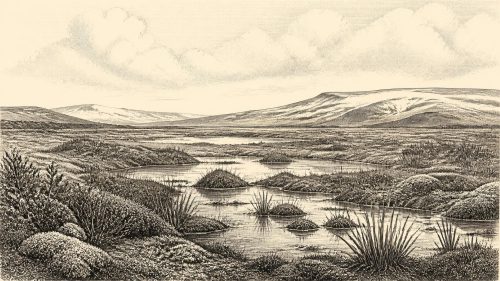
30,529 BCE cannot be reconstructed as a single Irish historical year, but falls within an unstable Late Pleistocene interval. Derryvree, County Fermanagh, preserves freshwater silts between glacial tills, radiocarbon dated broadly to 36,900–31,700 calibrated years BP. Its plants, insects and sediments indicate cold, open, tundra-like wetland with shallow water, before expanding ice covered much of Ireland. Castlepook Cave’s fauna demonstrates links with cold-stage north-west Europe, though deposits span long periods. A possibly tool-marked reindeer bone suggests fleeting human presence, not settlement. No evidence supports agriculture, permanent communities, politics or ritual. The period was dynamic, episodically habitable, and dominated by ice.

Tundra Puddles
Archived: 28 September 2026
30,530 BCE, Ireland lay within the unstable Marine Isotope Stage 3, before expansion of the British–Irish Ice Sheet. At Derryvree near Maguiresbridge, Fermanagh, silts, sands and sediments between glacial tills preserve secure evidence of wet tundra, pools, cold-tolerant plants and animals. These deposits indicate seasonal periglacial habitats later overwhelmed by advancing ice. Castlepook Cave, County Cork, records cold-stage fauna and possibly human butchery: a marked reindeer bone may show tool use around 33,000 years ago. However, disturbed deposits and absent associated artefacts prevent proof of occupation. Evidence supports environmental reconstruction and brief human visits, not recoverable society or precise dating.
Freshwater Vegetation
Archived: 28 September 2026
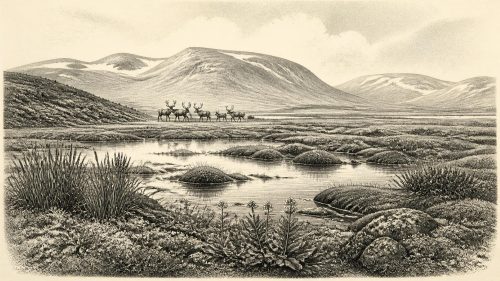
Around 30,531 BCE, Ireland lay within the climatically unstable Late Pleistocene, not a documented historical year. At Derryvree, County Fermanagh, freshwater silts between glacial tills preserve evidence of an ice-free interval, with tundra-like vegetation including bogbean, sedges, mosses and cold-tolerant plants. Later ice buried or disturbed much earlier evidence. Castlepook Cave, County Cork, yielded remains of mammoth, reindeer, giant deer, predators and small Arctic-adapted mammals, demonstrating an Ice Age ecosystem. A marked reindeer bone may indicate brief Upper Palaeolithic human activity, but no secure settlement evidence exists. Ireland's changing ice, habitats and uncertain connections profoundly shaped this poorly recoverable period.
Castlepook Bonebed
Archived: 28 September 2026
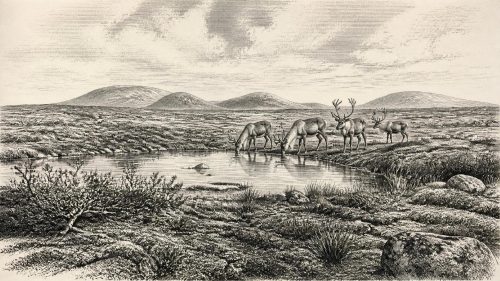
Circa 30,532 BCE, Ireland lay within the unstable later Ice Age, with no written history or securely dated human settlement. Derryvree’s freshwater deposits indicate open, cold tundra-steppe, wet ground and sparse vegetation, rather than woodland. Castlepook Cave preserves a fragmentary faunal record including mammoth, reindeer, horse, giant deer, predators and Arctic species, demonstrating intermittently habitable cold-climate environments. Cave remains accumulated over long periods and cannot prove species coexisted. A possibly cut-marked reindeer bone suggests but does not establish earlier human activity. Growing British–Irish ice later disrupted habitats, displaced fauna and destroyed evidence, leaving an uneven archaeological record of dynamic landscapes.
Transient Wetland
Archived: 28 September 2026
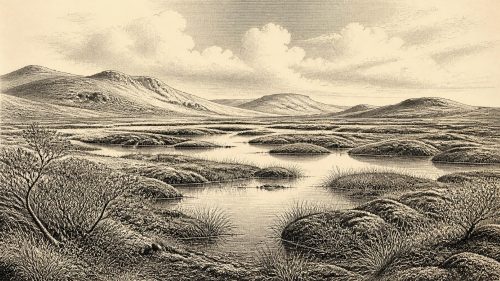
The modern label 30,533 BCE cannot identify a recoverable Irish year, but falls within a broad Late Pleistocene range. At Derryvree, near Maguiresbridge, Fermanagh, organic silts between glacial tills record a temporary freshwater wetland before renewed ice advance. Plant and insect remains indicate treeless, cold periglacial conditions, with pools, sedges, mosses and sparse vegetation. Sea levels were lower and climate fluctuated, though routes into Ireland remain unknown. Castlepook Cave preserves time-averaged Ice Age fauna, including mammoth and reindeer, plus a possible tool-marked bone. Evidence suggests occasional habitability, not permanent human occupation, culture, or year-specific events can be established with confidence.
Some records do not yet have a verified historical year and are awaiting chronological placement.