
Year by Year
Explore Year by Year articles from the most modern historical year back to the oldest.
3,305 Articles Archived
Unsettled Butchery
Archived: 26 September 2026
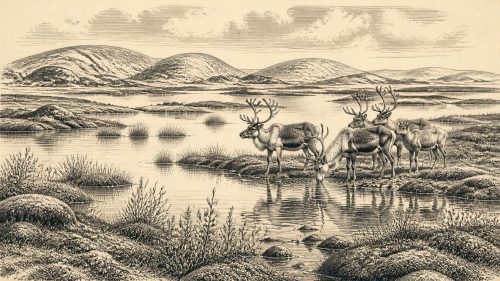
At 30,664 BCE, Ireland’s history is reconstructed from environmental evidence, not recorded events. Derryvree, County Fermanagh, preserves a freshwater wetland between glacial deposits, broadly dated to 34,950–29,750 BCE, showing cold, treeless periglacial conditions with pools, sedges, mosses and tundra plants. Castlepook Cave, County Cork, contains diverse Pleistocene fauna, including mammoth, reindeer, giant deer, hyaena and Arctic fox, accumulated over a long period. An incised reindeer femur may indicate stone-tool butchery, but remains unconfirmed evidence of human presence. Later cut-marked bear bone securely demonstrates Late Upper Palaeolithic visitors. Ice-sheet growth subsequently destroyed much earlier evidence across the island's unstable cold margin.

Intertill Water
Archived: 26 September 2026
Ireland around 30,665 BCE lay within unstable Marine Isotope Stage 3, not a precisely datable prehistoric year. Derryvree, near Maguiresbridge, preserves organic freshwater silts between glacial tills, indicating a cold, locally ice-free wetland during a broadly dated interval. Mosses, sedges and northern insects suggest open, treeless terrain, while related Fermanagh sites show intermittent non-glacial conditions in northern Ireland. Ireland’s coasts, sea levels and ice margins changed dynamically before the last glacial maximum. Cave faunas demonstrate mammoth, reindeer and other animals, but not synchronised landscapes or human occupation. No evidence establishes communities, settlement or migration; the record chiefly documents environmental transformation.

Periglacial Species
Archived: 26 September 2026
Around 30,666 BCE, Ireland’s evidence records environmental change rather than dated events or communities. At Derryvree, County Fermanagh, freshwater silts between glacial tills indicate a locally ice-free interval during the unstable Late Pleistocene, preserving tundra plants, sedges, mosses, aquatic species and insect remains. Castlepook Cave, County Cork, contains bones of mammoth, giant deer, reindeer, bear, hyena and other cold-adapted animals, accumulated over a long period. A possibly stone-cut reindeer femur may suggest brief human involvement, but proves neither settlement nor population. Later ice advance destroyed or buried much evidence, leaving these deposits as limited records of a cold, changing landscape.
Cork Wolf
Archived: 26 September 2026
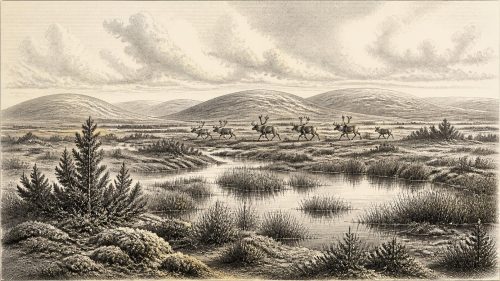
Around 30,667 BCE, Ireland was an unstable Late Pleistocene landscape rather than a documented society. Derryvree, County Fermanagh, preserves freshwater sediments indicating cold, open tundra, wetlands and intermittent ice-free conditions before later ice-sheet expansion. Castlepook Cave, County Cork, contains a diverse MIS 3 fauna, including mammoth, giant deer, reindeer, bear, wolf, Arctic fox and hyaena, demonstrating episodic animal colonisation. A possibly butchered reindeer femur may indicate fleeting Upper Palaeolithic human activity, but remains contested and unsupported by camps, tools or settlements. The evidence reveals ecologically active, climatically precarious Ireland, not continuous human occupation or recoverable political, cultural or social history.
Fermanagh Water
Archived: 26 September 2026
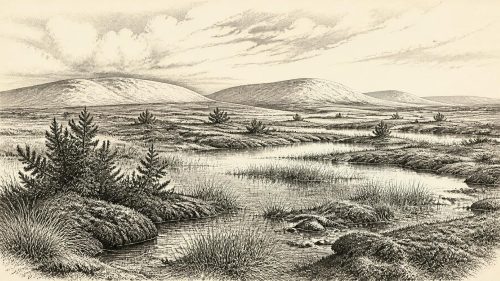
Derryvree deposit near Maguiresbridge, County Fermanagh, provides environmental evidence for a Late Pleistocene ice-free interval encompassing 30,668 BCE, though no event can be dated to that year. Freshwater silts and organic sediments, sealed between glacial tills, accumulated in a cold, treeless periglacial wetland of sedges, mosses, herbs and shallow pools. Radiocarbon results indicate a broad calibrated range of roughly 34,950–29,750 BCE. Later ice overrode the basin. Castlepook Cave fauna demonstrates episodic presence of Ice Age mammals, but not synchrony. A possibly butchered reindeer bone offers disputed evidence of people; no secure settlement or social record exists. A rare environmental archive.
Castlepook Hares
Archived: 26 September 2026
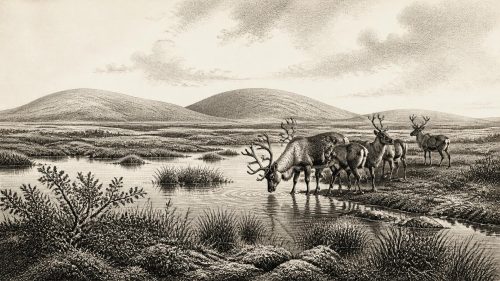
Thirty thousand years ago, Ireland was a climatically unstable later-Pleistocene landscape rather than a land of recorded communities. Derryvree, County Fermanagh, preserves freshwater sediments between glacial tills, indicating treeless tundra, seasonal wetlands, hardy plants, insects and severe periglacial conditions during an ice-free interval. Castlepook Cave, County Cork, yielded mammoth, reindeer, giant deer, predators, hares and lemmings, demonstrating intermittent cold-stage habitats, although its mixed deposits span periods. A marked reindeer bone may indicate Upper Palaeolithic butchery, but human presence remains unconfirmed. Advancing British–Irish Ice Sheet glaciers later buried and disturbed evidence, leaving a fragmentary record of changing environments and mobile foragers.

Possible Grooves
Archived: 26 September 2026
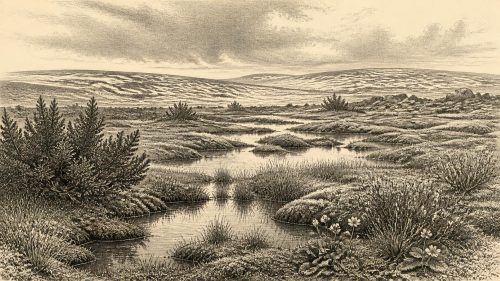
30,670 BCE is a label within a broad Late Pleistocene environmental horizon, not a datable Irish event. At Derryvree, County Fermanagh, freshwater sediments between glacial tills indicate locally ice-free, cold tundra conditions, with wetland plants and insects, before later glaciation. Castlepook Cave, County Cork, yielded diverse fauna, including mammoth, reindeer, giant deer and predators, demonstrating an open, cold environment, though mixed cave deposits cannot provide a snapshot. A marked reindeer femur may record stone-tool butchery around 31,000 BCE, but remains unconfirmed and cannot prove settlement. Secure evidence for humans in Ireland is later, while political and social history remain unknown.
Tundra Moss
Archived: 25 September 2026
The date 30,671 BCE is not a specific datable Irish event but a notional point within a broad, climatically unstable Late Pleistocene interval. At Derryvree, County Fermanagh, freshwater sediments between glacial tills indicate a treeless tundra wetland with sedges, mosses, Arctic-alpine plants, insects and shallow pools before renewed ice deposition. The site demonstrates regional environmental change rather than an ice-free Ireland. Castlepook Cave, County Cork, preserves cold-stage fauna including mammoth, reindeer and hyaena, confirming connections with wider Europe. A possibly cut-marked reindeer bone suggests but does not prove early human activity. Evidence reveals dynamic habitats, not settlements or year-specific history.

Glacial Marsh
Archived: 25 September 2026
At 30,672 BCE, Ireland cannot be reconstructed as a single dated landscape or society. Derryvree, County Fermanagh, preserves freshwater silts between glacial tills, indicating a locally ice-free wetland during a broad MIS 3 interval, later sealed by renewed ice. Fossils indicate treeless, tundra-like vegetation, shallow water and cold-stage conditions. Cave remains at Castlepook, County Cork, attest to varied fauna, including mammoth, reindeer and hyaena, but not coexisting populations at one time. A possibly tool-marked reindeer bone suggests early human activity, although evidence remains uncertain. Lower seas altered connections, while advancing ice made environments regionally unstable across the island over millennia.

Tundra Connections
Archived: 25 September 2026
30,673 BCE is a retrospective label, not a recoverable Irish year, within fluctuating Marine Isotope Stage 3. Ireland’s low sea levels, shifting ice margins and open terrain connected it ecologically to north-western Europe, though no proven human route existed. Derryvree, County Fermanagh, preserves freshwater silts between glacial tills, indicating tundra vegetation, wetlands and severe periglacial conditions. Castlepook Cave, County Cork, contains cold-stage fauna accumulated over periods rather than simultaneously. A cut-marked reindeer femur may indicate human butchery around 31,000 BCE, but lacks associated occupation evidence. The period therefore reveals an intermittently habitable, ice-shaped landscape and unresolved possibility of human visits.
Some records do not yet have a verified historical year and are awaiting chronological placement.