Bardan, resident druid of Limerick Archives

Summon Bardan

Summon Bardan, our resident druid, and ask him any question about Limerick.
His ancient wisdom will answer as soon as the search is complete.

ChatGPT Image Jul 13, 2026, 09_55_37 PM

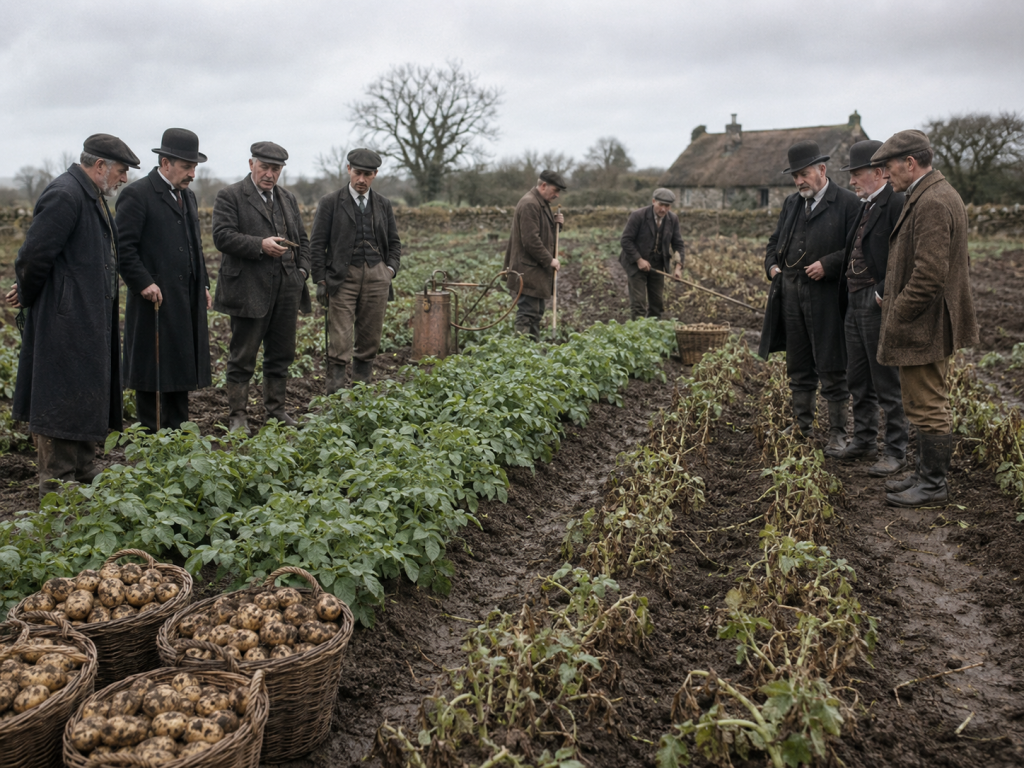
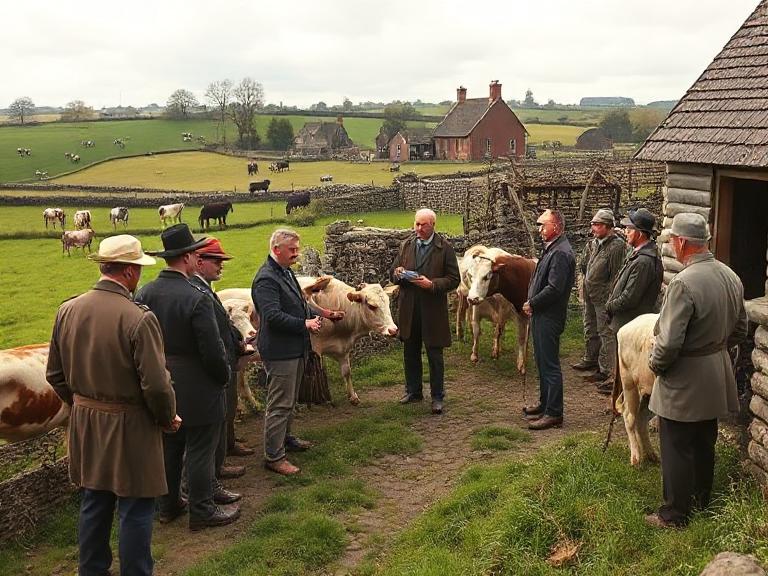
Important results from agricultural experiments conducted across County Limerick were reported on 23 January 1900. The trials examined whether a copper-sulphate solution could protect potato crops against disease and whether freshly introduced seed performed better than potatoes repeatedly grown on the same farms. The findings were encouraging. Even during a season when blight had been comparatively limited, treated plots produced sufficient improvement to repay the expense of spraying. For farmers whose income and household food supply depended heavily upon the potato harvest, the experiments offered practical evidence that preventive treatment could reduce risk rather than merely respond after disease had appeared.

Timing proved central to the success of the copper treatment. The Limerick trials indicated that two applications made relatively early in the growing season were more effective than one heavier dressing applied later. This supported the principle that the solution worked best as a preventive coating upon healthy foliage rather than as a cure after infection had become established. Farmers therefore needed to act before obvious damage appeared, preparing the mixture, maintaining spraying equipment and treating fields while the crop still looked sound. The method required additional labour and expenditure, but the reported improvement suggested that prevention could protect both yield and quality.

The experiments were conducted over a considerable area, giving the findings greater value than results obtained from a single isolated plot. Potato disease varied according to weather, drainage, soil and local growing conditions, making comparison across several farms particularly useful. The preceding crop had been one of Ireland’s soundest for some years, although wet lands in Connacht had suffered more severely. The relative absence of widespread destruction did not weaken the Limerick evidence. Instead, the results suggested that spraying remained economically worthwhile even when disease pressure was moderate, allowing farmers to protect against sudden deterioration during damp summer weather.

A second series of tests compared old farm-grown seed with potatoes newly introduced from elsewhere. In almost every instance, the fresh seed produced substantially better results than stock that had been cultivated repeatedly upon the same holding. The finding encouraged farmers to renew their seed rather than relying indefinitely upon potatoes selected from previous harvests. Better seed could improve vigour, yield and resistance, although the surviving report did not identify the varieties or every farm involved. Combined with early spraying, periodic seed renewal offered County Limerick growers a practical programme for strengthening a crop still central to rural food, wages and farm income.

The trials reflected a growing effort to apply organised agricultural science to the ordinary problems of Irish farming. Demonstration plots and comparative experiments translated chemical and botanical knowledge into recommendations that cultivators could judge by visible results. In County Limerick, where mixed farming and dairying existed alongside widespread potato cultivation, the value of a healthier crop extended beyond human consumption because potatoes could also support livestock feeding and household economy. The findings did not eliminate the continuing threat of blight, but they showed that careful timing, copper-sulphate treatment and renewed seed could materially reduce the vulnerability inherited from older cultivation practices.

Primary Sources

  1. Irish Times, “Sulphate of Copper Solution and Potato Disease,” 23 January 1900, p. 6.
  2. Farmer’s Gazette, account of agricultural experiments conducted in County Limerick during the 1899 growing season concerning copper-sulphate treatment, potato disease and old versus newly introduced seed; exact issue and page not confirmed, cited in the Irish Times, 23 January 1900, p. 6.
Associated Archives

Health and Medicine in LimerickHealth and Medicine
Agriculture and Rural Life in LimerickAgriculture and Rural Life
Historic News from LimerickHistoric News

Related Articles

190023RdAgricultureBlightDiseaseExperiments

Share Your Thoughts

We welcome your thoughts, memories and local knowledge about this article. Perhaps you recognise a person, place, building or event, remember a related story, or can provide additional names, dates or details. Every contribution helps improve the historical record and may reveal information that would otherwise be lost. Please share your comments, corrections and personal recollections with us, whether they are brief observations or detailed accounts. Your knowledge can help connect families, communities and generations while strengthening Limerick Archives for future visitors. By taking part, you become an important contributor to preserving and sharing Limerick’s history with everyone worldwide today.

Your email address will not be published. Required fields are marked *

Books Supporting the Archive

Every Book Purchased Helps Support The Continuing Work Of Limerick Archives.

Cover of Ashes

Ashes

The Ashes Trilogy, Book One

Ashes begins the story of a group of children growing up in the streets and lanes of Limerick, where poverty and hardship are balanced by humour, imagination and fierce friendship. Their city is more than a setting: it watches, remembers and gives voice to lives often absent from official history. As the children explore their neighbourhood, they encounter family pressures, faith, hunger, danger and the first signs of a changing world. Through their adventures and loyalties, the novel captures the resilience of ordinary people and introduces the characters whose lives will unfold across the three volumes of The Ashes Trilogy.

View on Amazon UK
Cover of Gurriers

Gurriers

The Ashes Trilogy, Book Two

Gurriers continues the lives of the Limerick children introduced in Ashes as childhood freedom begins to give way to work, responsibility and harsher choices. Their friendships remain strong, but poverty, family expectations, faith and the pressures of growing older test loyalties once taken for granted. The streets and lanes still offer humour, adventure and belonging, yet the wider world increasingly intrudes upon their lives. Through vivid dialogue, memorable characters and the watchful voice of Limerick itself, the novel explores resilience, identity and change while showing how even the closest companions can be drawn towards futures by circumstances beyond their control.

Cover of Scattered

Scattered

The Ashes Trilogy, Book Three

Scattered concludes The Ashes Trilogy as the friends who once shared Limerick’s streets and lanes face adulthood, work, hunger, faith, family duty and emigration. Time has altered their ambitions, tested their loyalties and carried some beyond the city that formed them. Yet memory continues to bind Louie, Seamus, Joe, Sean, Peter, Tony, Bardy, Maura, Eileen, Nora, Lingo and the mysterious Gleamer. Narrated through the enduring presence of Limerick itself, the novel explores separation, sacrifice and survival while recognising the humour and affection that remain. Together, their scattered lives complete a moving portrait of friendship, community and change across changing generations.

Cover of Threshold

Threshold

The Troubles Trilogy, Book One

Threshold opens in Belfast in 1968, where the Catholic Devlins and Protestant Morrows confront a city divided by religion, memory and fear. Civil rights marches, police violence, riots and internment transform ordinary streets into dangerous frontiers while political conflict enters homes, workplaces and schools. At the centre are Aileen Devlin and Thomas Morrow, whose relationship challenges the boundaries their families regard as essential to survival. As loyalty hardens into suspicion, both must decide whether inherited allegiance excuses injustice. Through family arguments, upheaval and private courage, the novel explores love, conscience, division and survival during the opening years of the Troubles.

Cover of Hunger

Hunger

The Troubles Trilogy, Book Two

Hunger is Book Two of The Troubles Trilogy, set in Belfast during the 1980s. Aileen Devlin and Thomas Morrow have built a fragile life across the city’s sectarian divide, but the conflict threatens the home they created for their daughter, Claire. As hunger strikes, the Anglo Irish Agreement and violence reshape Northern Ireland, republican Declan and loyalist Billy exploit fear, grief and vulnerable young men. Against them stand Aileen, Kathleen and Elsie, whose quiet strength keeps their families human. This is a story of love, survival and the courage to place people before causes in a divided society under pressure.

Cover of Crossing

Crossing

The Troubles Trilogy, Book Three

Crossing concludes The Troubles Trilogy during the decade from 1990 to 2000, as Belfast moves from violence towards negotiation, ceasefires and uncertain peace. The Devlin and Morrow families face political change alongside grief, ageing, divided loyalties and the consequences of choices made across three decades. Relationships once threatened by religious boundaries are tested by memory, mistrust and the fear that compromise may betray the dead. As the peace process gathers momentum, ordinary people must decide whether reconciliation is possible. The trilogy closes with a story of endurance, forgiveness, loss and hope beyond inherited division, proving that peace begins with courage.

Cover of Severance

Severance

Historical Novel

Severance is a historical novel set in Ballingarry, County Limerick, during Ireland’s struggle for independence. A torn and bloodied dispatch passes through fields, kitchens, lofts and hidden routes, placing everyone who handles it in danger. Michael Enright carries the burden of trust, while Mary, Molly and their neighbours struggle to preserve the message and protect one another. Against them, Captain Edward Harcourt studies every delay, wound and fragment for clues. As loyalty, fear and betrayal tighten around the hidden network, ordinary people must decide what they are willing to risk when history enters their homes and silence itself becomes dangerous.

Cover of Limerick Generations: 1900 to 1909

Limerick Generations: 1900 to 1909

Limerick Decalogy, Book One

Limerick Generations: 1900 to 1909 opens the decade by documenting a city and county entering the twentieth century amid political debate, commercial activity, poverty, faith and technological change. Month by month, the book connects major Irish developments with local events, institutions, streets and communities. Public meetings, labour, transport, education, sport, business and everyday life reveal how national questions were experienced in Limerick. Historical reports and carefully reconstructed narratives bring forgotten moments and ordinary people into focus. As Book One of Limerick Decalogy, it establishes the foundation for a ten volume journey through one hundred years of local history and memory.

Cover of Limerick Generations: 1910 to 1919

Limerick Generations: 1910 to 1919

Limerick Decalogy, Book Two

Limerick Generations: 1910 to 1919 traces a decade of political transformation, labour conflict, war, revolution and social change across Limerick city and county. Home Rule, unionist resistance, trade union organisation and the First World War entered streets, farms, schools, workplaces and family life. The Easter Rising, conscription crisis, influenza pandemic and general election altered public loyalties and expectations. The decade culminated in the Limerick Soviet of 1919, when workers challenged military restrictions through organised collective action. As Book Two of Limerick Decalogy, the volume preserves local experiences of hardship, courage, grief, endurance and change during years of intense historic upheaval.

Restoring History

Limerick Archives preserves, enhances, restores and colourises historic photographs, sometimes presenting fresh angles on familiar scenes. When no suitable public-domain image exists, we create carefully researched AI illustrations for archive articles. We also invite the public to submit photographs for restoration and possible publication, with ownership always remaining entirely theirs.