
Archived: 19 September 2026
Abstract
31,193 BCE denotes a modern chronological point within Marine Isotope Stage 3, not a documented Irish year. Before the Last Glacial Maximum, Ireland experienced variable ice cover and cold, open tundra-like wetlands, evidenced at Derryvree, Greenagho and Aghnadarragh. Castlepook Cave in County Cork preserves a rich, intermittently accumulated fauna including mammoth, reindeer, giant deer, bear, wolf, Arctic fox, lemmings and hyaena, demonstrating ecological links with Britain and Europe. A cut-marked reindeer femur may indicate brief human carcass processing, but cannot prove settlement or occupation. Evidence remains fragmentary, dating broad, and interpretations may change through improved excavation, analysis and ancient-DNA research.
Read Article

Archived: 19 September 2026
Abstract
About 31,194 BCE is a modern chronological label, not a recorded Irish year. Ireland then lay in the Middle Midlandian cold stage, before maximum glaciation, with variable tundra-steppe, wetlands and sparse vegetation. Derryvree deposits in Fermanagh provide environmental evidence for this harsh, ice-free or ice-marginal landscape. Castlepook Cave near Doneraile contains remains of mammoth, reindeer, giant deer and other cold-climate animals, accumulated across long periods. A marked reindeer femur, possibly cut by a stone tool, suggests a brief Upper Palaeolithic human visit, but cannot prove settlement. Glaciation, erosion and rising seas have left Ireland's human record fragmentary, provisional and unresolved.
Read Article
Archived: 19 September 2026
Abstract
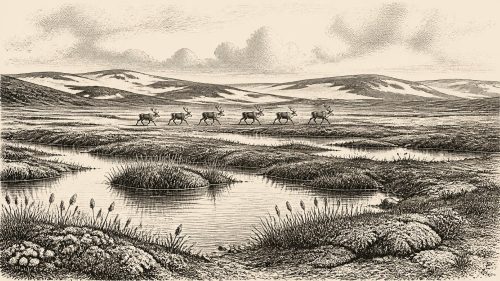
Around 31,195 BCE, Ireland was a cold, changing north-western margin of Europe, with uneven ice cover, lowered seas and tundra-like habitats rather than familiar coastlines. Derryvree, County Fermanagh, preserves freshwater sediments dated broadly to this period, indicating treeless, periglacial wetlands supporting plants, pools and seasonal productivity. Castlepook Cave, County Cork, yielded MIS 3 fauna including reindeer, mammoth, giant deer, predators and scavengers, although its deposits span long periods and have disturbed contexts. An incised reindeer femur may record stone-tool butchery, suggesting episodic human visits. However, no secure settlement, tools, structures or continuous population is known; the evidence remains provisional overall.
Read Article
Archived: 19 September 2026
Abstract
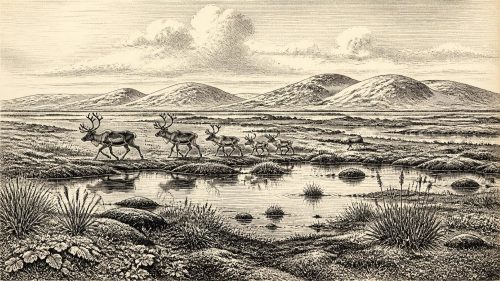
31,196 BCE is not recoverable as a discrete Irish year, but falls within a Late Pleistocene interval of climatic instability. Derryvree, County Fermanagh, preserves an ice-free phase between glaciations, with freshwater sediments recording open, treeless tundra wetland. Flowstone at Crag Cave indicates groundwater and locally non-glacial conditions in south-west Ireland during wider transition towards renewed ice-sheet expansion. Castlepook Cave documents diverse cold-adapted fauna, although its deposits combine episodes and processes. A marked reindeer femur may indicate Upper Palaeolithic butchery, yet cannot demonstrate settlement. Evidence supports changing habitats, animal movements and possible brief human presence, rather than events or known societies.
Read Article

Archived: 19 September 2026
Abstract
31,197 BCE is a modern label within a broad Late Pleistocene interval, not a date for a known Irish event. At Derryvree, County Fermanagh, freshwater silts between glacial tills show locally ice-free conditions around 36,900–31,700 calibrated years ago, before maximum glaciation. Fossils indicate treeless, waterlogged tundra supporting low plants, insects and aquatic life. Castlepook Cave, County Cork, preserves remains of mammoths, reindeer, giant deer and predators, demonstrating changing cold-stage fauna. A possibly butchered reindeer bone suggests, but does not prove, human visitation. Ireland was an environmentally variable periglacial landscape, later extensively reshaped by expanding ice during the Last Glacial Maximum.
Read Article
Archived: 19 September 2026
Abstract
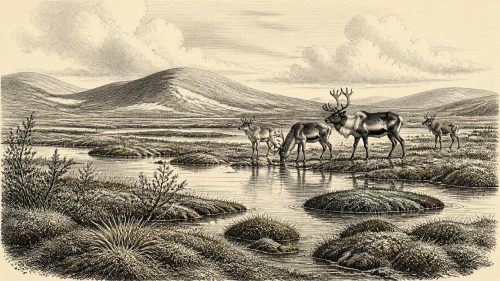
Although 31,198 BCE cannot denote a precise Irish year, it falls within a Late Pleistocene interval represented by Derryvree sediments in County Fermanagh. Organic deposits between glacial tills show that ice retreated sufficiently for a treeless, waterlogged tundra basin, rich in sedges, mosses and freshwater life, to develop before renewed glaciation. Cave remains, particularly at Castlepook, indicate diverse cold-adapted fauna, including reindeer, mammoth and predators, though dates and contexts require caution. A possibly cut-marked reindeer bone may indicate brief human presence, but cannot prove settlement. Ireland then lacked recorded societies; environmental change and expanding ice dominated this fragmentary deep-time record.
Read Article
Archived: 19 September 2026
Abstract
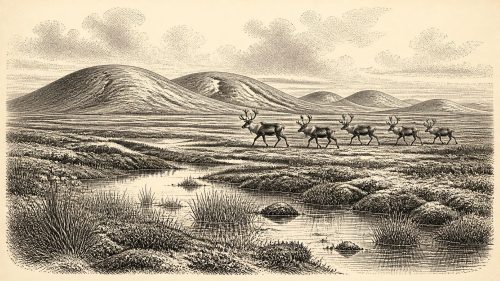
The modern date 31,199 BCE cannot identify a recorded Irish event, but broadly falls within Marine Isotope Stage 3. At Derryvree, County Fermanagh, organic freshwater deposits between glacial tills indicate a cold, treeless wetland tundra, with pools, mosses, sedges, alpine plants and beetles, during an interval between ice advances. Castlepook Cave, County Cork, preserves mixed remains of reindeer, mammoth, giant deer, predators and other cold-adapted fauna, demonstrating intermittent access from Britain or Europe. A modified reindeer bone may indicate human visitation, but no settlement is proven. Later ice expansion reshaped landscapes and destroyed or buried evidence in many Irish places.
Read Article
Archived: 19 September 2026
Abstract
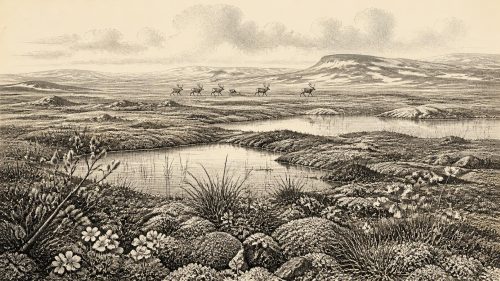
Around 31,200 BCE, Ireland’s history can be reconstructed only through uncertain archaeological and environmental evidence. Derryvree, County Fermanagh, preserves freshwater sediments between glacial tills, dated broadly to 36,900–31,700 calibrated years BP, showing an ice-free but severe tundra wetland before later ice-sheet expansion. Mosses, sedges, aquatic plants and sparse shrubs occupied cold, treeless ground. Castlepook Cave, County Cork, records a long span of Ice Age fauna, including reindeer, mammoth, giant deer, bears and hyenas, though not as one contemporary community. A possibly tool-marked reindeer bone suggests early human presence, but cannot establish occupation. Evidence depicts a locally varied, intermittently habitable landscape.
Read Article
Archived: 19 September 2026
Abstract
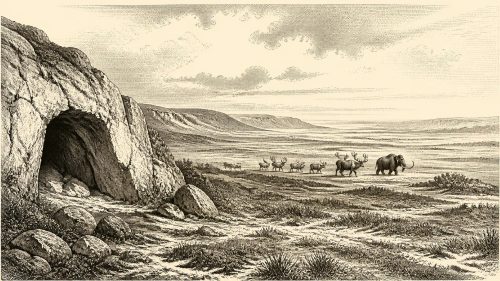
Castlepook Cave in County Cork preserves Ireland’s richest disturbed record of vertebrate fauna before the Last Glacial Maximum, during the climatically unstable later Marine Isotope Stage 3. Around 34,000–32,000 calibrated years ago, Ireland contained shifting cold, open habitats, developing ice and altered coastlines, rather than a uniformly frozen landscape. Mammoth, reindeer, giant deer, bear, wolf, hyena, lemmings and Arctic fox demonstrate connections with wider north-west European ecosystems. A tool-marked reindeer femur suggests fleeting Upper Palaeolithic activity, but cannot establish settlement or occupation. Dating, bone deposition and excavation methods require caution. Castlepook documents an ecological frontier increasingly transformed by advancing ice.
Read Article
Archived: 19 September 2026
Abstract
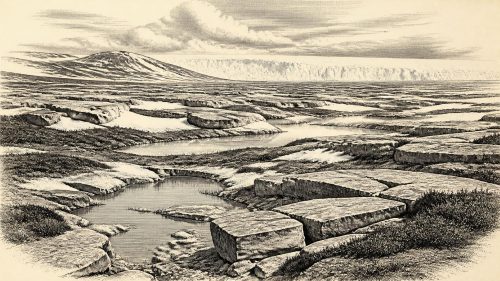
Around 31,202 BCE, Ireland lay within the climatically unstable Late Pleistocene, approaching major expansion of the British–Irish Ice Sheet. Evidence cannot reconstruct a single year: ice extent varied regionally, and later glaciers erased or disturbed earlier landscapes and deposits. Cold, seasonal open habitats probably persisted where ice did not cover land, while fossil caves attest to a wider earlier fauna including mammoth, reindeer and predators, though revised dates prohibit assigning species confidently to this moment. No secure evidence shows human residence, society, trade or conflict. Ireland’s first demonstrated human activity dates about 12,800 cal BP. Glaciation reshaped terrain, obscuring evidence.
Read Article


