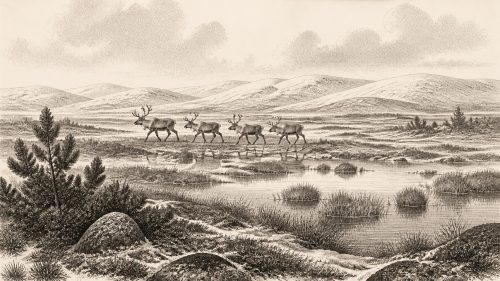
Mammoth Cave’s Tundra Fauna
Although 31,525 BCE is only a modern chronological label, evidence from Ireland’s later Marine Isotope Stage 3 illuminates conditions around this broad period. Derryvree, County Fermanagh, preserves a freshwater tundra wetland between glacial tills, demonstrating temporarily ice-free terrain before later ice advance. Plant and insect remains indicate cold, open, waterlogged landscapes. Castlepook Cave, County Cork, yielded mammoth, reindeer, giant deer, bears, wolves, arctic foxes, lemmings and hyenas, reflecting changing tundra-like habitats. A cut-marked reindeer femur may indicate Upper Palaeolithic human activity, but cannot prove settlement. Evidence supports episodic ecological opportunity, not established communities, institutions or precise events within the island.
View Record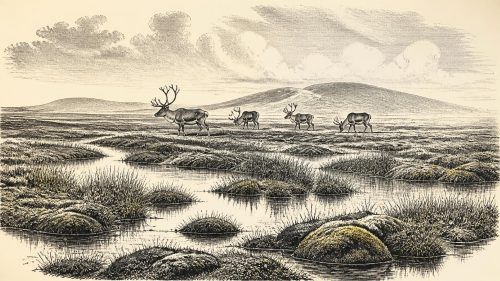
Derryvree Beneath Two Tills
31,526 BCE is an imprecise modern label for a Late Glacial interval in Marine Isotope Stage 3. At Derryvree, County Fermanagh, freshwater sediments between two tills, dated broadly to 36,900–31,700 calibrated BP, preserve evidence of cold, treeless tundra wetlands during an ice-free episode. Comparable Castlepook Cave remains in County Cork indicate diverse fauna, including mammoth, reindeer and predators. A marked reindeer bone may suggest brief Upper Palaeolithic human activity, but does not prove settlement. No polities, culture, trade or permanent occupation can be identified. Lower sea levels altered routes, while later ice-sheet expansion buried or destroyed much evidence across Ireland.
View Record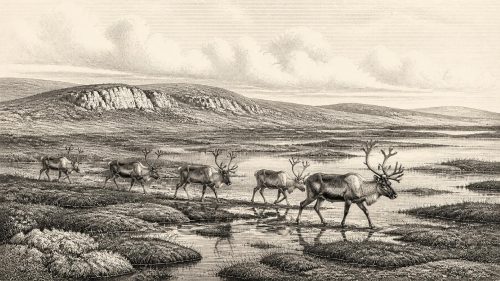
Awbeg Valley Bone Trail
About 31,527 BCE, Ireland lay within the climatically unstable later Marine Isotope Stage 3, not a precisely datable historical year. Organic silts at Derryvree, County Fermanagh, indicate locally habitable, treeless tundra wetlands between glacial advances. Castlepook Cave in County Cork preserves remains of reindeer, mammoth, bears, hyaenas, wolves, Arctic foxes and other cold-adapted fauna, although its mixed bone deposits require caution. A marked reindeer femur may record stone-tool butchery and thus an exceptionally early human visit, but lacks corroborating tools or occupation evidence. Later ice expansion obscured landscapes. Ireland was intermittently environmentally viable, while any contemporary human presence remains unproven.
View Record
A Line on Reindeer Bone
Around 31,528 BCE, Ireland lay within the unstable cold conditions of Marine Isotope Stage 3, not a datable historical year. Castlepook Cave, County Cork, yielded diverse Pleistocene fauna, including reindeer, mammoth, giant deer, hyena and lemmings. A reindeer femur, radiocarbon dated to about 33,000 years ago, bears a mark interpreted as stone-tool butchery, potentially Ireland’s earliest human evidence. This does not establish settlement, as cave deposits are disturbed and the cut’s origin remains debated. Open tundra-steppe, wetlands and changing ice margins supported intermittent animal and possible human movement. Advancing glaciation later obscured evidence, leaving fragile traces of Upper Palaeolithic visits.
View Record
A Reindeer Bone from Doneraile
Around 31,529 BCE, Ireland was a cold Late Pleistocene landscape rather than a recognisable historical society. Calibrated dating places Derryvree’s freshwater deposits, preserved beneath glacial tills in County Fermanagh, within the broader period; their remains indicate open, mostly treeless wetlands with pools, sedges and cold-adapted plants. Castlepook Cave in County Cork yielded mammoth, reindeer, giant deer, predators and lemmings, showing episodic habitable open country before maximum glaciation. An incised reindeer femur may record butchery by Upper Palaeolithic people, but cannot prove settlement. No evidence supports claims of communities, institutions, farming, ritual, or human occupation. Later ice expansion transformed the island.
View Record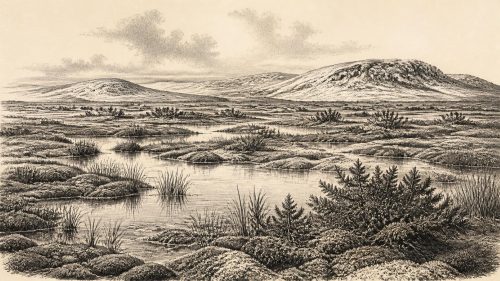
Menyanthes Under Derryvree
Approximately 31,530 BCE falls within Ireland’s climatically unstable Late Pleistocene, before the Last Glacial Maximum. Derryvree in Fermanagh preserves freshwater sediments between glacial tills, revealing a locally ice-free, periglacial wetland of sedges, mosses, bogbean and open tundra vegetation. Castlepook Cave in Cork contains disturbed remains of mammoth, reindeer, giant deer, bears, wolves and other cold-adapted animals, demonstrating intermittent connections with Eurasia. A possibly cut-marked reindeer bone may indicate human handling, but no confirmed occupation exists. Fragmentary evidence instead records changing environments, seasonal ecosystems and uncertain human presence across an unstable Atlantic frontier prior to more extensive ice-sheet growth in Ireland.
View Record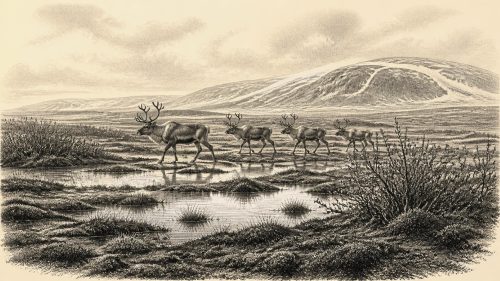
A Cutmark in North Cork
Thirty-one-thousand five-hundred-and-thirty-one BCE is a modern label within MIS 3, not a date for a recorded Irish event. Derryvree sediments in Fermanagh indicate a treeless, cold, wetland environment during a broad ice-free interval before later glaciation, while other deposits demonstrate regional climatic variation. Cave fauna, especially at Castlepook, shows that reindeer, mammoth, giant deer, hyaena and other mammals occupied Ireland before the Last Glacial Maximum. A reindeer femur possibly bearing a stone-tool cut mark may indicate human contact around 31,000 BC, but lacks context. No evidence supports settlement, institutions or continuous population; future research may clarify this Ice Age landscape.
View Record
Derryvree’s Arctic Pondlife
Modern dating cannot identify an Irish year in 31,532 BCE; the period belongs broadly to climatically unstable Marine Isotope Stage 3. At Derryvree, Fermanagh, freshwater organic sediments between glacial tills reveal temporary, open periglacial wetlands supporting mosses, sedges, pollen and cold-adapted insects. Other sites confirm changing conditions. Castlepook Cave preserves mammals accumulated over millennia, including mammoth, reindeer, giant deer, bears, hyaenas and later cold-stage fauna, but not a contemporaneous community. A marked reindeer bone may suggest Upper Palaeolithic butchery, yet cannot prove settlement. No politics, culture or continuous occupation is evidenced; Ireland was a shifting, intermittently habitable Ice Age landscape.
View Record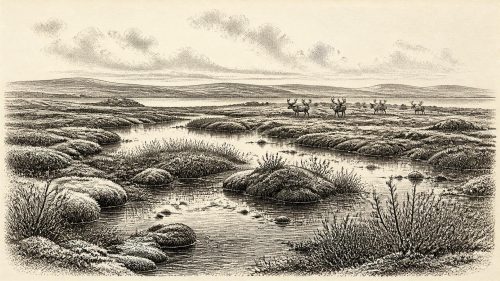
Maguirebridge’s Arctic Reedbed
31,533 BCE is a notional date within a broad, uncertain Late Pleistocene range rather than an identifiable Irish event. At Derryvree near Maguiresbridge, Fermanagh, organic freshwater sediments between glacial tills indicate a temporary ice-free, treeless wetland of sedges, mosses, pools and periglacial ground. Castlepook Cave, Cork, preserves evidence of mammoth, reindeer, giant deer, predators and other cold-stage fauna. A possibly butchered reindeer bone suggests early human visits, but remains unconfirmed and cannot establish settlement or society. No evidence supports agriculture, villages, polities or continuous population. Climatic instability and approaching ice-sheet expansion shaped and later erased much of Ireland’s landscape record.
View Record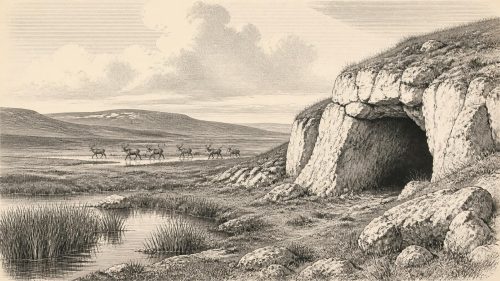
Castlepook’s Cutmark
31,534 BCE is not a recoverable Irish calendar year, but lies within Marine Isotope Stage 3, an unstable Pleistocene period. Lower sea levels altered connections with Britain and Europe, while ice-free areas supported open steppe-tundra, wetlands and cold-adapted plants. Derryvree deposits demonstrate such environments. Castlepook Cave preserves mixed animal remains, including mammoth, reindeer, giant deer and hyena, accumulated over millennia rather than as one community. A cutmarked reindeer femur c. 31,000 BCE may provide Ireland’s earliest evidence of human carcass processing. It cannot prove hunting, settlement or colonisation. Glaciation, flooding and early excavation left fragmentary evidence of potential visits there.
View Record