
Crag Cave’s Thaw Windows
Around 31,652 BCE, Ireland lay within the climatically unstable Late Pleistocene, not a recorded historical world. Evidence is sparse and cannot demonstrate settlement, institutions or fixed events. Derryvree sediments indicate open tundra-like vegetation, wetlands and fluctuating conditions, while Crag Cave speleothems show intermittent liquid water in south-west Ireland during milder phases. Castlepook Cave fauna confirms repeated arrivals of mammals, including reindeer, mammoth, hyaena and bear, across changing routes. A marked reindeer bone may indicate human butchery about 33,000 years ago, but remains inconclusive. Ireland was a cold, shifting landscape, intermittently habitable for plants and animals, and possibly visited by people.
View Record
Derryvree Before the Drumlin
Around 31,653 BCE, Ireland experienced unstable Late Pleistocene conditions during Marine Isotope Stage 3, before the Last Glacial Maximum. Derryvree, County Fermanagh, preserves freshwater sediments indicating locally ice-free tundra wetland, open pools and severe periglacial conditions between glacial advances. Cave records show intermittent milder phases and a varied fauna, including reindeer, mammoth, giant deer, bear, wolf and hyaena. Low sea levels may have enabled animal movement, though connections remained variable. No secure human settlement is known. A possibly butchered reindeer bone from Castlepook Cave may indicate brief Palaeolithic visitation, but remains inconclusive. Expanding ice later reshaped and obscured much evidence.
View Record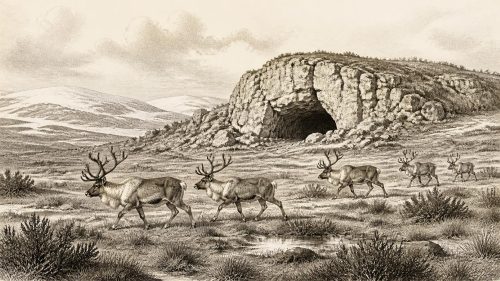
Mammoth Cave’s Cold Menagerie
Around 31,654 BCE, Ireland lay within the fluctuating cold conditions of Marine Isotope Stage 3, not a precisely datable year. Fermanagh sediments preserve evidence of open, wet habitats with cold-adapted plants and freshwater life, showing that some areas remained ice-free before later glaciation. Castlepook Cave in County Cork yielded Ireland’s richest cold-stage fauna, including mammoth, reindeer, giant deer, hyaena and Arctic fox. A cut-marked reindeer bone may indicate human carcass processing around 33,000 years ago, but requires confirmation. No permanent settlement is demonstrated. Subsequent ice-sheet growth reshaped landscapes and erased much earlier evidence, leaving an ecological, rather than societal, record.
View Record
Doneraile’s Reindeer Horizon
Around 31,655 BCE, Ireland was in Marine Isotope Stage 3, before the Last Glacial Maximum, with fluctuating ice, low sea levels and cold, varied habitats. Castlepook Cave near Doneraile preserves bones from repeated Late Pleistocene episodes, including mammoth, reindeer, hyaena, bear, wolf and Arctic fox, but mixed deposits prevent reconstruction of a single fauna or occupation. Derryvree wetlands indicate treeless tundra-like conditions. A dated Castlepook reindeer femur bearing a possible stone-tool mark may indicate brief human contact, yet cannot prove settlement. No securely associated camps, tools, hearths or cultural evidence exist. The record chiefly documents ecology, climate and uncertainty alone.
View Record
Castlepook’s Waning Fauna
31,656 BCE is a modern calendar projection, approximately 33,600 calibrated years before present, not a precisely datable Irish event. Ireland was entering colder Late Pleistocene conditions as the British–Irish Ice Sheet expanded unevenly. Derryvree deposits in Fermanagh preserve evidence of treeless, periglacial wetlands and open vegetation between glaciations. Castlepook caves in Cork contain mixed, imperfectly dated remains of mammoth, giant deer, reindeer, predators and other cold-adapted fauna, revealing changing connections with wider Europe rather than a single contemporaneous ecosystem. Routes of animal arrival remain uncertain. No archaeological evidence demonstrates human residence, society, rituals or institutions; environmental change defined this period.
View Record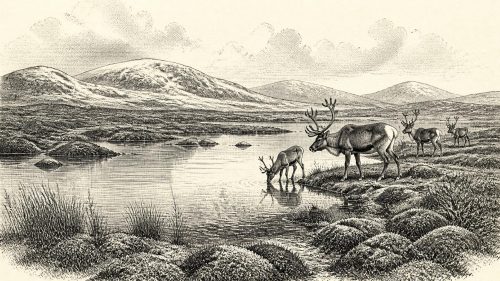
Maguirebridge’s Trifoliate Pools
About 31,657 BCE, Ireland lay within the climatically unstable later Marine Isotope Stage 3, not a recoverable historical year. Derryvree, County Fermanagh, preserves freshwater sediments between glacial tills, dated broadly to 34,950–29,750 BCE, indicating cold, open, wet tundra with pools, mosses, sedges and herbs. Castlepook Cave, County Cork, contains MIS 3 fauna including reindeer, mammoth, giant deer, hyaena and predators, though disturbed contexts limit interpretation. A possibly cut-marked reindeer bone may indicate an early human visit, but remains unconfirmed. No secure evidence supports permanent settlement, society or politics. These fragmentary archives document regional environmental change, animal use and advancing ice.
View Record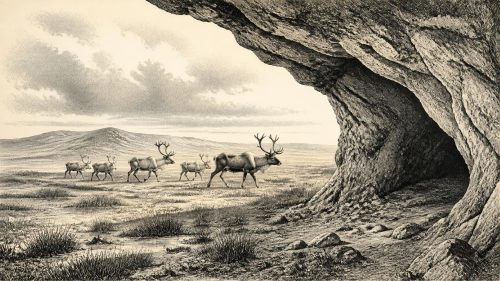
Castlepook’s Cut Reindeer
31,658 BCE is a modern chronological label, not a recorded Irish event. Castlepook Cave, County Cork, preserves Ireland’s principal pre-Last Glacial Maximum mammal archive, accumulated through carnivore activity, natural deaths, water movement and early excavation. Its bones, dated broadly from over 45,000 to about 20,000 BP, document intermittent cold-stage fauna including reindeer, mammoth, hyaena and wolves. A reindeer femur, assigned approximately 31,000 BC, bears a possible stone-tool butchery mark, potentially Ireland’s earliest evidence of human handling. It does not prove settlement or continuous occupation. Ireland then supported open, variable habitats before later ice-sheet expansion obscured much earlier evidence from view.
View Record
Birm-166’s Tundra Basin
Around 33,600 calibrated years before 1950, Ireland lay within the unstable MIS 3 cold phase, rather than a precisely datable historical year. Derryvree, County Fermanagh, preserves freshwater sediments between glacial tills, indicating locally ice-free, treeless tundra with wet hollows, hardy plants and insects. Cave finds at Castlepook, County Cork, show that reindeer, mammoth, giant deer, predators and other cold-adapted animals occurred in Ireland during MIS 3, though not necessarily simultaneously. A possibly cut-marked reindeer bone may indicate fleeting human activity, but cannot prove settlement. Expanding ice and changing seas shaped uncertain connections with Britain and Europe during this changing period.
View Record
Derryvree’s Permafrost Garden
Around 31,660 BCE, Ireland lay in the later Marine Isotope Stage 3, as conditions worsened before the Last Glacial Maximum. Derryvree, County Fermanagh, preserves silts recording an ice-free, periglacial wetland of tundra, sedges, mosses, insects and shallow pools. Castlepook Cave, County Cork, demonstrates the presence of cold-stage fauna, including mammoth, reindeer, giant deer, predators and smaller mammals, though not necessarily simultaneously. A marked reindeer femur may indicate brief human butchery, but cannot prove settlement. No polities or cultural communities are evidenced. Expanding ice, changing sea levels and uncertain routes made Ireland severe, intermittently accessible and ecologically still linked to Europe.
View Record
Derryvree’s Arctic Sandwort
Around 31,661 BCE, Ireland lay within the climatically unstable Late Pleistocene, but the date is only a broad modern approximation. At Derryvree, County Fermanagh, freshwater sediments beneath glacial till preserve tundra-like wetlands with Arctic sandwort, mountain avens, mosses, sedges and shallow pools, formed before renewed ice advance. Cave deposits, especially Castlepook in Cork, record Ice Age fauna including mammoth, reindeer, giant deer, predators and lemmings, though not as one contemporaneous community. A marked reindeer bone may indicate human butchery, but cannot establish settlement or continuous occupation. Evidence reveals changing environments and animals, not identifiable societies, politics, routes or annual events.
View Record