
Derryvree’s Roadcut Tundra
31,786 BCE is a modern label within unstable Marine Isotope Stage 3, not a recordable Irish year. Derryvree, County Fermanagh, preserves freshwater sediments, dated broadly 36,900–31,700 calibrated years before present, between glacial tills. Plant and insect remains indicate cold, open tundra wetlands during an ice-free interval, challenging assumptions of continuous ice cover. Castlepook Cave’s mixed faunal record documents mammals including reindeer, mammoth, predators and bears, showing intermittent ecological connections with north-west Europe. A possibly cut-marked reindeer bone suggests human visitation, but not settlement. Climatic deterioration and renewed ice expansion subsequently buried or destroyed much evidence of this changing Pleistocene landscape.
View Record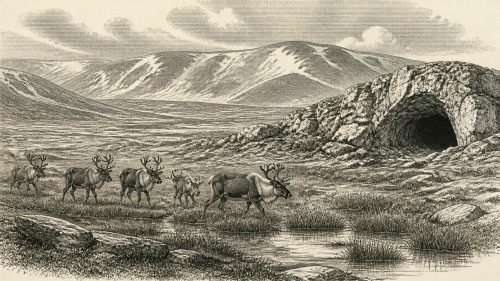
Cork Femur Debate
31,787 BCE is a modern proleptic label within late Marine Isotope Stage 3, not a recoverable Irish historical year. Ireland was a cold, variable pre-Last Glacial Maximum landscape, with changing ice, sea levels, open vegetation and mammals including reindeer, deer, bears and hyaenas. Cave deposits and revised radiocarbon dates indicate intermittent animal occupation, but cannot establish permanent human settlement. A marked reindeer femur from Castlepook Cave, County Cork, may show stone-tool processing and possible early human presence. However, its insecure context lacks associated tools, hearths or remains. Until evidence emerges, it remains a record of ice-age environments and cave fauna.
View Record
Derryvree Under Drumlin Ice
31,788 BCE is an orientating date within Marine Isotope Stage 3, not a documented year. At Derryvree, County Fermanagh, organic freshwater deposits between glacial tills indicate an interval of cold, treeless, wet tundra-like conditions before renewed ice advance; radiocarbon calibration gives a broad range rather than certainty. Pollen, mosses, insects and plants reveal diverse microhabitats. Castlepook Cave, County Cork, preserves evidence of mammals including mammoth, reindeer, giant deer, predators and lemmings, although their coexistence cannot be assumed. Ireland's shifting ice, seas, vegetation and animal routes created environments. No reliable evidence establishes human settlement, society, trade or activity at this time.
View Record
Greenagho’s Buried Fen
Around 31,789 BCE, Ireland lay within a volatile later Pleistocene landscape rather than a precisely datable historical year. Ice-free phases supported treeless tundra-steppe wetlands, freshwater pools and open vegetation, as preserved beneath tills at Derryvree and Greenagho. Lower sea levels altered coasts and routes, though no simple land bridge is established. Castlepook Cave yields mammoth, reindeer, giant deer and carnivores, evidencing productive cold open country. A marked reindeer femur may indicate Upper Palaeolithic butchery, but cannot prove settlement. Later glaciation destroyed much evidence while preserving rare deposits. No evidence supports farming, political institutions, permanent communities, or identifiable societies in Ireland.
View Record
Sedges Under Maguiresbridge
About 31,790 BCE, Ireland lay in the unstable, cold MIS 3 phase of the last Ice Age, not within a precisely dateable historical year. Inter-till freshwater deposits at Derryvree, County Fermanagh, preserve sedges, mosses, pollen and insects indicating waterlogged, tundra-like open country between ice advances. Comparable deposits confirm living northern environments. Castlepook Cave, County Cork, contains reindeer, wolf, Arctic fox and other cold-country fauna, demonstrating altered connections and seasonal productivity. A reportedly cut-marked reindeer femur may indicate an early human visit, but its context remains uncertain. No evidence supports permanent settlement, institutions or Palaeolithic society; environmental change dominates the record.
View Record
Mammoth Cave’s Reindeer Femur
Labelled 31,791 BCE, this period in Ireland belongs to later Marine Isotope Stage 3, not a recoverable calendar year. Fluctuating climates, lower seas and changing ice shaped an exposed, treeless landscape before the Last Glacial Maximum. Castlepook Cave in north Cork yielded a reindeer femur bearing a possible stone-tool cut mark, suggesting a brief human encounter around 33,000 radiocarbon years ago. However, disturbed deposits and absent hearths, tools or human remains preclude claims of settlement. Cave fauna, Fermanagh wetland deposits and Kerry speleothems indicate cold, variable habitats supporting mammals and intermittent liquid water. Evidence permits cautious speculation on hunter-gatherer visits.
View Record
Elephant Hall’s Reindeer Horizon
Around 33,700 calibrated years before present, Ireland lay within the unstable Late Pleistocene, as ice advanced towards the Last Glacial Maximum. Open grasslands, shrubs and bare ground supported grazing animals, while lower sea levels altered coastlines without proving migration routes. Castlepook Cave, County Cork, preserves Ireland’s richest pre-maximum vertebrate archive, including mammoth, reindeer, giant deer, bear and hyaena, though its disturbed bones represent episodes. A 33,000-year-old reindeer femur bears a possible stone-tool cut mark, suggesting but not confirming an early human visit. No occupation evidence establishes settlement, hunting practices or continuity. It chiefly records environmental change and unresolved human presence.
View Record
Doneraile’s Contested Reindeer Femur
31,793 BCE is a modern filing date, roughly 33,700 years before present, within climatically unstable Marine Isotope Stage 3. Ireland was cold, treeless and regionally varied, with tundra-like wetlands, periglacial terrain and advancing, uneven ice. Castlepook Cave, County Cork, preserves fauna including mammoth, giant deer, reindeer, bears, hyaenas, wolves, foxes and lemmings, showing ecological links beyond Ireland. A marked reindeer femur may record stone-tool use and an early human visit, but disturbed deposits and uncertain dating prevent firm conclusions. Secure butchery evidence at Clare is far later. No settlement, culture, trade or society can be reconstructed; faunal evidence remains paramount.
View Record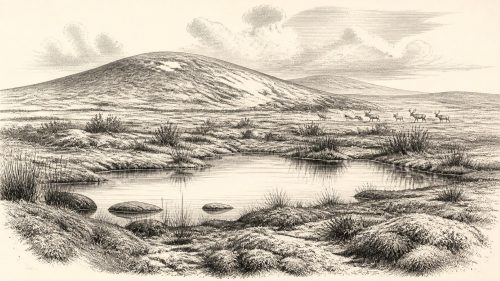
Maguirebridge’s Freshwater Interval
31,794 BCE cannot be treated as a precise Irish historical year, but falls within a fluctuating Late Glacial interval. At Derryvree near Maguiresbridge, Fermanagh, freshwater silts between glacial tills preserve evidence of an ice-free phase: open tundra, wetlands, sedges, mosses and cold-adapted insects. Conditions varied regionally as ice advanced and retreated before later extensive glaciation. Castlepook Cave, Cork, contains reindeer, mammoth and spotted hyena remains, showing a productive cold-stage fauna. A marked reindeer bone may indicate brief human activity around 33,000 years ago, but cannot prove settlement. The sparse record depicts a living, precarious landscape, reconstructed through deposits and probabilities.
View Record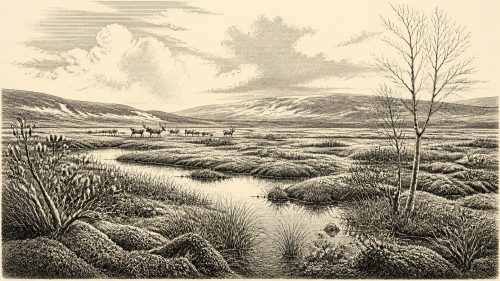
Mosses Between the Tills
Around 31,795 BCE, Ireland lay within an unstable Late Pleistocene cold phase, rather than the later Last Glacial Maximum. At Derryvree, County Fermanagh, sediments between glacial tills preserve evidence of treeless tundra wetlands, with mosses, sedges, dwarf birch, insects and freshwater pools. Lower sea levels altered coasts, but no certain land bridge or travel routes can be identified. Castlepook Cave, County Cork, records cold-adapted mammals, including reindeer, mammoth and hyaena. A possibly cut-marked reindeer bone suggests an early human visit, not settlement. No securely dated occupation exists; any presence was likely brief, mobile and vulnerable to severe advancing glacial ice.
View Record