Archived: 29 September 2026
Abstract
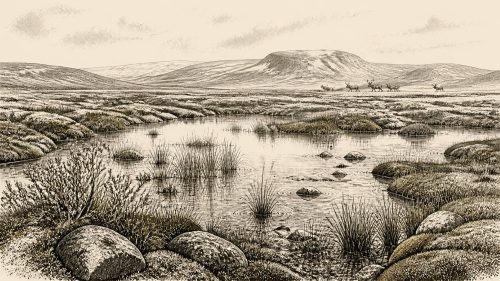
30,471 BCE is a modern label within the broad calibrated range of Derryvree’s freshwater deposit in County Fermanagh, not a recoverable Irish historical year. Roadworks exposed organic silts between two tills, proving a local ice-free interval before glacier return. Pollen, plants, insects and aquatic remains indicate open tundra, wetland and periglacial conditions during Marine Isotope Stage 3, before the Last Glacial Maximum. Cave finds, especially Castlepook’s cold-stage mammals, indicate regional faunal possibilities but cannot identify Fermanagh’s contemporary animals. A possibly butchered reindeer bone suggests human visits, not settlement. Lower seas altered routes, but no Irish land bridge can be assumed.
Read Article
Archived: 29 September 2026
Abstract
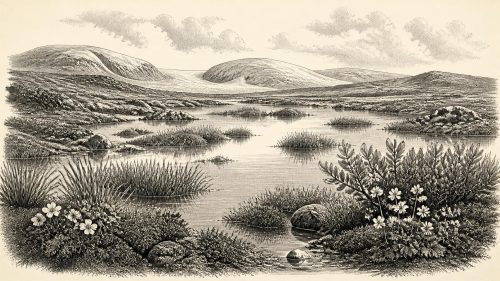
Thirty thousand years BCE is a modern label for a broad Late Pleistocene interval, not a recorded Irish year. At Derryvree, County Fermanagh, freshwater silts containing pollen, plants, mosses and insects lie between glacial tills, demonstrating episodic ice cover and a cold, open wetland mosaic. Radiocarbon dating places this episode broadly between about 34,950 and 29,750 BCE. Castlepook Cave, County Cork, preserves cold-stage animal remains, including reindeer, mammoth and hyaena. A possibly cut-marked reindeer femur suggests fleeting human activity, but requires confirmation. Evidence reveals seasonal, biologically active landscapes, not settled societies, political life or proven continuous land routes to Europe.
Read Article
Archived: 29 September 2026
Abstract
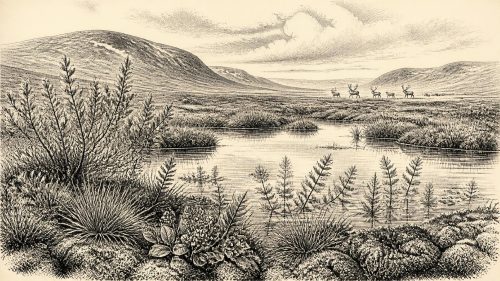
Around 30,473 BCE, Ireland experienced the unstable Late Pleistocene rather than a datable historical year. Derryvree in County Fermanagh preserves freshwater sediments between tills, showing a local ice-free wetland during Marine Isotope Stage 3. Its plants and insects indicate cold, treeless tundra-like conditions, with seasonal pools and vegetation. This evidence cannot establish island-wide conditions or a precise date. Castlepook Cave documents diverse cold-stage fauna, including mammoth, reindeer and hyaena, but its disturbed deposits span long periods. A possibly cut-marked reindeer bone suggests early human presence, yet does not prove settlement. Later ice reshaped landscapes and obscured evidence; uncertainty remains central.
Read Article
Archived: 29 September 2026
Abstract
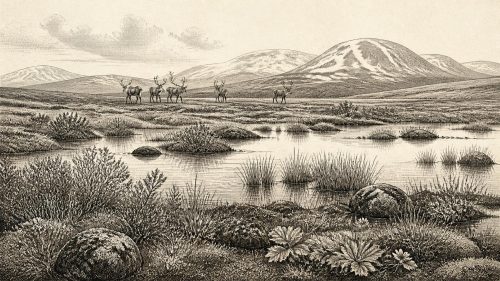
Thirty thousand years before the present, Ireland cannot be described through a recoverable historical year, but through uncertain environmental ranges. Derryvree, County Fermanagh, preserves freshwater sediments between glacial tills, indicating an ice-free tundra wetland with cold-adapted vegetation during an interstadial phase. Crag Cave mineral deposits suggest south-western Ireland responded to abrupt climatic ameliorations. Cave fauna, especially at Castlepook, records mammoth, reindeer, giant deer, predators and other Ice Age animals, though remains accumulated over long periods. A possibly cut-marked reindeer bone raises, but does not prove, human presence. Ireland remained a changing, intermittently fully habitable landscape before the Last Glacial Maximum.
Read Article

Archived: 29 September 2026
Abstract
At the notional date of 30,475 BCE, Ireland has no recoverable annual history; evidence instead describes Late Pleistocene environmental intervals. At Derryvree, County Fermanagh, organic sediments between two glacial tills record an ice-free freshwater wetland during Marine Isotope Stage 3, supporting tundra-steppe vegetation, shallow pools and brief productive summers. Cave remains, especially from Castlepook, County Cork, indicate reindeer and other Ice Age mammals, although accumulated bones cannot reconstruct precise communities. A cut-marked reindeer femur may signal early human activity, but remains contested and proves neither settlement nor culture. Subsequent ice expansion destroyed or buried evidence, leaving a fragmentary, climate-driven record.
Read Article

Archived: 29 September 2026
Abstract
30,476 BCE is not a recoverable Irish historical year, but an approximate horizon within unstable Marine Isotope Stage 3. At Derryvree, County Fermanagh, freshwater silts and organic remains between two glacial tills document a cold, treeless tundra wetland before renewed ice advance. BIRM-166, dated to 30,500 radiocarbon years BP, carries broad uncertainty and cannot identify a precise calendar date. Plant, insect and cave-fauna evidence indicates varied seasonal habitats supporting cold-adapted mammals. A possibly butchered reindeer bone suggests human visits, but proves neither permanent occupation nor social organisation. Ireland’s record is environmental, preserving dynamic interactions among ice, water, vegetation and fauna.
Read Article
Archived: 29 September 2026
Abstract
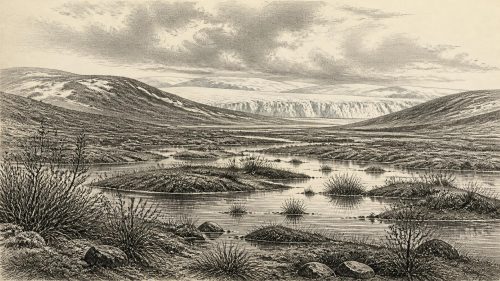
30,477 BCE is not a recoverable Irish year but falls within a broad radiocarbon interval represented by Derryvree, County Fermanagh. There, freshwater silts between glacial tills, including sample BIRM-166, record a temporary cold, open wetland landscape of sedges, mosses, herbs, dwarf willow and juniper before renewed ice advance. Elsewhere, changing ice conditions varied regionally. Castlepook Cave’s long faunal sequence demonstrates that mammoth, giant deer, reindeer and predators occupied southern Ireland at differing times, not necessarily together. No secure evidence establishes human settlement then; a possibly cut-marked reindeer bone remains uncertain. The article therefore reconstructs environment, not political or social history.
Read Article

Archived: 29 September 2026
Abstract
Labelled 30,478 BCE, this period cannot be reconstructed as a single Irish year, but environmental evidence illuminates a wider Late Pleistocene interval. At Derryvree, County Fermanagh, freshwater silts between glacial tills preserve plants, insects and sediments from a cold, open wetland of grasses, sedges, mosses, herbs and shallow water. Ireland’s landscapes varied as conditions shifted towards the later Last Glacial Maximum. Faunal records indicate cold-adapted animals, though dated cave remains need not be contemporary. A possibly cut-marked reindeer bone suggests early human visitation, not settlement. No secure evidence supports communities, culture or institutions; ecological change remains the central Irish history.
Read Article
Archived: 29 September 2026
Abstract
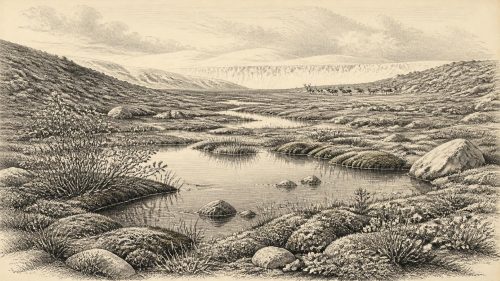
At 30,479 BCE, Ireland’s history is archaeological rather than annual. Derryvree in County Fermanagh preserves freshwater sands, silts and organic muds between two glacial tills, showing a locally ice-free interval before renewed ice advance. Its radiocarbon evidence broadly spans 34,950–29,750 BCE, preventing precise dating. Plants indicate cold, treeless periglacial wetlands with mosses, sedges, grasses and dwarf willow. Castlepook Cave in Cork records diverse glacial fauna, including mammoth, reindeer and hyaena, but its disturbed deposits cannot reconstruct a single moment. A cut-marked reindeer bone may indicate brief human presence, not settlement. These archives reveal changing habitats and visits before later glaciation.
Read Article

Archived: 29 September 2026
Abstract
Although 30,480 BCE is a label rather than a recoverable Irish year, it lies within the broad age range of Derryvree’s Pleistocene deposits in County Fermanagh. Sediments between glacial tills show an ice-free freshwater wetland, with pools, mosses, sedges, grasses, juniper and cold-adapted herbs, indicating severe tundra-like conditions. Wider evidence from Castlepook Cave records Ice Age mammals, but its mixed deposits cannot prove species coexisted locally. Lower sea levels connected Ireland to Britain, enabling animal movement. Human presence remains uncertain: a possibly cut-marked reindeer bone is inconclusive, and secure evidence of people belongs later. The landscape, not society, is documented.
Read Article


