
Archived: 30 September 2026
Abstract
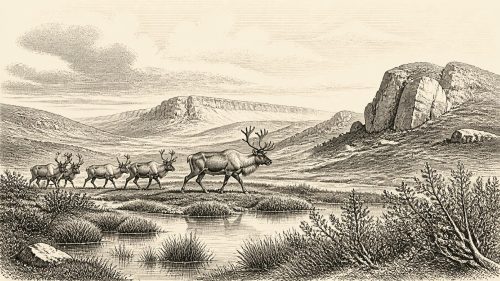
About 30,451 BCE, a modern label rather than a precise Irish date, Ireland experienced a cold Late Pleistocene interval. At Derryvree near Maguiresbridge, freshwater sediments between glacial tills record an ice-free phase before the Last Glacial Maximum. Pollen, plants, insects and sediments indicate tundra-like wetlands with shallow water, sedges, grasses, juniper and arctic-alpine species. Later ice buried this evidence. Castlepook Cave in Cork preserves diverse cold-stage fauna, including mammoth, reindeer, hyaena and Arctic fox, although remains span time. A possibly cut-marked reindeer bone suggests brief human presence, not settlement. No evidence supports contemporary polities, villages, trade, rituals or calendar-dated events.
Read Article

Archived: 30 September 2026
Abstract
Around 30,452 BCE, Ireland lay within Marine Isotope Stage 3, a fluctuating cold period preceding the Last Glacial Maximum. At Derryvree, Fermanagh, freshwater sediments buried between glacial tills preserve evidence of tundra-like wetland: mosses, sedges, aquatic plants and a buckbean seed. Their uncertain radiocarbon age cannot identify one calendar year. Castlepook Cave, Cork, yielded cold-stage fauna, including mammoth, reindeer and carnivores, accumulated over time. A possibly stone-tool-marked reindeer femur may suggest brief human activity, but no secure occupation evidence exists. The record instead depicts changing ice margins, open habitats and mobile animals, with human presence uncertain and documentary history absent.
Read Article
Archived: 30 September 2026
Abstract
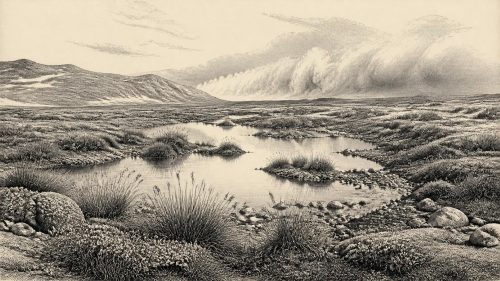
About 30,453 BCE is not a recoverable Irish historical year but falls within broad Late Pleistocene dating ranges. At Derryvree, County Fermanagh, sediments between two tills record a locally ice-free freshwater basin before renewed glaciation. Pollen, plants, mosses and insects indicate cold, treeless tundra-like wetlands rather than a frozen wasteland. Climate during Marine Isotope Stage 3 fluctuated sharply, while later ice obscured much evidence. Castlepook Cave, County Cork, preserves a mixed, time-averaged fauna including mammoth, reindeer and hyena. A cut-marked reindeer femur may indicate Upper Palaeolithic butchery, but cannot prove permanent settlement. Evidence supports changing environments and possible human visits.
Read Article
Archived: 30 September 2026
Abstract
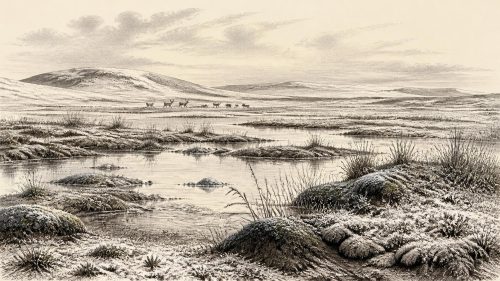
30,454 BCE is a modern chronological label within a broad Late Pleistocene range, not a recorded Irish year. Derryvree, County Fermanagh, preserves freshwater silts between tills, showing a locally ice-free interval with cold, wet, open vegetation and periglacial conditions. Castlepook Cave, County Cork, contains a long, disturbed faunal archive including mammoth, reindeer, giant deer, bears and hyaenas, rather than a single contemporaneous assemblage. A cut-marked reindeer femur may indicate brief human carcass processing around this period, but cannot prove settlement. Ireland experienced regionally changing ice, uncertain coasts and habitats, with no evidence for polities, farming, permanent villages or sustained occupation.
Read Article
Archived: 30 September 2026
Abstract
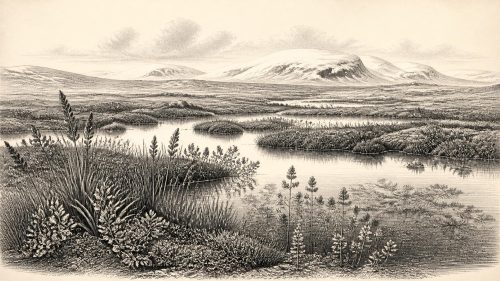
Around 30,455 BCE, Ireland lay within a cold, unstable Pleistocene landscape, although the date represents a broad calibrated range rather than a specific year. At Derryvree, County Fermanagh, freshwater silts between glacial tills preserve bogbean, water-milfoil, mosses, sedges and Arctic-alpine vegetation, indicating shallow wetlands amid open tundra during an ice-free interval. Insects support severe periglacial conditions with short productive summers. Cave finds elsewhere show Ice Age fauna, including reindeer and mammoth, but cannot be directly linked to Derryvree. A possibly cut-marked reindeer bone suggests early human activity, yet permanent occupation remains unproven. Renewed ice later completely buried this temporary ecosystem.
Read Article

Archived: 30 September 2026
Abstract
Around 30,456 BCE, Ireland cannot be described through exact events or populations, but through uncertain environmental evidence. Organic silts at Derryvree, County Fermanagh, dated broadly to Marine Isotope Stage 3, record a cold, treeless freshwater landscape of mosses, sedges and tundra plants between glacial advances. Castlepook Cave, County Cork, yielded reindeer, giant deer, mammoth and hyaena remains, demonstrating Ice Age fauna before the Last Glacial Maximum. A cut-marked reindeer femur may indicate Upper Palaeolithic butchery and a brief human visit, not permanent settlement. Later ice expansion reshaped and destroyed evidence, leaving fragmentary records of habitats, animal movements and possible visits.
Read Article
Archived: 30 September 2026
Abstract
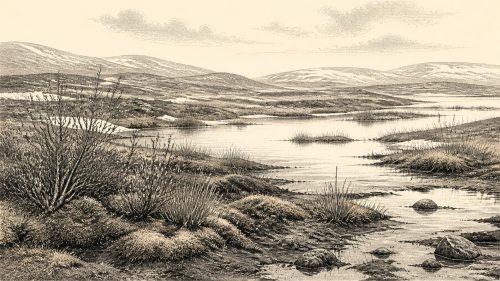
Although 30,457 BCE cannot be dated precisely, Derryvree near Maguiresbridge records an ice-free interval during Marine Isotope Stage 3. Freshwater sediments between glacial tills preserve evidence of a treeless, periglacial wetland supporting sedges, mosses, herbs, shrubs, insects and arctic-alpine plants before renewed ice advance. Ireland was environmentally varied, not uniformly ice-covered, while lower sea levels altered surrounding geography without proving migration routes. Castlepook Cave fauna demonstrates episodic cold-country habitats for mammoths, reindeer, predators and other animals. A possibly cut-marked reindeer femur may indicate human carcass processing, but cannot establish hunting, settlement or permanent population. The evidence reveals an Ice-Age landscape.
Read Article
Archived: 30 September 2026
Abstract
At the notional date of 30,458 BCE, Ireland lay within the climatically unstable Marine Isotope Stage 3, not a precisely datable annual setting. Dynamic ice, low sea levels and changing coasts produced varied local environments. Buried wetland deposits in Fermanagh demonstrate intervals of freshwater pools and cold, open vegetation between glacial advances. Castlepook Cave in County Cork preserves fauna including reindeer, mammoth, giant deer and predators, indicating viable grazing landscapes, although deposits are complex. A cut-marked reindeer femur may record Upper Palaeolithic butchery, yet cannot prove settlement or continuity. Later worsening climate and ice substantially obscured this already fragmentary record.
Read Article

Archived: 30 September 2026
Abstract
30,459 BCE is not a recoverable Irish historical year but a point within Late Pleistocene Marine Isotope Stage 3. Castlepook Cave in County Cork preserves re-dated animal bones showing that southern Ireland hosted changing cold-climate faunas before the Last Glacial Maximum, including reindeer, mammoth, giant deer, Arctic fox, brown bear and spotted hyaena. Open grasslands, tundra, wetlands and sheltered productive areas supported mobile mammals, while low sea levels enabled intermittent dispersal. A possible cut mark on a reindeer femur suggests fleeting human activity, not settlement. Later ice destroyed much evidence; Castlepook remains a rare archive requiring investigation and cautious interpretation.
Read Article

Archived: 30 September 2026
Abstract
At 30,460 BCE, Ireland cannot be reconstructed year by year, but evidence indicates intermittent ice-free environments during Marine Isotope Stage 3. Derryvree, County Fermanagh, preserves freshwater deposits between glacial tills, showing cold, treeless wetland with tundra plants, insects and shallow water before renewed ice advance. Castlepook Cave, County Cork, contains mixed Late Pleistocene animal remains, including mammoth and reindeer, accumulated over long periods and poorly stratified. A cut-marked reindeer femur may indicate Upper Palaeolithic butchery, but cannot demonstrate settlement or continuity. No political, social or economic history is recoverable. The period remains fragmentary environmental prehistory, awaiting improved dating and excavation.
Read Article


