
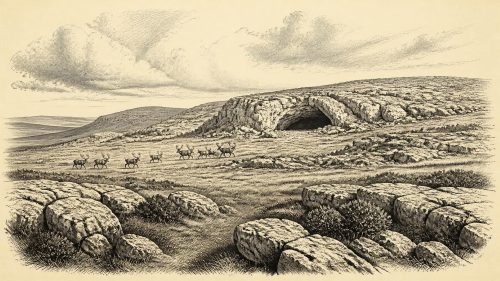
Cork’s Pre-LGM Reindeer
About 33,300 years ago, Ireland was in Marine Isotope Stage 3, shortly before Last Glacial Maximum ice cover reshaped the island. Southern caves, especially Castlepook in north Cork, preserve remains of reindeer, mammoth, giant deer, hyaena and fauna, indicating cool, open habitats. Lower sea levels altered coastlines and may have facilitated animal and human movement. A cut-marked reindeer femur may represent Ireland’s earliest evidence of human carcass processing, but it proves neither settlement nor hunting. Dating remain uncertain. Later glaciation and rising seas destroyed or submerged evidence, leaving a record of a fauna-bearing landscape and possible human visits to Ireland.
View Record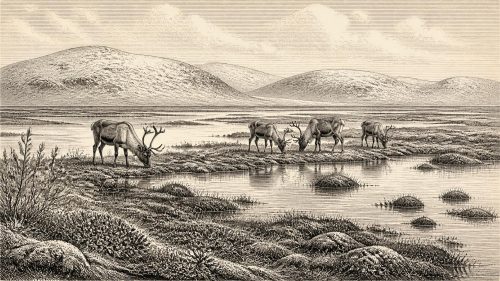
Derryvree’s Pre-Ice Wetlands
31,318 BCE is a modern label within an uncertain MIS 3 interval, not a recoverable Irish historical year. At Derryvree, County Fermanagh, freshwater organic sediments between glacial tills record an ice-free phase, broadly 36,900–31,700 calibrated years BP. Fossils indicate cold, treeless, wet tundra-like ground, while successive ice advances and retreats made conditions regionally variable. Southern cave deposits show that diverse Ice Age mammals reached Ireland over MIS 3. A cut-marked Castlepook reindeer bone may indicate brief human activity, but proves neither settlement nor continuous occupation. Lower seas changed coastlines, yet travel routes remain uncertain. Later glaciation destroyed or buried evidence.
View Record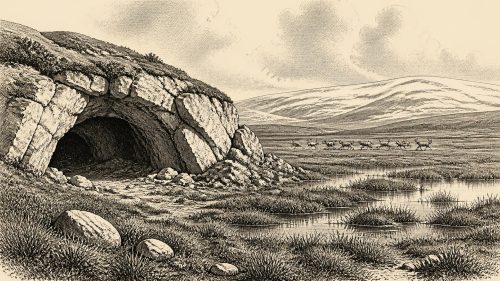
Castlepook’s Iceward Fauna
About 31,319 BCE is best understood as a broad Late Pleistocene, MIS 3 reference, not a precisely dated Irish event. Ireland experienced unstable, increasingly cold conditions as the British–Irish Ice Sheet expanded, altering coasts, habitats and access routes. Fragmentary sediments indicate tundra wetlands, while Castlepook Cave preserves remains of mammoth, reindeer, giant deer, predators and Arctic-adapted species, demonstrating intermittent continental fauna. Its deposits span different periods and were disturbed, so they cannot prove contemporaneous communities. A cut-marked reindeer bone may indicate butchery by people, but confirms neither settlement nor continuity. Later glaciation erased much evidence; caves retain the clearest record.
View Record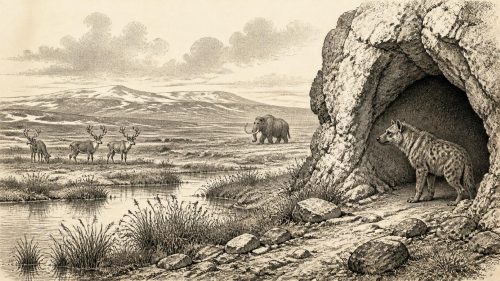
Castlepook’s Hyena-Scored Mammoth
About 31,320 BCE, Ireland lay within the Late Pleistocene’s unstable Marine Isotope Stage 3, before the Last Glacial Maximum. Ice margins, sea levels and coastlines changed, producing varied cold environments rather than a uniformly ice-covered island. At Derryvree, Fermanagh, freshwater sediments between glacial tills preserve evidence of tundra-like wetlands, including mosses, sedges, dwarf willow and insects, during an ice-free interval. Castlepook Cave, Cork, yielded mammoth, reindeer, giant deer, predators and scavengers, including hyena-marked bone, though deposits are chronologically mixed. No settled human community is securely evidenced; possible cut marks remain uncertain. Ireland’s history is dynamic glacial landscapes and faunal archives.
View Record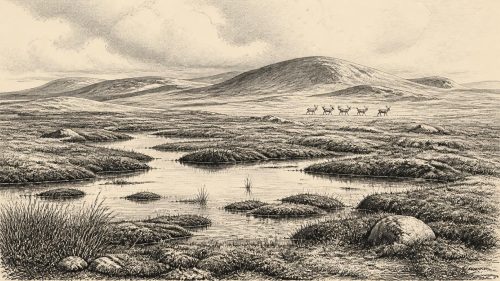
BIRM-166 and the Coming Ice
At approximately 31,321 BCE, Ireland lay in the unstable cold conditions of Marine Isotope Stage 3, not entirely under a uniform ice sheet. The date is only a broad calibrated approximation, linked to the BIRM-166 freshwater deposit at Derryvree, Fermanagh. Silts between glacial tills record locally ice-free tundra, wetlands, plants, insects and animals before renewed glaciation. Castlepook Cave, Cork, preserves diverse fauna, including mammoth, reindeer, giant deer, hyaena and cold-adapted species, accumulated across a lengthy period. A possibly cut-marked reindeer bone suggests transient human presence, not settlement. Advancing British-Irish ice later reshaped landscapes and obscured this ecologically varied pre-maximum world.
View Record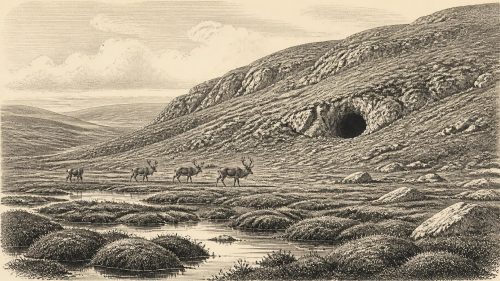
The Doneraile Reindeer Mark
31,322 BCE is a modern label for a Late Pleistocene interval, best understood through uncertain dated ranges rather than year-specific history. Derryvree silts in Fermanagh indicate cold, treeless tundra-like wetlands, while Castlepook Cave, County Cork, preserves fauna including reindeer, mammoth, giant deer and predators. A reindeer femur bears a possible fresh-bone stone-tool incision, potentially indicating Upper Palaeolithic human activity. However, disturbed cave contexts and absent associated hearths, tools or settlements prevent stronger conclusions. Ireland was varied as ice expanded, with traces often erased by glaciation. No community, polity, culture or occupation is proven; humans remain a plausible but unconfirmed presence.
View Record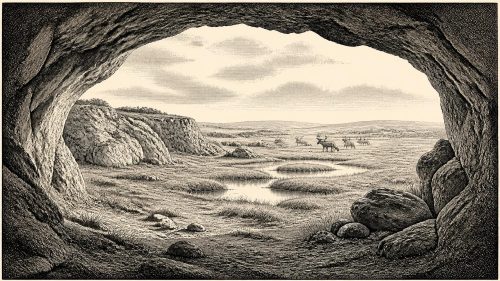
The Castlepook Bone Question
31,323 BCE is a retrospective label within climatically unstable Marine Isotope Stage 3, not a precisely datable Irish event. Environmental records from Crag Cave and northern deposits indicate fluctuating conditions, including milder phases, wetlands and open cold-country habitats. Castlepook Cave, County Cork, preserves remains of mammoth, reindeer, giant deer, hyaena and fauna, demonstrating productive Ice Age ecosystems before the Last Glacial Maximum. A marked reindeer femur may show butchery with a stone edge and early human visitation. However, lacking associated tools, hearths or settlements, it cannot prove population, society or occupation. Ireland’s history remains environmental, while human presence is unresolved.
View Record
Maguirebridge’s Sealed Tundra
31,324 BCE is an editorial date within a broad Late Pleistocene range, not a datable Irish year. At Derryvree near Maguiresbridge, Fermanagh, freshwater sediments later sealed beneath ice preserve pollen, plants, mosses and insects indicating an ice-free, treeless, waterlogged tundra with wetland niches. Castlepook Cave, Cork, contains remains of reindeer, mammoth, giant deer, predators and other cold-stage fauna, although cave deposits span long periods and may be disturbed. A marked reindeer femur may record butchery by humans, but cannot prove settlement. Ireland was regionally variable during MIS 3; later glaciation destroyed much evidence, leaving only fragmentary ecological and human traces.
View Record
Crag Cave and Derryvree
At 31,325 BCE, Ireland was a climatically unstable Late Pleistocene fringe, not a landscape uniformly covered by ice. Derryvree, County Fermanagh, preserves sediments indicating cold, treeless tundra wetlands with freshwater ecosystems before later glaciation. Crag Cave, County Kerry, records intermittent calcite growth, showing milder MIS 3 episodes when liquid water circulated underground. Castlepook Cave, County Cork, contains a complex fauna including mammoth, reindeer, hyaena and other species, demonstrating habitable open environments. A cut-marked reindeer bone may indicate Upper Palaeolithic butchery, but lacks associated artefacts or occupation evidence. No political or settled human society can be inferred; environmental change remains record.
View Record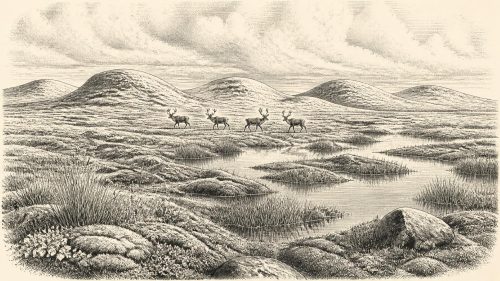
The Derryvree Freshwater Lens
31,326 BCE is a modern label for later Marine Isotope Stage 3, not a recoverable Irish year. Derryvree, County Fermanagh, preserves freshwater sediments between tills, indicating an ice-free, cold tundra wetland during a broadly dated interval. Castlepook Cave, County Cork, contains MIS 3 remains of reindeer, mammoth, hyaena and other open-country fauna, although disturbed deposits prevent a single ecological snapshot. A cut-like mark on a reindeer femur may indicate early human butchery, but remains contested and cannot prove settlement. Glaciation and changing sea levels obscured evidence. Secure Irish human presence is far later; permanent society is unproven for this period.
View Record