Parkgate
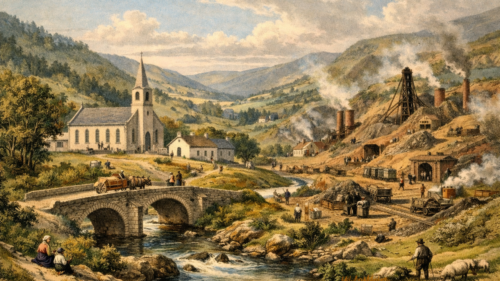
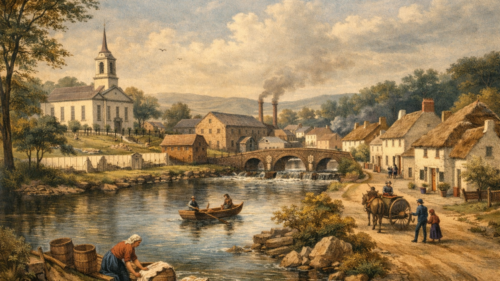
Parkgate is securely identifiable as a village in historical County Antrim. In Samuel Lewis’s 1837 topographical dictionary it appears as “PARK-GATE,” described as “a village, in the parish of DONEGORE, barony of UPPER ANTRIM, county of ANTRIM,” with 35 houses and 162 inhabitants 1. That is strong nineteenth-century evidence for both the settlement’s existence and its county assignment. A later place-name authority source also records the modern settlement form as Parkgate in county Antrim and preserves the Irish-language historical form as Geata na Páirce 2. The spelling in historical English-language sources is not entirely fixed.
Dateline
Historical settlement
Parkgate is securely identifiable as a village in historical County Antrim. In Samuel Lewis’s 1837 topographical dictionary it appears as “PARK-GATE,” described as “a village, in the parish of DONEGORE, barony of UPPER ANTRIM, county of ANTRIM,” with 35 houses and 162 inhabitants 1. That is strong nineteenth-century evidence for both the settlement’s existence and its county assignment. A later place-name authority source also records the modern settlement form as Parkgate in county Antrim and preserves the Irish-language historical form as Geata na Páirce 2.
The spelling in historical English-language sources is not entirely fixed. Lewis uses the hyphenated form “Park-Gate” 1, while the Irish place-name source normalises the name as Parkgate and supplies the Irish equivalent Geata na Páirce, showing that the settlement’s name was interpreted in Irish as “gate of the park” rather than as a separate native toponym 2.
Nineteenth-century context
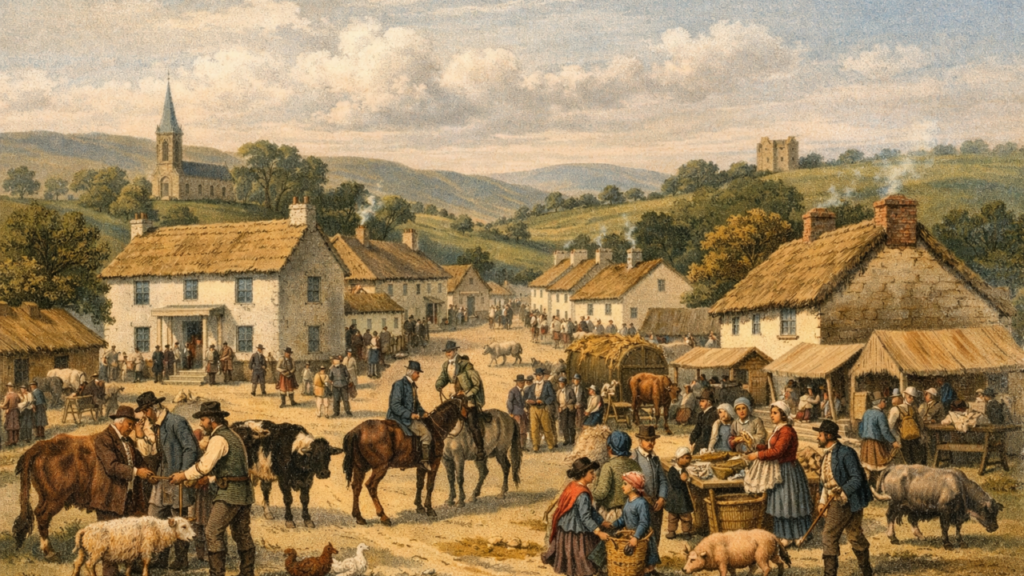
Lewis’s account shows Parkgate as a functioning rural village rather than a mere locality: it had a constabulary station, petty sessions on alternate Tuesdays, and fairs held four times a year 1. Those details place it within the everyday administrative and market network of early nineteenth-century Antrim. The village’s location is given as 4½ miles east of Antrim town, in Donegore parish and Upper Antrim barony, which matches the historical civil geography of the county 1.
The same county-wide Lewis volume also lists Parkgate among the larger villages of Antrim, reinforcing that it was recognised as a distinct settlement of some standing in the county’s settlement hierarchy 3. In other words, Parkgate was not just a road name or estate label: historical references treat it as a village with its own houses, population, policing, and fair days 13.
Name and identity
The historical evidence supports three points clearly. First, Parkgate was a real settlement, not a modern invention 1. Second, it belonged to county Antrim in historical administrative usage 1. Third, the name appears in sourced variants: “Park-Gate” in Lewis and “Parkgate” in the place-name authority record, with the Irish form Geata na Páirce 12. On that basis, the settlement identity and county assignment are well established, and the Irish form can be reported as a historically attested form rather than a speculative reconstruction 2.