

Settled Movement
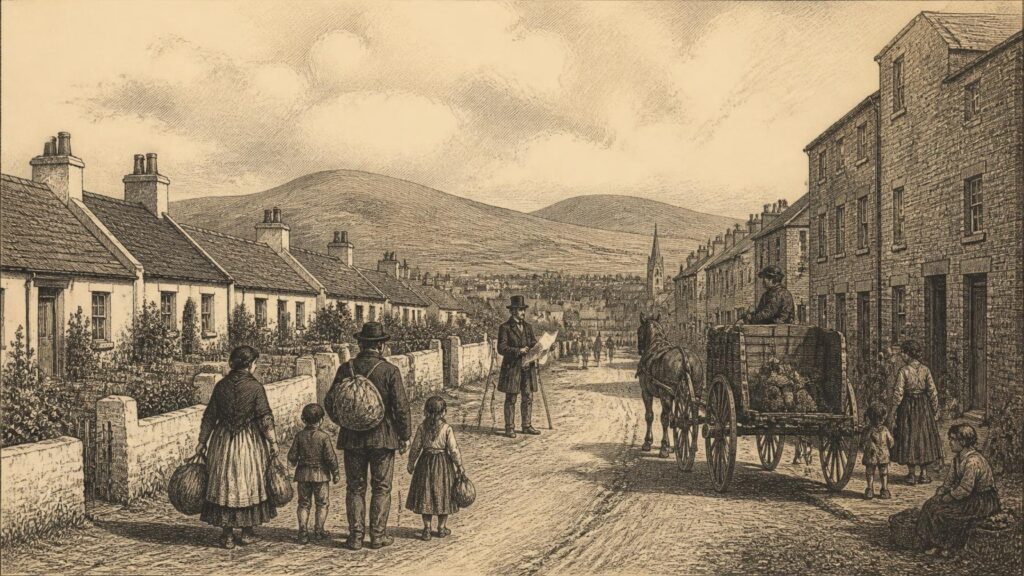
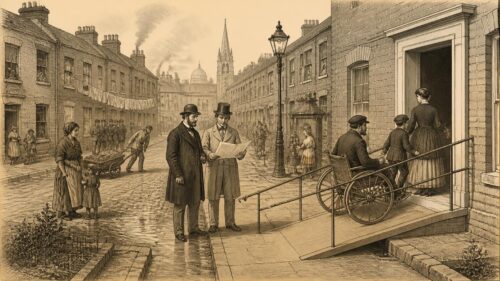
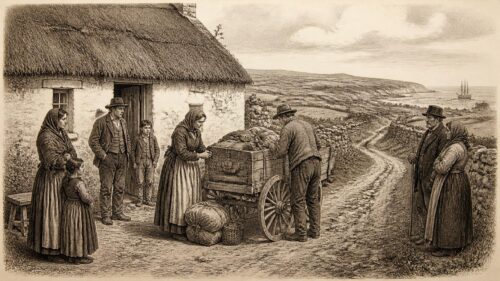
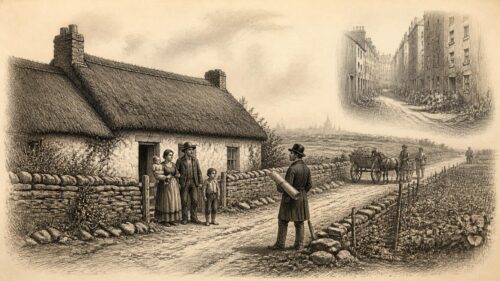
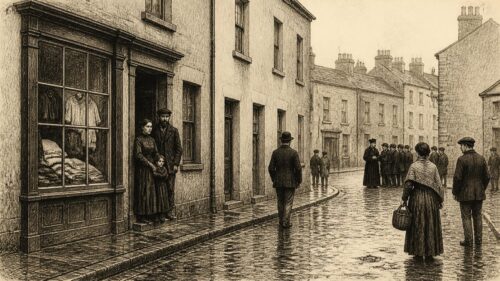
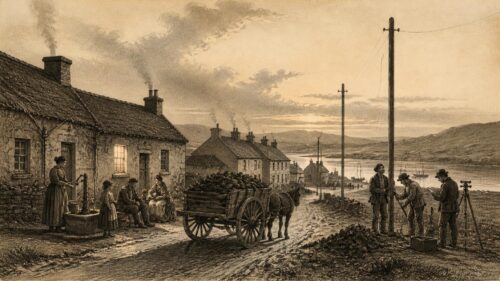
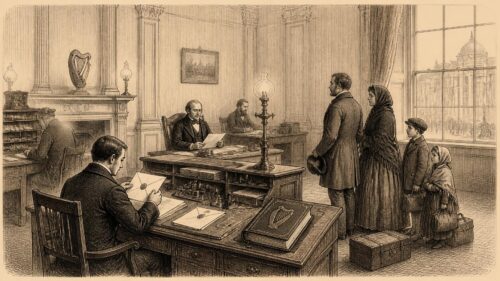
AI generated historical illustration, not a contemporary photograph.
At a Glance
Housing and migration have repeatedly tested the practical reach of government in Ireland. They have determined where people could remain, where they were compelled to leave, and whether public institutions could convert law, finance and land into habitable homes. The history is therefore more than a sequence of building schemes or population figures. It is a history of state capacity: of what authorities could survey, fund, regulate, construct and fairly distribute, and of the human consequences when they could not.
Framing Capacity
“State capacity” is a modern analytical phrase, but the underlying problem is an old one. A government may declare that housing is necessary, condemn unhealthy dwellings, subsidise construction or proclaim a wish to retain population. None of these declarations, by itself, builds a cottage, repairs a sewer, acquires a site or settles a family. Capacity consists in the less dramatic machinery behind policy: accurate knowledge of need, powers to obtain land, dependable revenue, credit, trained officials, local administrative bodies, builders and materials, and procedures that make decisions intelligible to those affected by them.
Ireland makes this relationship unusually visible because migration was not an occasional disturbance to housing policy but one of its permanent conditions. Over the nineteenth and twentieth centuries, people moved from small holdings, from congested districts and from towns with inadequate employment; many crossed the Irish Sea or the Atlantic. Others moved into Dublin, Belfast, Cork, Limerick and provincial towns. In the later twentieth century, suburban expansion redistributed population around the principal cities. Since the late 1990s, inward migration has added another dimension to demand, tenure and settlement. The housing question has therefore always been tied to who was leaving, who was arriving and who had the power to stay.
The evidence does not support a simple tale in which migration was caused by housing alone. Employment, landholding, family strategy, education, religion, transport and international opportunity all mattered. Nor did public housing always prevent movement: a house in one place could make departure from another more likely. Yet housing shaped the terms upon which movement occurred. A secure dwelling could anchor a household, while overcrowding, insecure tenure or the absence of new homes made movement more urgent. The history of Irish housing is consequently a useful way to examine how policy translated national aspiration into local life.
Rural Foundations
In nineteenth-century Ireland, housing policy emerged from a society in which rural poverty, agricultural labour and access to land were central political questions. The Great Famine transformed population patterns through death, eviction, consolidation of holdings and extraordinary outward migration. It would be misleading to reduce that catastrophe to a housing crisis: food failure, disease, political economy and inadequate relief were decisive. But the condition of rural dwellings and the insecurity of labouring households formed part of the wider landscape in which destitution was experienced. The Poor Law system could relieve distress, often through the workhouse, but it was not designed to create a settled supply of decent rural homes.
The Labourers (Ireland) Act of 1883 marked an important change. It gave rural local authorities a role in improving accommodation for agricultural labourers, with public finance and, where necessary, powers connected to the acquisition of sites. Later legislation extended and altered the scheme. What mattered historically was not simply the cottage as an object. The programme required an administrative chain: local investigation, a scheme, official approval, borrowing, construction, rent collection and maintenance. Rural housing was becoming a public responsibility mediated through institutions rather than an issue left wholly to landlords, employers, charitable bodies or individual households.
The scattered cottages built under the Labourers Acts were modest, but their significance should not be measured only against later urban estates. They provided separate dwellings, plots and a measure of domestic autonomy for households whose accommodation had often been insecure or poor. Research using the location of subsidised labourers’ cottages and long-run census evidence has made it possible to investigate their relationship to population change. Such work does not establish that every cottage halted emigration; historical causation is more complicated than that. It does, however, show that the distribution of housing policy can be studied as part of the geography of population retention and movement.
This was a distinctive form of capacity. The state did not need to direct every person’s occupation or destination in order to influence migration. It could alter the material conditions in particular districts: whether a labourer’s family had a sanitary home, whether a household possessed a garden, whether a local authority could borrow, and whether landowners or local interests could obstruct a scheme. The unevenness of provision is equally important. Capacity was never identical across the island. It depended on the energy of local bodies, the availability of sites, political pressure, finances and the practical ability to carry projects through.
Folklore and family memory often attach powerful meanings to cottage schemes: the new whitewashed house, the improved hearth, the garden, the distance from a former cabin or the authority of the inspector. Such memories are historically valuable as evidence of how change was understood. They should not, however, be treated as a substitute for the documentary record. The records reveal programmes, legislation and public expenditure; memory helps explain why a particular dwelling could become a symbol of dignity, independence or state intrusion. The two forms of evidence illuminate different aspects of the past.
Urban Distress
Urban housing exposed a different, and in some respects harsher, problem of state capacity. Dublin’s tenements became the best-known example, but unhealthy and overcrowded accommodation existed in other towns as well. Industrial and commercial change, the subdivision of older houses, low incomes and weak regulation created environments in which landlords, tenants, municipal authorities and public-health officials confronted one another. The issue was not merely that there were too few houses. There were also questions of sanitation, water, disease, ventilation, rents, inspection and the legal power to compel improvement or clearance.
The early history of municipal intervention demonstrates that housing policy in Ireland did not begin at independence. British legislation and local administration provided some tools before 1922, while Irish local politics shaped their use. Yet powers on paper were not the same as effective action. A council might identify an insanitary house but lack money for replacement dwellings. It might clear a site but confront resistance, high construction costs or uncertainty over rehousing. The removal of a bad dwelling could improve the city in aggregate while making an individual family’s position more precarious if no suitable alternative was available.
The Dublin housing inquiry of 1913 and 1914 supplied a forceful documentary account of grave conditions. Its importance lay partly in exposure, but exposure alone was not capacity. Detailed evidence could make neglect politically difficult to ignore; it could not by itself marshal finance, labour and land. The housing issue became intertwined with questions of public health, social order and citizenship. Contemporary observers often treated bad housing as a cause of moral or political disorder. That language reflected the assumptions of the age. A more cautious interpretation is that appalling living conditions made the limits of municipal and imperial administration plainly visible.
Housing also interacted with migration within Ireland. A city could attract people seeking wages, service employment, education or access to transport, even while possessing poor accommodation. Conversely, shortage and overcrowding could push households outward to lodging houses, relatives, peripheral districts or other countries. The relationship was not mechanical. A person who migrated to Dublin was not necessarily housed by the city, and a tenant forced from a tenement did not necessarily leave the city. Still, urban growth made allocation a central administrative problem: which households would be rehoused, on what terms, in which district and with what access to work?
The great historical lesson of the tenement era is that capacity must be judged by outcomes as well as institutions. Councils, boards, inspectors and statutes existed, but many working people remained in dangerous or degrading conditions. That failure should not erase the efforts of reformers, doctors, tenants and councillors. Rather, it explains why housing became such a politically charged measure of public authority. A state that could not secure safe dwellings near employment faced a credibility problem that no constitutional formula could wholly conceal.
National Beginnings
The creation of the Irish Free State in 1922 gave the new administration an immediate housing inheritance: inadequate urban dwellings, rural need, constrained finances and local institutions formed under the previous regime. The Provisional Government’s million-pound housing scheme was an early acknowledgement that the shortage required public action. The scale and social distribution of its results have been debated by historians, but the decision itself is revealing. Housing was among the first practical tests of a state trying to establish legitimacy amid political division, reconstruction and limited resources.
The new state had to choose between overlapping approaches. It could subsidise private building and owner occupation; it could assist local authorities to build rental housing; it could support rural reconstruction; it could regulate unhealthy property; or it could combine all of these. The choices were not merely technical. They expressed views about property, family life, class, public expenditure and the proper extent of government. The preference for owner occupation acquired particular force in independent Ireland. Ownership could be presented as security, respectability and national rootedness, though it also shifted risks and responsibilities towards households.
Historical scholarship identifies the 1920s as a period in which the state extended support for owner occupation while its finances remained precarious. That did not mean public provision disappeared, nor that ministers were indifferent to slums. It meant that the balance of policy often favoured assistance to those able to build, buy or borrow. Such assistance could enlarge the housing stock, but it did not necessarily reach the families in the worst accommodation. The distinction matters when assessing state capacity. A government can be capable of subsidising construction while being less capable, or less willing, to deliver secure homes to those with the least purchasing power.
Partition complicates any account of the period. Housing systems north and south developed within different political jurisdictions after 1921, although people, labour markets, family networks and older administrative practices did not cease at the border. This article concentrates on the institutions of the Irish Free State and its successor state. It does not assume that their experience represented the whole island. The contrast itself is historically important: political borders shaped the resources, laws and administrative routes through which housing and migration were addressed.
Documentary material from Dáil debates and official financial scrutiny reveals a state concerned with the detailed workings of subsidy. The questions could be prosaic—whether a dwelling qualified for support, how loan charges were calculated, or whether people displaced by clearance had been housed under the proper terms. Yet such details reveal the real substance of administration. Housing capacity was built not only in ministerial announcements but through accounting rules, legal interpretation and disputes between departments, auditors and councils.
Building Power
The 1930s are often remembered as a stronger phase of Irish state intervention in housing. The Housing Act of 1932 and associated financial arrangements enlarged the ability of local authorities to provide homes and to rehouse people displaced by clearance. Public support for loan charges was crucial. Local authorities could not sustain extensive building programmes simply by declaration; they needed a financial structure that converted future rental income, grants and borrowing into construction in the present.
The distinction between rehousing after clearance and what officials called normal housing was not a bureaucratic curiosity. It showed how policy ranked needs and assigned public subsidy. Official accounts from the period recorded different maximum rates of contribution depending on whether homes were provided for people displaced by the operations of a local authority. In other words, the state was not merely building houses; it was constructing categories of entitlement. A family’s route into a new dwelling could depend on whether an inspector, council and department regarded its earlier home as unfit and its move as a qualifying displacement.
That system could deliver substantial gains. University of Galway research on the development of the Irish housing system records a marked expansion in annual building after 1932 compared with the preceding decade. The programme addressed slums, created employment and demonstrated that a relatively young state could mobilise finance and administration at a scale previously difficult to attain. But success should not be romanticised. New estates could be distant from established work and kin networks; construction quality and cost could be contentious; allocation could be socially divisive; and local building capacity remained uneven.
The records of public accounts show why capacity is not synonymous with size. Even as schemes expanded, officials scrutinised whether grants had been calculated correctly, whether shops attached to dwellings were eligible for support, and whether the legal basis for payments was sufficiently clear. Such disputes may appear narrow beside the hardship of bad housing. They were nevertheless important. Public construction at scale depends on rules that can withstand audit. If grants are ambiguous, borrowing is misapplied or responsibilities are unclear, expansion may become politically vulnerable. Administrative competence can therefore protect housing programmes as surely as bricks and mortar do.
The period also reveals an enduring tension in Irish policy. State aid could be used both to provide rental homes and to encourage private ownership. These were not wholly opposed goals, but they served different populations and produced different long-term obligations. Rental housing required continuing management, repair and allocation. Ownership support could lessen direct public responsibility after construction, while making households dependent on incomes, credit and property values. The eventual predominance of owner occupation was not simply a cultural preference; it was helped by repeated institutional choices about subsidy, finance and public provision.
Departing Citizens
Independence did not end emigration. This was among the most sobering demonstrations of the limits of national capacity. The aspiration that political self-government would permit people to remain at home confronted an economy in which employment was insufficient for many young adults, particularly in rural districts. Housing could improve a household’s conditions, but a cottage could not by itself create a viable livelihood. The connection between housing and migration must therefore be kept in proportion: inadequate homes mattered, yet employment and income remained fundamental.
Seasonal migration to Britain offers a particularly sharp example. In the late 1930s, official inquiry followed the deaths of ten workers from Achill in a bothy fire at Kirkintilloch in Scotland. The episode exposed the vulnerability of people who travelled for agricultural work and lived in employer-linked accommodation beyond the jurisdiction of the Irish state. Irish authorities could investigate and protest, but they could not directly regulate housing conditions in Scotland. The tragedy demonstrates a hard boundary of capacity: a state may be answerable to its emigrants in a moral or political sense while lacking legal authority over the places where they work and sleep.
The scale of emigration in the 1950s was especially striking. University College Cork’s historical survey estimates that roughly half a million people left the Republic during that decade, when its population was below three million. Such figures are not simply demographic data. They suggest the depth of the imbalance between household formation and opportunities at home. Young people left not because every Irish dwelling was inadequate, but because steady employment, independent households and the prospect of a settled adult life could appear more attainable elsewhere.
Housing policy nevertheless formed part of the background to this departure. A young couple’s ability to establish a household was shaped by available homes, credit, land, rents and proximity to work. Rural housing schemes could improve standards, but they could also stabilise settlement patterns in areas with limited employment. New urban houses could relieve overcrowding, but if industrial growth was weak they could not absorb all potential workers. The state’s housing and economic capacities thus had to operate together. Failure in either sphere could reinforce emigration.
There is a temptation to treat emigration as evidence that every domestic policy failed. That would be too simple. Public housing, health measures, education and infrastructure improved many lives even in decades of large departures. The more defensible interpretation is that emigration exposed the limits of gains that were real but uneven. Ireland could build homes and improve dwellings; it could not always create sufficient local opportunity to make staying an attractive choice. The history cautions against measuring housing policy solely by national totals. Where homes were built, who occupied them and what work lay within reach mattered equally.
Suburban Shifts
From the mid twentieth century, housing became a principal instrument in reshaping Irish cities. Clearance of old inner-city accommodation and the construction of suburban estates moved many households outward. In Dublin especially, this process improved space and sanitary conditions for numerous families, while also altering access to employment, schools, shops, transport and extended kin. A new house could represent liberation from a tenement room; it could also place a household at a distance from the social and economic networks that had sustained it.
This was internal migration organised, in part, by public policy. Rather than merely responding to spontaneous movement, the state and local authorities influenced where population would live through land acquisition, estate design, allocation rules and transport decisions. The capacity required was broader than housing construction. It included roads, buses, water, drainage, schools and community facilities. When these followed slowly, residents experienced the gap between a completed house and a functioning neighbourhood.
The 1960s brought wider planning ambitions and a more developed policy apparatus, but growth also exposed new pressures. Academic accounts of Irish housing identify weak regulation of development land and community provision as factors in rising prices and uneven suburban growth. The issue was not that public intervention vanished; rather, public action, private construction and mortgage finance were being recombined. Housing increasingly linked local government decisions to land values, lending institutions and the expectations of owner occupiers.
Rural settlement changed too. Improved roads, rising car ownership and employment centred in towns and cities allowed more people to live at a distance from their work. Some were local households; others were returnees or in-migrants. The result was not a simple rural revival. New dispersed housing could sustain population in particular places, but it also placed demands on roads, water, schools and planning systems. Migration and housing were once again testing whether public authority could coordinate settlement rather than merely react to individual applications.
Interpretation is necessary here. Suburbanisation should not be described only as a policy failure or only as social progress. For many families, a modern suburban house marked a profound improvement. For public institutions, however, it created long-term responsibilities that were sometimes underestimated. State capacity is cumulative: every decision to approve or build housing creates future demands for maintenance, transport, amenities and environmental management. The apparent solution to one generation’s overcrowding can become the next generation’s planning challenge.
Changing Arrivals
By the late twentieth century, the older image of Ireland as solely a country of departure had become inadequate. Emigration did not disappear, but economic change, return migration and inward migration made the population more diverse. University College Cork’s research notes the unprecedented scale of immigration from the late 1990s, particularly after European Union enlargement in 2004. This did not create Ireland’s housing difficulties from nothing. It did, however, bring demographic change into a system already shaped by high ownership, a reduced direct building role for the state and increasing reliance on markets.
The shift matters historically because housing institutions had been designed through earlier assumptions about household formation and population movement. A state accustomed to losing young adults had to adapt to new residents requiring rental accommodation, schools, services and routes into settled communities. The language of “capacity” becomes especially important at this point. It is not enough to say that more people require more homes. Authorities must also know where population is growing, distinguish temporary from durable demand, provide infrastructure and administer eligibility without turning housing allocation into a mechanism of exclusion.
During the later twentieth century, policy moved away from the expansive socialised system of home ownership supports described by UCD researchers and towards more market-oriented housing and mortgage arrangements. That history helps explain why later rapid demand met a constrained public supply. The point is not that markets are incapable of producing homes, nor that every earlier public scheme was successful. It is that a system relying heavily on private credit, land markets and developers has a different capacity profile from one in which public bodies retain land, construction expertise and a large direct building role.
The severe boom and bust of the early twenty first century made those differences unmistakable. Construction activity can be abundant without producing affordable or appropriately located homes for all households. Conversely, after a downturn, empty or unfinished developments do not automatically provide secure housing where jobs and services are concentrated. These are historical observations rather than a claim that one policy instrument solves every shortage. They underline a persistent Irish lesson: housing numbers, tenure, place and administrative access must be considered together.
Migration has sometimes been invoked in public debate as a simple explanation for housing pressure. Historical evidence suggests caution. Population change affects demand, certainly, but shortages also reflect the accumulated decisions of planning, finance, land management, public building and tenancy regulation. To attribute housing difficulty solely to newcomers repeats an old error: confusing a visible pressure with the institutional conditions that determine whether a society can respond. A historically informed account treats migration as one component of demand, not as an excuse to avoid examining policy capacity.
Institutional Lessons
The Irish record offers no single formula, but it does reveal several durable principles. First, housing capacity is local as well as national. Central government can legislate, borrow and subsidise, but homes are built on particular sites and allocated through particular councils or agencies. The nineteenth-century cottage schemes, the clearance programmes of the twentieth century and later suburban growth all depended on the ability to make national resources effective in specific places.
Second, capacity requires continuity. Housing takes longer than an electoral cycle. Land assembly, water and drainage, design, construction, allocation and maintenance cannot be improvised when a crisis becomes politically visible. The stronger Irish building phases show what public finance and administrative commitment could accomplish. Their weaknesses show that speed alone is not enough. Quality, location, transport and long-term stewardship are part of the same task.
Third, the history distinguishes evidence from aspiration. Governments have repeatedly announced goals of better homes, stronger communities or population retention. Documentary sources allow historians to ask harder questions: what legislation passed, what loans were made, how many homes were actually completed, who was eligible, what objections emerged and what conditions followed? This discipline also guards against nostalgia. The rural cottage, the suburban estate and the owner-occupied house can each be remembered fondly, but each belonged to systems with exclusions, costs and trade-offs.
Finally, housing policy cannot be detached from movement. People leave when prospects narrow; they arrive where work, safety or family connection exist; they move internally when homes and employment are unevenly distributed. The state does not control all of these decisions, and it should not be imagined to possess such power. Its responsibility is more practical and more demanding: to ensure that movement does not translate into avoidable homelessness, overcrowding, exploitation or exclusion, and that the wish to remain in a community is not defeated merely by the absence of a decent home.
Irish history shows both ambition and constraint. It records rural cottages that altered the texture of labouring life, public schemes that replaced intolerable dwellings, and administrative systems capable at times of building at scale. It also records persistent emigration, uneven regional development, incomplete infrastructure and recurrent shortages. The central lesson is not that the past supplies a ready-made model. It is that housing reveals the state in action. Where institutions can join land, finance, construction and fair access, they make settlement possible. Where they cannot, migration becomes not merely a personal choice but a measure of public limitation.
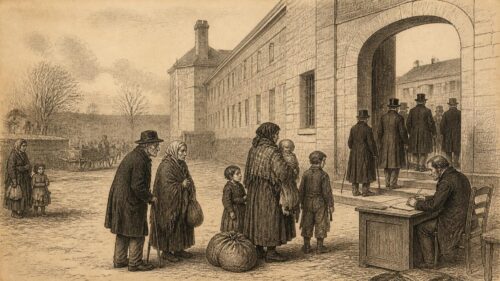

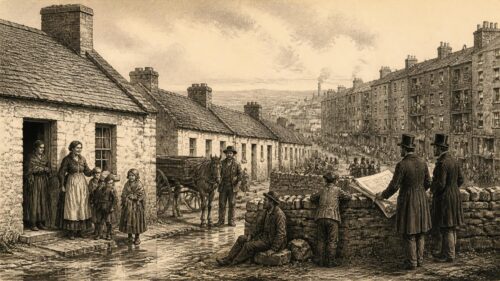
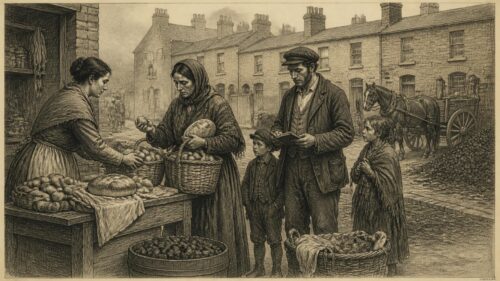
One striking theme is the article’s distinction between expanding housing provision and equitable state capacity. Irish governments could finance cottages, clear slums or promote ownership, yet allocation rules, local administrative variation and distance from employment left vulnerable households poorly served. Migration further complicates the picture: improved housing might anchor families, but could not compensate for limited livelihoods or protect seasonal workers abroad. This suggests that housing policy should be judged not only by numbers built, but by whom it enabled to remain connected to work, community and dignity. How should historians weigh construction totals against uneven social and geographical outcomes?