

Wired Homes
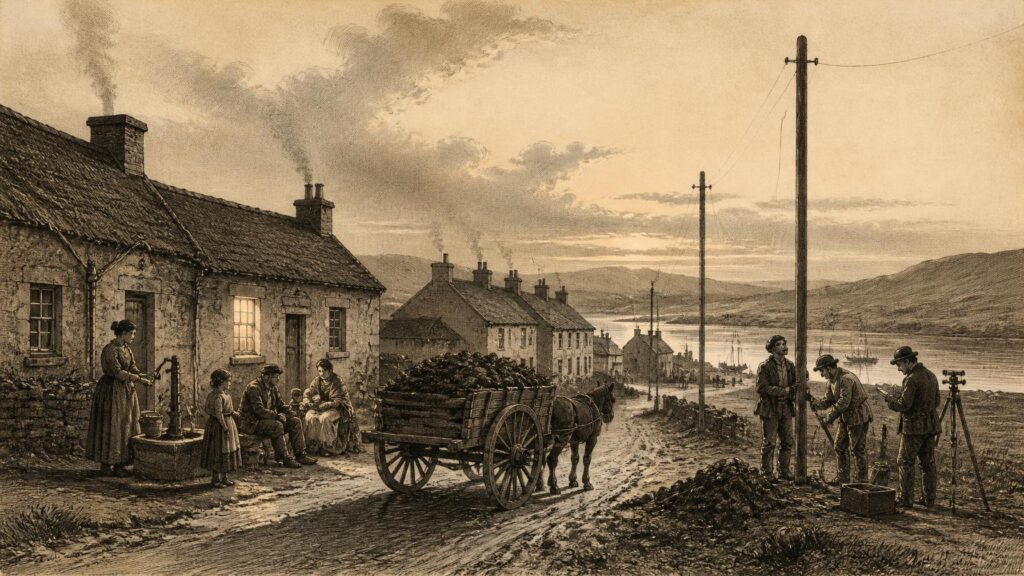
AI generated historical illustration, not a contemporary photograph.
At a Glance
In modern Ireland, warmth, light, hot water and the possibility of private domestic life are often treated as ordinary facts of a house. Historically, they were achievements contingent upon building standards, public finance, fuel, wires, pipes, labour and confidence in institutions. The story of housing energy and public trust is therefore not simply a tale of technical progress. It is an Irish history of unequal access, collective persuasion and the slow remaking of what a home could reasonably be expected to provide.
Domestic Foundations
A house is never merely a roof and four walls. It is a place in which fuel is stored, water is carried or pumped, food is cooked, children are washed, clothes are dried, illness is managed and darkness is made tolerable. In Ireland, as elsewhere, the historical quality of domestic life depended as much on services as on structure. A dwelling with sound walls but no dependable water, sanitary provision, heat or light could not offer the security later associated with the word “home”.
This point matters because Irish historical discussion has often separated housing from energy. Housing may be described in terms of overcrowding, rents, tenements, cottages, council estates or ownership; energy, meanwhile, may appear as a history of the Shannon Scheme, peat stations, imported coal, oil or electricity. Yet in everyday life these subjects were inseparable. The range, hearth, lamp, pump and later the electric cooker or immersion heater belonged to the same domestic economy. They shaped labour, expenditure, health and the distribution of authority within households.
The 1946 Census of Population provides unusually clear documentary evidence of this interdependence in the twenty-six counties. Its volume on housing and social amenities recorded water sources, sanitary facilities and baths as well as the condition and size of dwellings. The figures reveal a country in which urban and rural domestic provision differed sharply. In aggregate rural areas, only a small minority of private dwellings had a piped supply laid directly to the house; wells, pumps, streams and other sources remained central to daily life. This was not a minor inconvenience. It meant repeated physical work, uncertainty in dry weather and practical limits upon washing, cooking, cleaning and animal husbandry.
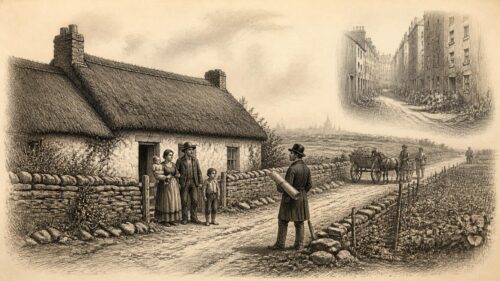
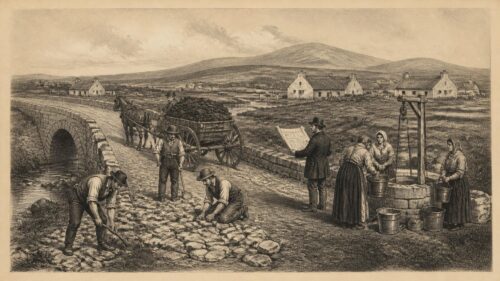
Such evidence also corrects a tempting retrospective picture of a uniformly self-sufficient countryside. Turf cutting, carrying water and tending a solid-fuel range could be represented as familiar rural custom, and many people remembered the skills and sociability associated with them. But familiarity should not be confused with ease or free choice. The absence of a public service placed costs in time and bodily effort upon individual households. Those costs were frequently borne by women and children, whose work was less likely to appear in official financial accounts.
Public trust entered this domestic world long before electricity reached a gate or a kitchen wall. Tenants had to believe that a council house would be better than the accommodation it replaced. Ratepayers had to accept that public money might be used for drainage, roads, water and building. Householders had to believe that a new connection, appliance or installation would make life more manageable rather than impose an unbearable charge. Trust was practical: it rested on what happened at the tap, the fire, the meter and the rent office.
Municipal Ambitions
Irish public housing did not begin with the independent State, nor was it solely a response to a single national programme. Under the nineteenth-century Poor Law and later local-government arrangements, public authorities gradually acquired responsibilities extending beyond relief into sanitary matters and housing. The structures of government were imperfect, unevenly resourced and shaped by British administration, but they established an important principle: living conditions could be a legitimate public concern.
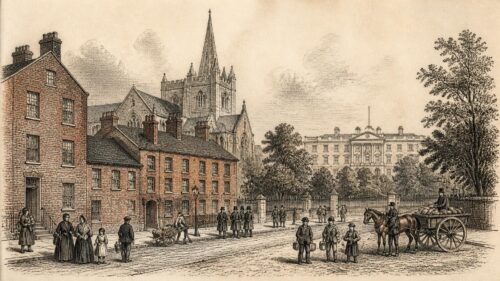
After independence, the Free State inherited acute problems. Housing shortages, poor-quality cottages, overcrowded urban accommodation and deficient services were not new, but the legitimacy of the new institutions was tested by their capacity to improve them. The Department of Local Government and Public Health placed housing expansion, infrastructure and town planning among its central concerns during the 1920s and 1930s. That administrative history is significant. It demonstrates that the State’s claim to competence was made not only through constitutional language or national ceremony, but through drains, roads, building loans and the supervision of local authorities.
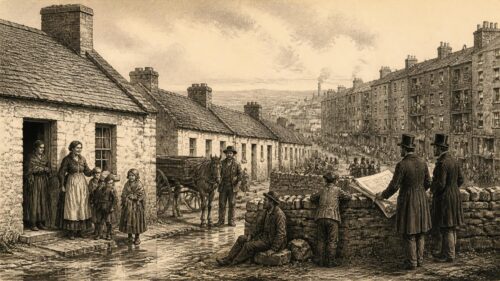
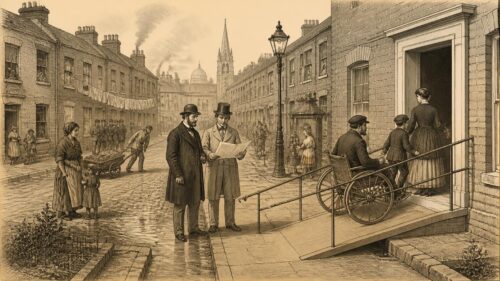
Council housing was especially important because it offered a visible form of public promise. A new terrace, cottage or estate could embody an assertion that a family deserved more rooms, a yard, better sanitation and a measure of security. In many towns, the move from older housing into municipal accommodation was an event remembered across generations. The surviving record from Navan, for example, documents a sustained programme in which the urban district council built more than 300 houses between 1900 and 1940. Such local cases should not be treated as a complete national pattern, but they show how public provision altered the townscape and the lives of tenants.
It would nevertheless be misleading to portray every council scheme as an uncomplicated triumph. Public housing could be constrained by finance, land availability, construction cost, eligibility rules and the administrative habits of its time. Houses varied considerably in size, finish and location. Tenants could encounter repair difficulties, rent pressure or the stigma that sometimes accompanied public assistance. The historical evidence supports the conclusion that local-authority housing enlarged the stock of secure and comparatively decent homes; it does not support an idealised account in which every household received equal comfort or equal voice.
Energy provision exposed this tension particularly clearly. A new house with a range and a better layout might reduce hardship, but the range still required fuel. A piped water supply was valuable, but water within the house often depended upon pressure, pumping and maintenance. A home might be brighter and cleaner than the dwelling it replaced without being electrified. Public trust therefore developed in layers. The State and local authority could win confidence by delivering visible improvements, yet expectations grew with every improvement. Once a household had a better house, it could reasonably ask why it lacked services available elsewhere.
National Current
The foundation of the Electricity Supply Board in 1927, and the construction of the Shannon hydroelectric scheme at Ardnacrusha, gave this question a distinctly national form. The project was among the most ambitious undertakings of the early State. Its significance lay not only in generating power but in establishing the idea of a national electricity system under public control. When ESB began supplying urban areas from the Shannon network in 1929, electricity became associated with a new administrative capacity: the State could plan, build and operate an essential modern service.
This association should be stated carefully. The Shannon Scheme did not immediately make electricity universal, and it did not abolish disparities between towns and country districts. Nor did the existence of a public utility remove all anxiety about charges or service. Still, the institutional arrangement mattered. In place of a patchwork of local and private undertakings, the ESB offered a national framework. That framework enabled later expansion and made an increasingly powerful claim that electricity was not merely a commercial commodity for prosperous centres, but a public utility with social consequences.
During the Emergency, that claim met the constraints of a small and vulnerable economy. Imported coal and oil were scarce; dry conditions could reduce hydroelectric generation; consumers were urged to conserve power. ESB publicity moved away from the easy language of electrical abundance and towards restraint. Historical advertising material records warnings against waste, peak-period restrictions and, in some circumstances, disconnection for consumption beyond the permitted ration. This is an important reminder that public trust is not identical with public approval. A trusted service may still ask households to endure restrictions, but it must explain why those restrictions exist and apply them with an intelligible sense of fairness.
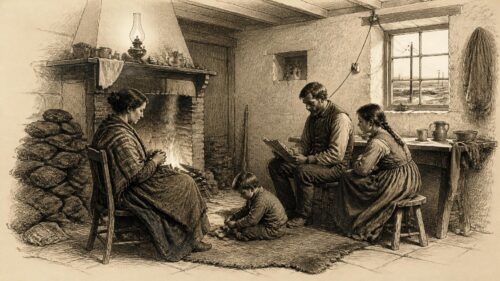
The Emergency also sharpened awareness of the household’s dependence on fuel. Solid fuel and turf were not simply inherited habits; they were indispensable resources where electricity was limited and imported alternatives were insecure. The domestic range could heat a room, boil a kettle and cook a meal, but it also demanded constant tending, cleaning and supply. For rural families especially, fuel production and collection formed part of the annual rhythm of work. The later promise of electricity was powerful partly because it appeared to relieve these burdens, even though electric power did not make traditional fuels disappear overnight.
The documentary record should not be read as proof that all households regarded electricity in the same way. For some, the electric light alone held great appeal. For others, the economic value of a motor, pump, milking equipment or refrigeration was more persuasive. For women carrying water or managing a range, the prospect of hot water and a cleaner cooker could have immediate importance. These different priorities help explain why the State’s electrical project had to be sold, demonstrated and discussed rather than merely announced.
Rural Persuasion
The Rural Electrification Scheme, launched in 1946, was the decisive meeting point of housing, energy and public trust in mid-century Ireland. ESB divided rural Ireland into 792 areas, generally around parish-scale communities, and developed the scheme in phases. The network required an immense physical effort: poles, lines, transformers, survey work, wiring and skilled labour. By the mid-1960s, more than 50,000 miles of line had been erected and over one million poles installed. The scale of this work was real, but its human meaning rested on the households which elected, or were able, to connect.
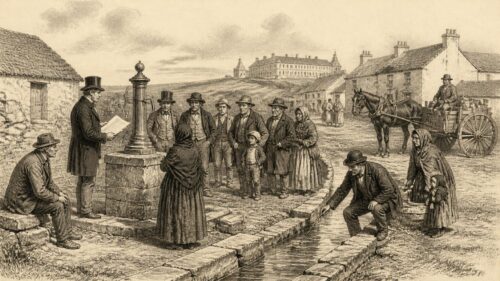
The project was not a simple gift delivered to passive recipients. ESB Archives material shows that enrolment was a community affair. Staff and volunteers canvassed areas, organised demonstrations and exhibitions, and explained probable charges. In some places, voluntary organisations, clergy and local organisers helped make the case. The well-known switch-on ceremonies, often involving a priest, a public gathering and the lighting of homes at dusk, were carefully staged moments of communal recognition. They transformed a technical connection into evidence that a district had joined a wider national settlement.
Persuasion was necessary because the benefits were prospective while the costs were immediate. The prospective customer had to sign an application, accept wiring requirements and contemplate a fixed charge as well as payment for use. In the Aghabullogue material preserved by ESB, volunteers measured houses and outbuildings and provided rough estimates. The fixed charge became a stumbling block for some households. Such evidence is valuable because it resists a simplified narrative of universal eagerness. People could desire electricity while remaining unable or unwilling to commit to its price.
Dáil debates confirm that economics structured the roll-out. In December 1948, a question concerning Milltown in County Kerry received the answer that the area had not been selected because the ratio between estimated fixed-charge revenue and network capital cost was insufficient. The language is bureaucratic, but its meaning was direct: remoteness and low prospective return could delay access. That was a source of understandable frustration. A national system created expectations of inclusion, while its early planning still ranked places according to cost and anticipated demand.
The rural scheme therefore depended on a difficult bargain between universal aspiration and financial calculation. Government subsidies altered the bargain over time. The subsidy was withdrawn in 1955, restored in 1958 and increased for a period in the early 1960s. ESB then made an intensive effort to reach unconnected houses through what it called Planned Post-Development. These changes show that rural electrification was not a single completed act in 1946. It was a prolonged negotiation over who would be connected, on what terms and at what public cost.
Trust grew where that negotiation produced a service households could use. Electricity made possible electric pumps, lighting, refrigeration, washing equipment, cooking appliances and farm machinery. It extended the working day but also reduced certain forms of drudgery. ESB’s 1957 film More Power to the Farmer presented these benefits in emphatically optimistic form: it contrasted hand washing, water carrying and manual farm work with electrical appliances, pumped water and mechanised tasks. As publicity, the film cannot be treated as neutral social observation. Yet its persuasive themes reveal the practical hopes on which the programme relied.
The strongest historical interpretation is not that electricity automatically liberated everyone, but that it changed the material choices available within households. A light bulb did not settle questions of income, migration, gender or care. An electric cooker required an appliance, a sound installation and money for current. A pump required a water source and pipework. Nevertheless, electricity created conditions in which later domestic expectations became imaginable. The home could become a serviced space rather than a place organised wholly around daylight, hand labour and the range.
Water Labour
Water provides perhaps the clearest bridge between housing and energy. The 1946 census recorded that, across all private dwellings, less than one-third had an individual piped water supply laid on to the dwelling. In rural areas the proportion was far smaller. Private wells were the dominant category, while public pumps, private pumps, streams and miscellaneous sources supplied the remainder. Such numbers should be approached with care: they classify water sources, not the full experience of access, quality, distance or reliability. Even so, they establish beyond dispute that many homes remained outside the standard later assumed to be normal.
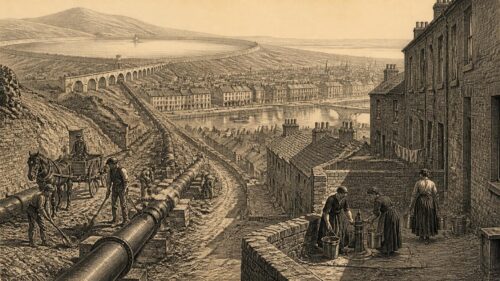
The work of carrying water was domestic infrastructure performed by people. It could involve repeated journeys in all seasons, the lifting of heavy containers and the management of limited supplies. It affected bathing, laundering, food preparation and hygiene. In farm households it also connected the domestic sphere to animal care and dairying. The availability of electric pumping therefore had implications beyond convenience. It enabled water to move into, or closer to, homes and farmyards; it also helped make group water schemes more feasible.
ESB’s role in group water schemes illustrates how public bodies could reinforce one another. Archive material records the utility’s provision of surveys, drawings and connections for electric pumps, while local groups, councils and central departments contributed to planning and delivery. This was not an entirely centralised model. Communities organised collectively, but their efforts relied on technical capacity and public support. The arrangement offers a historically grounded example of trust as cooperation: householders had to work with neighbours and institutions, while institutions had to show that they would not abandon communities after initial promises.
Advertising from the period naturally framed the electric pump as a release from water carrying. That message was commercially useful to ESB and socially meaningful to many households. It also reflected assumptions about gender. Promotional images and demonstrations often addressed women as managers of the modern home, while material aimed at men stressed farm efficiency, output or savings. The division was not absolute, and individual experience cannot be recovered from advertising alone. But the distinction indicates that electrification entered homes already structured by unequal expectations of labour.
Public housing and public energy came together in this regard. In local-authority estates, better layouts and services could alter the domestic routine more quickly than in isolated rural houses. ESB’s mid-century pamphlet on electricity in local-authority housing celebrated roomier houses, improved services, planned sites and increased construction. Its language was promotional, but it identifies a shared ambition between utility and council: to make new homes capable of supporting a newer pattern of life. The energy system was being presented as part of housing quality, not an optional addition.
Uneven Access
It is important not to mistake a national programme for immediate equality. Rural electrification was extensive, but the last and most expensive connections remained difficult. Parliamentary records from the early 1970s acknowledged that certain households faced special charges so high that supply was impracticable. In those cases, grants towards bottled-gas installations could be offered as an alternative. This was a humane recognition of exclusion, but it also makes the limitation plain: the substitute did not provide the same range of uses as an electrical connection.
The issue persisted beyond the celebrated early decades of the scheme. By 1990, an Oireachtas committee was told that some farmhouses still lacked electricity or lacked a supply adequate for modern requirements. The surviving discussion distinguished between domestic supply and the needs of farm enterprises, but the distinction itself is revealing. In rural Ireland, a house and a farm were often physically and economically entangled. A service sufficient for a light and kettle might be inadequate for milking equipment, machinery or a developing agricultural business.
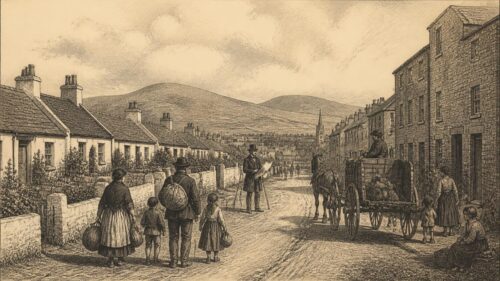
These cases are not marginal to the history; they explain why public trust could never rest upon national rhetoric alone. The residents of remote areas judged the public system by whether it reached them at a bearable cost. A scheme designed around revenue and capital ratios could appear rational from the centre and unfair at the edge. The tension was not unique to electricity. It is a recurring problem in the provision of water, transport, communications and housing: equal citizenship establishes a moral claim, while dispersed settlement makes equal service expensive.
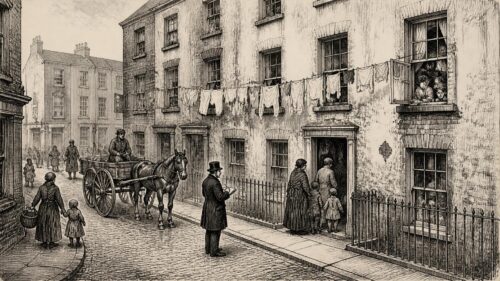
Neither should urban housing be romanticised as fully secure or modern. The 1946 census recorded substantial variation in the availability of piped water, baths and sanitary facilities between towns and the countryside, but towns also contained overcrowding and aged housing. The provision of council homes did not erase private renting, insecure tenure or poor-quality accommodation. Housing policy repeatedly had to balance new building against repairs, land costs, rents and the needs of families not easily accommodated by standard schemes.
The historical lesson is that material improvements can increase, rather than end, public expectations. Once electric light, indoor water or a fixed bath became visible in neighbouring houses, their absence became more difficult to accept. The service itself created a benchmark of fairness. This is one reason why infrastructure has such political force. It is experienced privately but evaluated comparatively. The householder measures public promises against the home next door, the town nearby and the national language of equal treatment.
Public Accounts
Trust requires more than access. It also requires confidence that public money is being used honestly, competently and with an intelligible purpose. The history of Irish electrification contains this dimension from the beginning. The construction of a national network required large capital expenditure, technical expertise and long-term planning. Rural expansion needed subsidies because many connections could not be justified by immediate commercial return. Public ownership did not remove the need for scrutiny; it made scrutiny central to the system’s legitimacy.
Oireachtas debates and committee records preserve the language of that scrutiny. Deputies asked why particular areas had not been chosen, challenged estimates of cost and raised the position of households unable to meet connection charges. Later committee discussions examined the accounting treatment of advances made for rural electrification and the continuation of subsidy. These records are not a complete measure of public opinion, but they are documentary evidence that electricity was understood as a political and financial responsibility rather than a purely technical undertaking.
There is a broader historical significance here. Public trust did not arise because the State was always efficient or because citizens were incapable of criticism. It arose, where it did arise, because there were recognised channels through which deficiencies could be named. A family could complain to a canvasser, a community could organise a re-canvass, a representative could raise a question, and officials could be required to account for their decisions. These mechanisms were imperfect and their outcomes uneven, yet they gave practical form to the idea that essential services should answer to the public.
The ESB’s own demonstrations deserve the same double reading. They were instruments of salesmanship, designed to encourage demand and appliance purchase. They were also forms of public education in a country where many prospective consumers had little experience of electrical equipment. Demonstrators explained cooking, pumps and household appliances; mobile vans brought unfamiliar technology to local communities. The process could be patronising in its assumptions, particularly about women’s domestic roles, but it also addressed a genuine gap between the arrival of wires and the confident use of power.
Consequently, trust was made through competence as much as through sentiment. A connection had to work. Bills had to be understandable. Installations had to be safe. Promised benefits had to be visible in ordinary routines. National pride could accompany these outcomes, but it could not substitute for them. The famous image of rural electrification as a quiet revolution is powerful precisely because the change was registered in quiet places: the kitchen, dairy, washhouse, yard and bedroom.
Memory Evidence
Memories of first electric lights, switch-on ceremonies and the replacement of hand-carried water remain an important part of Irish local history. They communicate astonishment, relief and pride that tables cannot capture. An account of a village hall celebration or a child seeing an illuminated kitchen for the first time may express the emotional scale of a technical change. Oral testimony also preserves details about social relationships: the neighbour who helped with wiring, the organiser who canvassed reluctant households, or the family that delayed connection because the charge seemed too high.
But memory has limits. It may compress years of gradual change into one symbolic evening, attach later comfort to an earlier date, or generalise from a household whose experience was unusual. Folklore is especially likely to turn major infrastructure into stories of instant transformation. Such stories are not worthless; they reveal how communities chose to remember modernisation. They should, however, be distinguished from documentary evidence such as census tables, ESB records, local-authority minutes and parliamentary debate.
The documentary record supports several firm conclusions. Electricity reached urban areas from the Shannon network from 1929. The rural scheme began in 1946 and was organised across 792 areas. Connections were promoted through community activity and demonstrations. Charges and expected revenue influenced selection. Water provision remained highly uneven in 1946, particularly in rural areas. Local authorities were important providers of social housing over a long period. These facts establish the framework within which personal memories can be understood.
Interpretation begins when historians ask what the framework meant. It is reasonable to conclude that rural electrification strengthened confidence in public capacity because it made a national institution tangible in households previously outside the electrical network. It is equally reasonable to conclude that exclusion, delay and high charges weakened that confidence in particular places. Those are interpretations drawn from evidence, not claims that every citizen held the same view. The surviving sources do not permit such unanimity.
Lasting Lessons
The historical connection between housing, energy and public trust remains instructive because it shows that domestic infrastructure is never merely domestic. A cold or poorly serviced house can expose wider failures of planning, investment and distribution. Conversely, a reliable light, pump or heating system can make public institutions appear present and useful in ordinary life. The Irish experience demonstrates that the credibility of a public promise is measured not only in national statistics but in the burden removed from a household.
It also warns against easy nostalgia. The solid-fuel range and the water bucket belonged to patterns of resilience, skill and family life, but they could also signify constrained choices and arduous labour. The all-electric home promised cleanliness and ease, but it introduced bills, dependence upon a network and new forms of consumption. Neither older self-provision nor newer public service was free of cost. Historical understanding requires attention to who bore those costs, who could choose between options and who was left outside the prevailing standard.
Above all, the history suggests that trust is built through a sequence of ordinary proofs. Institutions must acknowledge unequal conditions, explain unavoidable costs, invite public participation, deliver competent service and make correction possible when a scheme fails to reach people fairly. Rural electrification succeeded as a lasting national memory not because every difficulty vanished, but because a very large number of households eventually experienced a material change that had previously seemed remote. Wires, houses and water systems became part of the social contract.
That contract was neither automatic nor complete. Its history is one of local authority, public enterprise, household calculation, voluntary effort and political argument. To remember it properly is to recognise that a secure home depends upon infrastructures which must be maintained, financed and trusted. In Ireland, the passage from lamp and range to a serviced dwelling was not simply a march of technology. It was a contested public achievement, made credible whenever the promise of modern living reached the kitchen door.
The article usefully presents trust in electrification as a practical bargain rather than an abstract feeling: households judged public provision through charges, reliability, water access and reductions in labour. Particularly striking is the tension between the national promise of inclusion and decisions that delayed costly rural connections, leaving remoteness visible. This suggests that infrastructure can create expectations even while distributing benefits unevenly. The comparison between electrification and group water schemes raises questions whether collective organisation strengthened or compensated for state provision. How should we assess the roles of affordability, community action and public responsibility in creating services in mid-century Ireland?