Currach Heritage
At a Glance
Museum Record
The museum record places the currach project on Inis Oedrr in 1968, where a two-person team documented Michael Conneely building a boat for the national collection. The material identifies him as a carpenter, farmer, and currach builder from West Village. It also says Ciare1n Baire9ad recommended him after the museum sought advice on who could build a traditional Irish currach for the collection. [2][6]
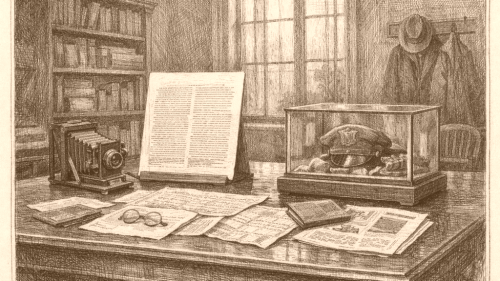
Another museum page states that the team travelled to Inis Oedrr aboard the Naomh c9anna ferry and spent eight days recording a 19-and-a-half-foot, three-man currach complete with mast and sail. The same page says curator John OdSullivan and photographer Brendan Doyle recognised a vanishing skill and left a significant, complete record through photographs, footage, notes, correspondence, and the finished boat itself. [2][6][8]
Building Process
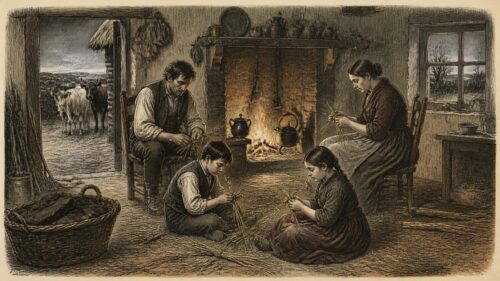
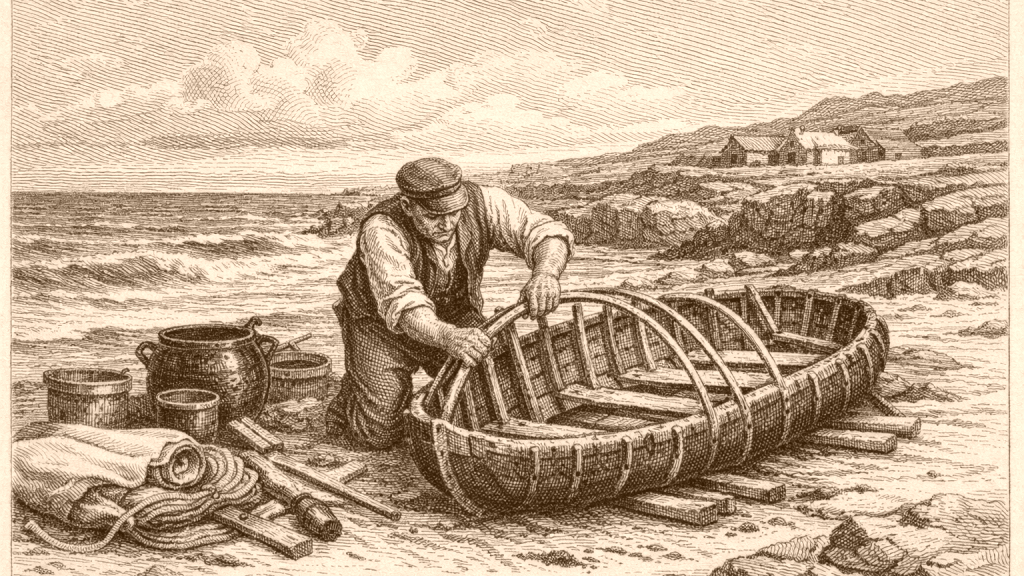
The step-by-step account begins with twenty-nine oak ribs crossing under the seats, forming a shell with the laths. It says Mikey pared and planed the ribs before placing them in a trough, covering them with straw and a sack, and adding boiling water so they would soften and bend into arches. The passage then describes the ribs being fitted into the lower gunwale and lower shoulder. [4][6]
The same account says Mikey measured half the distance of a seat to place the centre lath and used twenty deal laths on this currach, each nailed to the ribs. It then describes measuring and cutting canvas strips, sewing them into a made-to-measure skin, reinforcing the bottom frame with tarred canvas, and coating the inside and outside with tar because canvas is not waterproof. The build ended with the skin pulled tight and nailed in place. [4]
Working Boats
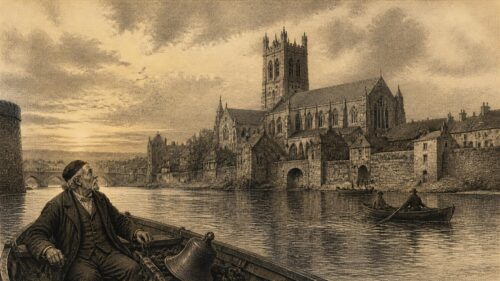
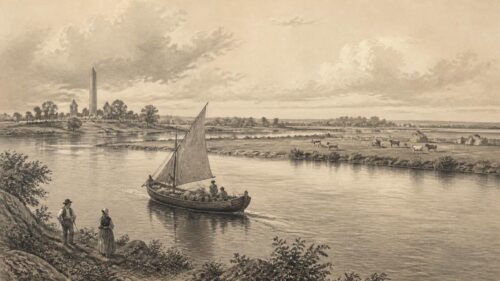
The museum's fishing page places tarred and canvas currachs among small boats used in the undeveloped Irish fishing industry and says they originated from hide boats. It adds that they were a distinctive feature of parts of the west coast, and that small-scale sea fishing was often a summer activity because fish were more plentiful and weather was less dangerous for small boats. [9]
That page also lists line fishing, netting, drift nets, seine netting, and draft netting among the techniques used from boats. It gives one inland example: a leather coracle, called a currach locally, used to set salmon nets on the River Boyne into the 1940s. The museum FAQ likewise defines currachs as skin-covered boats and notes the shift from animal skins to canvas painted with tar. [7][9]
Heritage Framing
The 2021 museum release frames the Conneely recording as a response to the visible disappearance of currach building by the mid-twentieth century. It says the museum recognised the threat to the tradition and commissioned a currach for the national collection. The same release adds that Conneely learned the craft from his father, who was mostly self-taught, and that he made currachs for the other Aran Islands and the mainland. [6]
The same museum text says the recordings left a significant and complete record of a vanishing skill, and that the unique footage is now available in an online exhibition. It also states that the museum's later work includes researching the Conneely material for a new gallery focused on traditional boats of the west coast and extending fieldwork and outreach along the Atlantic coast. These are institutional descriptions, not a wider historical survey. [6][8]
Material Craft
The building account distinguishes the currach through named parts and materials: oak ribs, deal laths, canvas skin, tar coating, and a timber mast secured through a cut piece of wood called a seas crainn. It also says the museum asked for mast and sail despite island people not usually getting the sail at the time. The result was a documented build that combined ordinary working practice with museum request. [4][6]
The same source describes oar fittings too. Mikey fitted a glamba to each oar, the thole pin passed through its centre hole, and the handle was pared round to make it easier on the hand. Elsewhere the museum notes that the currach was on permanent display at Country Life in Turlough Park. These details show the object as both a handled craft and a preserved collection item. [4]
Archival Value
The museum's online exhibitions page identifies Making a Currach – Michael Conneely as one of several folklife exhibitions and says such exhibitions can feature rare archive imagery and video. It also places the currach exhibition alongside other recorded craft projects, including sieve making, cart making, and tin can making. This shows the currach material as part of a broader documentary practice within the Museum's online folklife presentation. [8]
Within the material here, the clearest pattern is practical and descriptive rather than abstract. Currachs appear as skin-covered boats, fishing boats, and museum objects; the Conneely build appears as a filmed and photographed construction sequence; and the museum's later pages connect the record to exhibitions and research. The excerpts do not explain every regional variation, but they do show how one boat type is traced through use, recording, and display. [7][8][9]